
How to Hang a Pendant Light: A Step-by-Step Guide
Summary›
- Planning Your Pendant Light Installation
- Tools Needed for Pendant Light Installation
- Safety First: Essential Precautions
- Step-by-Step Pendant Light Installation
- Optimal Pendant Light Height Guidelines
- Expert Installation Tips and Common Mistakes
- Choosing the Right Pendant for Your Space
- Recommended Pendant Lights for Your Project
- Conclusion
Hanging pendant lighting yourself can feel intimidating, but with the right preparation and guidance, it's a home improvement project that brings professional results without the contractor costs. Whether you're illuminating a kitchen island, creating ambiance over a dining table, or replacing outdated ceiling fixtures, understanding how to hang a pendant light safely and effectively is essential.
While brass table lamp options serve well for accent lighting in living spaces, pendant lights offer overhead illumination that transforms entire rooms. This guide walks you through every stage—from planning and measurements to wiring and final adjustments—ensuring your installation is both beautiful and code-compliant. You'll learn standard heights, required tools, safety precautions, and discover fixtures that complement Scandinavian-inspired interiors.
Planning Your Pendant Light Installation
Before you touch a single wire, thoughtful planning prevents costly mistakes. The first consideration is your mounting location. Standard junction boxes work for most installations, but heavier fixtures may require additional support. Measure your ceiling height and determine the ideal cord length needed to position the light correctly above your surface.
Consider the visual balance of your space. A single oversized pendant can serve as a statement piece, while multiple smaller fixtures create rhythm and distribute light evenly. For those looking to explore more options, our Pendant Lights collection offers a curated selection of Scandinavian-inspired designs suitable for any room configuration.
Your room's function dictates lighting requirements. Kitchen islands benefit from task-focused illumination, dining areas from atmospheric ambient light, and entryways from statements that welcome guests. Drywall ceilings accommodate standard installations, but plaster or concrete may require specialized anchors. Always check your electrical box's weight capacity before selecting a fixture.
Tools Needed for Pendant Light Installation
Having the right tools within arm's reach transforms a frustrating project into a satisfying afternoon. Here's what you'll need for a professional-quality installation:
- Voltage tester – Essential for confirming power is off before handling wires
- Wire strippers – For cleanly exposing wire ends without damaging conductors
- Wire nuts – To securely connect matching wire colors
- Electrical tape – Provides additional insulation on wire nuts
- Stud finder – Locates ceiling joists when additional support is required
- Screwdriver set – Flathead and Phillips for mounting hardware
- Measuring tape – Precision for consistent height placement
- Ladder or step stool – Comfortable working height is non-negotiable
- Pliers – For twisting wires and tightening nuts
Keep a clean workspace and place tools on a flat surface where you can reach them without straining. A headlamp provides additional visibility when the room's existing light is switched off during installation.
Safety First: Essential Precautions
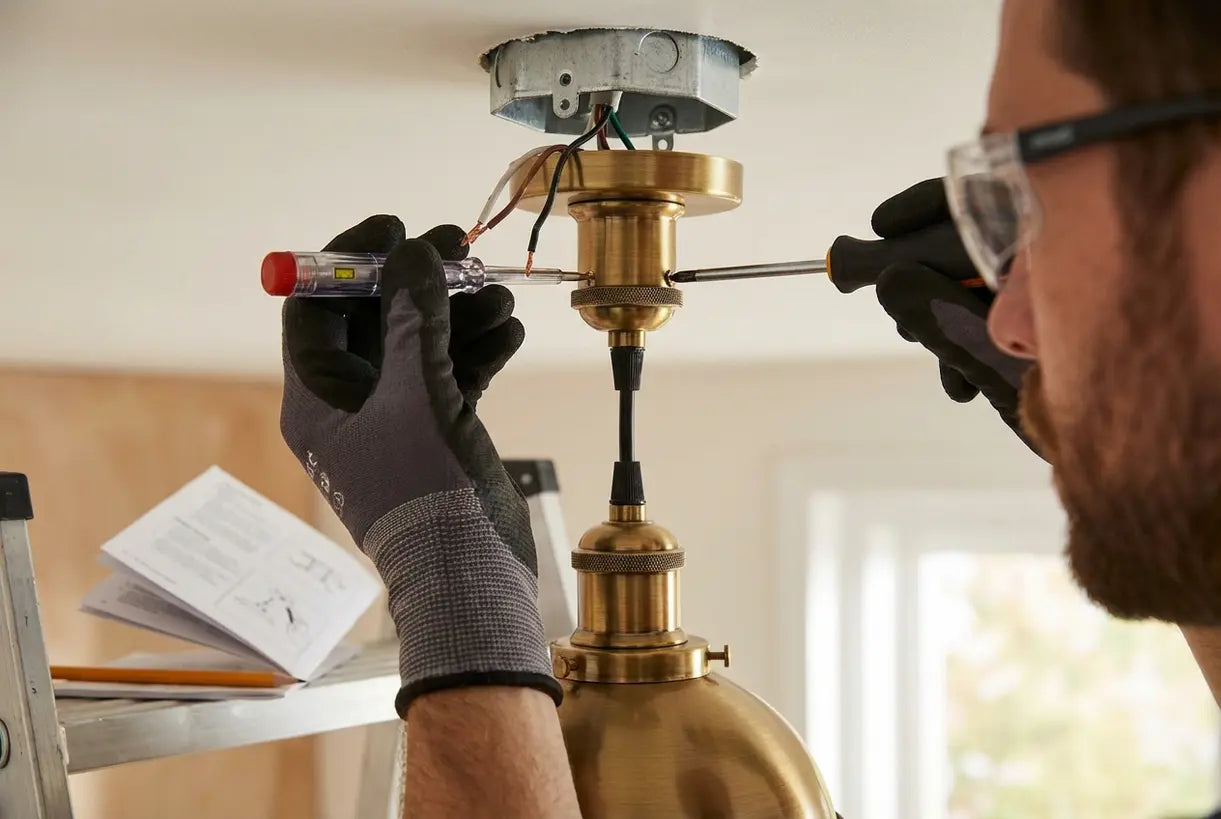
Electrical work demands respect for potential hazards. The most critical step is turning off power at the circuit breaker—not just the wall switch. After switching the breaker off, test the wires with a voltage tester before proceeding. Double-check that no power flows through any wire you intend to touch.
Pro Safety Tip: Place a piece of tape over the breaker switch to prevent family members from accidentally restoring power while you're working. This simple step has prevented countless accidents.
Ensure your ladder is stable and positioned on even flooring. Working overhead for extended periods strains the neck, so take breaks. If you're uncomfortable with electrical connections or encounter aluminum wiring, consult a licensed electrician. While DIY spirit is admirable, complex electrical situations require professional expertise.
Step-by-Step Pendant Light Installation
With preparation complete, you're ready to transform your space. Follow these steps methodically for a secure, professional installation:
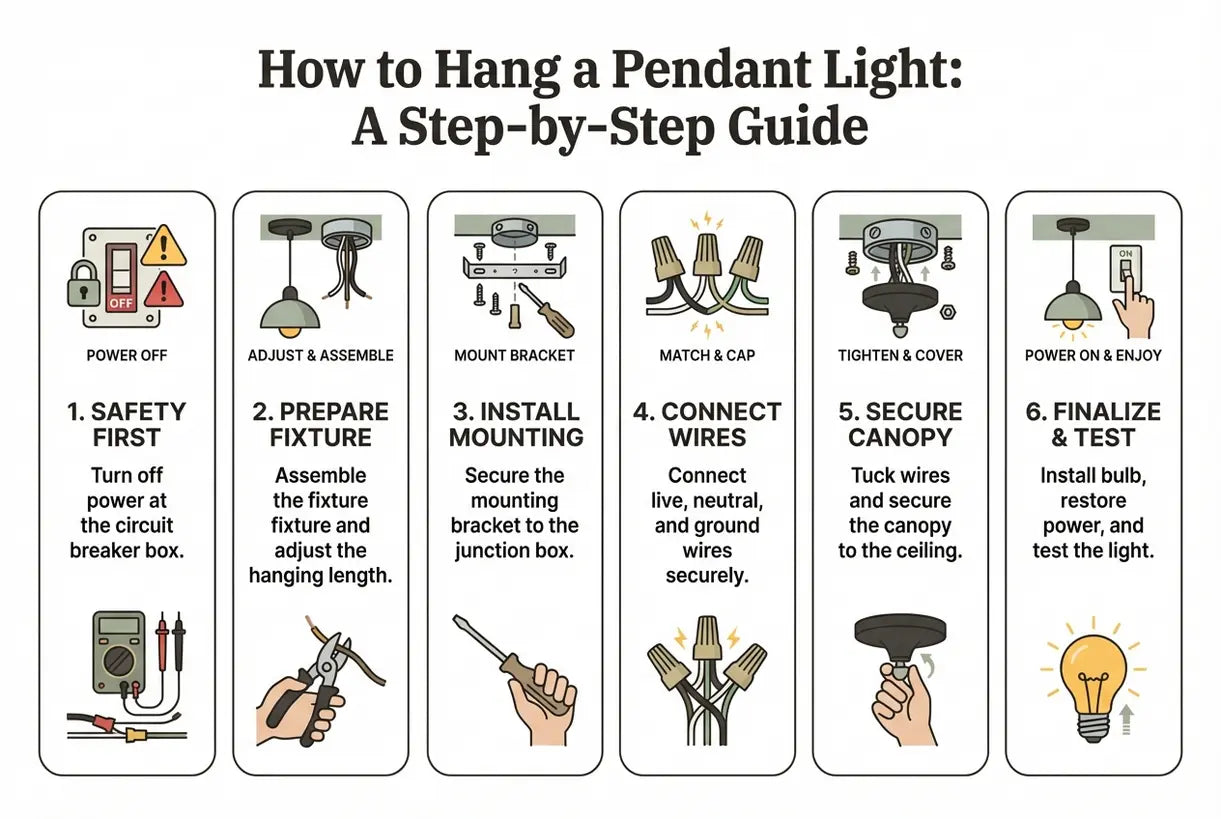
- Turn off power at the breaker and verify with your voltage tester. Remove the existing fixture carefully, noting how wires are configured.
- Assemble your pendant according to manufacturer instructions. This often involves threading the cord through the canopy and attaching decorative elements before ceiling mounting.
- Mount the bracket to the electrical box using included hardware. If your fixture includes a crossbar, attach it now and ensure everything is level.
- Connect the wires by matching colors—black to black (hot), white to white (neutral), and green or bare copper to the grounding screw or wire. Twist connections clockwise and secure with wire nuts. Wrap with electrical tape for added safety.
- Adjust cord length before tucking wires into the ceiling. For adjustable pendants, set your desired height now.
- Attach the canopy to the mounting bracket, ensuring a flush fit against the ceiling.
- Install the bulb and any shades or globes. Don't exceed recommended wattage.
- Restore power and test your installation.
Optimal Pendant Light Height Guidelines
The difference between amateur and professional-looking installations often comes down to placement height. Incorrect positioning creates glare, obstructs sightlines, or fails to deliver adequate illumination. Here's how to calculate the perfect height for various applications:
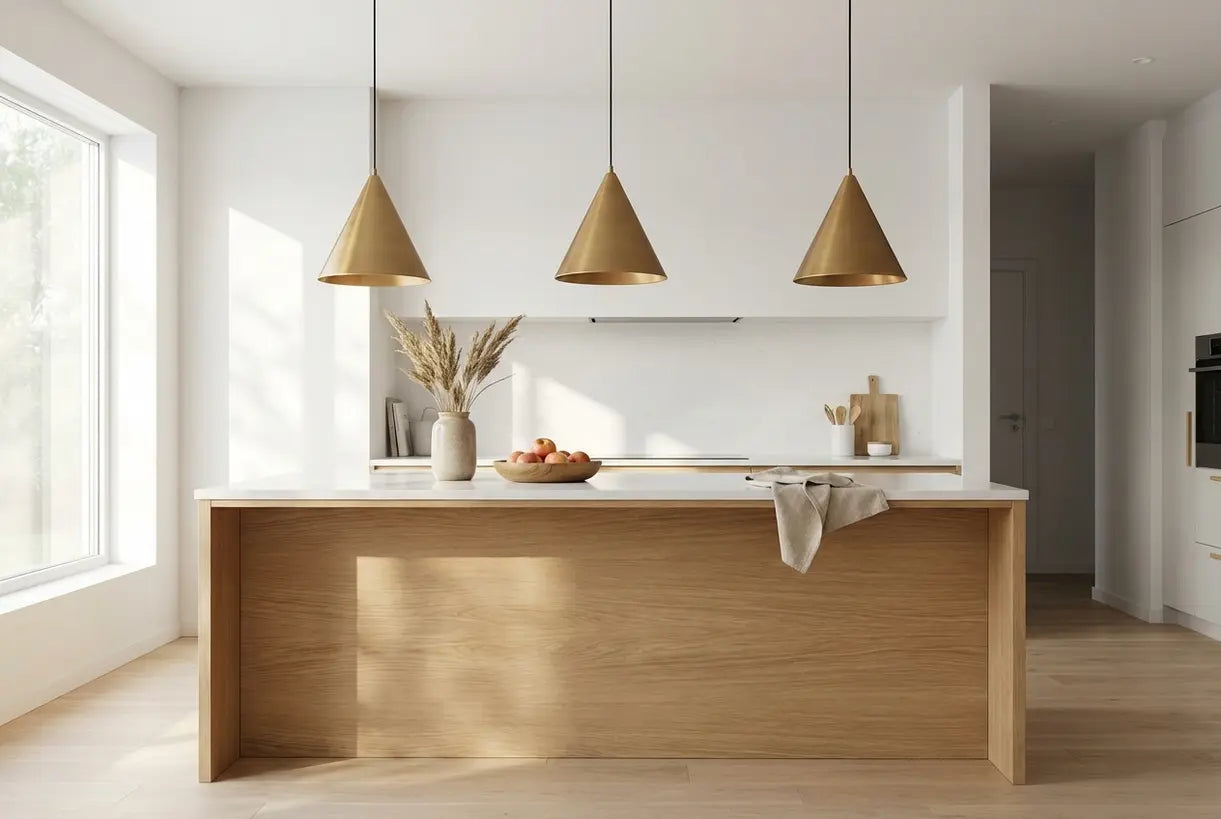
Above dining tables: Hang pendants 28 to 36 inches above the table surface. This provides intimate illumination without obstructing conversations across the table.
Over kitchen islands: Position lights 30 to 40 inches above the countertop. This range balances task lighting for meal prep with clear sightlines across the kitchen.
Nightstand pendant replacement: If substituting a pendant for a traditional brass table lamp in bedrooms, hang 24 to 28 inches above the nightstand surface for reading light that's within comfortable arm reach.
Entryways and hallways: Maintain at least 7 feet clearance from floor to fixture bottom. For taller ceilings common in Scandinavian architecture, hang fixtures proportionally lower while respecting this minimum.
When installing multiple pendants over a surface, space them evenly. For cohesive design, divide your surface length by the number of fixtures plus one, using the result to determine spacing intervals.
Expert Installation Tips and Common Mistakes
Even experienced DIYers encounter challenges with pendant lighting installation. Learn from these professional insights to achieve flawless results on your first attempt.
One frequent error is cutting cords too short. The Brushed Nickel Single Pendant Light features an adjustable cord that accommodates various ceiling heights while providing flexibility for future modifications. Always measure twice and secure generous length before making permanent cuts.
Another common oversight involves wire compatibility. If your home has older aluminum wiring and your new fixture uses copper, special anti-oxidant paste and compatibility-rated connectors are mandatory. Mixing incompatible metals creates fire hazards over time.
For staggered arrangements, verify ceiling box capacity and structural support. Multiple pendants create heavier cumulative loads than single fixtures. When planning your layout, sketch the arrangement on paper first, calculating exact cord lengths and relative positions. Keep fixtures centered over surfaces, leaving equal visual margins on all sides.
Patience with canopy positioning yields the cleanest aesthetic. The decorative canopy should sit flush against the ceiling without visible gaps. If your ceiling is slightly uneven—a common occurrence in older homes—spiral adjustment collars can mask minor imperfections while maintaining the minimalist aesthetic central to Scandinavian design.
Choosing the Right Pendant for Your Space
With installation knowledge secured, selecting the ideal fixture becomes your next adventure. Scandinavian design emphasizes clean lines, natural materials, and intentional simplicity. Your lighting should reflect these principles while serving your practical needs.
Scale matters enormously. A fixture too small becomes visually lost; one too large overwhelms. For standard 8-foot ceilings, select pendants with overall hanging heights under 16 inches. Higher ceilings accommodate more dramatic silhouettes—cascading clusters or substantial single pieces that anchor open floor plans.
Material selection influences both diffusion and aesthetic character. Glass globes soften light for ambient settings, while metal shades focus illumination for task work. Hand-blown glass introduces subtle organic variation that celebrates craft tradition, a cornerstone of Nordic design philosophy.
Recommended Pendant Lights for Your Project
When you're ready to purchase, fixtures that combine quality construction with timeless aesthetics ensure your installation remains relevant through evolving style trends. Skonne curates Scandinavian-inspired pieces that blend seamlessly into both contemporary renovations and classic interiors.
The Matte Black Globe Pendant offers contemporary sophistication with diffused ambient light that pairs beautifully with modern minimalist decor. Its dark finish creates striking contrast in light-toned rooms while maintaining the warmth Scandinavian spaces are celebrated for.
For versatile kitchen islands or breakfast bars requiring multiple hang points, consider the Clear Glass Mini Pendant (Set of 3). This coordinated group simplifies installation planning while creating rhythmic visual interest through staggered or level alignment.
Featured Pendants for Scandinavian Interiors
Whether you're undertaking a full kitchen renovation or simply replacing an outdated ceiling mount, the right pendant transforms functional lighting into intentional design. With proper height placement, secure installation, and quality fixtures, your new lighting becomes a defining element of your home's character.
Conclusion
Installing pendant lighting yourself rewards careful preparation with stunning results. By following safety protocols, understanding proper height guidelines, and selecting quality fixtures suited to your space, you achieve professional-grade illumination that reflects your personal aesthetic. Scandinavian design principles—simplicity, functionality, and natural materials—guide selections that remain beautiful and relevant for years.
At Skonne, we believe lighting should do more than illuminate. It should elevate daily moments, create warmth, and express your vision for home. Our curated collection of pendant lights reflects this philosophy, offering thoughtfully designed pieces that install beautifully and perform reliably. Explore our complete selection and discover how hygge—the Danish concept of cozy contentment—begins with the right light.
Related Article
Black Table Lamps: Bold, Versatile Designs for Modern & Moody InteriorsExplore bold black table lamp designs perfect for modern and moody interiors. Discover how to add sophistication and contrast to any room.