
Stone Lamp Shades: How to Choose the Right Shade for Your Stone Base
Summary›
- Understanding the Relationship Between Stone Bases and Lamp Shades
- The Three Types of Lampshades for Stone Bases
- What Is the Best Material for a Lampshade with a Stone Lamp Base?
- How Do I Choose the Right Size Lampshade for My Stone Lamp Base?
- What Color Shade Works Best with Natural Stone Lamp Bases?
- How High Should a Lampshade Sit on a Stone Lamp Base?
- Scandinavian Design Principles for Organic Lamp Bases
- Purchasing Considerations: Quality Indicators
- Creating Your Stone Lamp Sanctuary
There's something deeply grounding about bringing natural elements into your home. Stone lamp shades achieve this beautifully—creating an atmosphere of intentional calm that transforms ordinary spaces into sanctuaries of Nordic-inspired tranquility. Whether you're drawn to the raw beauty of travertine, the cool elegance of marble, or the organic warmth of sandstone, the relationship between your stone lamp base and its shade is what ultimately defines its presence in your space.
Finding the perfect lamp shade for a stone base isn't simply about covering a bulb. It's about honoring the natural character of the stone while creating harmonious light that enhances your interior. This guide will walk you through everything you need to know about stone lamp shades—from material selection and sizing to the subtle art of pairing that brings wabi-sabi philosophy into your daily living. By understanding these principles, you'll discover how the right combination can elevate your home's atmosphere while celebrating the authentic beauty of natural stone lighting.
Understanding the Relationship Between Stone Bases and Lamp Shades
Natural stone lamp bases possess inherent character that mass-produced materials simply cannot replicate. Each piece carries unique veining, tonal variations, and textural elements that tell a story of geological time. When selecting a shade, your goal is to complement—not compete—with these organic qualities.
The Scandinavian design philosophy that guides our curation at Skonne emphasizes this dialogue between materials. Natural stone lamp shades and their bases should exist in conversation, where the shade diffuses light to highlight the stone's surface while the base anchors the composition with its earthy presence. This harmony creates what we call "grounded illumination"—lighting that feels both elevated and rooted.
The Three Types of Lampshades for Stone Bases
When exploring stone lamp shade options, you'll encounter three primary silhouettes that define the overall aesthetic of your lighting:
Drum Shades
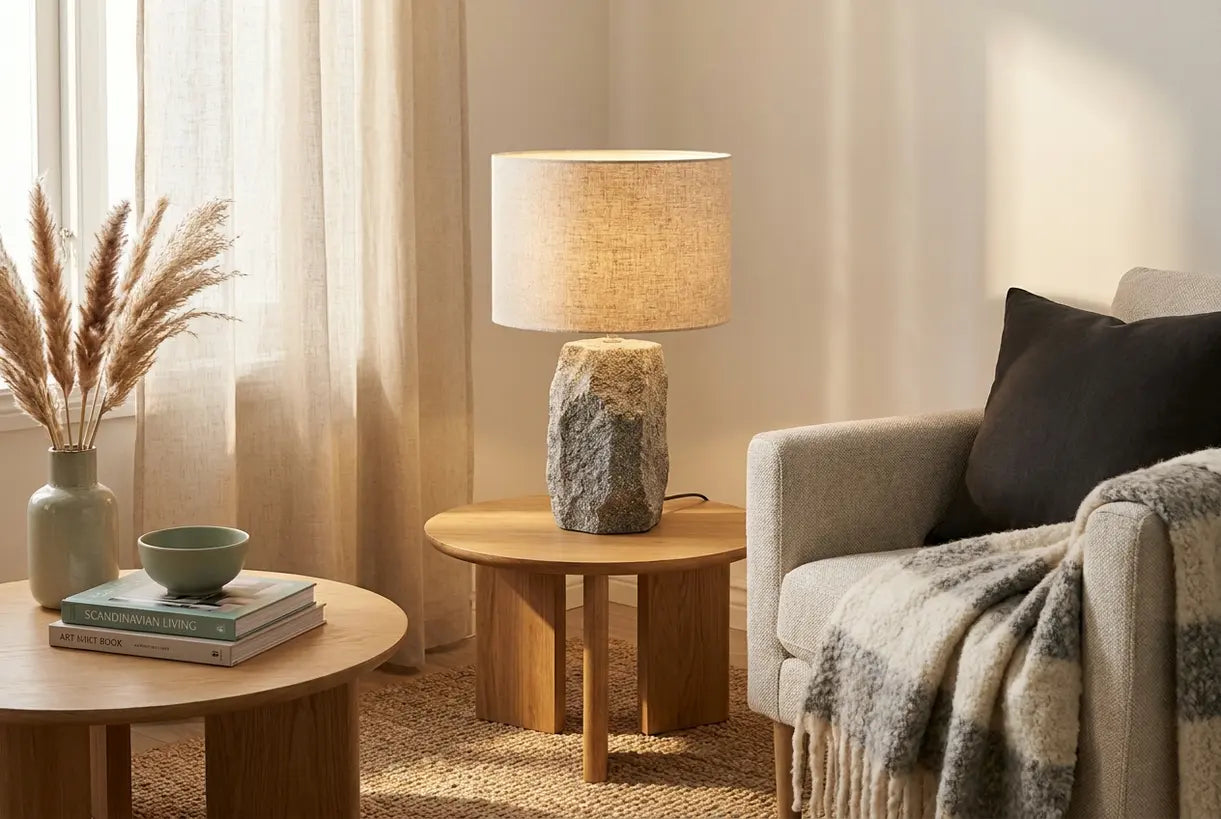
Drum shades—cylindrical shapes with straight sides—offer the most versatile pairing for stone bases. Their clean geometry provides a contemporary counterpoint to the organic irregularity of natural stone. For Scandinavian and Japandi interiors, drum shades in natural linens create that sought-after balance between structure and softness.
Empire and Bell Shades
These classic shapes narrow toward the top, creating a more traditional profile that works beautifully with substantial stone lamp bases. An empire shade can lend gravitas to a travertine lamp shade pairing, while a bell shape introduces gentle curves that echo the stone's organic origins. These styles excel in spaces where you want the lamp to feel like a sculptural presence.
Tapered and Geometric Shades
Modern interpretations include slightly tapered cylinders or even angular geometric forms. These work exceptionally well with minimalist stone bases, emphasizing clean lines while allowing the natural material to remain the focal point. For anyone drawn to wabi-sabi lamp shades, consider how asymmetry in the shade can mirror the stone's own perfect imperfections.
What Is the Best Material for a Lampshade with a Stone Lamp Base?
Material selection represents perhaps the most crucial decision in your stone lamp shade journey. The wrong fabric can undermine the organic beauty of your stone base, while the right choice creates a cohesive design statement.
Linen: The Scandinavian Standard
Linen lamp shades for stone bases remain the gold standard for Nordic-inspired interiors. This natural fiber offers several advantages:
- Textural harmony: Linen's subtle weave echoes the textured surface of stone without overwhelming it
- Diffusion quality: Creates warm, ambient light that highlights stone's natural variations
- Ageless appeal: Develops character over time, embracing wabi-sabi principles
- Breathability: Allows heat dissipation while maintaining soft illumination
Cotton and Natural Fibers
High-quality cotton offers a smoother alternative when you prefer subtlety over texture. Organic cotton and hemp blends also work beautifully, particularly when unbleached to maintain that connection to natural materials.
Parchment and Paper Options
For those drawn to Japanese aesthetics, rice paper or parchment shades create ethereal, diffused light. These work exceptionally well with lighter stone varieties like white marble or limestone, enhancing the luminous quality of both materials.
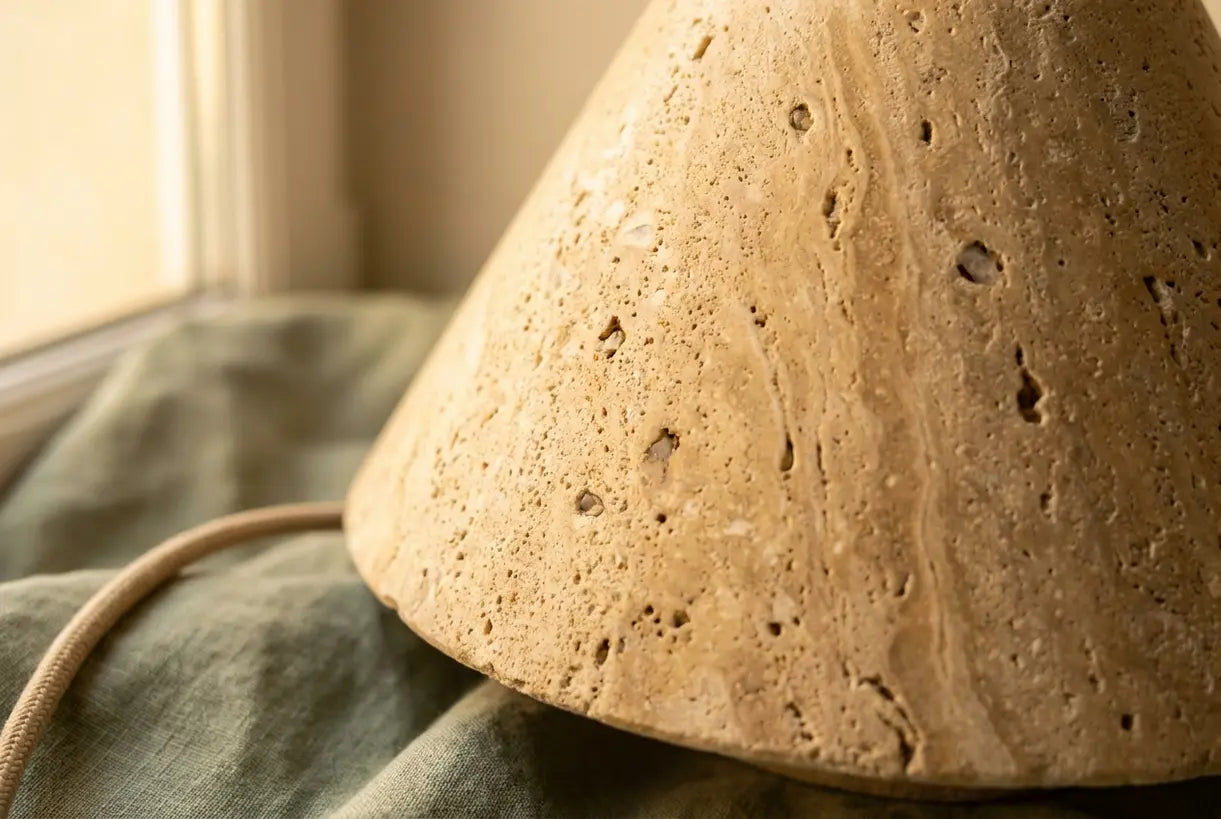
For those looking to explore more options, our Lamps collection offers a curated selection of stone-based designs paired with thoughtfully chosen shades.
Table Lamps
Shop all Table Lamps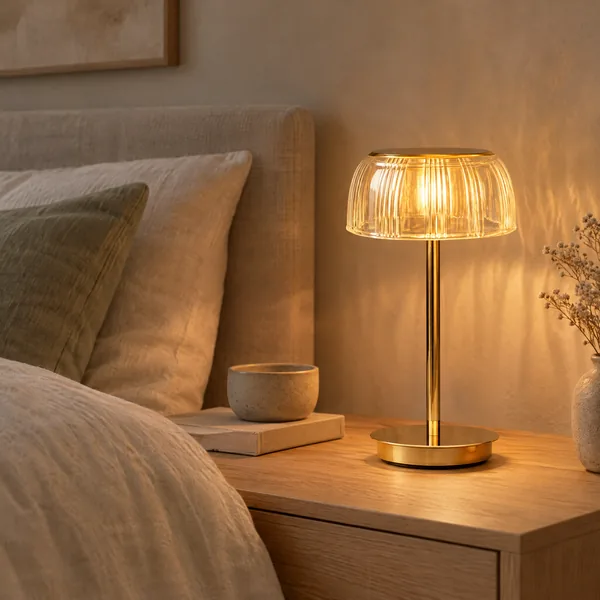
 Save $30.00
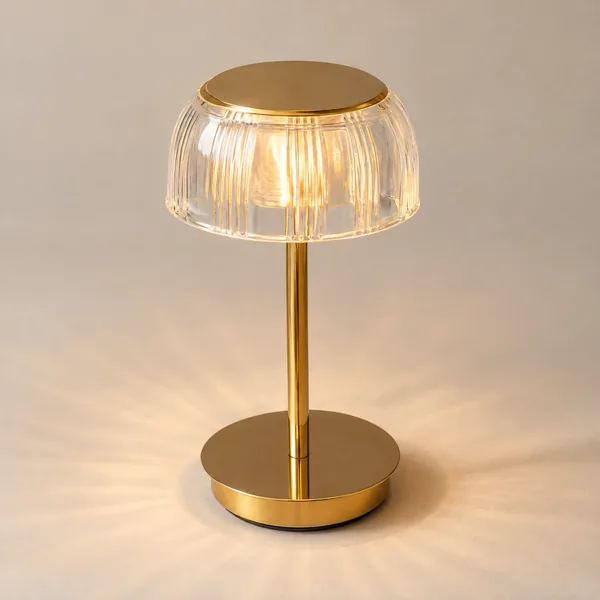
Kvalla Jellyfish LED Rechargeable Table Lamp
 Save $60.00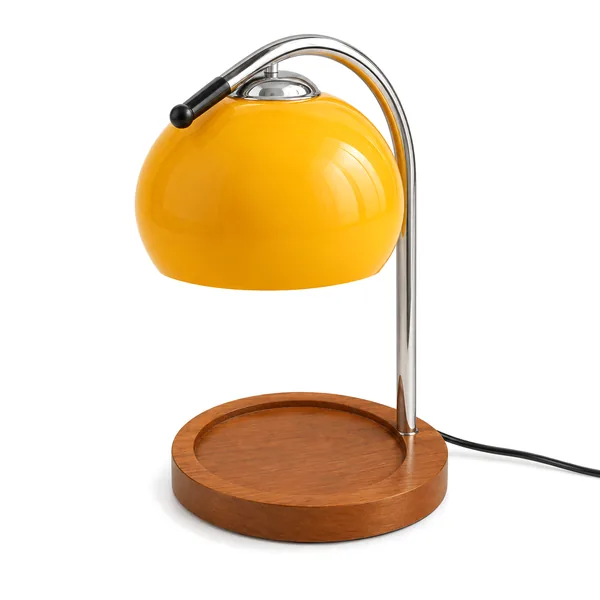
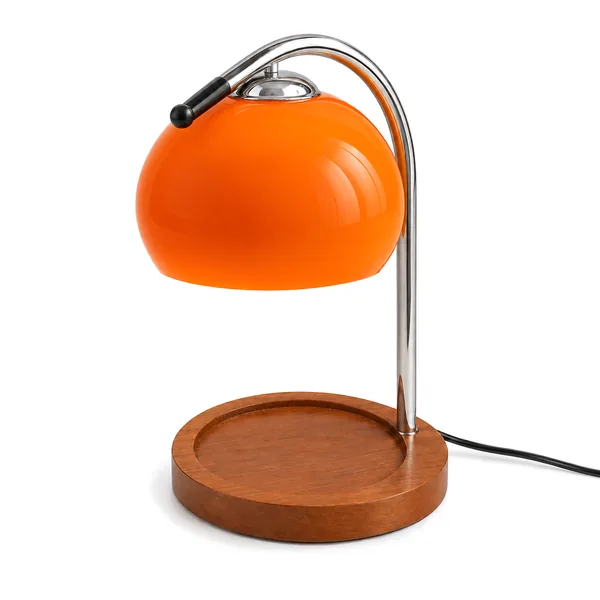
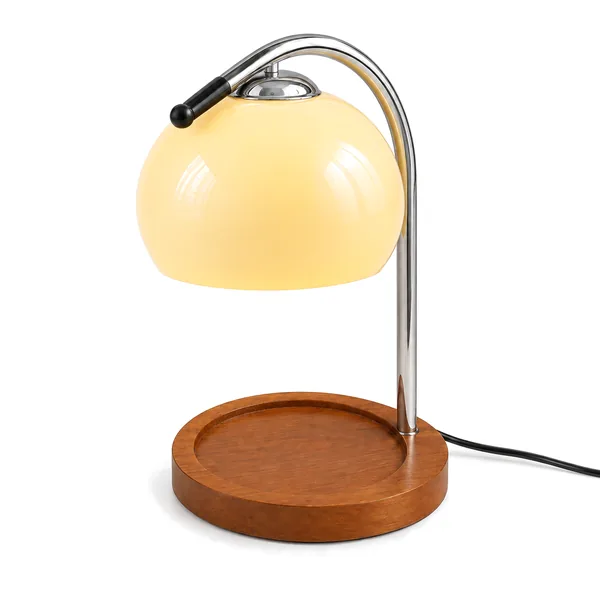 3 options
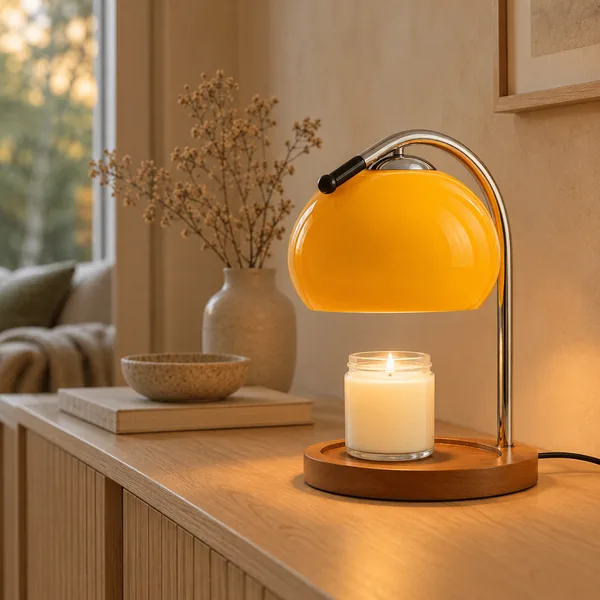
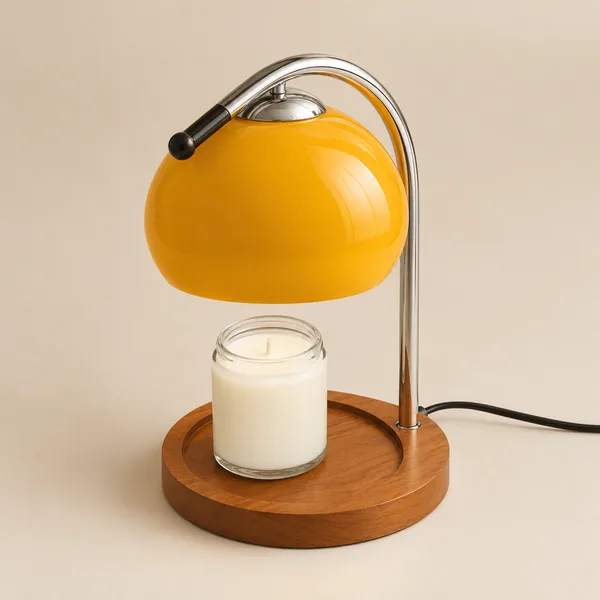
Solvarm Stained Glass Candle Warmer Table Lamp
 Save $220.00
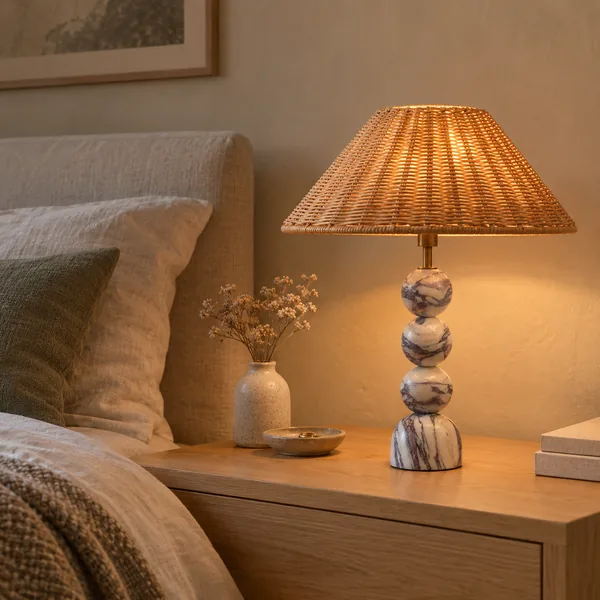
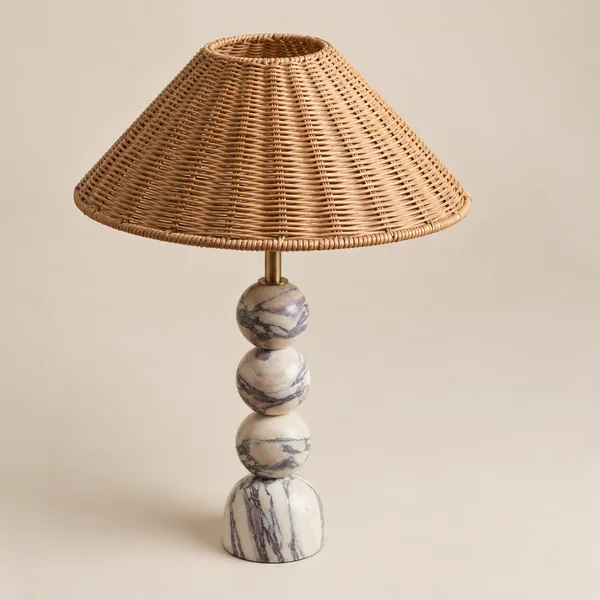
Stenglo Nordic Marble Table Lamp Rattan Shade
How Do I Choose the Right Size Lampshade for My Stone Lamp Base?
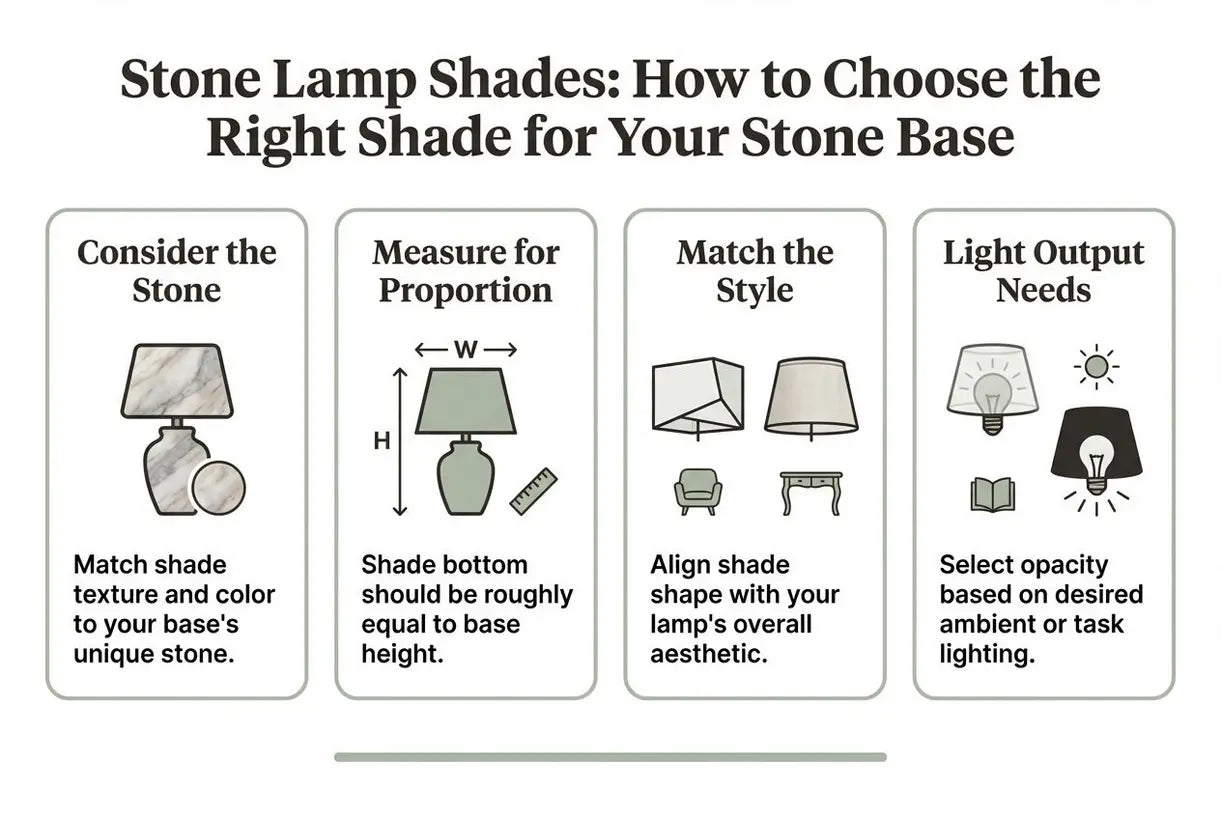
Proportion is where many well-intentioned lighting choices falter. A shade that's too small makes your stone base appear heavy and unbalanced. One that's too large overwhelms the natural beauty you've invested in. Here are the guiding principles that designers use when selecting drum shades for stone lamps and other configurations:
The Width Rule
Your shade's widest point should typically measure twice the width of your lamp base at its broadest point. For example, if your stone base measures 6 inches across, aim for a shade between 11-13 inches in diameter. This creates visual balance while allowing both elements to breathe.
Height Considerations
The shade height should generally equal approximately three-quarters of the base height. A 16-inch stone base pairs beautifully with a 12-inch shade. This ratio maintains the lamp's overall silhouette as elegant rather than squat or spindly.
Practical Measurement Guide
Designer Tip: When in doubt, choose slightly larger rather than smaller. A generous shade creates presence and authority, while an undersized shade can make even beautiful stone bases appear insubstantial.
Accounting for Stone's Visual Weight
Natural stone carries substantial visual weight. When choosing lamp shades for marble bases or denser materials like granite, you may want to increase the width slightly—opting for a 2.2:1 ratio rather than 2:1—to ensure the shade feels proportionally anchored.
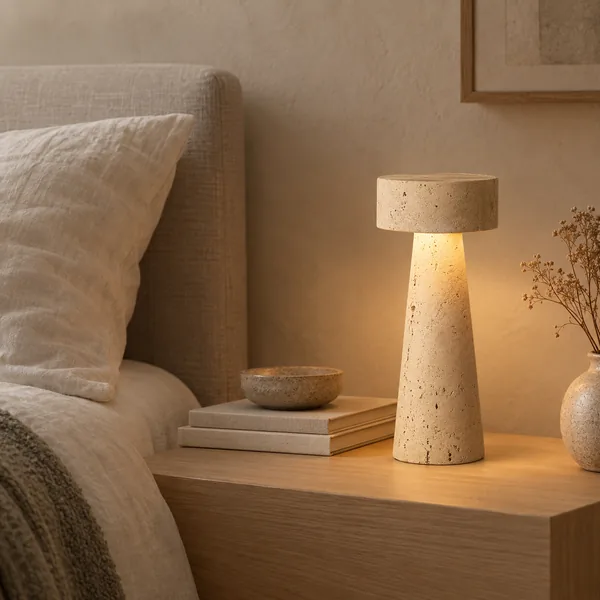 Stilla Wabi-Sabi Handcrafted Stone Table Lamp$389.00$479.00
What Color Shade Works Best with Natural Stone Lamp Bases?
Color selection for stone lamp shades should be guided by the stone's own tonal qualities. Rather than creating contrast, successful pairings often work within the same color family, allowing texture and materiality to provide visual interest.
Neutral Palette Approach
For travertine lamp shade pairings and warmer stones like sandstone or limestone, consider:
- Warm whites: Cream and ivory tones that complement stone's natural warmth
- Taupe and greige: Sophisticated neutrals that bridge warm and cool stone varieties
- Oatmeal and natural linen: Undyed fibers that introduce organic color variation
Cool Stone Considerations
Marble and certain granites carry cooler undertones. Here, consider:
- Crisp whites: Clean, bright shades that emphasize marble's elegance
- Soft grays: Subtle tonal shifts that create monochromatic sophistication
- Sage and muted greens: Unexpected naturals that echo stone's mineral origins
The Case for Contrast
While tonal harmony feels inherently Scandinavian, strategic contrast can create striking moments. A charcoal or deep slate shade against light travertine introduces contemporary edge. Conversely, a pale shade on dark soapstone creates ethereal lightness. The key is intention—make contrast a deliberate design choice rather than an accident.
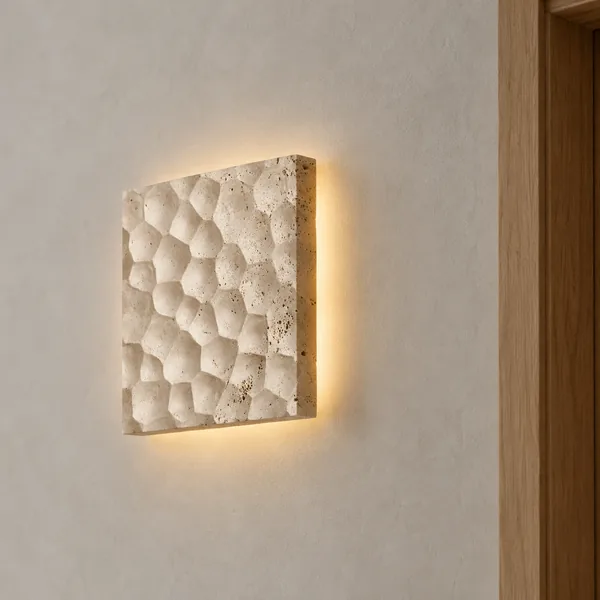
The Stilla Wabi-Sabi Handcrafted Stone Table Lamp exemplifies this philosophy, with its natural stone variations perfectly complemented by carefully considered shade pairings that honor the wabi-sabi principle of finding beauty in imperfection.
Travertine Lighting
Shop all Travertine Lighting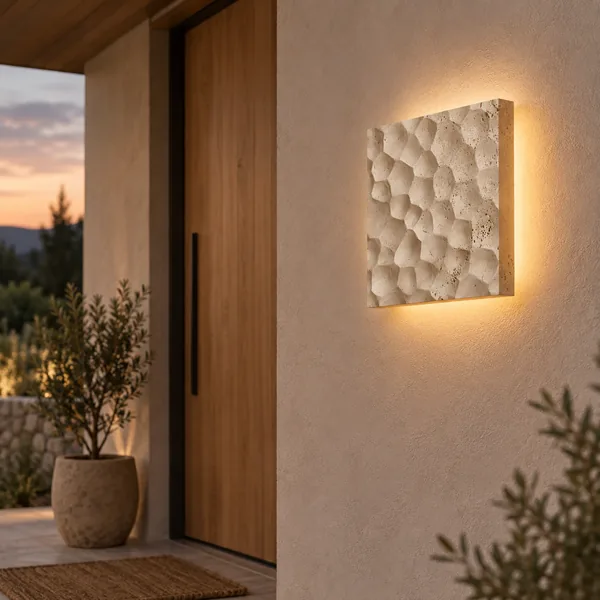
 Save $170.00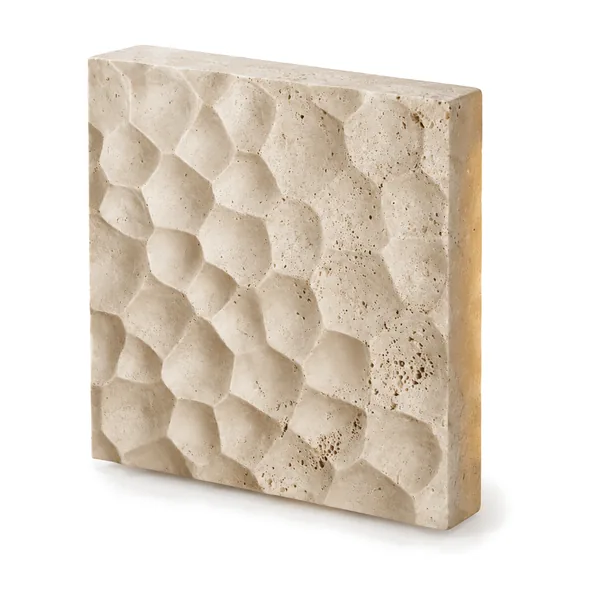
 2 options
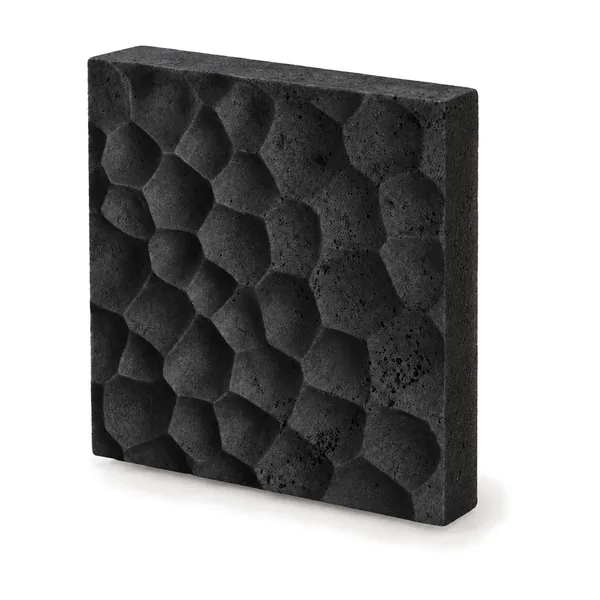
Stenvei Natural Stone IP65 LED Outdoor Sconce
 Save $130.00
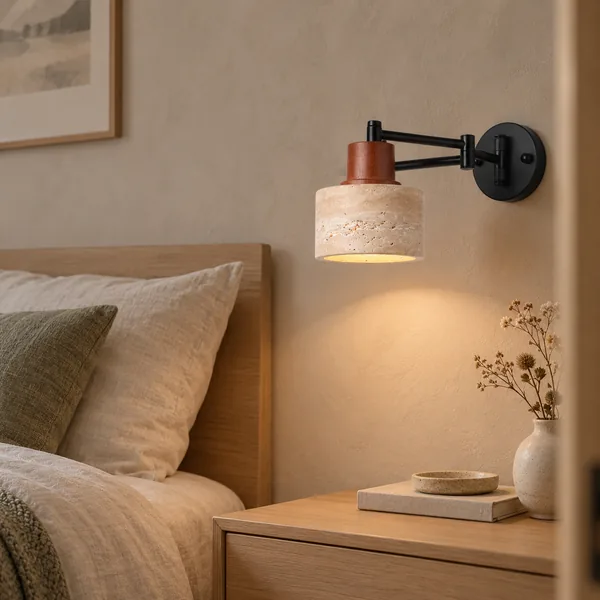
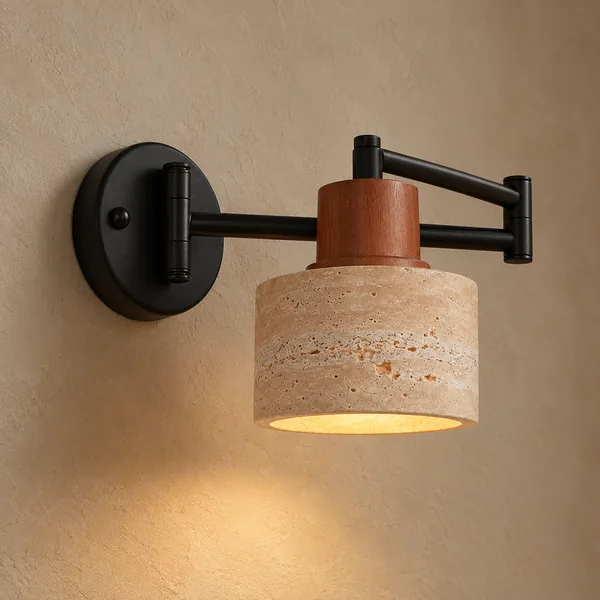
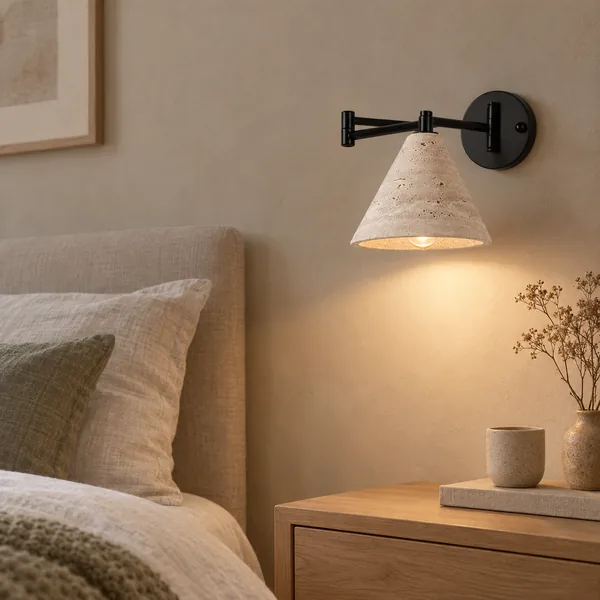
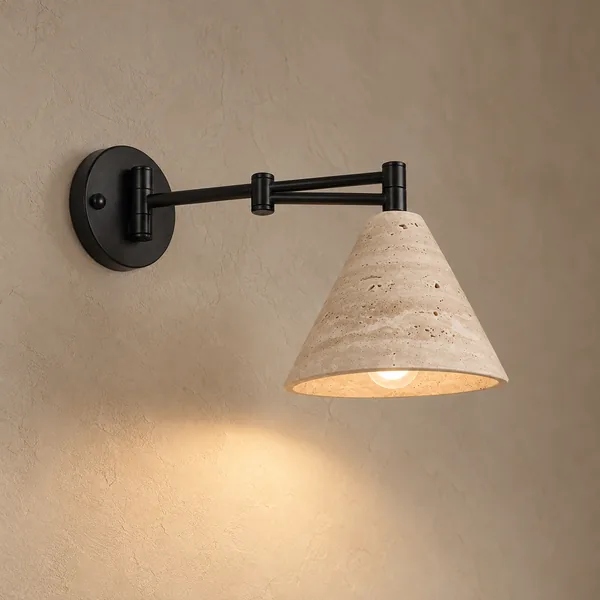
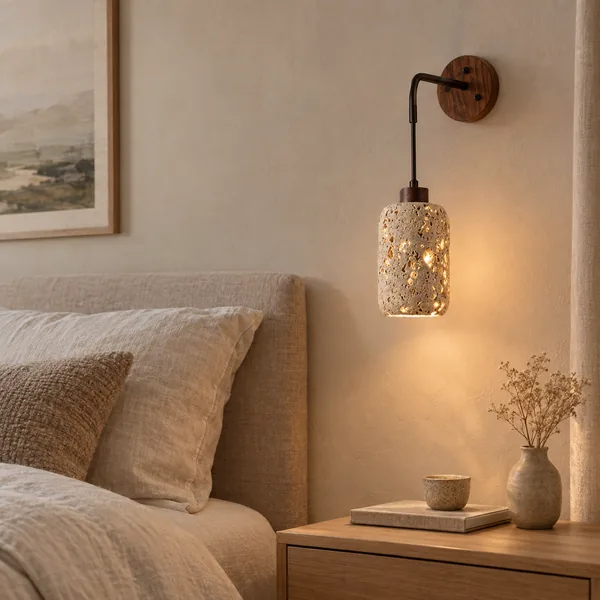
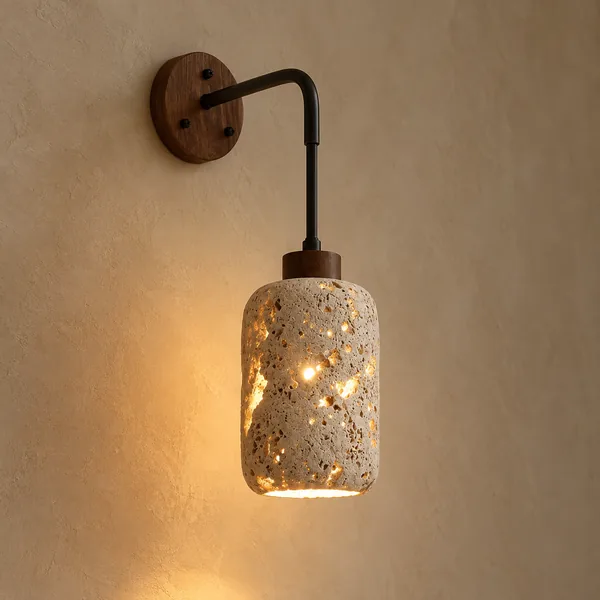
Fjella Natural Travertine Adjustable Wall Lamp
How High Should a Lampshade Sit on a Stone Lamp Base?
Vertical positioning—the "drop" of your shade relative to the base—impacts both aesthetics and function. Too high, and the bulb becomes visible, creating harsh glare. Too low, and you obscure the stone base that represents a significant portion of your investment.
The Optimal Position
Generally, the bottom of your shade should sit approximately eye level when you're seated in the space—typically 36-42 inches from the floor for table lamps. On the base itself, this usually translates to the shade covering the hardware (socket and switch) while revealing the full sculptural form of the stone below.
The Harp and Finial Relationship
Most stone lamp bases accept standard harps (the wire framework that holds the shade). Choose a harp height that positions your shade at the desired level while ensuring the finial (the decorative top piece) doesn't protrude awkwardly above the shade. Many quality fabric shades include a diffuser at the top to conceal the bulb and soften upward light.
Considering Stone Base Height
Taller stone bases—those exceeding 20 inches—may require proportionally larger shades or extended harps. The goal remains the same: maintain that balanced ratio between base and shade while ensuring comfortable, glare-free illumination at seated height.
Natural Stone Lamps for Nordic Interiors
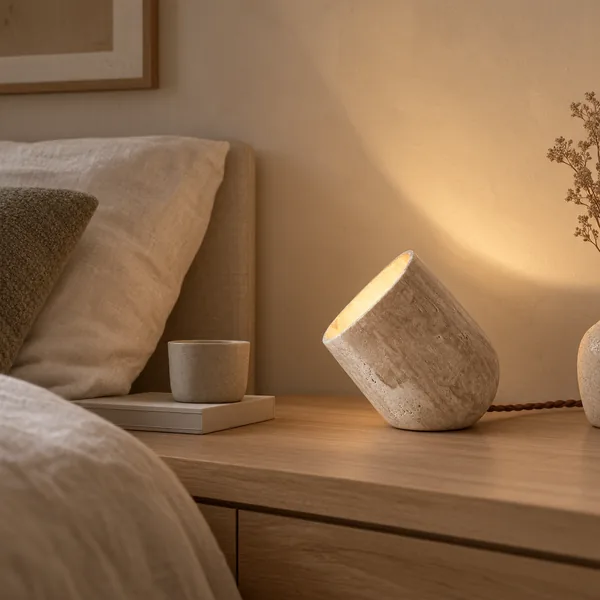 Stenvarm Travertine Natural Stone Accent Lamp$239.00$299.00
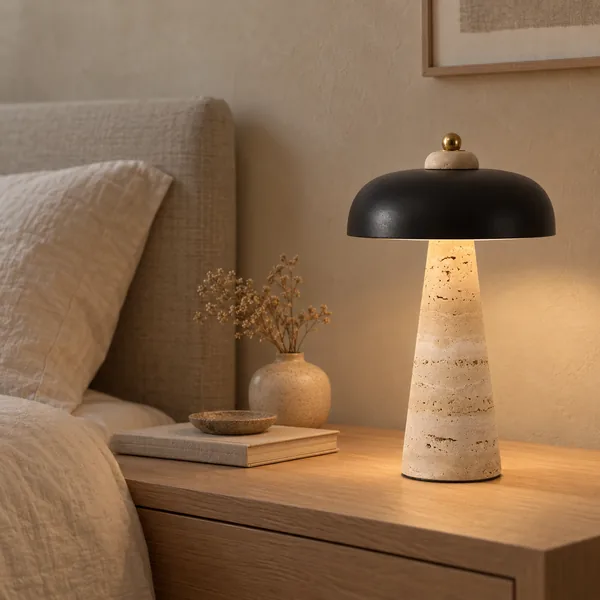 Kveldstein Natural Stone Rechargeable Table Lamp$279.00$399.00
Scandinavian Design Principles for Organic Lamp Bases
The Nordic approach to lighting goes beyond mere functionality—it embraces the emotional impact of illumination. When working with organic lamp bases, these principles guide successful shade selection:
Embrace Restraint
Scandinavian design champions simplicity. Choose shades without excessive trim, pleating, or ornamentation. Let the natural stone and quality fabric speak for themselves. The Scandinavian lamp design ethos suggests that beauty emerges from honest materials and thoughtful proportion.
Cultivate Hygge Through Warmth
Hygge—the Danish concept of cozy contentment—relies heavily on lighting. Stone lamp shades should create pools of warm, inviting light that transform spaces into retreats. Avoid cool-toned LEDs that compete with stone's natural warmth. Instead, opt for bulbs in the 2700K range that complement your organic lamp shade materials.
Honor the Handmade
Wabi-sabi lighting celebrates the marks of human touch and natural processes. Slight variations in hand-woven linen, subtle irregularities in stone, and the patina that develops over time—these are features to be treasured, not flaws to be hidden. Choose shades that feel crafted rather than manufactured.
Purchasing Considerations: Quality Indicators
When investing in stone lamp shades, quality markers separate pieces that will age beautifully from those that disappoint:
- Stitching: Look for reinforced seams and quality thread that won't unravel
- Lining: Premium shades include protective lining that prevents yellowing and ensures even light diffusion
- Frame construction : Metal frames should feel substantial, not flimsy
- Fitter compatibility: Ensure the shade's fitter (the part that connects to the harp) suits your stone base's hardware
- Fabrics: Natural fibers like linen and cotton breathe better and age more gracefully than synthetics
The Stenvarm Travertine Natural Stone Accent Lamp demonstrates how authentic materials and thoughtful construction create lighting that becomes more beautiful with time—a cornerstone of sustainable, intentional design.
Creating Your Stone Lamp Sanctuary
The journey to finding perfect stone lamp shades combines technical knowledge with intuitive aesthetic sensibility. By understanding proportion, material relationships, and the unique character of natural stone, you become equipped to make choices that resonate with your space and sensibility.
Remember that the best stone lamp shade pairings honor both elements equally—the sculptural presence of the base and the luminous quality of the shade. Neither dominates; both contribute to that coveted Scandinavian balance of beauty and function. When you step back from a well-paired stone lamp and feel that immediate sense of rightness, you'll know you've succeeded.
At Skonne, we believe lighting should ground you even as it illuminates. Our curated collection of stone-based designs, from the wireless convenience of the Kveldstein Natural Stone Rechargeable Table Lamp to the artisanal craftsmanship of our travertine and wabi-sabi collections, offers starting points for your own lighting journey.
Ready to transform your space? Explore our complete lighting collection and discover how natural stone lighting can bring Nordic warmth and wabi-sabi authenticity to your home.
Related Article
White Stone Lamps: Clean, Luminous Designs for Airy & Minimal InteriorsDiscover elegant white stone lamps that bring clean, luminous warmth to minimalist interiors. Natural stone designs for modern, airy spaces.