
Transitional Dining Room Lighting: The Perfect Balance Between Classic & Contemporary Fixtures
Summary›
- What Is Transitional Style Dining Room Lighting?
- The Philosophy of Balanced Design
- The Visual Language of Transitional Fixtures
- Sizing Guidelines for Harmonious Proportions
- Selecting Finishes That Bridge Decades
- A Closer Look: The Stjerna Vintage French Clear Glass Chandelier
- The Temperature Question: Creating Ambiance
- Installation Height: The 30-36 Rule
- Layering Light in Transitional Spaces
- Curated Options for Every Dining Space
- Creating Your Transitional Sanctuary
- Conclusion
Finding the perfect centerpiece for your dining space often feels like balancing competing desires. You crave the warmth and character of classic design, yet you're drawn to the clean simplicity of contemporary aesthetics. Transitional dining room lighting bridges this gap beautifully, offering fixtures that honor traditional craftsmanship while embracing modern restraint. At Skonne, we believe the best dining moments happen under light that feels both timeless and intentional.
What Is Transitional Style Dining Room Lighting?
Transitional lighting occupies that perfect middle ground between ornate traditional fixtures and stark contemporary designs. Unlike purely classic dining room chandeliers with their heavy crystal and elaborate scrollwork, or ultra-modern pendants with their industrial minimalism, transitional pieces borrow the best from both worlds. They feature cleaner lines than traditional fixtures but warmer materials than modern alternatives.
This hybrid approach creates classic contemporary lighting that doesn't feel dated after a few years, nor does it lean too heavily into passing trends. The style particularly resonates with homeowners who appreciate architectural details but want their spaces to feel current and livable. For those beginning their search, exploring our Pendant Lights collection reveals how Scandinavian influences naturally complement transitional aesthetics.
The Philosophy of Balanced Design
The essence of transitional design lies in intentional editing. Traditional lighting often incorporates multiple decorative motifs—floral details, crystal teardrops, ornate metalwork—while contemporary fixtures might strip away everything but geometric form. Transitional dining room lighting ideas preserve the material richness of classic design—solid brass, hand-blown glass, fine linen—while presenting them in refined, simplified silhouettes.
This balance extends to proportion as well. Transitional fixtures avoid the imposing scale of formal traditional pieces, yet they maintain more presence than minimal contemporary pendants. The result is lighting that feels substantial but not heavy, warm but not cluttered—perfect for the multi-functional dining rooms of today where Zoom calls and homework sessions share space with dinner parties.
The Visual Language of Transitional Fixtures
Understanding the specific vocabulary of this style helps enormously when shopping. Look for drum shades rather than bell-shaped ones, cylinder glass rather than curved hurricane shapes, and stepped geometric forms rather than scrolling arms. These subtle distinctions separate transitional chandeliers from their traditional cousins.
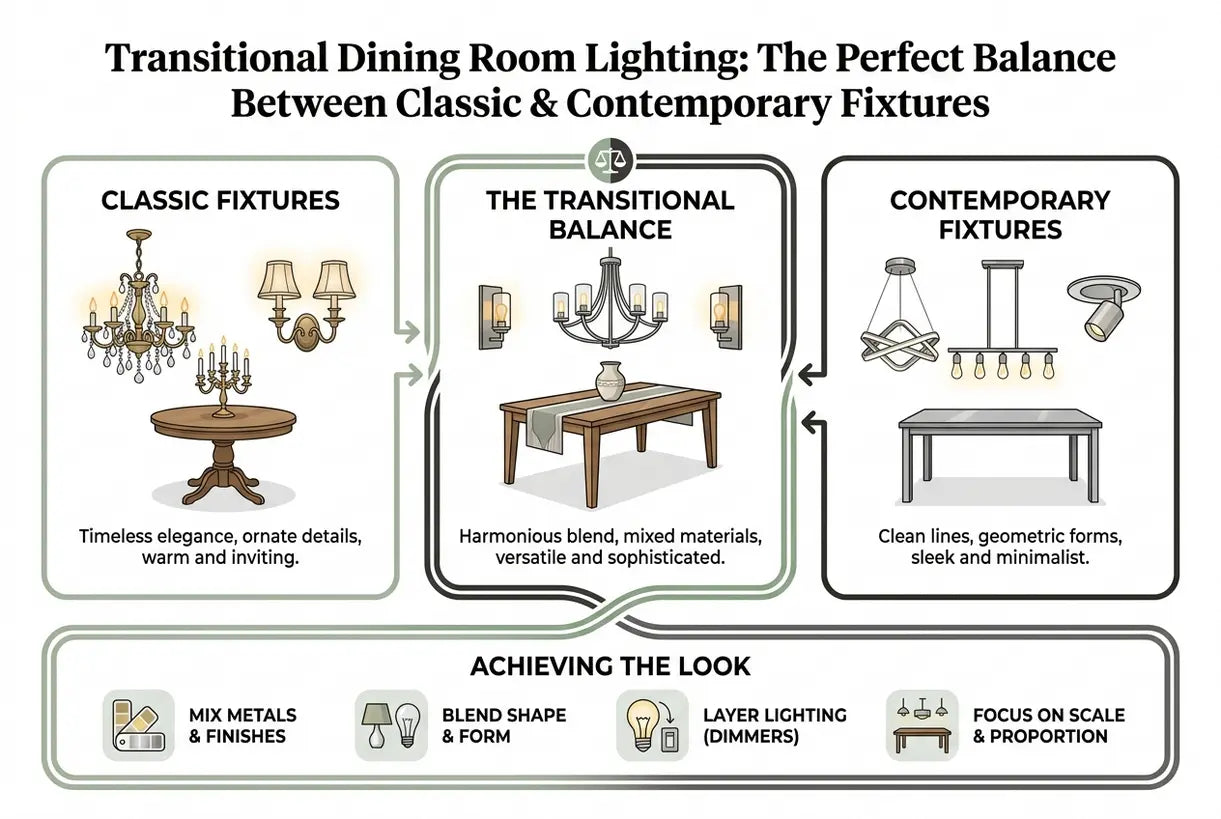
The infographic above illustrates how transitional pieces bridge material palettes. Where traditional lighting might use polished brass with crystal and contemporary pieces might use matte black with exposed bulbs, transitional fixtures often combine brushed brass with ribbed glass or oil-rubbed bronze with linen. These pairings feel deliberate rather than eclectic, creating cohesion across your dining space.
Sizing Guidelines for Harmonious Proportions
Scale determines whether your fixture anchors the room or dominates it awkwardly. For dining table lighting, the standard formula suggests choosing a fixture with a diameter approximately one-half to two-thirds the width of your table. A 48-inch table pairs beautifully with a 24 to 32-inch chandelier, while a more intimate 36-inch table calls for an 18 to 24-inch piece.
Ceiling height complicates these calculations. While standard eight-foot ceilings work well with semi-flush mounts or chandeliers hung closer to the ceiling, vaulted or tray ceilings allow for more dramatic suspensions. Remember that transitional style emphasizes proportion above all—you want your fixture to float harmoniously in the space, neither crowding the table nor getting lost in the volume of the room.
Dining Room Lighting
Shop all Dining Room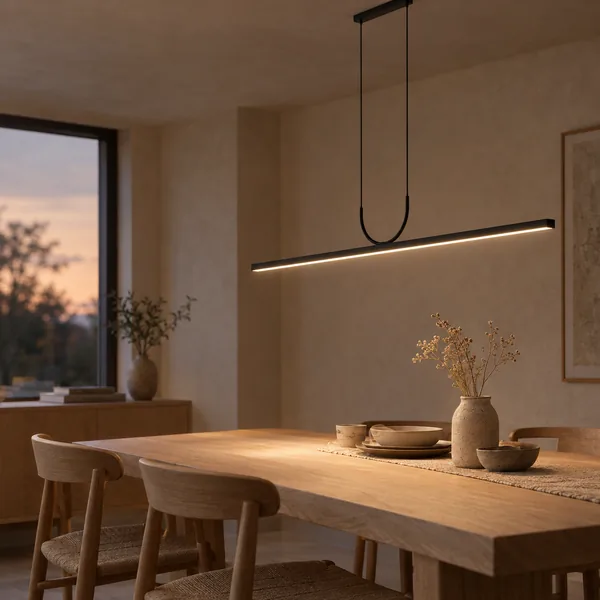
 Save $140.00
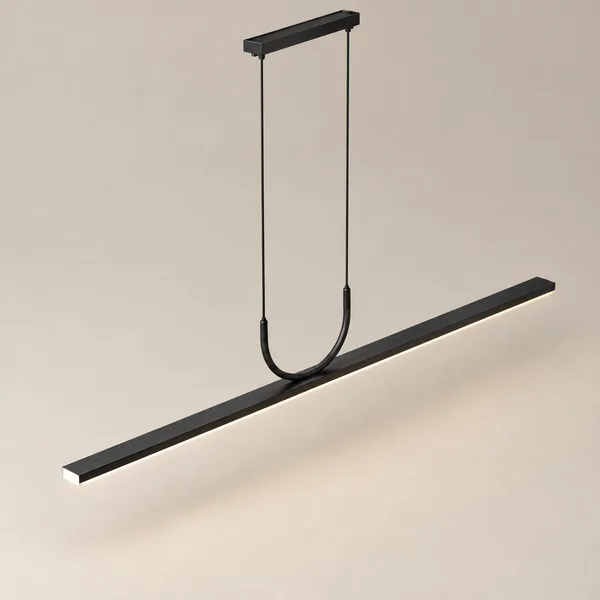
Linné Minimalist Linear Black LED Pendant Light
 Save $60.00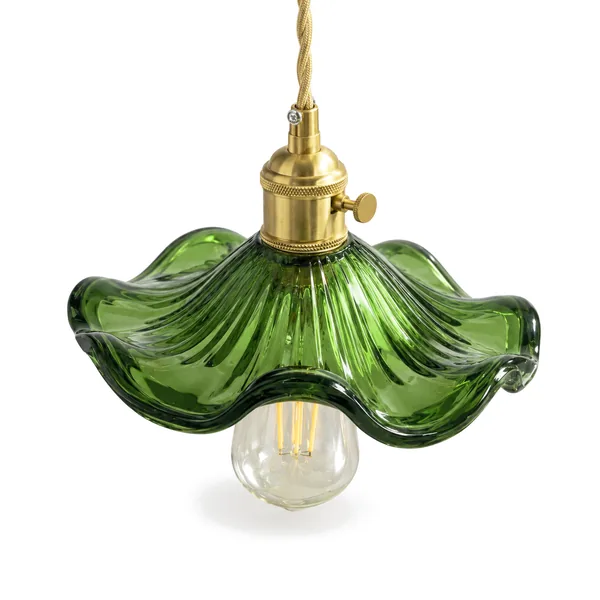
 3 options
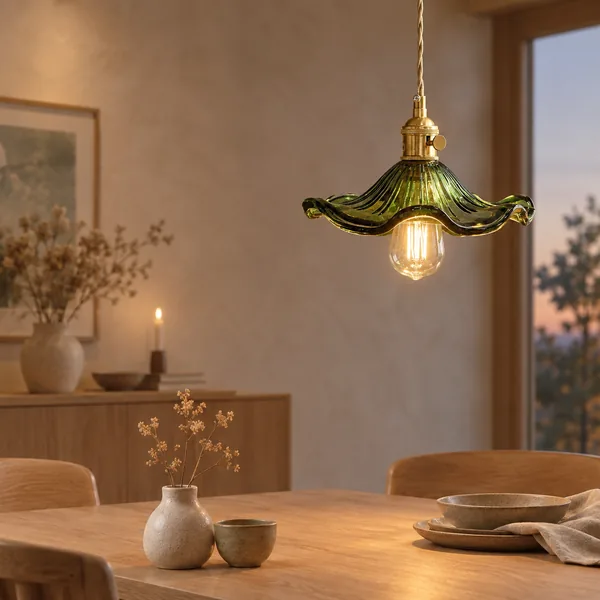
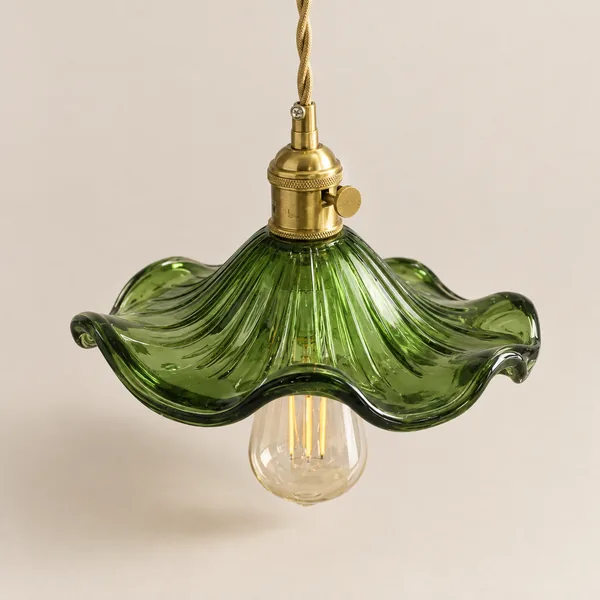
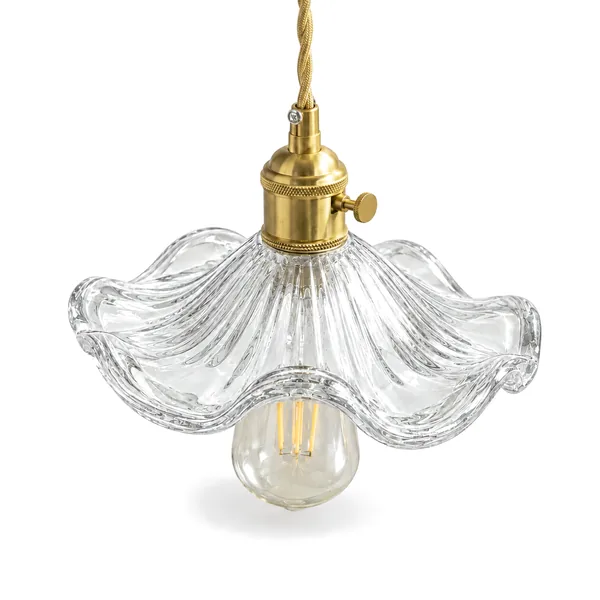
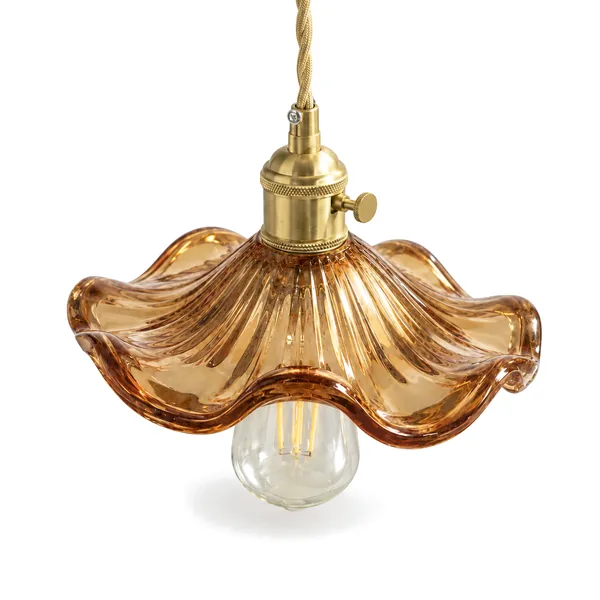
Glora Nordic Glass Pendant Light with Copper
 Save $120.00
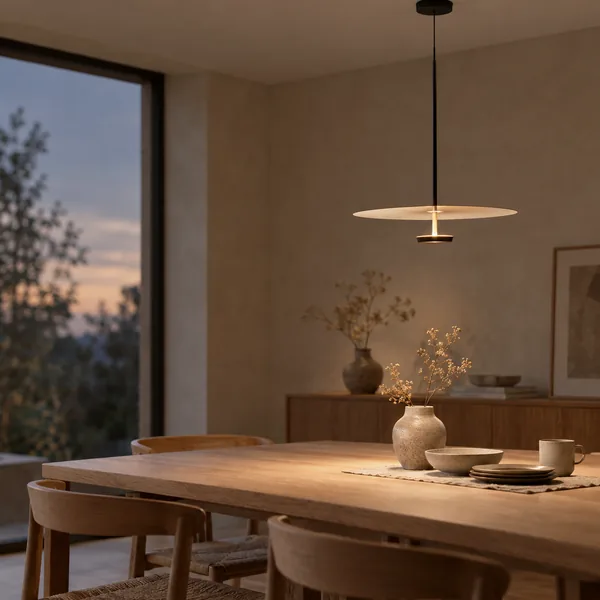
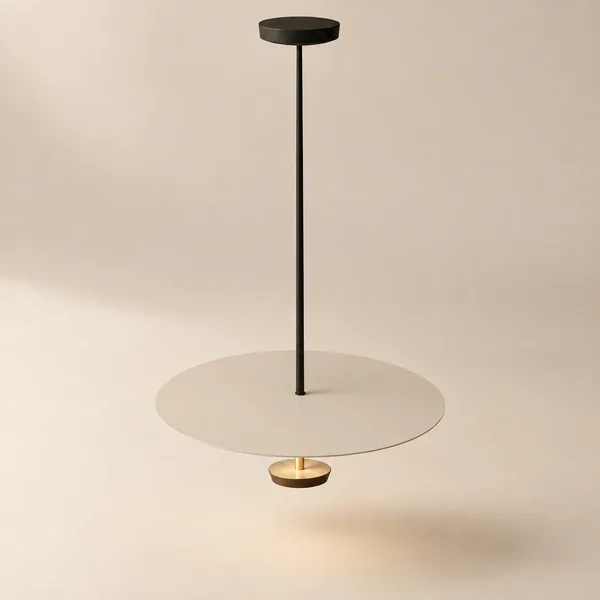
Skiva Nordic Saucer Ceiling Pendant Light LED
Selecting Finishes That Bridge Decades
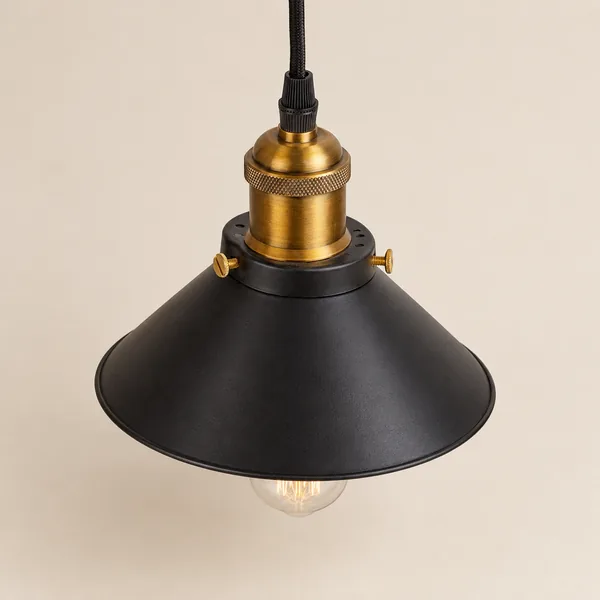
The metal finish on your black transitional dining room lighting or brass fixtures significantly impacts how successfully they bridge styles. Brushed and satin finishes generally feel more transitional than high-polished or heavily antiqued alternatives. A satin brass reads as contemporary warmth, while polished brass often veers traditional. Similarly, oil-rubbed bronze offers traditional depth with contemporary matte sophistication.
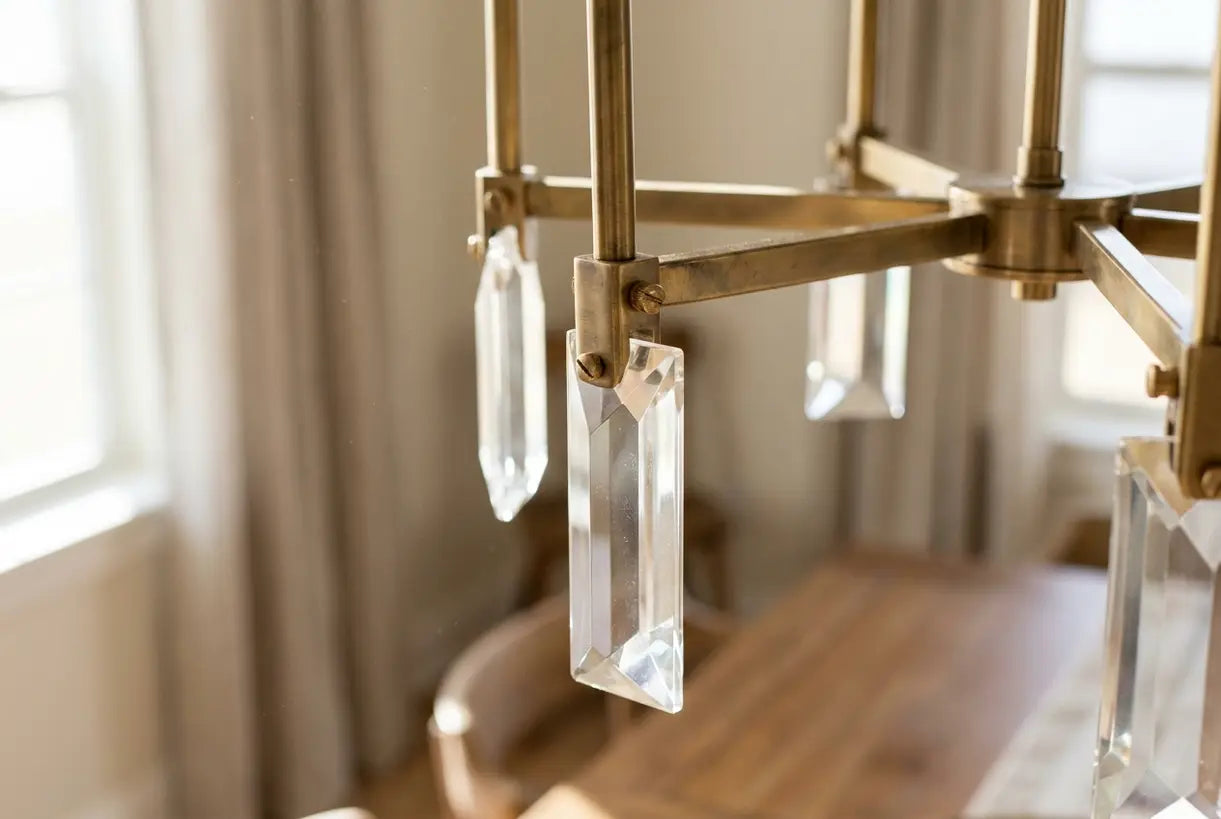
Mixed metal approaches also thrive in this aesthetic. A chandelier with a bronze frame and brass candle cups, or nickel hardware with copper accents, introduces subtle visual interest without the chaos of eclectic styling. The key lies in the quality of the materials themselves—solid metals rather than plated coatings, hand-finished rather than machine-perfect surfaces. These tactile qualities communicate craftsmanship even from a distance.
A Closer Look: The Stjerna Vintage French Clear Glass Chandelier
When searching for the perfect balance between decorative presence and restraint, the Stjerna Vintage French Clear Glass Chandelier exemplifies transitional excellence. This piece solves the common dilemma of wanting vintage warmth without dated fussiness.
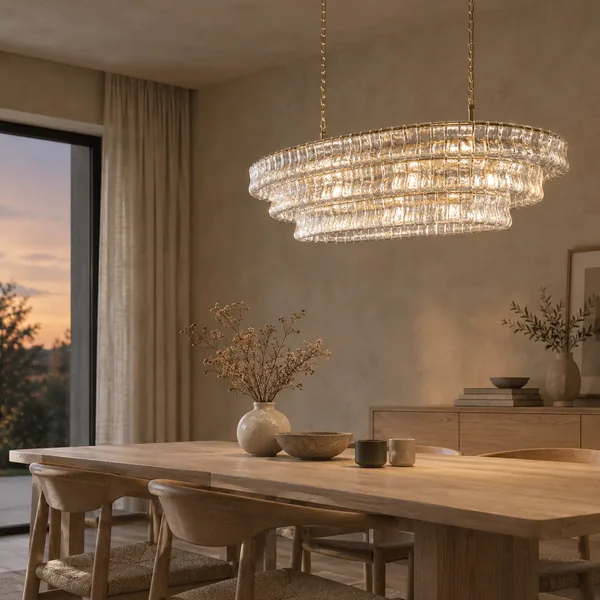 Stjerna Vintage French Clear Glass Chandelier$1,799.00$2,259.00
The Stjerna's elongated form draws from classic French proportions, yet its rippled clear glass and gold stainless steel hardware feel decidedly current. Unlike purely vintage pieces that lock you into one aesthetic, this fixture's adjustable color temperatures allow you to shift from crisp daylight for task work to warm amber for intimate dinners—functionality that defines modern transitional living.
The Temperature Question: Creating Ambiance
One of the most frequent questions we encounter concerns color temperature. Should bronze transitional dining room lighting glow warm and golden, or crisp and bright? The transitional approach embraces versatility. While traditional dining rooms often defaulted to warm incandescent glows, and contemporary spaces sometimes favor cooler daylight tones, modern transitional spaces benefit from adjustable systems.
For most dining applications, we recommend fixtures offering 2700K to 3000K color temperatures—warm enough to flatter skin tones and food presentation, yet crisp enough for reading and detail work. Dimmability becomes essential here; the ability to transition from bright, functional light to intimate ambient glow allows your dining room to serve multiple purposes throughout the day.
Installation Height: The 30-36 Rule
Proper hanging height ensures your fixture illuminates effectively without obstructing sightlines. The standard guideline suggests positioning the bottom of your chandelier or pendant approximately 30 to 36 inches above the dining table surface when you have standard eight-foot ceilings. This range clears the sightlines of most seated diners while keeping the light source close enough to create intimacy.
For ceilings higher than eight feet, add approximately three inches of hanging height for each additional foot of ceiling height. However, consider the fixture's visual weight as well—lighter, more transparent pieces like those with clear glass or open frameworks can hang slightly lower, while substantial solid fixtures need more breathing room. According to Architectural Digest, proper scale and hanging height matter more than fixture cost in determining whether lighting feels intentional or awkward.
Layering Light in Transitional Spaces
A single central fixture rarely carries the full lighting load for modern dining rooms. The best vintage transitional dining room lighting schemes incorporate layers—perhaps combining your central chandelier with buffet lamps, wall sconces, or recessed accent lighting. This approach allows you to adjust the atmosphere for different occasions while maintaining that balanced transitional aesthetic.
When selecting complementary pieces, maintain consistency in finish families and material quality. If your main fixture features brushed brass and seeded glass, echo those elements in your supporting lights rather than introducing competing chrome or polished nickel. The goal is cohesion without matchy-matchy uniformity—think related rather than identical. For additional guidance on selecting complementary pieces, House Beautiful offers extensive resources on lighting pairings.
Chandeliers
Shop all Chandeliers
Curated Options for Every Dining Space
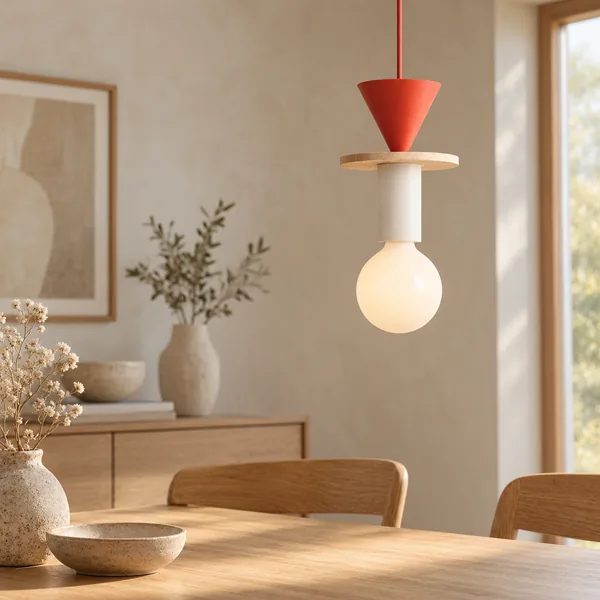
Not every transitional space demands the same type of fixture. For those seeking crystal brilliance with modern control, or clean Scandinavian lines with traditional materiality, our collection offers specific solutions. The Klarglod Dimmable Nordic K9 Crystal Chandelier brings precision dimming to classic crystal elegance, while the Skiva Saucer Nordic LED Pendant Ceiling Light offers understated geometry perfect for modern dining rooms with transitional warmth.
Featured Transitional Dining Solutions
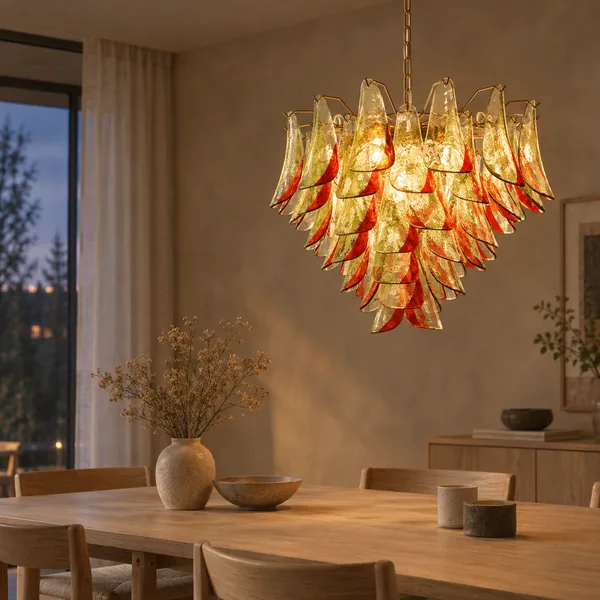 Klarglod Dimmable Nordic K9 Crystal Chandelier$889.00$1,279.00
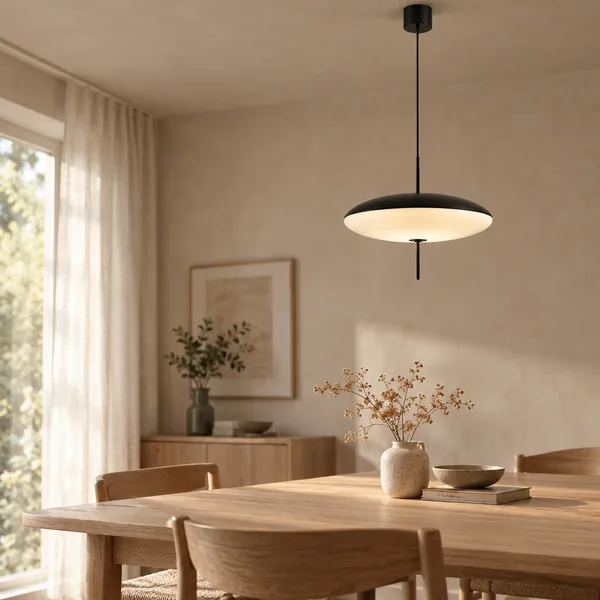 Skiva Saucer Nordic LED Pendant Ceiling Light$179.00$219.00
Creating Your Transitional Sanctuary
The beauty of modern transitional dining room lighting lies in its longevity. These fixtures grow with your evolving taste and can bridge different furniture styles as you refresh other elements of your home. Whether your dining chairs are classic upholstered pieces or sleek contemporary designs, a well-chosen transitional light fixture creates visual harmony.
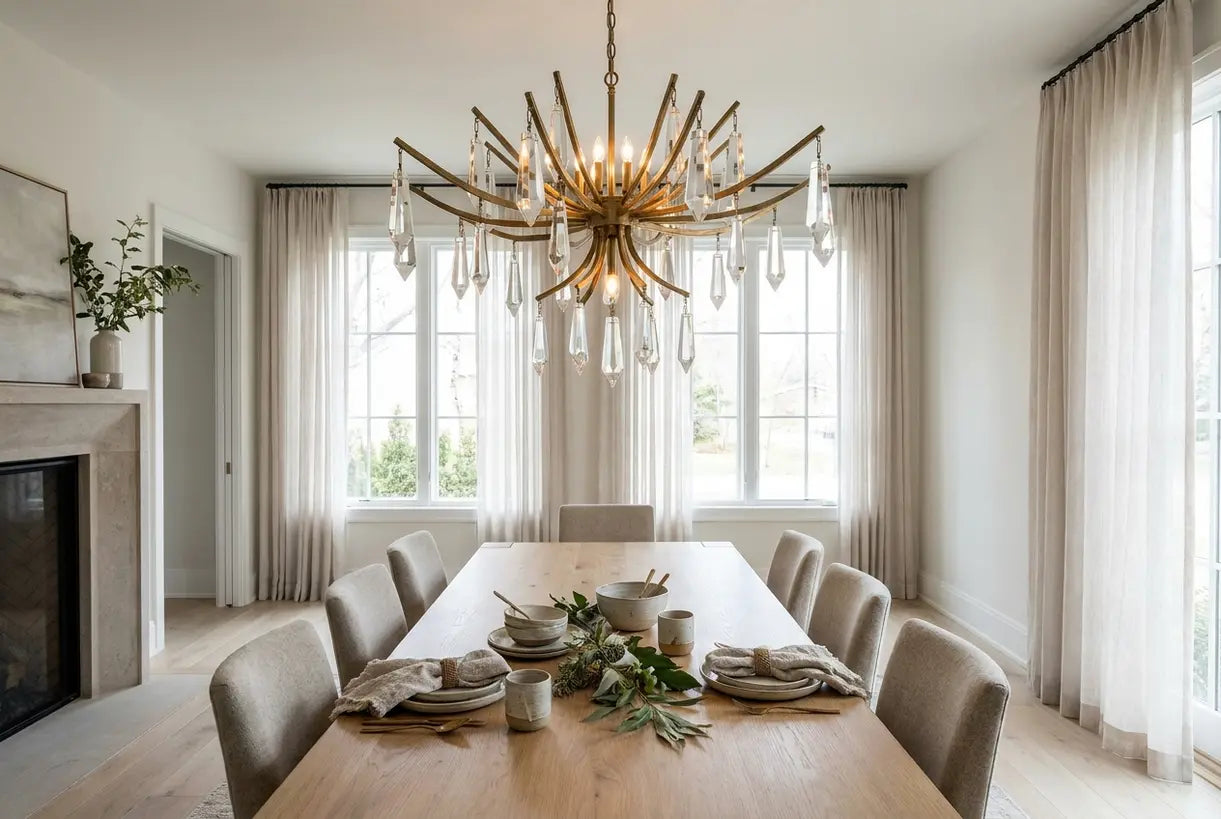
Start with quality materials that feel substantial in hand. The weight of genuine crystal, the warmth of solid brass hardware, and the clarity of artisan glass—all these tactile qualities contribute to that elevated yet approachable feeling that defines the best transitional spaces. Your dining room lighting should feel like a long-term investment in your home's comfort and style, not a temporary placeholder.
Conclusion
Transitional dining room lighting offers more than illumination—it provides the visual anchor that unifies your dining space. By bridging the gap between traditional elegance and contemporary clarity, these fixtures create environments where both formal gatherings and casual breakfasts feel equally appropriate.
At Skonne, we curate lighting that honors this philosophy of balance. Our collection features pieces that respect timeless craftsmanship while embracing modern living needs—adjustable color temperatures, dimmable LEDs, and proportions suited for today's homes. As you consider your options, remember that the best fixture is one that solves your specific challenges while bringing that sense of hygge warmth that makes dining spaces feel like home.
Related Article
Dining Room Lighting Trends: The Biggest Looks Shaping Dining Spaces Right NowDiscover the biggest dining room lighting trends shaping spaces in 2026, from sculptural pendants to warm brass finishes and layered ambient lighting.