
Wall Sconce Shades: How to Choose, Replace & Upgrade Your Fixture's Shade
Summary›
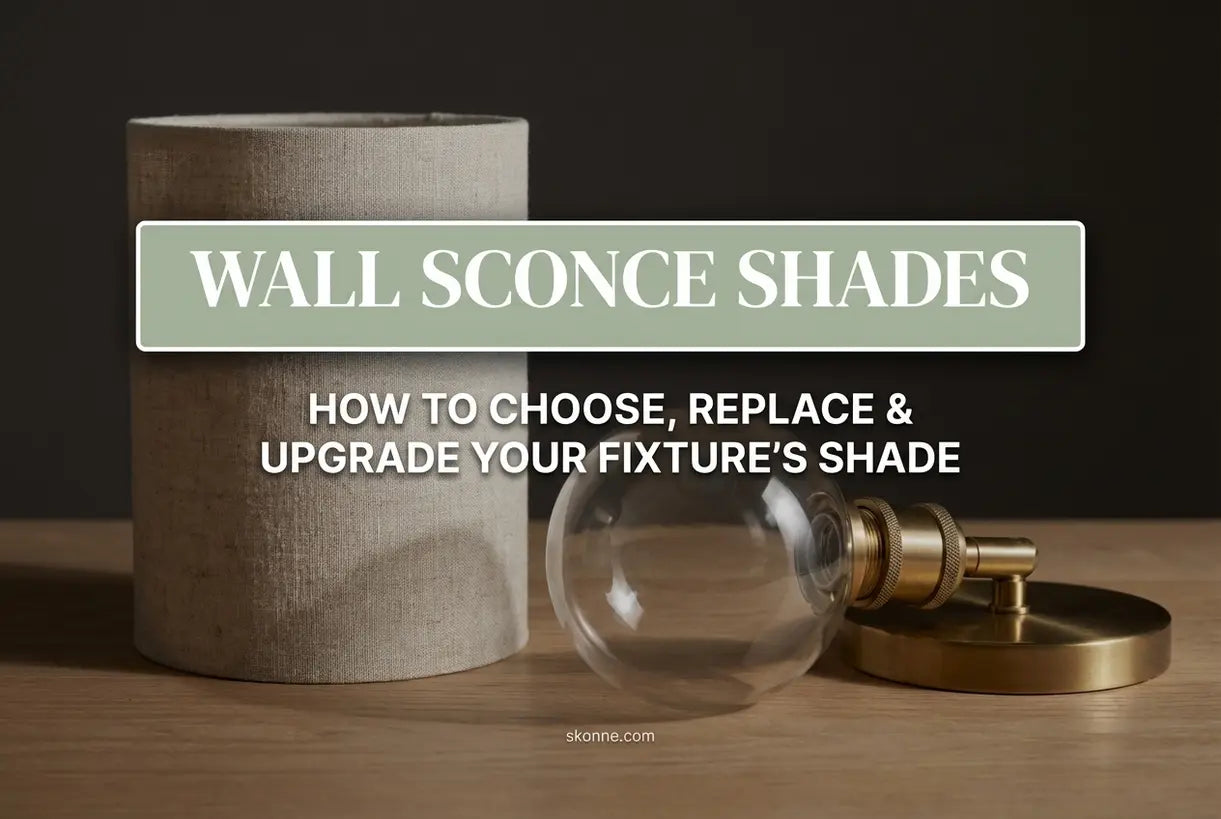
The right wall sconce light shades can transform an ordinary fixture into a statement piece that defines your room's atmosphere. Whether you're looking to replace a damaged shade, update an outdated style, or simply refresh your lighting without investing in entirely new fixtures, upgrading your sconce shades offers an accessible path to elevated interior design. For homeowners and renters who appreciate the clean lines and intentional warmth of Scandinavian aesthetics, selecting the perfect shade is about balancing function with that coveted hygge feeling—the gentle glow that makes a space feel like home.
In this guide, you'll discover exactly how to choose wall sconce shades that complement your existing décor, the precise measurements you need for a seamless replacement, and installation tips that make the process effortless. Along the way, we'll introduce you to thoughtfully designed options from Skonne's curated collection, crafted to bring that signature Nordic warmth to your walls.
Why Wall Sconce Shades Matter More Than You Think
Your wall sconce shade does more than diffuse light—it sets the emotional tone of a room. The material, shape, and opacity of your shade determine whether your lighting feels clinical or cozy, dramatic or subtle. Fabric wall sconce options create that coveted soft, ambient glow perfect for bedrooms and living spaces, while glass sconce shades offer a more directed, sculptural quality that works beautifully in entryways and bathrooms.
Many homeowners don't realize that replacing just the shade can completely alter a fixture's character. A bell shade sconce brings traditional elegance, while a drum shade wall sconce offers clean, contemporary lines. The versatility of shade replacement means you can adapt your lighting to evolving tastes without the cost of new electrical work or fixture installation.
Understanding Shade Shapes and Their Effects
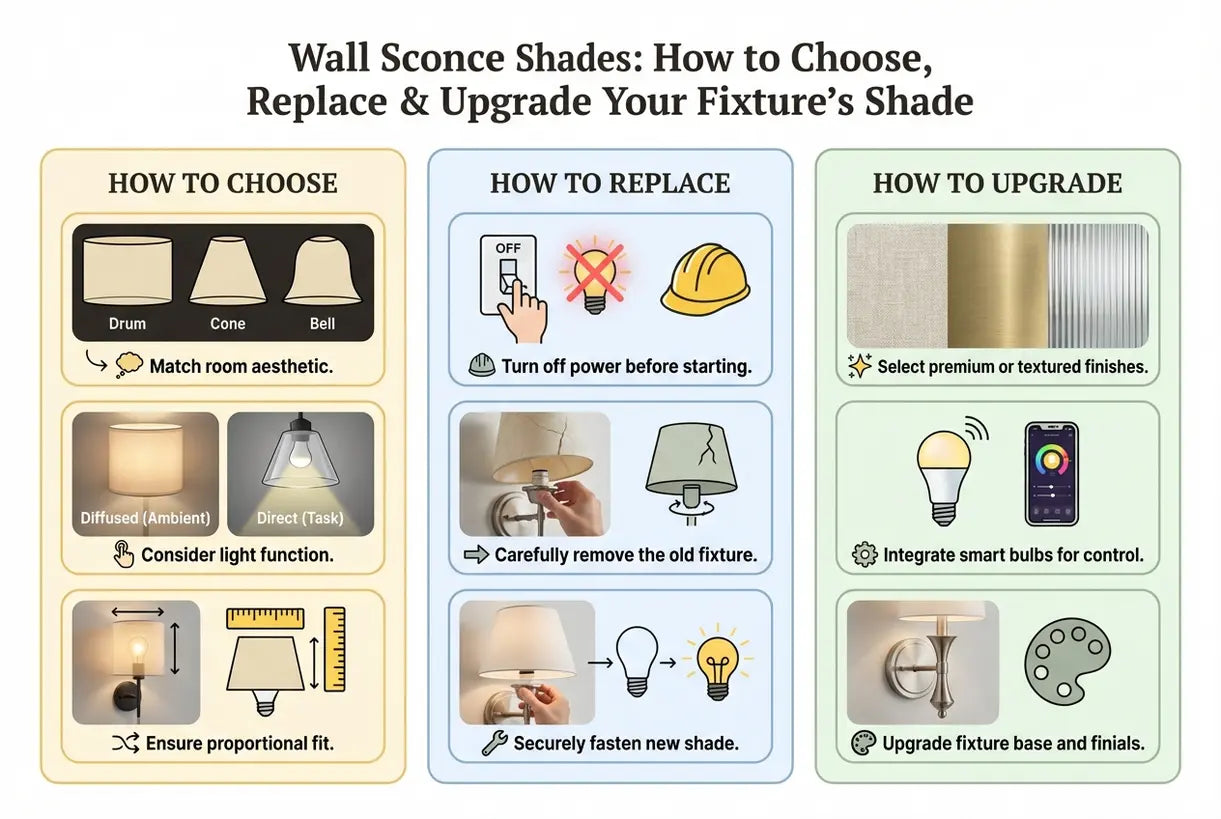
The shape of your wall sconce light shade significantly impacts light distribution and visual weight:
- Bell shades – Wider at the bottom, these cast light downward while adding a touch of classic sophistication
- Drum shades – Cylindrical shapes that distribute light evenly, ideal for modern and minimalist spaces
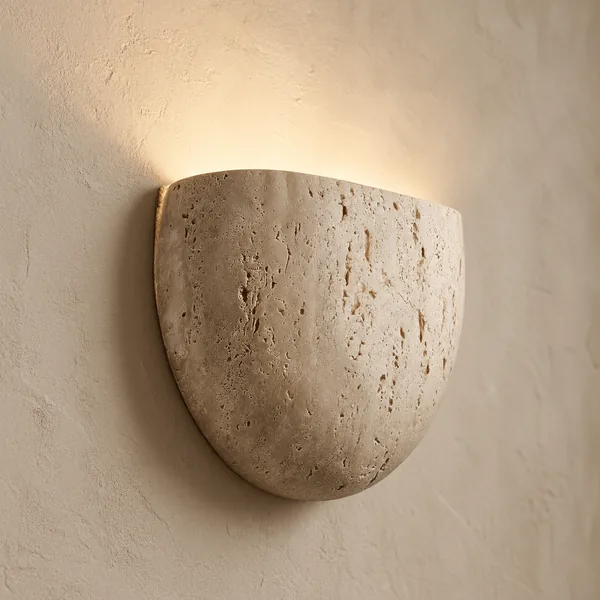
- Half shades – Perfect for uplighting or downlighting effects, creating dramatic wall washes
- Double shade wall sconce designs – Layered materials that create depth and visual interest while softening illumination
When considering your options, think about the primary function of your lighting. Reading nooks benefit from directional shades that focus light where needed, while hallways and ambient lighting situations call for more open, translucent options that spread warmth throughout the space.
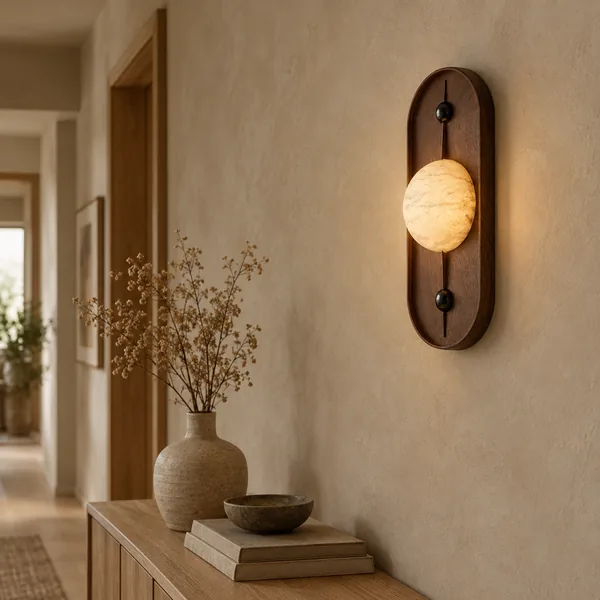
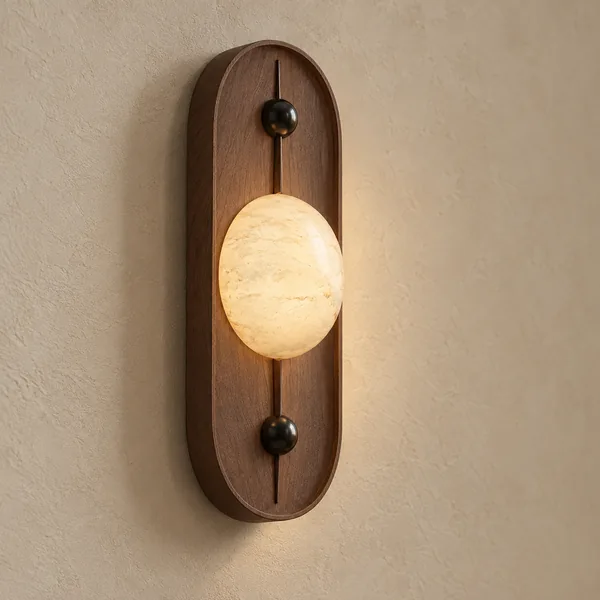
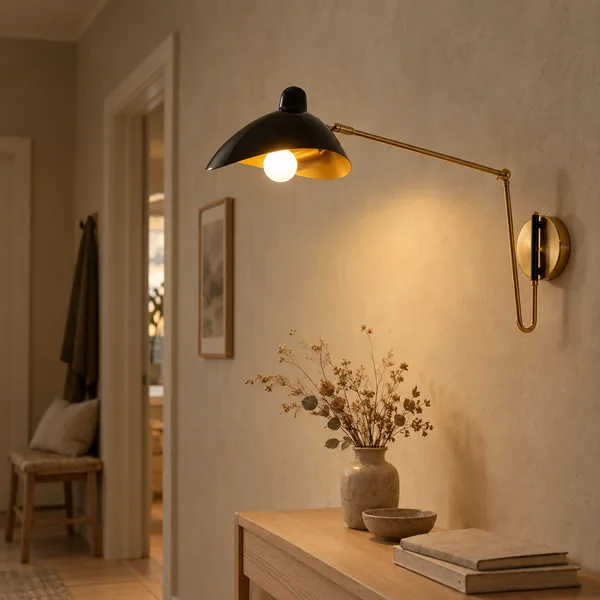
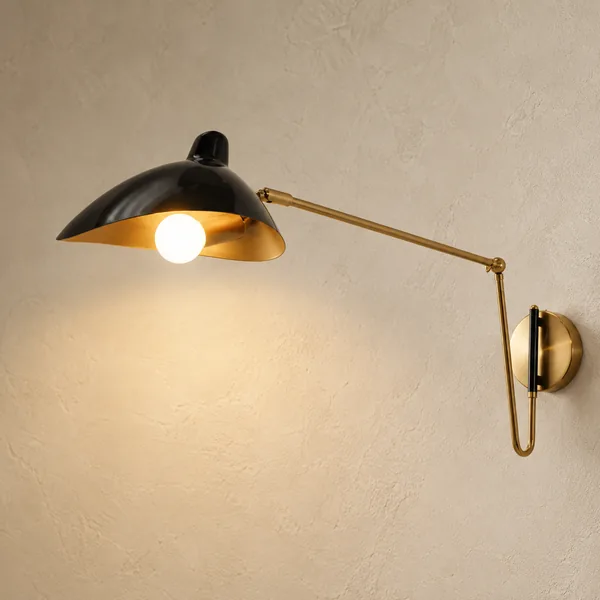
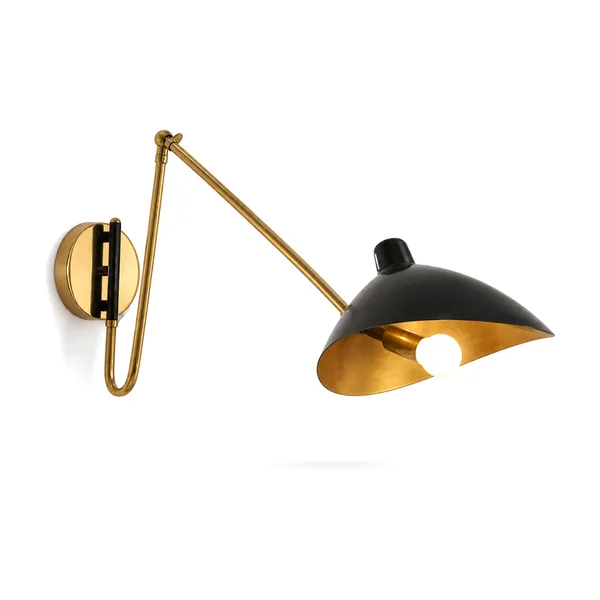
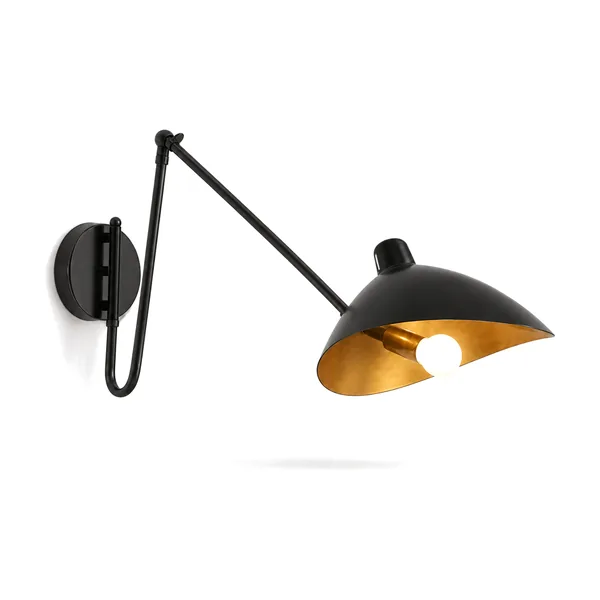
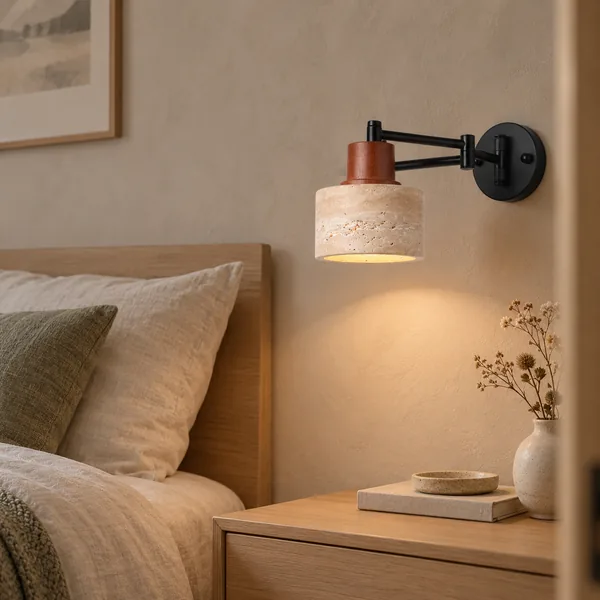
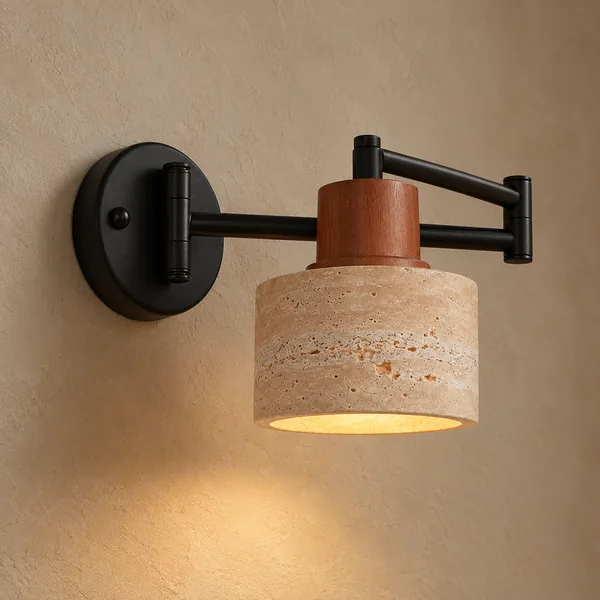
Adjustable Wall Lights
Shop all Adjustable Wall Lights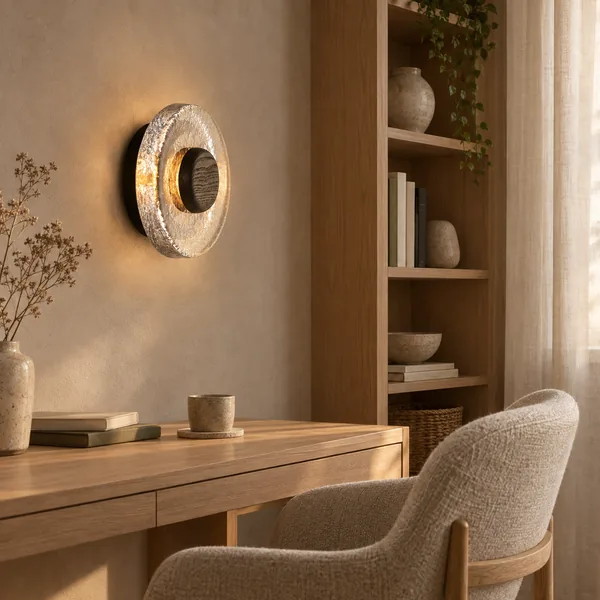
How to Measure for Wall Sconce Shade Replacements
One of the most common frustrations when upgrading lighting is ordering a shade that doesn't fit properly. Getting the measurements right ensures your wall sconce shade replacement looks intentional rather than improvised.
You'll need to measure three critical dimensions:
- Height – From the top edge to the bottom edge of the existing shade
- Top diameter – The width across the opening where the shade connects to the fixture
- Bottom diameter – The width across the lower opening (particularly important for bell and empire shapes)
Additionally, note the fitter type—the mechanism that attaches the shade to your sconce. Common types include clip-on (for small candle-style bulbs), washer fitters (flat discs with a hole for the bulb), and uno fitters (threaded rings). Knowing your fitter type prevents the disappointment of a beautiful shade that won't attach to your fixture.
Pro Tip: When measuring for replacement, bring your old shade to a well-lit area and use a soft measuring tape. For irregular shapes, measure at the widest and narrowest points, and always round up slightly—it's easier to accommodate a shade that's slightly too large than one that's too small.
Choosing the Right Size Shade for Proportion
What size wall sconce shade do you need? The answer depends on your fixture's scale and the room's proportions. As a general guideline, your shade's height should be approximately 75% of the total fixture height, leaving some of the arm or base visible. For width, the shade should extend no more than 2 inches beyond the wall plate on either side.
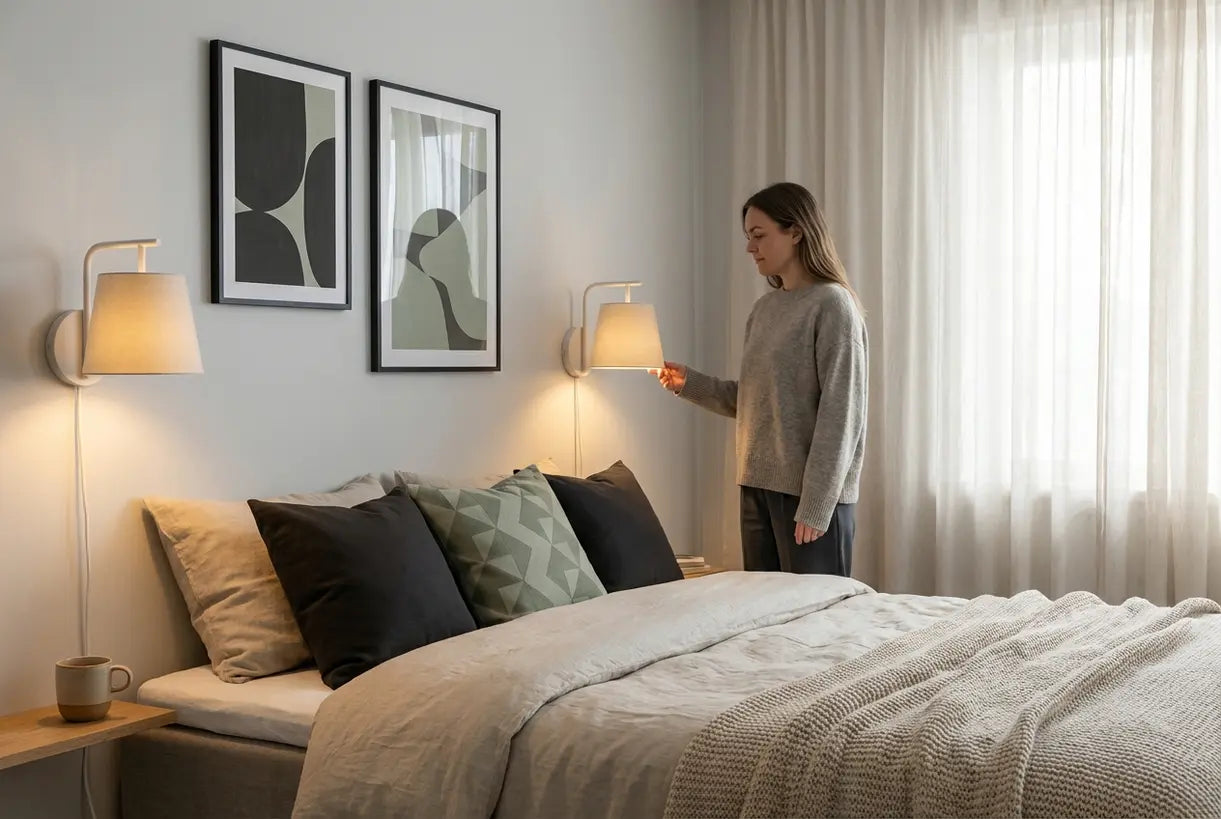
For those seeking a complete fixture upgrade rather than just a replacement shade, the Eldorm Handcrafted Wabi-Sabi Iron Wall Sconce offers a harmonious proportion with its artisan-crafted iron base and soft fabric shade that diffuses light beautifully into a gentle, ambient glow—perfect for bedrooms and entryways where that Scandinavian sense of calm is essential.
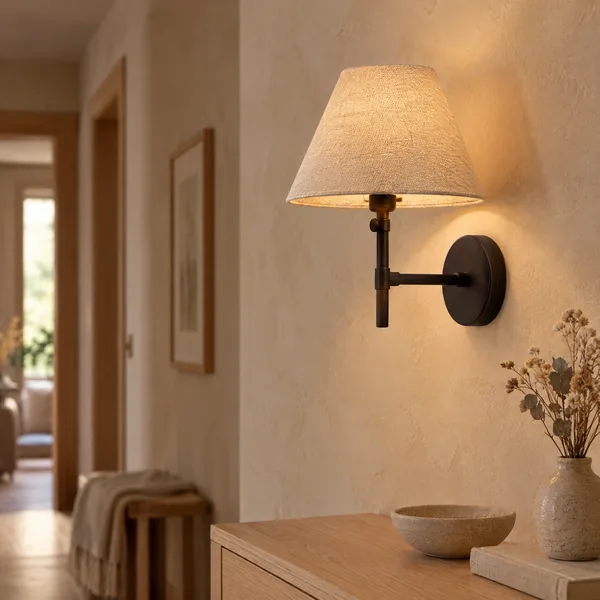 Eldorm Handcrafted Wabi-Sabi Iron Wall Sconce$199.00$259.00
Material Matters: Selecting the Best Wall Sconce Shade
What materials are best for wall sconce shades? The answer depends on your aesthetic goals and functional needs. Each material interacts with light differently, creating distinct atmospheres:
Fabric wall sconce shades, particularly those in linen shade wall sconce designs, offer unparalleled warmth. The natural fibers diffuse light softly, eliminating harsh shadows and creating that signature hygge ambiance. Linen ages beautifully, developing character over time while maintaining its structural integrity. Silk variations add a subtle luminosity and refined elegance that elevates formal spaces.
Glass sconce shades range from opal and frosted (for soft diffusion) to clear and seeded (for more direct, sparkling light). Glass is exceptionally easy to clean and works well in bathrooms and kitchens where humidity and grease are concerns. Bedroom Lighting & Decor collections often incorporate both fabric and glass options to suit different functional zones within the same room.
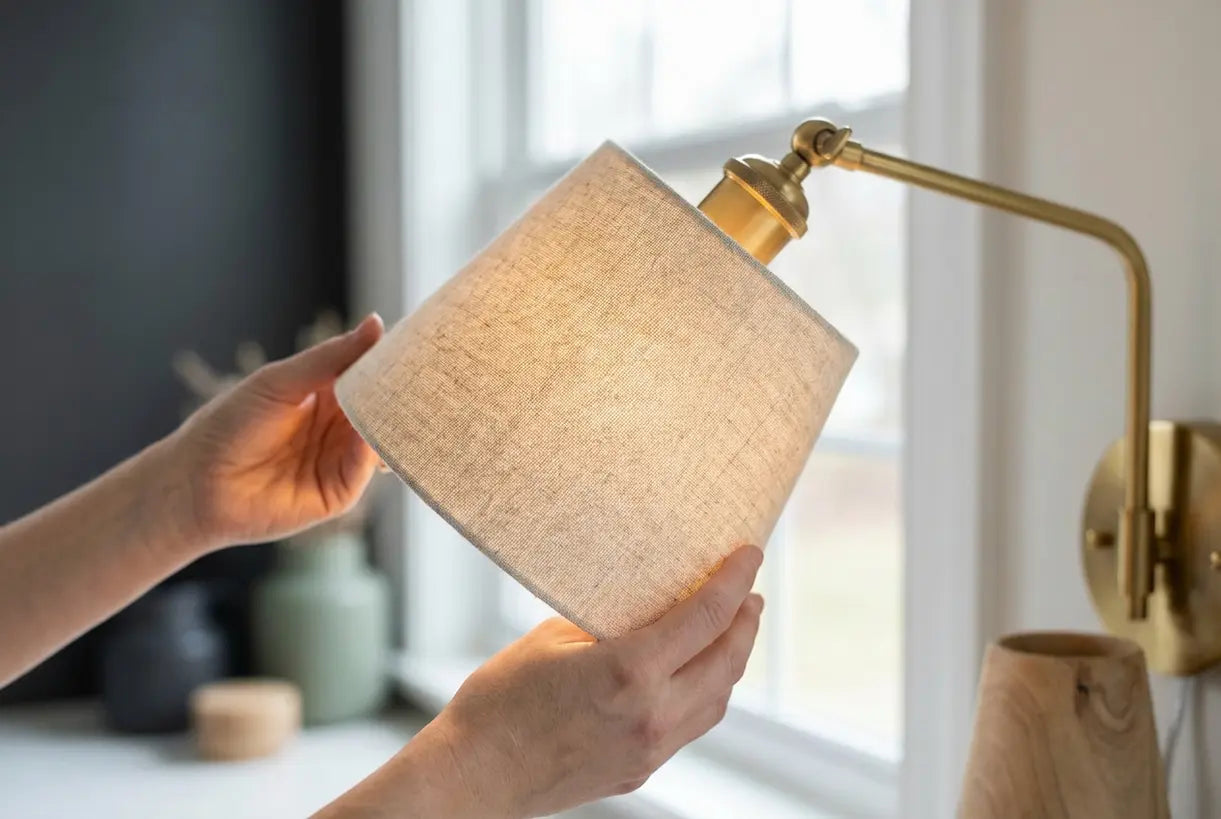
Metal shades, typically found in industrial or mid-century designs, direct light downward or upward in focused beams. These work beautifully for task lighting but may feel too harsh for ambient purposes unless paired with dimmer switches. Paper and parchment shades offer affordable, lightweight options with beautiful diffusion, though they require more careful handling and placement away from heat sources.
Color and Opacity Considerations
White and off-white shades provide the brightest, most neutral light output, making spaces feel larger and more open. Ivory and cream tones warm up the light slightly, creating a cozier atmosphere that's particularly flattering in dining rooms and bedrooms. Bold colors or dark shades create dramatic, moody effects but significantly reduce light output—best used as accent lighting rather than primary illumination sources.
Opacity levels also affect functionality. Opaque shades direct light only through the top and bottom openings, creating dramatic up-and-down lighting effects. Semi-opaque options offer a balance between diffusion and directionality. Fully translucent shades spread light most broadly but may reveal the bulb inside when illuminated, which is why many designers recommend using vintage-style Edison bulbs or frosted LEDs with clear shades.
Curated Wall Sconce Solutions
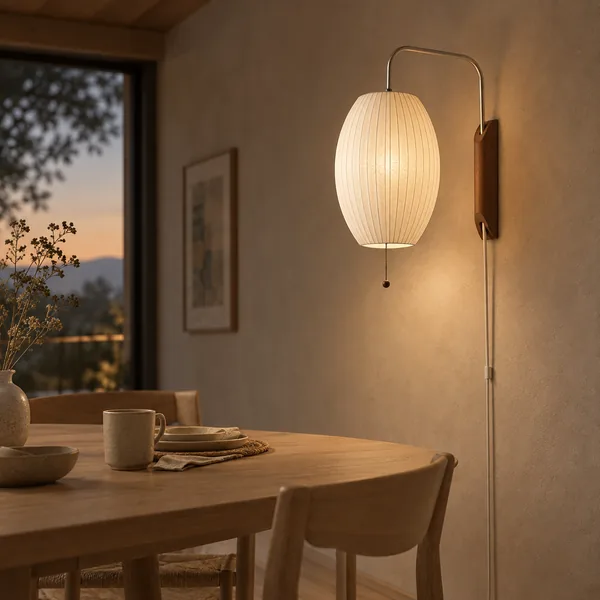 Solvei Minimalist Silk Wall Lamp for Bedroom$297.00$399.00
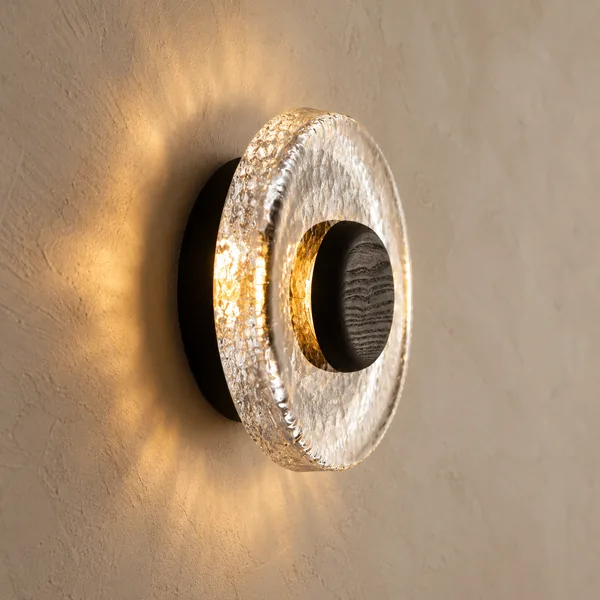
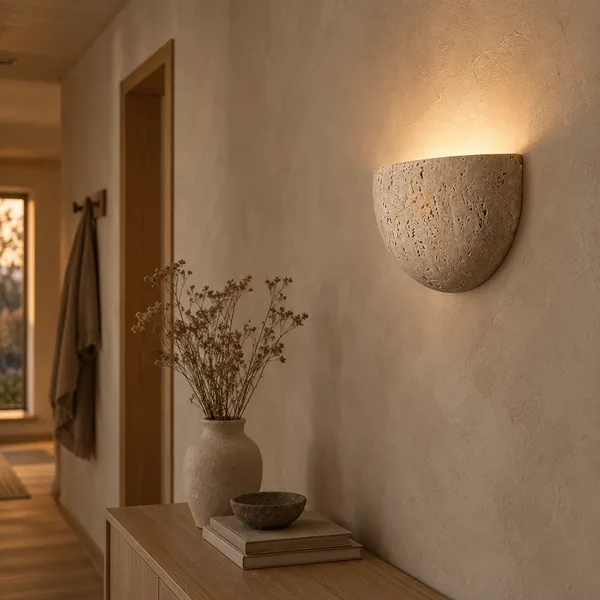
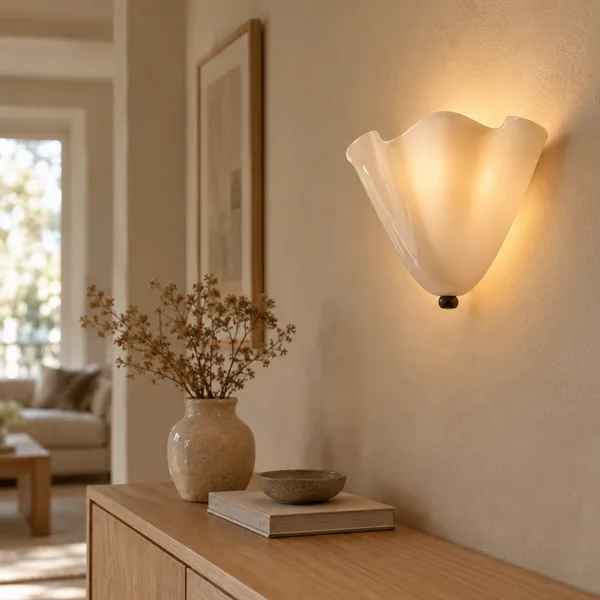 Glodsten Handcrafted Glass Stone LED Wall Light$259.00$319.00
Installing Your New Wall Sconce Shade
How do I install a new wall sconce shade? For most replacement scenarios, the process is refreshingly simple. Before beginning, ensure the fixture is turned off at the wall switch and the bulb has cooled completely.
For clip-on shades: Gently squeeze the wire clips together and slide them over the bulb, positioning the shade so it sits level. These work best with candle or flame-shaped bulbs.
For washer fitters: Unscrew the bulb, place the shade's center hole over the socket, and reinstall the bulb. The bulb base holds the shade in place. Be careful not to overtighten, as this can crack glass shades or warp fabric ones.
For uno fitters: These screw onto the socket itself. Unscrew the existing shade by turning it counterclockwise, then thread the new shade clockwise until snug. This style offers the most secure attachment and works well for heavier materials.
When upgrading both the fixture and shade, the Solvei Minimalist Silk Wall Lamp and Glodsten Handcrafted Glass Stone LED Wall Light offer distinct material approaches—the former with its sculptural silk fabric shade stretched over natural wood for warm, golden radiance, and the latter with richly textured glass that casts soft, sculptural light in multiple color options.
When to Replace vs. Upgrade the Entire Fixture
Can you replace just the shade on your wall sconce? In most cases, yes—but there are situations where a complete fixture replacement makes more sense. If your existing sconce has an integrated LED module (rather than a replaceable bulb), shade options may be limited or impossible to swap. Similarly, vintage fixtures with unusual proportions might not accommodate modern standard shade sizes.
Consider a full upgrade if your current fixture feels dated in ways that go beyond the shade, if the metal finish has deteriorated, or if you want to change the light direction (from upward to downward, for instance). For those ready to invest in pieces that combine timeless Scandinavian design with artisanal quality, exploring complete fixture options ensures every element works in harmony.
For more guidance on selecting the perfect fixture for your space, the American Lighting Association offers comprehensive resources on residential lighting design principles that complement the aesthetic considerations discussed here.
Flush-Mount Wall Lights
Shop all Flush-Mount Wall Lights
Maintaining Your Wall Sconce Shades
Once you've selected and installed the perfect shades, proper maintenance ensures they continue to cast beautiful light for years. Dust fabric shades regularly with a soft brush attachment on your vacuum or use a lint roller for quick touch-ups. Glass sconce shades can be removed periodically and washed in warm, soapy water—just ensure they're completely dry before reinstalling to prevent moisture damage to the electrical components.
For paper or delicate natural fiber shades, avoid water entirely. Instead, use a dry microfiber cloth or compressed air to remove dust. Keep all shades away from direct spray cleaners, which can leave residue that becomes noticeable when the light is on.
Design Note: Consider having a replacement shade on hand for high-traffic areas. Accidents happen, and having a backup ensures your lighting scheme stays consistent even if a shade gets damaged. Many designers order an extra shade when purchasing new fixtures specifically for this purpose.
Conclusion: Elevate Your Space with Intentional Lighting
Wall sconce light shades represent one of the most accessible yet impactful upgrades you can make to your home's lighting design. By understanding how to measure properly, select materials that support your aesthetic goals, and install with confidence, you transform not just your fixtures but the entire atmosphere of your rooms. The right shade doesn't merely cover a bulb—it sculpts light, creating the warm, inviting spaces where life's best moments unfold.
At Skonne, we believe that lighting should do more than illuminate; it should inspire. Our curated collection of Scandinavian-inspired wall sconces—from the artisan-crafted Eldorm to the sculptural Solvei and the unique Glodsten—offers options that honor both form and function. Each piece is selected to bring that signature Nordic warmth to your walls, creating the hygge feeling that transforms houses into homes.
Whether you're replacing a single damaged shade or reimagining your entire lighting scheme, remember that the best choices come from understanding your space, your needs, and the quality of light that makes you feel most at home.
Related Article
Alabaster Wall Sconces: Soft, Luminous Stone Fixtures for Warm, Elevated InteriorsDiscover how alabaster wall sconces bring soft, luminous warmth to your home. Elevated stone lighting for refined, timeless interiors.