
How to Choose the Best Pendant Lights for Your Kitchen Island
Summary›
- Why Pendant Lighting Defines Your Kitchen Island
- Finding the Perfect Size for Your Space
- Determining Quantity and Spacing
- Installation Height and Sight Lines
- Selecting Styles for Compact Kitchens
- Choosing Finishes and Materials
- LED Technology and Dimming Capabilities
- Pendant Lights vs. Chandeliers: Making the Right Choice
- Creating Your Perfect Kitchen Ambiance
Your kitchen island is more than just a workspace—it's where morning coffee becomes a ritual, where homework happens, and where friends gather during dinner parties. The right kitchen pendant lights transform this central hub from purely functional to genuinely inviting, casting warm pools of light that define the heart of your home.
At Skonne, we believe lighting should serve both purpose and poetry. Whether you're renovating a compact city kitchen or designing your dream open-concept space, choosing the best pendant lights for kitchen islands requires balancing scale, style, and the Scandinavian principle that beauty and utility should never compete. This guide will walk you through everything from sizing rules to finish selection, helping you create that perfect hygge atmosphere over your island.
Why Pendant Lighting Defines Your Kitchen Island
Before diving into measurements and materials, it's worth understanding why pendant lighting for island spaces matters so much. Unlike recessed ceiling lights that wash everything in uniform brightness, pendants create intimate zones of illumination. They draw the eye upward, adding vertical interest to your kitchen's design while providing the focused task lighting you need for chopping vegetables or reading recipes.
From a Scandinavian design perspective, pendant lights embody the concept of lagom—not too much, not too little, but just right. They offer an opportunity to introduce natural materials like brass, glass, or matte black metal that complement wood countertops and clean cabinetry. When chosen thoughtfully, your Pendant Lights become the jewelry of your kitchen—functional art that elevates the entire space.
Finding the Perfect Size for Your Space
One of the most common questions we hear is: what size pendant light is best for a kitchen island? The answer depends on your island's dimensions and the visual weight you want each fixture to carry. As a general rule, your pendant's diameter should be roughly 10-12 inches for standard islands, or up to 15-20 inches for larger statement pieces over expansive surfaces.
Consider the scale of your kitchen overall. In spaces with 9-foot or higher ceilings, you can accommodate larger, more dramatic pendants without overwhelming the room. For compact kitchens with standard 8-foot ceilings, smaller pendants or mini-pendants (8-10 inches in diameter) prevent the fixtures from feeling too heavy. Remember that the goal is visual balance—your modern pendant lights for kitchen island should complement the space, not dominate it.
Determining Quantity and Spacing
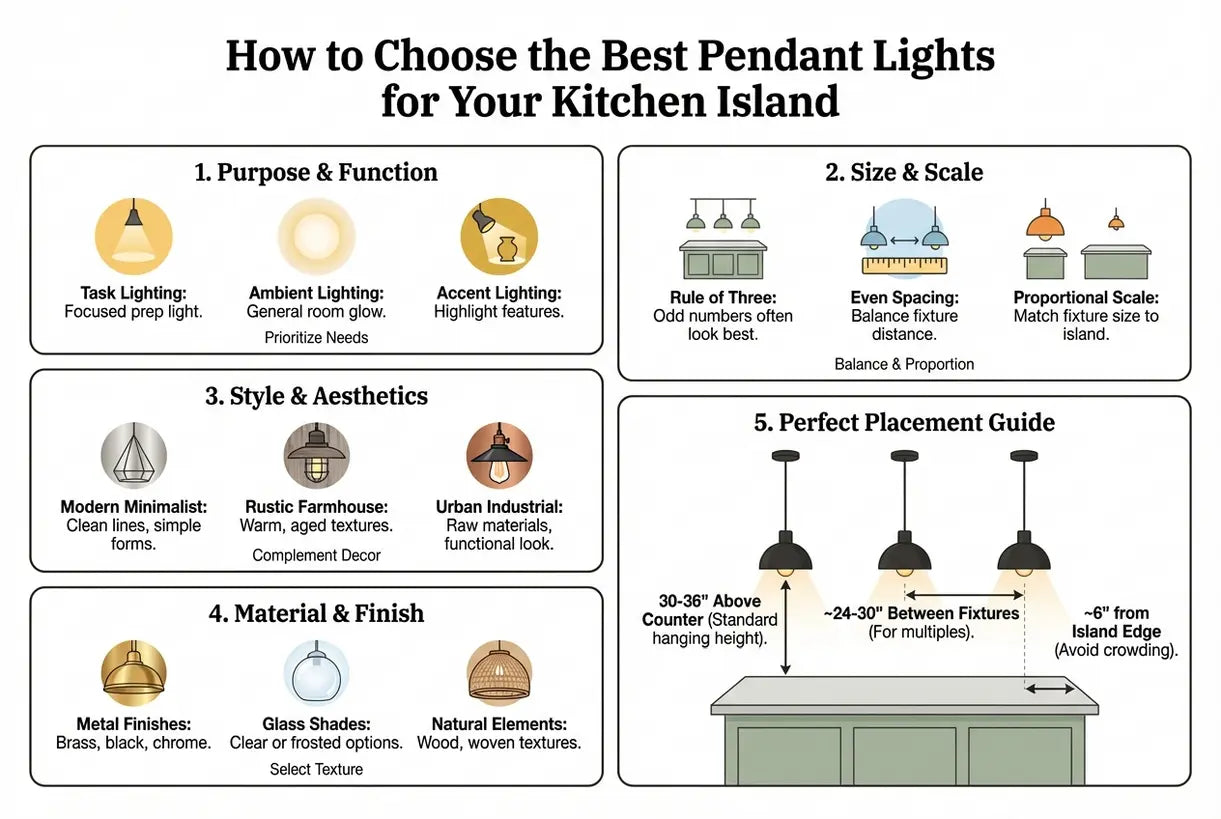
Another crucial decision is how many pendant lights do I need for my kitchen island? The standard formula is to divide your island's length (in feet) by the width of your chosen pendant (in feet), then adjust based on aesthetics. For most islands, two or three pendants create the most pleasing rhythm.
Spacing is equally important. Aim for 24-30 inches between the edges of each pendant to create visual breathing room. If using three pendants over a 6-foot island, center the middle fixture and space the outer two approximately 30 inches apart from center to center. For two pendants, position them equidistant from the island's center line, typically about 30-36 inches apart. This spacing ensures even light distribution while maintaining that clean, intentional Scandinavian aesthetic.
Installation Height and Sight Lines
When planning your layout, consider how high should pendant lights hang over an island? The standard recommendation is 30-36 inches above the countertop surface (not the ceiling). This height provides adequate task lighting without obstructing views across the kitchen or bumping into the head of taller family members.
However, adjust based on your specific circumstances. If your island serves primarily as a dining area where people sit on bar stools, hang pendants slightly higher—around 36-40 inches—to allow comfortable conversation without the fixtures feeling intrusive. For purely functional prep areas, 30-32 inches maximizes task lighting. Always consider the sight lines from adjacent rooms; your LED pendant lights kitchen should enhance the open flow rather than creating visual barriers.
Selecting Styles for Compact Kitchens
If you're working with limited square footage, you might wonder what style of pendant lighting works best for small kitchens? The key is choosing fixtures that provide adequate illumination without visual clutter. Small kitchen pendant lights with clean lines and transparent or semi-transparent shades help maintain an open, airy feeling.
Consider mini-pendants with glass globes or slim metal shades that don't block sight lines. The industrial pendant lights island trend works particularly well in small spaces when scaled appropriately—compact cage designs or small bell jars add character without bulk. From a Scandinavian perspective, prioritize fixtures that embody simplicity and function; avoid ornate details that compete with limited visual space. Remember that in compact kitchens, your pendants should virtually disappear when not illuminated, then provide beautiful, focused light when switched on.
Choosing Finishes and Materials
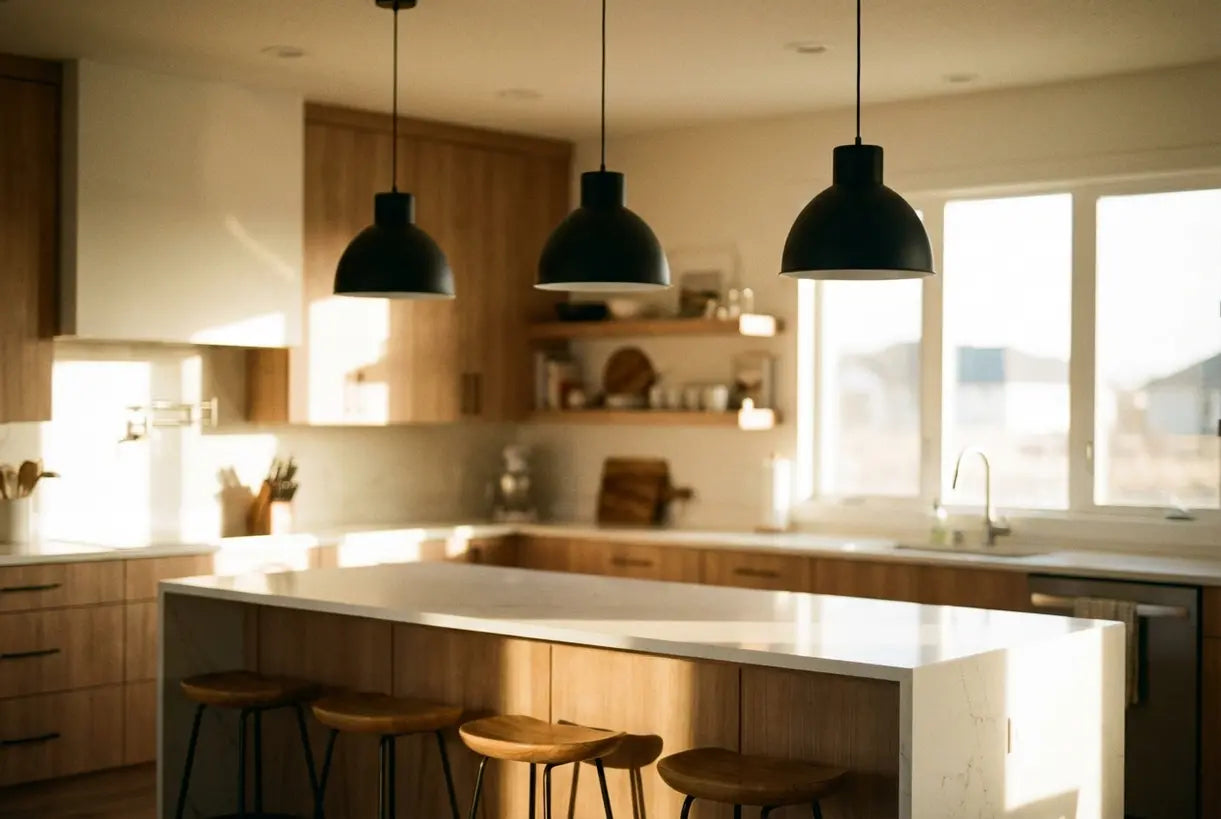
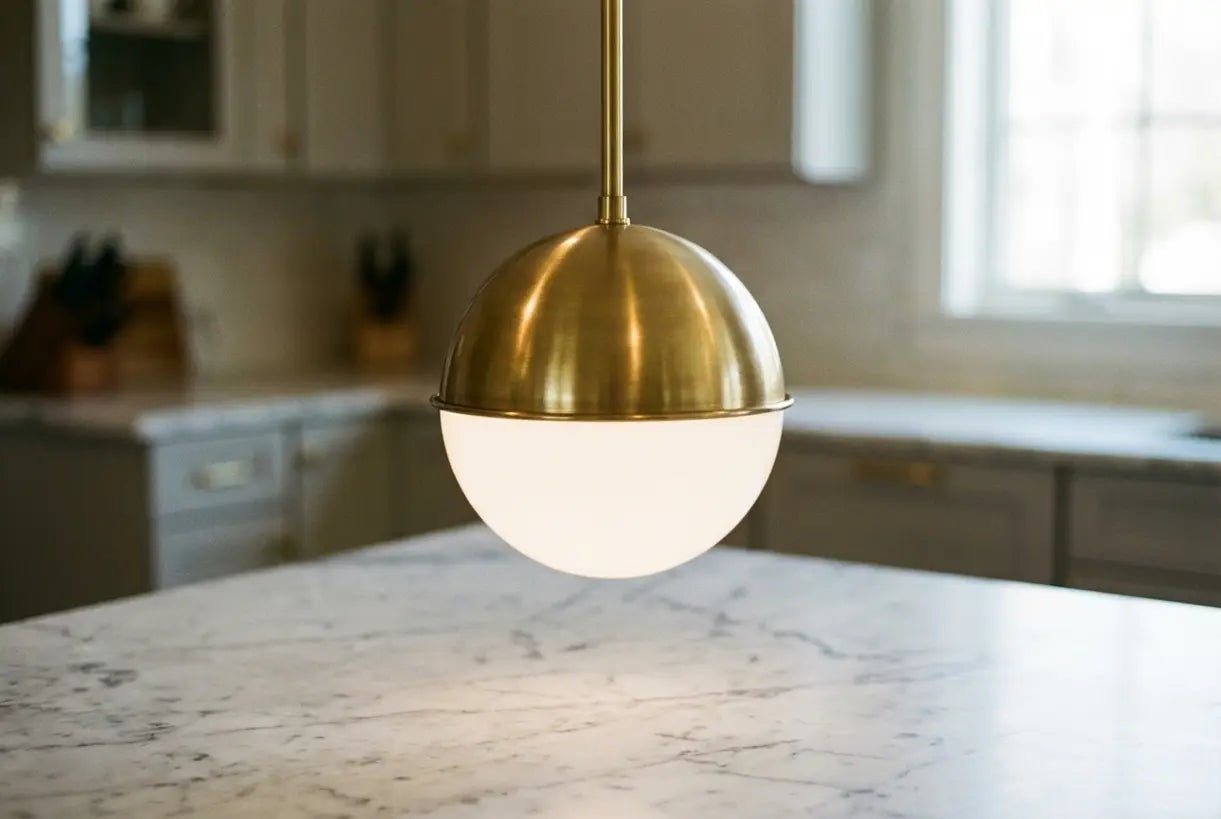
When considering how do I choose the right pendant light finish for my kitchen?, look to your existing hardware and fixtures for guidance. The finish should complement your faucet, cabinet pulls, and appliances while adding intentional contrast. Brass pendant lights kitchen fixtures bring warmth and pair beautifully with white or navy cabinetry, while matte black offers dramatic contrast against light countertops.
Consider the maintenance aspect as well. Polished finishes like chrome show fingerprints and water spots more readily, while brushed or matte finishes hide daily wear better. Mixed metals are increasingly popular in Scandinavian-inspired kitchens—don't be afraid to combine a brass pendant with stainless steel appliances if the overall palette feels cohesive. The material of the shade matters too; opaque metal directs light downward for focused task illumination, while glass, rattan, or fabric shades provide softer, more ambient diffusion that flatters food and faces alike.
Curated Pendant Solutions for Every Kitchen
LED Technology and Dimming Capabilities
When evaluating are LED pendant lights better for the kitchen than incandescent? options, the advantages become clear. LED technology offers superior energy efficiency, lasting up to 25 times longer than traditional bulbs while consuming significantly less electricity. For a space like the kitchen where lights often remain on for hours, this translates to noticeable utility savings and reduced maintenance.
Color temperature matters as much as bulb type. For kitchen task lighting, look for LEDs in the 2700K to 3000K range—warm enough to flatter skin tones and food presentation, yet bright enough for detailed work. Many homeowners also wonder, can pendant lights be dimmed in the kitchen? The answer is yes, provided you select dimmable LED bulbs and compatible switches. Dimming capability allows you to transition from bright task lighting for meal prep to ambient glow for evening entertaining, maximizing the versatility of your island lighting.
Pendant Lights vs. Chandeliers: Making the Right Choice
Understanding what is the difference between a pendant light and a chandelier for kitchen use? helps narrow your selection. Pendants are typically singular fixtures hanging from a single cord or chain, though they can be clustered or arranged in linear formations. Chandeliers feature multiple light sources branching from a central hub, creating broader, more diffuse illumination.
For kitchen islands, pendants generally offer superior task lighting because they direct focused beams downward onto work surfaces. They're also more flexible in terms of placement—you can adjust the spacing between multiple pendants to suit your island's exact dimensions. Chandeliers work beautifully over dining tables where ambient mood lighting takes precedence over detailed task work. For the island itself, where you're chopping vegetables and reading recipes, the directional nature of modern pendant lights for kitchen island installations proves more practical and visually appealing.
Creating Your Perfect Kitchen Ambiance
Selecting the ideal pendant lighting involves balancing practical measurements with personal aesthetic preferences. By considering your island's dimensions, ceiling height, and daily usage patterns, you create a lighting scheme that serves your needs while reflecting the clean, intentional beauty of Scandinavian design principles.
Remember that the best kitchen lighting evolves with your day. Bright, clear illumination supports morning meal prep and afternoon baking projects, while dimmed, warmer tones create intimate gathering spaces for evening conversations. The right pendants don't just light your counter—they set the stage for daily life.
At Skonne, we curate Pendant Lights that honor both form and function, bringing that essential Scandinavian hygge to American homes. From adjustable industrial designs to elegant brass globes, our collection offers solutions for every island configuration and design vision.
Related Article
Scandinavian Dining Room Design: Minimal Tables, Warm GatheringsDiscover how to create a warm, inviting Scandinavian dining room with minimal design principles, natural materials, and statement lighting for memorable gatherings.