
How to Choose the Best Pendant Lighting for Your Kitchen
Summary›
- Why Pendant Lighting Matters for Your Kitchen Island
- The Essential Rules for Pendant Light Placement
- Single vs. Multi-Light Pendant Fixtures
- Selecting the Right Style for Modern Kitchens
- Can Pendant Lights Serve as Your Main Kitchen Lighting?
- Installation Tips for Perfect Results
- Bringing It All Together: Your Pendant Lighting Strategy
When designing your dream kitchen, every detail matters—from the cabinets to the countertops, and especially how you illuminate the heart of your home. Kitchen pendant lights have become the defining feature of modern kitchen islands, offering both functional task lighting and an opportunity to express your personal style. Whether you're renovating an entire kitchen or simply updating your island's focal point, understanding how to choose the best pendant lighting for your kitchen can transform an ordinary cooking space into an intentional gathering place.
The right kitchen island lighting balances practicality with Scandinavian-inspired design principles: clean lines, warm materials, and that sense of hygge that makes your kitchen feel like home. In this guide, we'll walk you through everything you need to know—spacing, height, sizing rules, and style recommendations—so you can make a confident, informed decision. Along the way, we'll introduce you to our thoughtfully curated collection at Skonne, where we've done the heavy lifting to bring you pendant lights that embody both beauty and purpose.
Why Pendant Lighting Matters for Your Kitchen Island
Your kitchen island isn't just a workspace—it's where morning coffee rituals happen, homework gets completed, and friends gather during dinner parties. Without adequate lighting, this central hub can feel dim and unwelcoming. Pendant lights solve this challenge by bringing focused illumination exactly where you need it most.
Unlike recessed ceiling lights that cast shadows, pendant lights hang at eye level, providing direct downward lighting that eliminates dark spots on your countertop. This makes food preparation safer and easier while creating a warm atmosphere that invites lingering conversations. The visual impact is equally important: well-chosen pendants act as sculptural elements that anchor your kitchen's design, drawing the eye upward and adding vertical interest to your space.
From a design standpoint, pendant lights offer remarkable versatility. They can serve as subtle background elements or bold statement pieces depending on your aesthetic preferences. For those embracing Scandinavian design principles, the right pendant brings together natural materials, soft diffused light, and minimalist forms that feel both contemporary and timeless.
The Essential Rules for Pendant Light Placement
Before falling in love with a particular fixture, it's crucial to understand the practical guidelines that ensure your pendant lights function beautifully. These rules aren't arbitrary—they're based on ergonomics, visual balance, and years of interior design experience.
How to Determine the Right Height Above Your Island
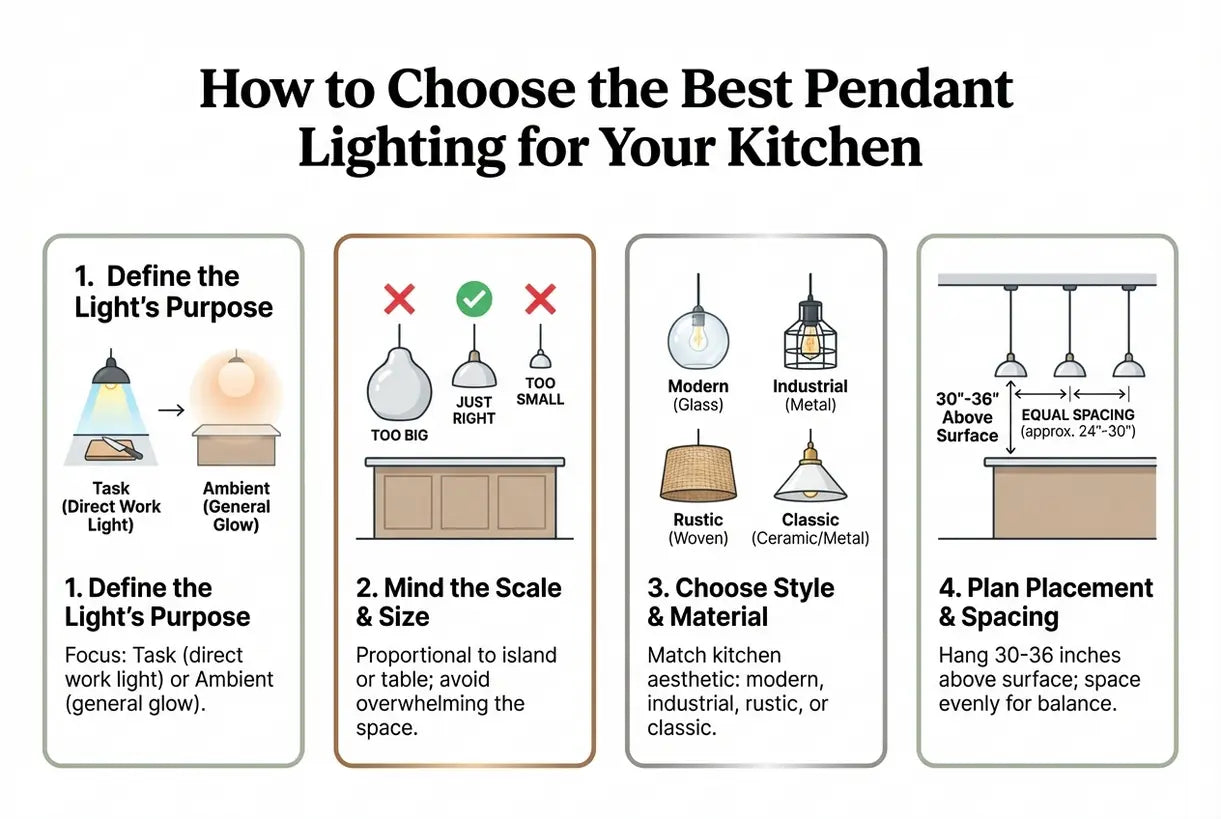
One of the most common questions we hear is: "How high should I hang pendant lights above my kitchen island?" The standard recommendation is 30 to 36 inches from the countertop surface to the bottom of the fixture. This height provides adequate headroom for most people while ensuring the light reaches the workspace effectively.
For taller individuals or families with children who might reach up, err toward the higher end of this range (34-36 inches). If your ceiling is particularly high (10 feet or more), you may need to hang pendants slightly higher to maintain proper proportions, though the 30-36 inch rule from the counter still applies in most cases.
Consider the sightlines from adjacent rooms as well. When viewed from the living or dining area, your pendant lights should frame the island attractively without obstructing views across the space.
Calculating Proper Spacing Between Fixtures
Spacing is just as important as height. As a general guideline, position pendant lights 24 to 30 inches apart from center to center. If you're hanging an odd number of pendants (which often creates the most balanced look), center the middle fixture over the island's midpoint and space the others accordingly.
The width of your island determines how many pendants you can accommodate:
- Small islands (4-5 feet): One large pendant or two smaller fixtures
- Medium islands (6-7 feet): Two to three pendants depending on fixture size
- Large islands (8+ feet): Three to four pendants, or consider linear multi-light options
Always ensure you have at least 6 inches of clearance from the pendant edge to the island's edge to avoid the fixtures feeling cramped or overhanging the walking space.
Choosing the Right Pendant Size for Your Space
Scale is everything in lighting design. A tiny pendant over a massive island will look lost, while oversized fixtures can overwhelm a compact kitchen. Use this simple formula: measure the width of your island in inches, then divide by the number of pendants you plan to hang. Each pendant should be approximately that width or slightly smaller.
For example, on a 72-inch island with three pendants, each fixture should be roughly 10-12 inches in diameter. This creates visual harmony without crowding the space.
The height of the pendant matters too. In rooms with standard 8-9 foot ceilings, keep pendant height (excluding the rod/cord) under 12 inches to maintain proper clearance. Higher ceilings allow for more dramatic, elongated fixtures.
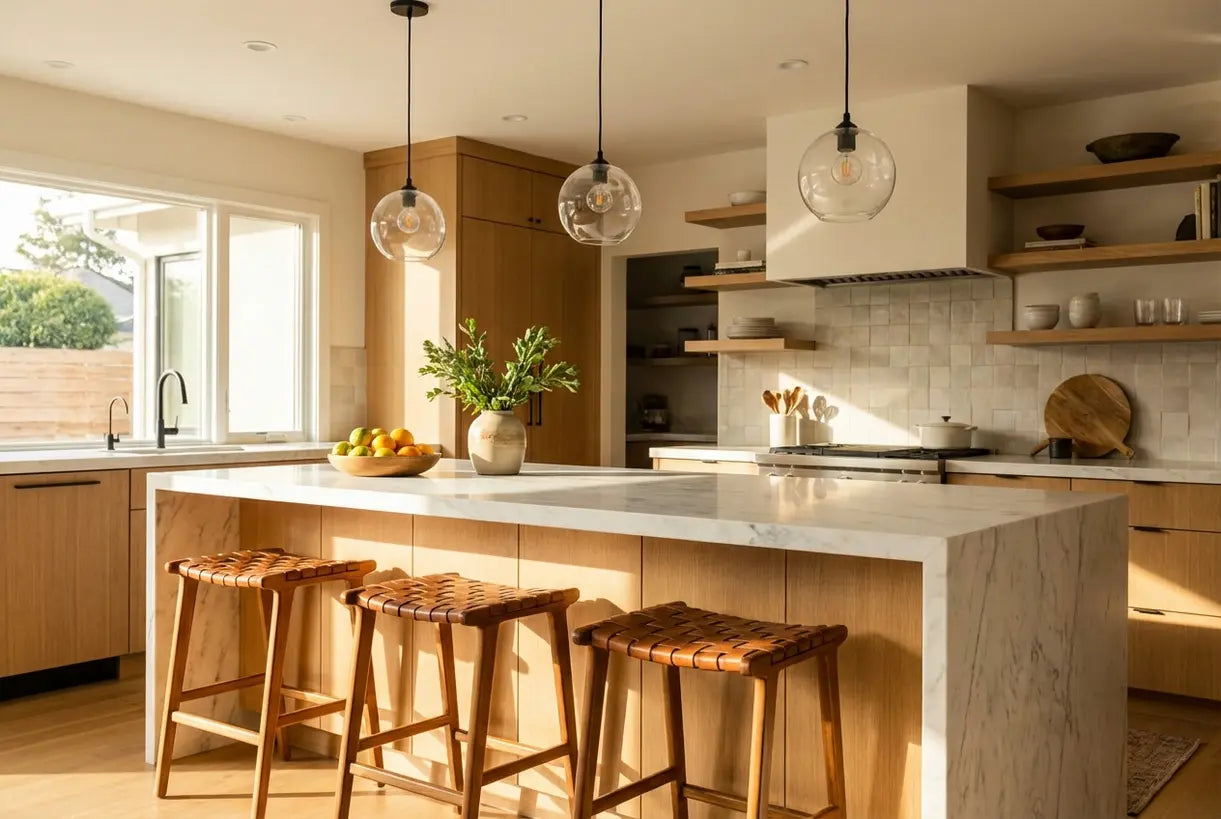
The Clara Glass Globe Pendant exemplifies this balance perfectly. Available in both 8" and 10" globe sizes, this fixture adapts beautifully to various island widths while its clear glass construction and brushed brass canopy bring that warm, Scandinavian sensibility to your kitchen. The globes provide ample downward lighting while maintaining an airy, unobtrusive profile—ideal for kitchens where you want illumination without visual weight.
Single vs. Multi-Light Pendant Fixtures
When planning your kitchen island lighting, you'll encounter two main approaches: individual single pendants or multi-light fixtures that combine several light sources into one canopy. Understanding the difference helps you choose the right solution for your specific space.
Single pendants offer maximum flexibility. You can adjust the height of each fixture independently, space them exactly where needed, and mix styles if desired (though we recommend consistency for a cohesive look). They're ideal for asymmetrical island layouts or when you want to create a specific visual rhythm across your countertop.
Multi-light pendants (linear fixtures with 2-5 lights on one canopy) simplify installation since you only need one electrical box. They're excellent for narrow islands or when you prefer a streamlined aesthetic. These fixtures work particularly well in modern kitchens where minimalism is key.
Consider your ceiling infrastructure when deciding. If you only have one junction box centered over your island, a multi-light fixture may be more practical than rewiring for multiple singles. However, if you have the flexibility, single pendants often provide the most customizable and visually interesting results.
Selecting the Right Style for Modern Kitchens
Today's kitchens are as diverse as the families who use them, but certain pendant styles consistently elevate modern spaces. When browsing our Pendant Lights collection, you'll notice several approaches that align with contemporary Scandinavian and transitional aesthetics.
Industrial and Farmhouse Influences
For kitchens with rustic elements—exposed brick, butcher block counters, or apron-front sinks—industrial pendants add character while maintaining clean lines. Matte black finishes, metal shades, and adjustable hardware create that coveted blend of rugged and refined.
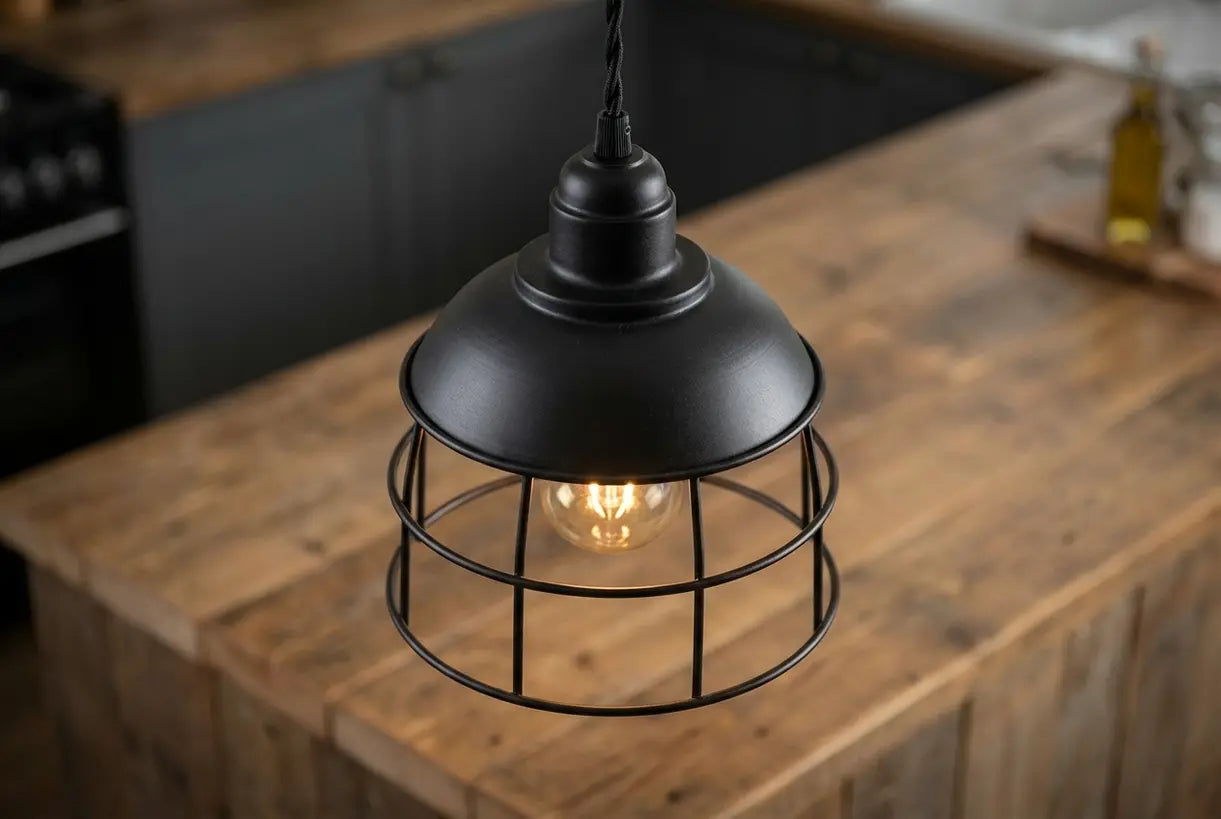
The Rowan Industrial Metal Pendant embodies this aesthetic with its matte black metal construction and adjustable rod system. It's particularly well-suited to farmhouse and industrial kitchens where you want fixtures that feel grounded and substantial. Plus, its dimmable LED compatibility means you can shift from bright task lighting during meal prep to ambient glow for evening entertaining.
Sleek LED Solutions for Contemporary Spaces
If your kitchen embraces minimalism with flat-panel cabinets and quartz countertops, consider ultra-slim LED pendants. These fixtures offer exceptional energy efficiency while maintaining the clean profiles that modern design demands.
The Aria Adjustable LED Pendant represents the future of kitchen lighting. Its slim profile and adjustable height adapt to any ceiling configuration, while the color temperature adjustability lets you customize the warmth of your light—from cool white for detailed cooking tasks to warmer tones for relaxed dining. As an energy-efficient choice, it reduces electricity costs without sacrificing brightness or style.
Pendant Solutions for Every Kitchen Style
Can Pendant Lights Serve as Your Main Kitchen Lighting?
A question we often encounter is whether pendant lights over the island can replace other kitchen lighting entirely. While pendants provide excellent task illumination for your countertop, they shouldn't be your only light source.
The most successful kitchen lighting designs employ layered lighting—combining ambient, task, and accent fixtures to create depth and flexibility. Pendant lights excel at task lighting, but you'll still want recessed or flush-mount ceiling fixtures for general ambient light, plus under-cabinet lighting for countertop tasks away from the island.
That said, well-placed pendants with bright LED bulbs can significantly reduce your reliance on other fixtures during certain activities. The key is ensuring adequate lumen output (aim for 35-50 lumens per square foot of island surface) and choosing fixtures with wide light distribution rather than narrow spot beams.
LED Efficiency: A Smart Choice for Kitchens
Modern LED pendant lights offer remarkable advantages over traditional incandescent or halogen options. They consume up to 75% less energy, generate minimal heat (important in already-warm kitchens), and last 15-20 years with normal use. This makes them both an environmentally conscious and cost-effective choice for a room where lights often burn for hours daily.
When selecting LED pendants, pay attention to color temperature. 2700K-3000K (warm white) creates a cozy atmosphere but may compromise color accuracy for food preparation. 3500K-4000K (neutral white) offers better task visibility while still feeling welcoming. Many adjustable LED fixtures, like our Aria Pendant, let you customize this setting to match your needs throughout the day.
Installation Tips for Perfect Results
Even the most beautiful pendant lights won't shine if poorly installed. Here are essential considerations for achieving professional-quality results:
- Hire a licensed electrician for any new wiring or junction box installations. This ensures code compliance and safety.
- Use a dimmer switch compatible with your fixture type. Dimmers extend bulb life and let you adjust mood from bright prep lighting to soft evening ambiance.
- Consider swag hooks or plug-in pendants if your ideal fixture location doesn't align with existing electrical boxes. These solutions offer flexibility for renters or budget-conscious renovators.
- Account for cord/rod length when ordering. Many pendants come with adjustable cords, but verify the maximum drop suits your ceiling height.
- Install pendants last after all other kitchen finishes are complete. This prevents damage and ensures precise positioning relative to your finished island height.
For more visual guidance on installation and styling, watch this helpful overview:
Bringing It All Together: Your Pendant Lighting Strategy
Choosing pendant lighting for your kitchen isn't just about following rules—it's about creating a space that functions beautifully for your lifestyle while reflecting your aesthetic preferences. Start by measuring your island and determining how many fixtures will create the right visual balance. Consider the practical aspects: height for headroom, spacing for even light distribution, and size for proper scale.
Then, think about the feeling you want to create. Do you gravitate toward warm brass finishes and clear glass that feel timeless and airy? Or do matte black metals and industrial details speak to your appreciation for bold, grounded design? Perhaps you're drawn to the cutting-edge efficiency of LED technology with its sleek profiles and customizable settings.
Whatever your preference, remember that the best pendant light placement balances technical precision with emotional resonance. The fixtures you choose will be part of your daily life—from early morning coffee in soft dawn light to late-night conversations under warm evening glow. They deserve careful consideration.
At Skonne, we've curated our pendant lighting collection with these principles in mind. Each fixture represents our commitment to Scandinavian-inspired design: clean lines, quality materials, warm finishes, and that ineffable sense of hygge that makes a house feel like home. Whether you're drawn to the elegant simplicity of globe pendants, the character of industrial metal, or the innovation of adjustable LED systems, you'll find options that elevate your kitchen while honoring your unique style.
Related Article
Rechargeable & Wireless Wall Sconces: Cord-Free Lighting You Can Place AnywhereExplore the freedom of rechargeable wall sconces—USB-powered, wireless lighting that brings Scandinavian warmth to any space without hardwiring.