
How to Choose and Install String Lights for Your Patio
Summary›
- Understanding Different Types of Outdoor String Lights
- LED vs Incandescent: Making the Right Choice
- Weatherproofing and Durability Considerations
- Planning Your Patio Layout and Measurements
- Safe Installation Techniques
- Solar vs. Plug-In: Finding Your Power Solution
- Video Guide: Installation Walkthrough
- Seasonal Care and Winter Storage
- Creating Your Perfect Outdoor Sanctuary
There's something magical about stepping onto a patio as evening approaches and being greeted by a canopy of warm, glowing light. Outdoor string lights have the unique ability to transform ordinary spaces into intimate retreats where memories unfold under gentle illumination. Whether you're drawn to the Scandinavian concept of hygge—that cozy, contented feeling of togetherness—or simply want to extend your living space into the outdoors, the right patio lights can make all the difference.
In this guide, you'll discover how to select string lights that not only elevate your outdoor aesthetic but also withstand the elements season after season. From understanding bulb types to mastering safe installation techniques, we'll walk through everything you need to create that perfect evening ambiance. Along the way, we'll introduce you to thoughtfully designed lighting solutions that embody the warm, intentional approach to outdoor living.
Understanding Different Types of Outdoor String Lights
Before you start shopping, it's important to understand the various styles of patio lights available and how each creates a different atmosphere. The most common types include classic Edison-style bulbs with their warm vintage glow, modern LED options that offer energy efficiency, and delicate fairy lights that provide subtle accent lighting.
Bistro lights and cafe lights typically feature larger, decorative bulbs spaced evenly along the strand and are ideal for creating defined overhead coverage. These work beautifully over dining areas or across pergolas. On the other hand, garden string lights with smaller bulbs are perfect for weaving through foliage or wrapping around railings for a more organic, whimsical effect.
For those seeking versatility, solar-powered options eliminate the need for electrical outlets, while plug-in models offer consistent brightness regardless of weather conditions. Your choice will depend on your patio layout, available power sources, and the kind of ambiance you wish to create.
LED vs Incandescent: Making the Right Choice
One of the most important decisions you'll make is between LED string lights and traditional incandescent bulbs. Each has distinct advantages depending on your priorities.
LED technology has advanced significantly, now offering the same warm, inviting glow that people love from incandescent bulbs while consuming up to 90% less energy. LEDs also last significantly longer—often 25,000 hours or more compared to roughly 1,000 hours for incandescent bulbs. This longevity means fewer replacement hassles and lower long-term costs.
Incandescent bulbs do produce a warmer, softer light that some find more flattering and ambient. However, they run hotter, consume more electricity, and are more fragile. For outdoor use where durability and energy efficiency matter, LED string lights have become the clear preference for most homeowners.
Weatherproofing and Durability Considerations
When investing in outdoor lighting, weatherproof patio lighting isn't just a nice-to-have—it's essential. Quality outdoor string lights should carry an IP rating (Ingress Protection) that indicates their resistance to dust and moisture. Look for lights rated IP44 or higher, which ensures protection against splashing water from any direction.
Consider the construction materials as well. Commercial-grade strands often feature heavy-duty wiring, shatterproof polycarbonate bulbs instead of glass, and sealed sockets that prevent water infiltration. These details might seem small, but they determine whether your lights survive a surprise rainstorm or a harsh winter.
Our 48ft LED Outdoor String Lights - Warm White exemplify these durability standards, featuring replaceable LED bulbs on a heavy-duty strand designed specifically for year-round outdoor exposure. The dimmable adapter lets you adjust brightness as evening progresses, creating that golden hour feeling well into the night.
Planning Your Patio Layout and Measurements
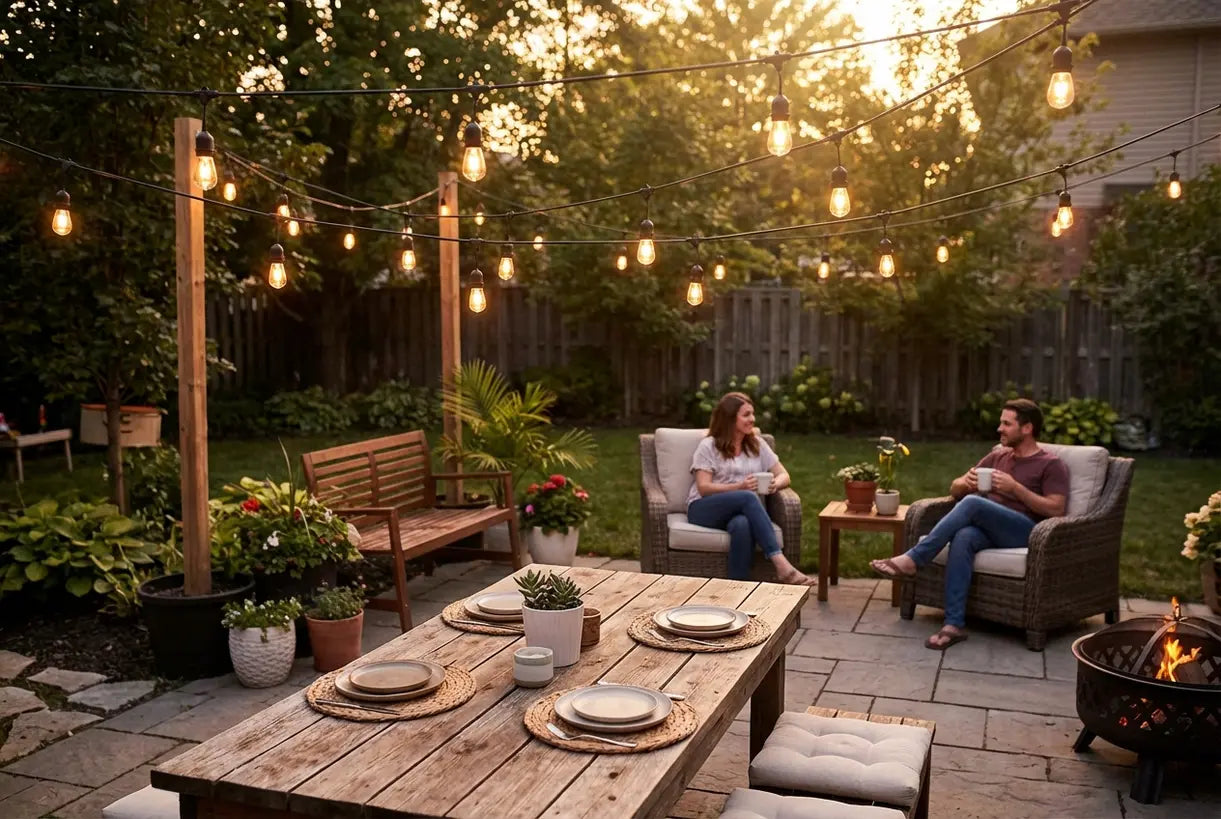
Successful string light installation begins with thoughtful planning. Start by identifying anchor points—such as pergola beams, fence posts, tree branches, or the exterior walls of your home. These will determine your hanging pattern, whether that's classic parallel lines, a zigzag canopy, or a radiating web design.
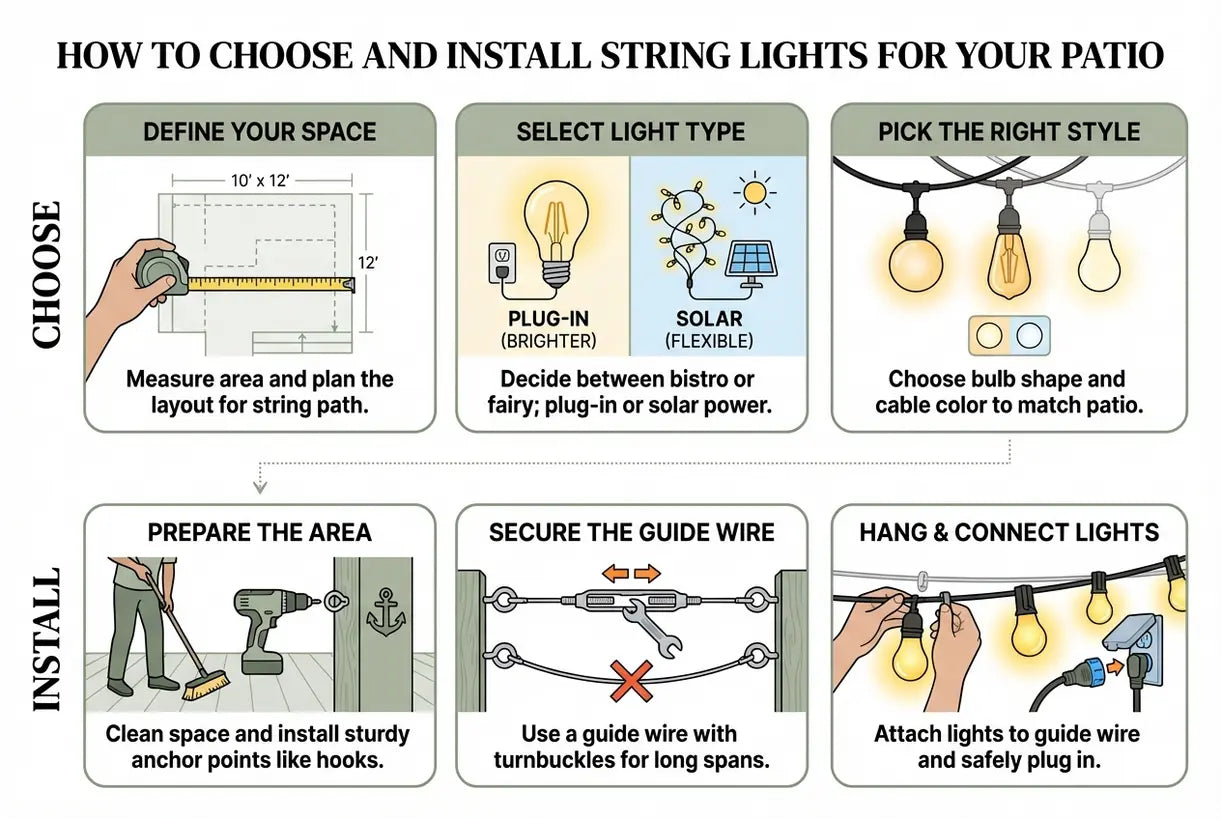
Consider the height as well. Lights hung too low pose a safety hazard, while lights hung too high lose their intimate, enveloping quality. Generally, 8-10 feet above ground level hits the sweet spot for most patios. If you're hanging over dining or seating areas, ensure at least 7 feet of clearance for standing guests.
Take accurate measurements of your intended layout, then add 10-15% extra length for draping and tension adjustments. It's better to have slightly too much cord than to discover you're short by a critical few feet. For larger spaces, plan to connect multiple strands end-to-end, but always check the manufacturer's maximum connection guidelines to avoid electrical overload.
Pro Tip: Use graph paper or a digital planning app to sketch your layout before purchasing. This simple step prevents costly mistakes and helps you visualize the final atmosphere.
Safe Installation Techniques
Safety should never be compromised when working with electricity outdoors. Begin by ensuring your power source is protected by a Ground Fault Circuit Interrupter (GFCI) outlet, which automatically cuts power if electrical current strays outside its intended path. This is particularly important for preventing shock hazards in wet outdoor conditions.
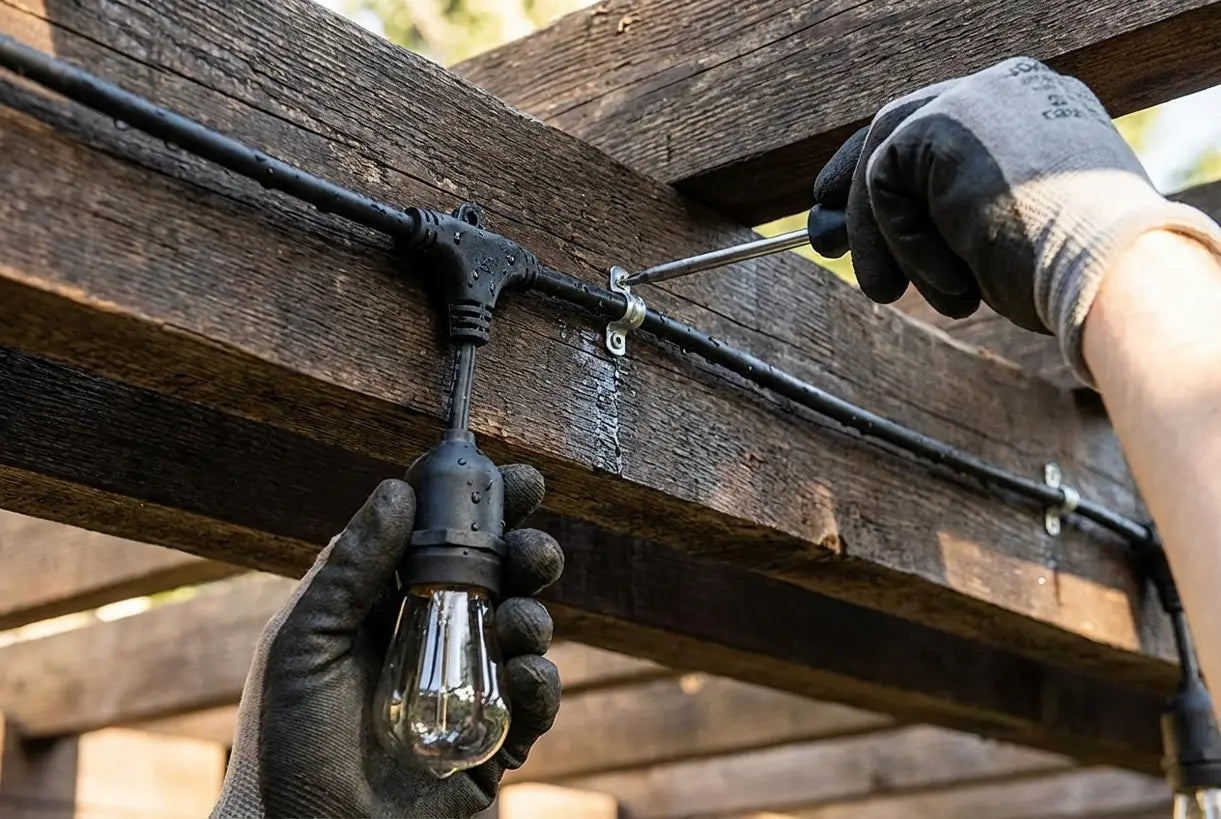
When mounting your lights, avoid using nails or staples that can damage the wire insulation and create fire hazards. Instead, opt for purpose-built mounting clips, cup hooks, or cable ties designed for outdoor use. For masonry or concrete surfaces, use appropriate anchors that won't loosen with temperature changes.
Always keep connections elevated and protected from standing water. Use waterproof connection protectors or wrap junctions in electrical tape, then secure them under eaves or within weatherproof enclosures. Never run cords through doorways or windows where they can be pinched or damaged.
Once installation is complete, test for proper illumination before calling the job done. Check that the plug connection feels secure, the switch operates smoothly, and dimmers (if installed) function across their full range. These small checks ensure years of worry-free enjoyment.
Solar vs. Plug-In: Finding Your Power Solution
Your power source significantly impacts both installation complexity and long-term operation. Plug-in string lights offer consistent brightness regardless of weather conditions and allow for dimming capabilities. However, they require proximity to electrical outlets and careful cord management.
Solar-powered options represent the pinnacle of easy installation—no outlets, no cords, no hassle. Modern solar technology has improved dramatically, with efficient panels that charge even on overcast days. These work wonderfully for accenting garden plants, illuminating pathways, or adding sparkle to areas far from your home's electrical system.
Illuminate Your Garden Naturally
The Solar-Powered Fairy String Lights - 33ft offer exceptional flexibility with multiple lighting modes and automatic dusk-to-dawn operation. The built-in battery stores solar energy throughout the day, releasing it as a gentle glow once evening arrives—no wiring required.
Video Guide: Installation Walkthrough
For a visual demonstration of these installation techniques, watch our comprehensive video guide covering everything from mounting hardware selection to final tension adjustments:
Seasonal Care and Winter Storage
Even the most durable weatherproof patio lighting benefits from seasonal maintenance. In autumn, remove accumulated leaves and debris from bulbs and sockets to prevent moisture retention. Inspect strands for cracked bulbs or frayed wiring, replacing any damaged components promptly.
The question of whether string lights can be left outside in winter depends on your local climate and the lights' durability rating. In moderate climates with mild winters, commercial-grade LED lights often withstand year-round exposure. However, in regions with heavy snow, ice accumulation, or extreme temperature swings, removal and proper storage extends product lifespan significantly.
When storing lights, avoid throwing them into a tangled heap. Instead, wrap strands around cardboard pieces or empty wrapping paper tubes to prevent kinking and knotting. Store in a cool, dry location until spring returns. For those who prefer leaving lights in place, consider investing in covers for exposed sockets or disconnecting power during the coldest months.
To explore more outdoor lighting solutions that complement your patio design, visit our Outdoor Lighting Collection for curated options that blend Scandinavian sensibility with outdoor durability.
Creating Your Perfect Outdoor Sanctuary
Transforming your patio into an illuminated retreat is about more than just hanging lights—it's about crafting an atmosphere where life's simple pleasures unfold. The gentle glow of well-chosen string lights invites lingering conversations, quiet moments of reflection, and the kind of contented warmth that defines true outdoor living.
By selecting durable, weather-appropriate lighting and installing it with care and attention to safety, you create a space that welcomes you home each evening. Whether you choose the reliable brilliance of plug-in LEDs or the sustainable simplicity of solar options, the result is an outdoor extension of your living space that feels both intentional and effortlessly inviting.
At Skonne, we believe that thoughtful lighting is the foundation of hygge—that Scandinavian embrace of comfort and connection. Our curated selection of outdoor string lights reflects this philosophy, offering not just illumination, but an invitation to slow down and savor the spaces where life happens.
Related Article
Art Deco Chandeliers: Glamorous, Geometric Fixtures for Bold, Vintage-Inspired InteriorsA clear, step-by-step guide for hanging pendant lights: tools, wiring safety, height and spacing recommendations, plus product suggestions for kitchens and dining areas.