
How to Choose the Perfect Pendant Lighting for Your Home
Summary›
- Understanding the Foundations of Pendant Lighting
- The Height Rules: Finding the Sweet Spot
- Size Matters: Calculating Proportions
- Quantity and Spacing: The Magic Number
- Style Selection: Scandinavian Principles in Practice
- Video Guide: Visualizing Pendant Placement
- Special Considerations: Low Ceilings and Bulb Selection
- Beyond the Kitchen: Pendant Lighting in Living Spaces
- Bringing It All Together
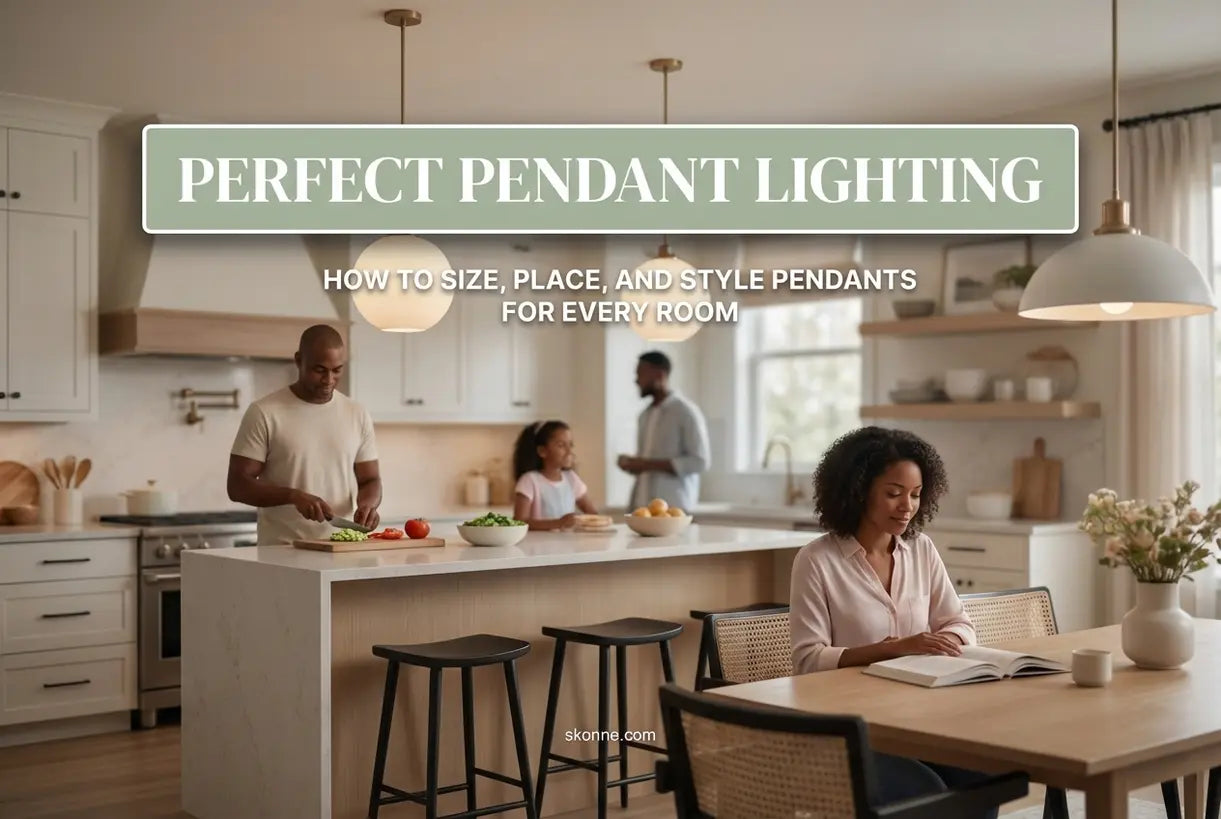
Lighting shapes the soul of a space, and in the realm of Scandinavian-inspired interiors, pendant lighting serves as both functional art and ambient storyteller. Whether you're illuminating a bustling kitchen island, creating intimacy over a dining table, or adding character to a living room corner, the right pendant transforms everyday moments into something elevated and intentional. Yet with endless options available—from sleek glass globes to industrial metal cones—choosing the perfect fixture requires more than aesthetic intuition. It demands an understanding of proportion, height, spacing, and harmony with your existing decor.
In this comprehensive guide, we'll walk through everything you need to know about pendant lighting selection, from calculating the ideal hang height to determining whether you need a single statement piece or a trio of coordinated fixtures. By understanding these foundational principles, you'll not only solve common lighting challenges but also discover how Scandinavian design philosophy—rooted in simplicity, warmth, and purposeful beauty—can guide your choices toward fixtures that truly belong in your home.
Understanding the Foundations of Pendant Lighting
Before diving into measurements and specifications, it's essential to recognize what distinguishes pendant lighting from other ceiling-mounted options. Unlike flush mounts that hug the ceiling or chandeliers that demand center-stage attention, pendant lights offer versatility through suspension—dropping down on cords, rods, or chains to create focused pools of light exactly where you need them.
The beauty of pendant lights lies in their adaptability. In open-concept homes, they help define zones without erecting walls. In compact apartments, they provide task lighting without consuming valuable floor or table real estate. For those embracing Scandinavian design principles, pendants offer the perfect opportunity to incorporate natural materials, clean lines, and that coveted hygge feeling—the Danish concept of cozy contentment that turns houses into sanctuaries.
The Pendant Lights collection at Skonne embodies this philosophy, featuring curated pieces that balance minimalist aesthetics with warm, welcoming illumination. Each design considers not just how a room looks, but how it feels when the sun sets and artificial light takes over.
The Height Rules: Finding the Sweet Spot
One of the most common questions homeowners face involves suspension height. Hang your pendant too low, and it becomes an obstruction; too high, and it loses intimacy and functional illumination. The general rule of thumb suggests maintaining 30 to 36 inches between the bottom of the fixture and the surface below—but this shifts depending on context.
For kitchen islands and countertops, where you'll frequently stand and work, aim for the higher end of that range (approximately 34-36 inches). This prevents head collisions while ensuring adequate task lighting for meal preparation. Over dining tables, where seated guests look up frequently, slightly lower placement (30-34 inches) creates a more intimate, enveloping glow that encourages lingering conversations.
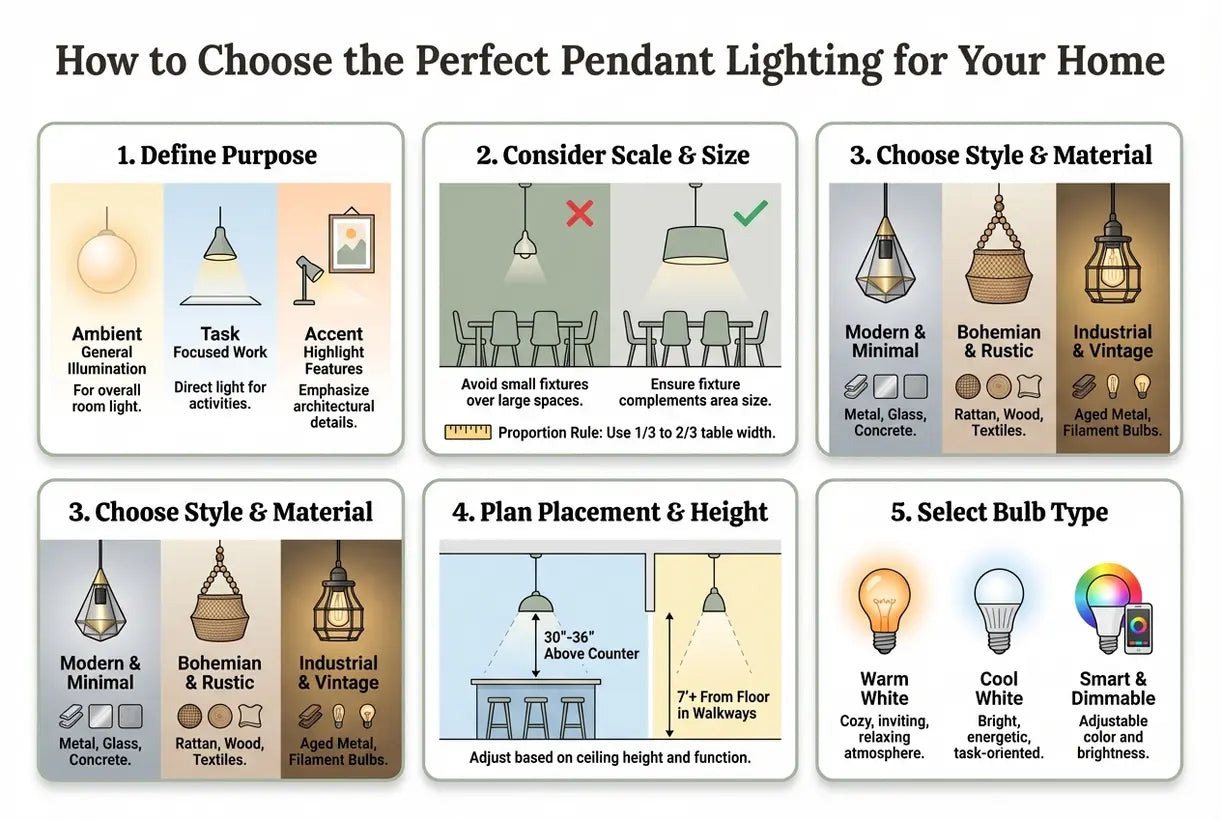
Entryways and foyers present different challenges. Here, you want clearance for tall guests—typically 80 inches from the floor as a minimum—while still keeping the fixture low enough to feel welcoming rather than distant. If you have particularly high ceilings (9 feet or above), consider fixtures with adjustable cords or rods that allow you to customize the drop length after installation.
Size Matters: Calculating Proportions
Selecting the appropriate diameter for your pendant light prevents visual imbalance that can make a room feel crowded or sparse. For linear surfaces like kitchen islands or long dining tables, a simple mathematical approach helps: add the length and width of your surface (in feet), then convert that sum directly to inches. For example, a 5-foot by 3-foot island equals 8 feet, suggesting an 8-inch diameter pendant—or multiple smaller pendants totaling that visual weight.
When choosing a single statement piece over a round dining table, select a fixture with a diameter measuring approximately half to two-thirds the width of your table. This creates presence without overwhelming the space. For rectangular tables, consider either one large linear pendant or multiple smaller fixtures spaced evenly to distribute light across the entire surface.
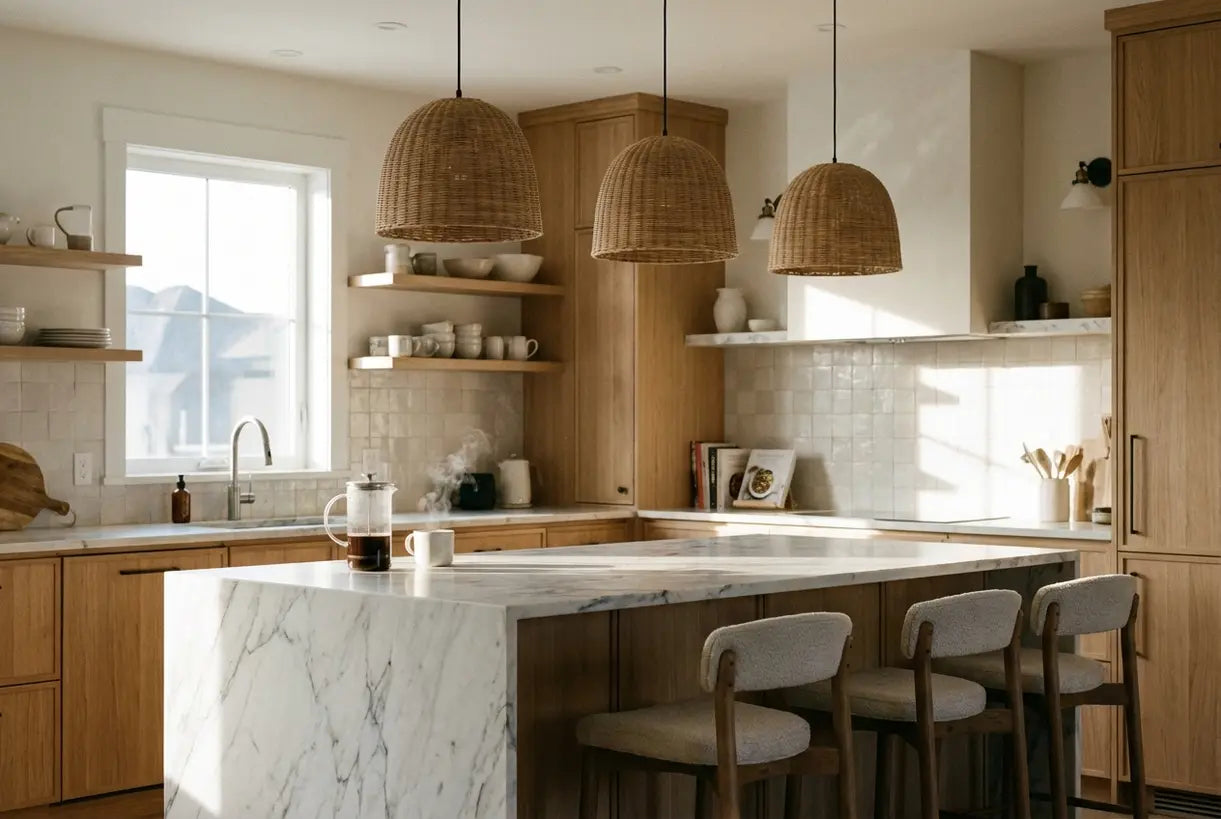
Visual weight matters as much as physical dimensions. A dark metal fixture appears heavier than a transparent glass one of the same size. Similarly, solid shades project differently than open or woven designs. Always consider the visual density of your chosen material when assessing whether a size feels appropriate for your space.
Quantity and Spacing: The Magic Number
Determining how many pendants to hang depends on your surface length and the desired aesthetic. For kitchen islands and countertops, spacing fixtures approximately 24 to 30 inches apart creates rhythm without clutter. When using multiple pendants, ensure at least 6 inches of clearance from the ends of the surface to maintain visual balance.
As a general guideline for rectangular surfaces: allow one pendant per 2 feet of counter length. A 6-foot island accommodates three medium-sized pendants beautifully, while a 4-foot surface might suit two larger fixtures or a single statement piece. The key lies in maintaining equal spacing between lights and edges, creating a symmetrical, intentional appearance.
Perfect Trio Solutions
The Environmental Protection Agency's Energy Star program recommends considering task-specific lighting needs when determining fixture quantity, ensuring adequate illumination for cooking, dining, or socializing activities.
Style Selection: Scandinavian Principles in Practice
When choosing pendant styles for a contemporary home, Scandinavian design offers timeless guidance: prioritize natural materials, clean lines, and functionality that doesn't sacrifice beauty. Glass pendants diffuse light softly, reducing harsh shadows while maintaining brightness. Metal finishes in brass, copper, or matte black add warmth and sophistication without overwhelming minimalist spaces.
Consider the existing architecture of your room. High ceilings with crown molding might welcome ornate lantern-style fixtures, while modern, streamlined kitchens pair beautifully with geometric shapes and exposed bulbs. The key lies in contrast and complement—your lighting should either harmonize with existing finishes or provide intentional contrast that sparks visual interest.
The Bristol Glass Pendant exemplifies this balance perfectly, combining the warmth of satin brass with the clarity of glass to create a fixture that feels both elevated and approachable. Its adjustable cord accommodates various ceiling heights, making it versatile enough for kitchen islands, dining nooks, or bedroom corners.
Video Guide: Visualizing Pendant Placement
Sometimes, seeing the principles in action clarifies what measurements and descriptions cannot fully convey. Watch this detailed demonstration of pendant light height and placement techniques to visualize how different suspension lengths affect room ambiance and functionality.
Special Considerations: Low Ceilings and Bulb Selection
Homes with standard 8-foot ceilings or lower require thoughtful pendant selection to avoid cramped, cluttered appearances. Look for fixtures labeled as "semi-flush" or those with adjustable cords that can be shortened to minimal lengths. Compact designs with vertical orientation (taller than they are wide) preserve headroom while still providing that distinctive pendant aesthetic.
Bulb selection dramatically impacts both the functionality and atmosphere of your pendant lighting. LED bulbs offer superior energy efficiency and longevity compared to traditional incandescent options. When selecting LED bulbs, pay attention to color temperature: 2700K to 3000K produces warm, inviting light ideal for residential dining and living spaces, while 3500K to 4000K offers crisper illumination better suited for task-oriented kitchen work.
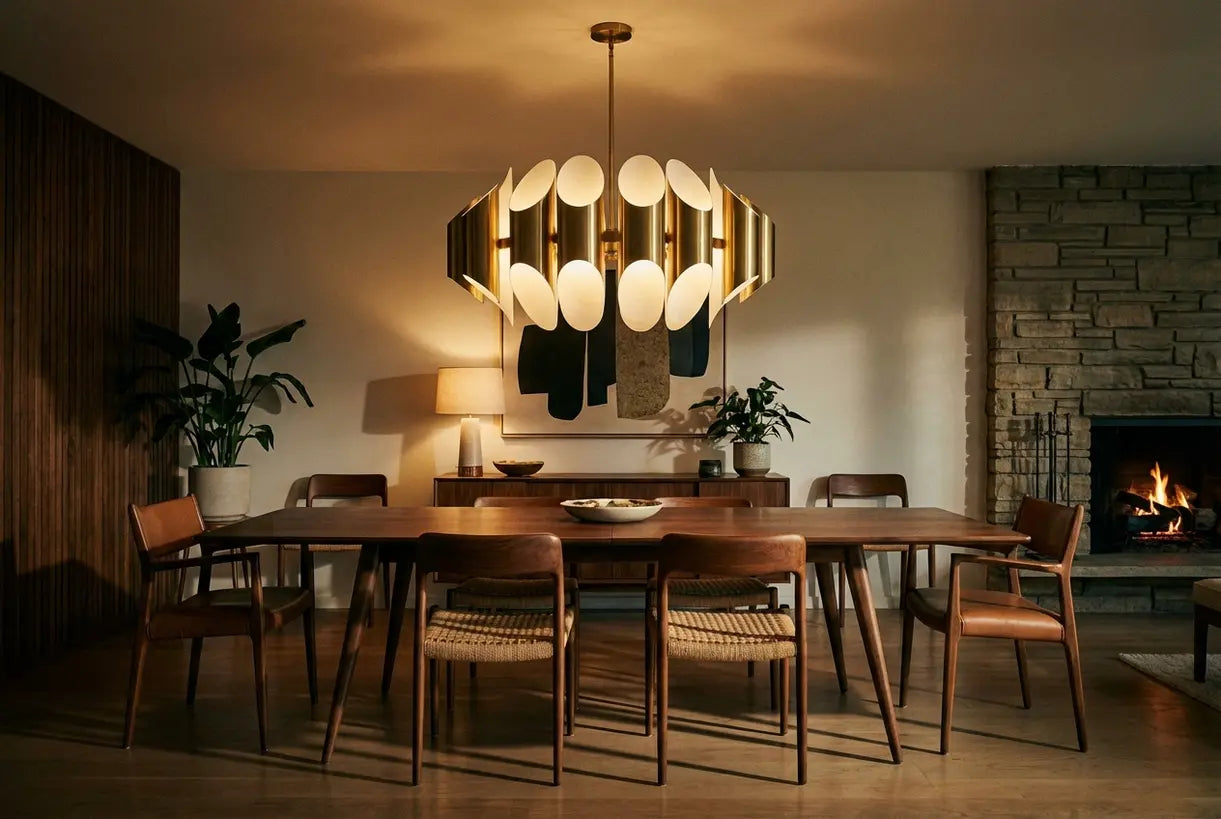
Dimmable options provide flexibility, allowing you to transition from bright task lighting during meal prep to soft ambient illumination during dinner parties. Ensure both your fixture and bulbs are compatible with dimmer switches—a detail often overlooked until installation day.
Beyond the Kitchen: Pendant Lighting in Living Spaces
While pendant lights traditionally dominate kitchen and dining applications, they increasingly anchor living rooms, bedrooms, and entryways. In open-concept living areas, a strategically placed pendant can define a reading nook or coffee corner without the visual weight of a floor lamp. In bedrooms, pendant lights flanking the bed eliminate nightstand clutter while providing focused reading light.
The key to successful placement in these alternative spaces lies in scale and cord management. Lower ceilings in bedrooms might benefit from flush-mount pendants or very short drops, while dramatic entryways with high ceilings can accommodate statement pieces that draw the eye upward, emphasizing architectural volume.
Bringing It All Together
Choosing the perfect pendant lighting transcends mere shopping—it involves understanding your space's proportions, your family's functional needs, and the atmospheric quality you wish to create. By following the height guidelines (30-36 inches above surfaces), sizing appropriately for your room dimensions, and selecting fixtures that embody both Scandinavian simplicity and your personal aesthetic, you transform utilitarian lighting into design statements.
Remember that the best lighting choices consider how spaces evolve throughout the day. Morning coffee rituals, afternoon work sessions, and evening gatherings all demand different qualities of light. Dimmable LEDs, adjustable suspension cords, and thoughtfully positioned fixtures ensure your pendant lighting serves every moment with grace and intention. Whether you select a single dramatic lantern or a coordinated trio of glass pendants, let the principles of warm, purposeful Scandinavian design guide you toward illumination that feels like home.
Related Article
Glass Wall Sconces: Frosted, Smoked, Blown & Clear Styles for Every HomeExplore different glass wall sconce styles from frosted to smoked. Find the perfect lighting to elevate your Scandinavian-inspired home decor.