
Coordinating Kitchen Island and Dining Room Lighting: How to Match Fixtures for a Cohesive Open-Plan Look
Summary›
- Matching vs. Coordinating: Understanding the Distinction
- The Foundation: Key Principles for Coordinated Lighting
- Visual Guidance: Expert Video Tips
- Styles and Finishes That Naturally Coordinate
- Coordinating Different Fixture Types
- Product Spotlight: Finding Your Perfect Pair
- Common Mistakes to Avoid in Open-Plan Lighting Coordination
- Pendant and Chandelier Pairings That Work
- Elevated Fixture Combinations for Your Space
- Creating Your Cohesive Open-Plan Lighting Story
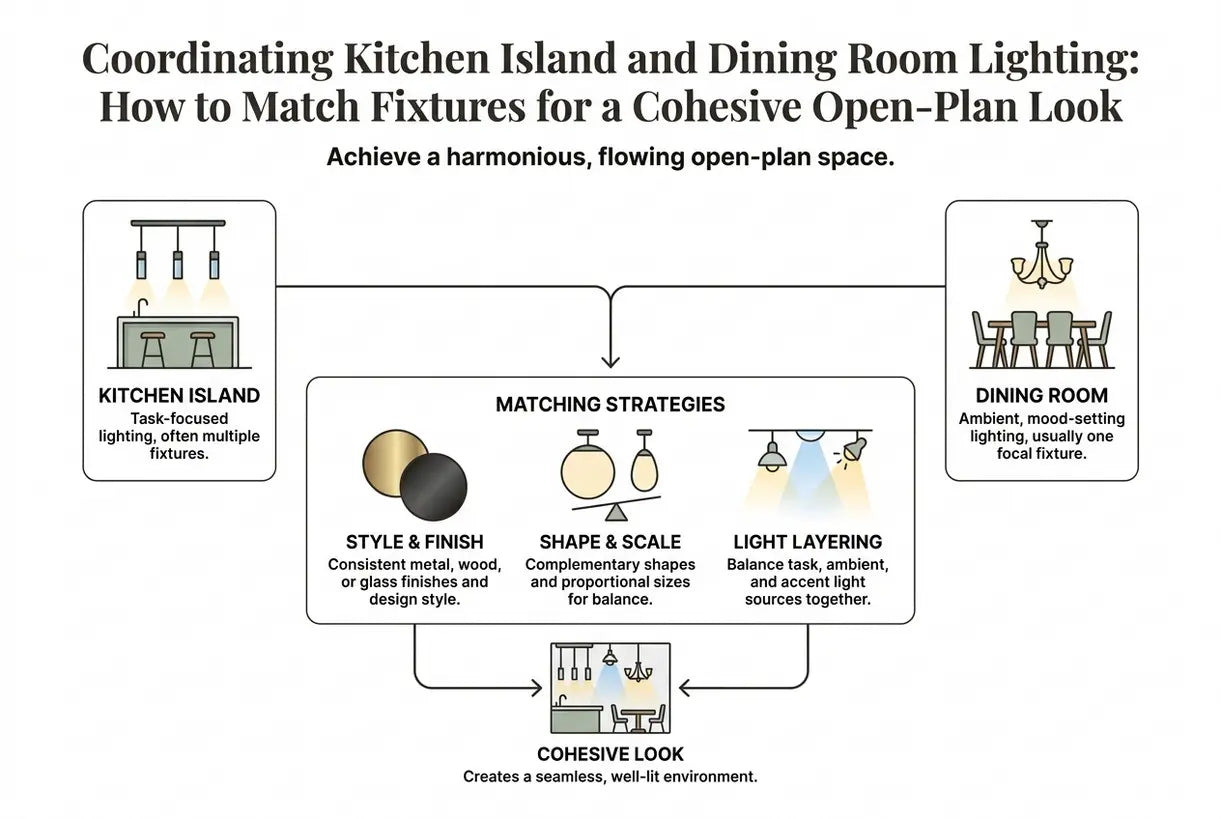
Creating harmony between your kitchen island and dining area lighting is one of the most impactful design decisions you'll make when designing an open-plan space. Whether you've just opened up a wall to create that coveted open concept living environment or are renovating a great room that serves multiple purposes, the way you approach coordinating kitchen island and dining room lighting will define the entire atmosphere.
The challenge? These two zones serve different functions—your kitchen island is a hardworking prep and casual dining surface, while your dining table hosts more formal gatherings. Yet they share the same visual space. Success lies not in perfect duplication but in intentional coordination that reads as cohesive. In this guide, we'll explore practical strategies that transform a disjointed lighting scheme into a curated, Scandinavian-inspired expression of your style.
Matching vs. Coordinating: Understanding the Distinction
One of the first questions homeowners face is whether their kitchen island pendants should match their dining room chandelier. The short answer: they don't need to match—but they should coordinate.
Matching implies identical or nearly identical fixtures, which can quickly read as unimaginative and overly "matchy-matchy." Coordinating, on the other hand, suggests a thoughtful relationship between fixtures through shared elements like:
- Similar metal finishes (brass, nickel, matte black)
- Related glass treatments (clear, seeded, frosted, smoked)
- Complementary shapes or silhouettes
- Consistent design language (Scandinavian minimal, vintage organic, industrial)
Think of coordinating like composing music: different instruments playing harmonious notes rather than the same melody in unison. This approach creates visual interest while maintaining flow.
The Foundation: Key Principles for Coordinated Lighting
Before selecting fixtures, establish these foundational parameters to guide your choices:
Scale and Proportion
The size of your fixtures must respect the dimensions of their respective zones while feeling balanced when viewed together. Your kitchen island pendant lights should generally hang 28-34 inches above the countertop, and they should be proportionally smaller than your dining room chandelier to establish a subtle hierarchy.
A common guideline: the diameter of a dining room chandelier should be approximately one-half to two-thirds the width of your dining table. For islands, choose pendants whose combined width spans roughly two-thirds of the island length.
Height Considerations
Visual line of sight is crucial in open-plan spaces. Your dining room chandelier typically hangs 30-36 inches above the table surface. Kitchen island pendants, conversely, should clear sightlines—28-34 inches above the counter—for safety during food preparation.
When viewed from a distance, these varied heights should create a pleasant rhythm. Avoid placing both sets of fixtures at exactly the same height, which can flatten the visual experience.
Style Cohesion
Select a dominant design language and interpret it differently for each zone. For example, if Scandinavian minimalism is your direction, you might choose streamlined glass pendants over the island and a more expressive glass chandelier over the dining table—both featuring Nordic materials but with different personalities.
Visual Guidance: Expert Video Tips
For a deeper dive into kitchen and dining lighting best practices, this expert video offers practical visual guidance on creating cohesive lighting schemes:
Styles and Finishes That Naturally Coordinate
Certain aesthetic directions lend themselves particularly well to coordinating kitchen island and dining room lighting. The Nordic Scandinavian style, with its emphasis on honest materials and organic forms, provides ample opportunity for fixture coordination through:
- Clear glass elements that allow light to diffuse naturally
- Brass or gold-toned metals that warm the space without overwhelming
- Natural, imperfect textures like hand-blown glass or organic shapes
- Black accents that ground contemporary spaces
When selecting finishes, choose two metals maximum for a cohesive palette—one dominant, one accent. For those looking to explore more options, our Dining Room Lighting collection offers a curated selection designed to coordinate beautifully with kitchen pendants.
Coordinating Different Fixture Types
Effective pendant and chandelier combinations require understanding how different fixture types can speak the same visual language:
Glass Pendants with Glass Chandeliers
Perhaps the most harmonious approach, glass-on-glass coordination allows for maximum light transmission while creating visual consistency. Look for similar glass treatments—clear and luminous, seeded with texture, or smoked for moodier spaces.
Linear Pendants with Oval Chandeliers
If your kitchen island features linear or multi-pendant arrangements, echo that elongated geometry with an oval or rectangular dining chandelier. This creates a pleasing horizontal rhythm that reinforces the open-plan flow.
Organic Forms Throughout
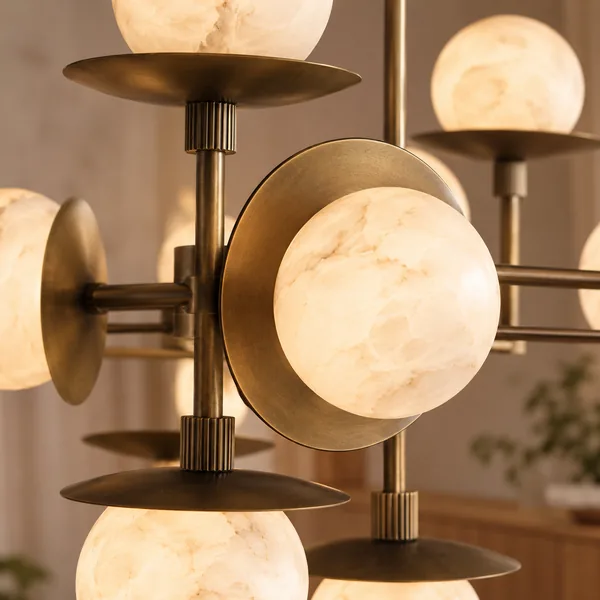
Fixtures with organic, sculptural shapes—dome pendants, cloud forms, or branching chandeliers—can create an artistic thread connecting both zones without matching literally.
Single Pendants with Statement Chandeliers
When your kitchen island calls for compact individual pendants, pair them with a dining chandelier that incorporates multiple arms or elements. This creates the right visual weight balance between zones.
Pendant Lights
Shop all Pendant Lights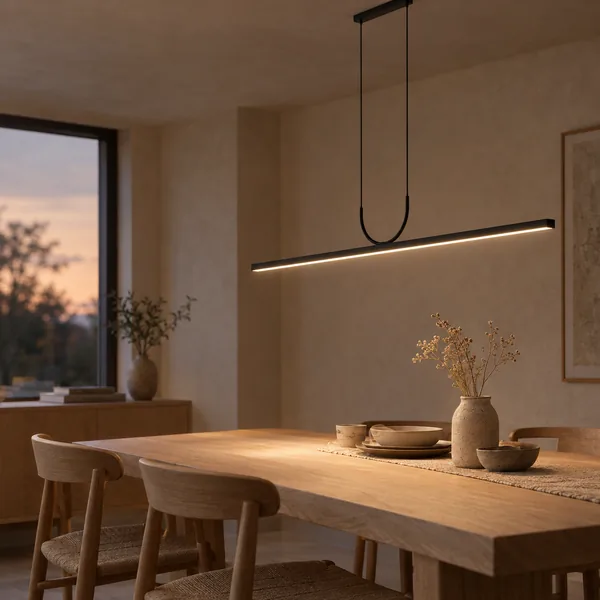
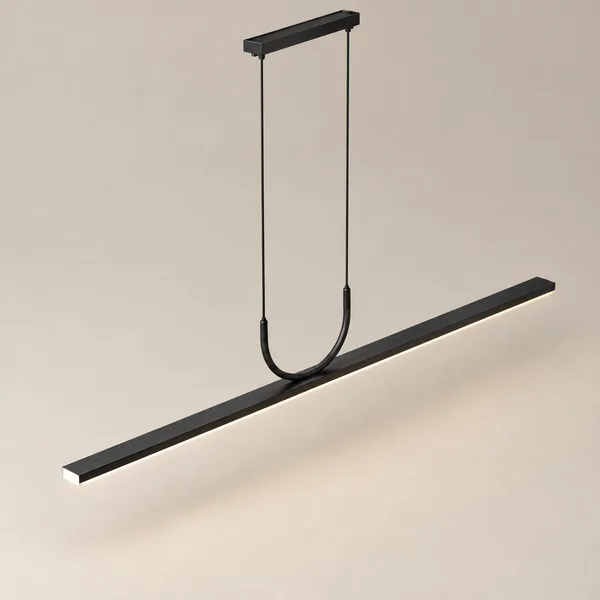 Save $140.00
Linné Minimalist Linear Black LED Pendant Light
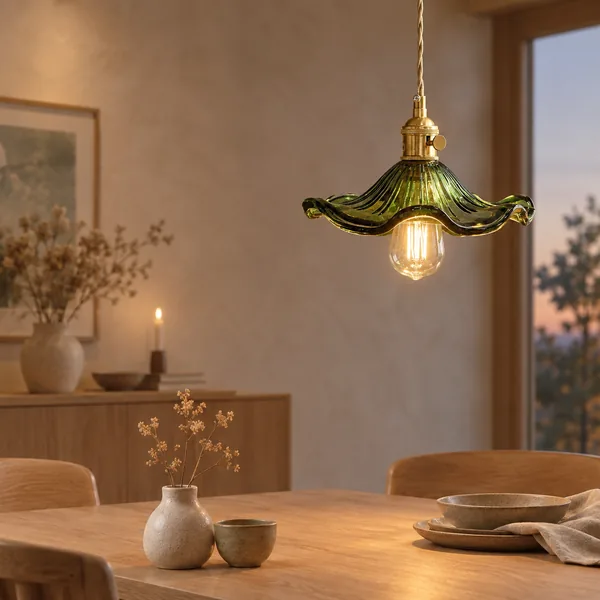
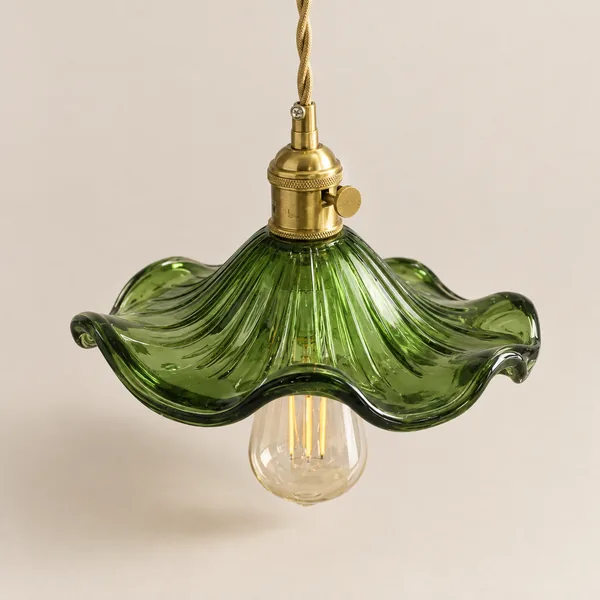 Save $60.00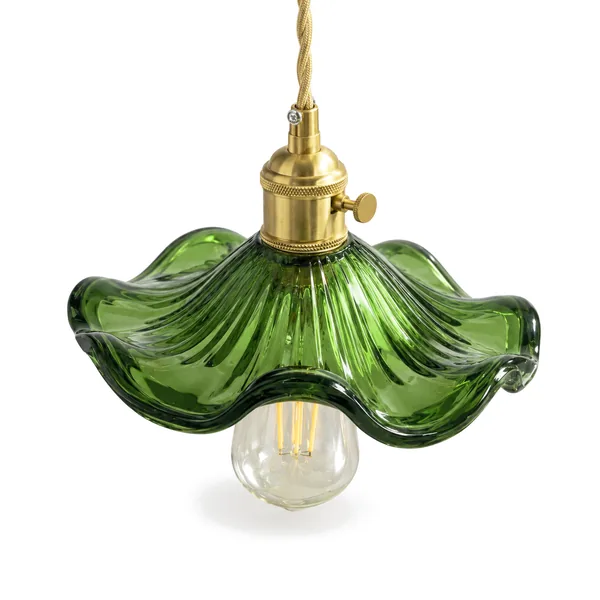
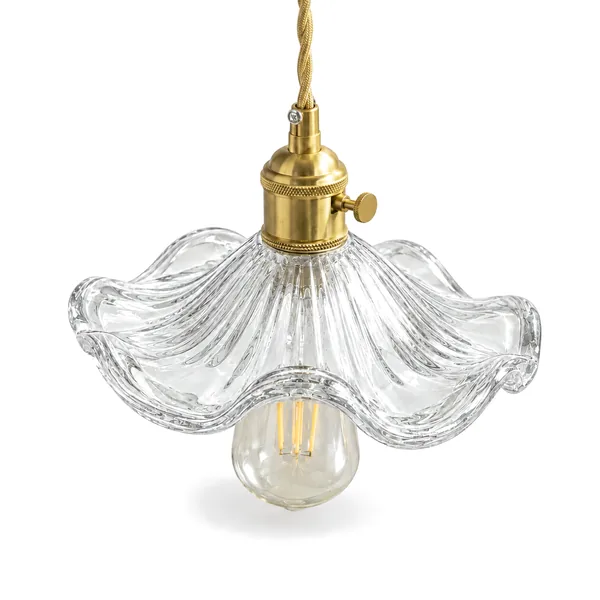
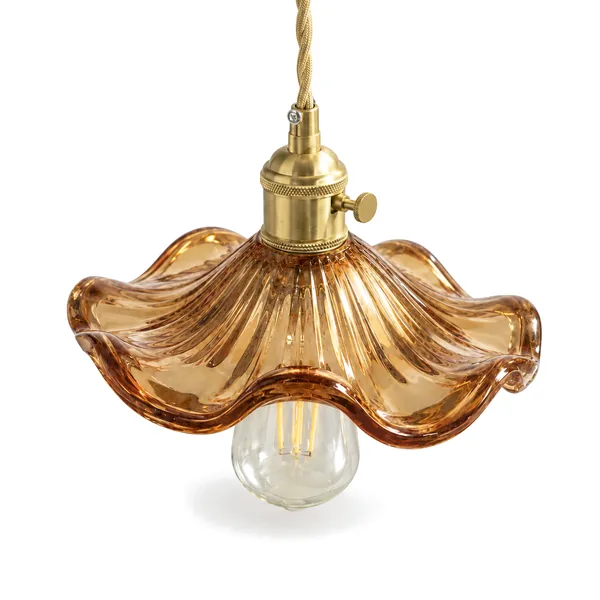 3 options
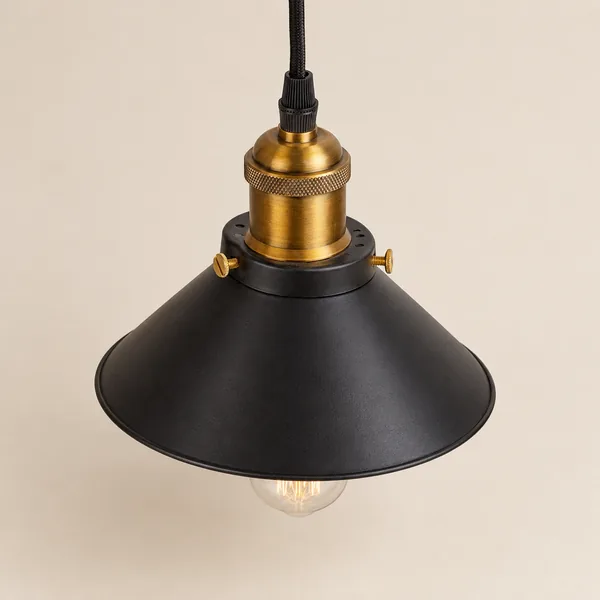
Glora Nordic Glass Pendant Light with Copper
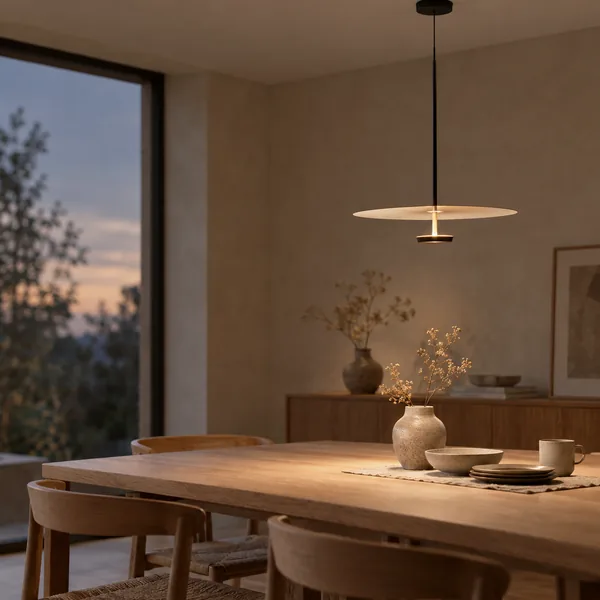
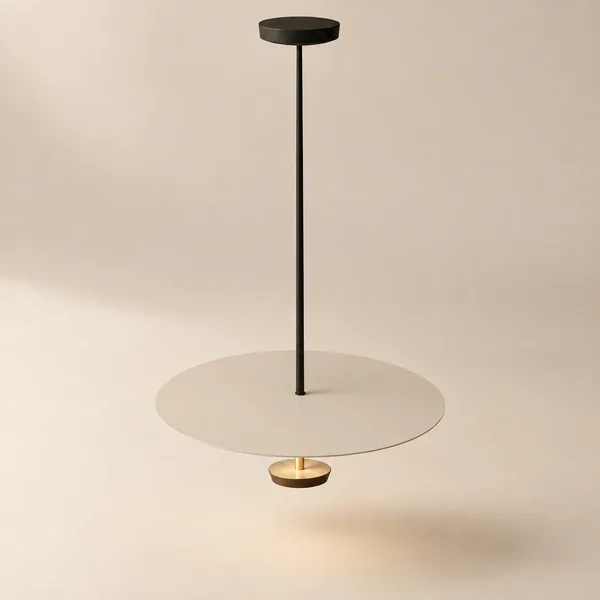 Save $120.00
Skiva Nordic Saucer Ceiling Pendant Light LED
The Role of Can Lighting and Layering
While pendant and chandelier combinations form the visual centerpiece, ceiling fixtures work in tandem with the overall lighting scheme. Consider how recessed can lighting in both zones can wash walls and highlight artwork, creating an ambient foundation that allows your decorative fixtures to shine.
Pro Tip: In open-plan spaces, dimmers are essential. The ability to adjust brightness allows your coordinated fixtures to shift from bright task lighting during meal prep to atmospheric dining illumination.
Product Spotlight: Finding Your Perfect Pair
At Skonne, we curate lighting that embodies Scandinavian warmth and intentional design. The Driva Sculptural Cloud Pendant Light in Glass exemplifies how a single fixture can set the tone for an entire lighting scheme.
The organic, cloudlike silhouette works beautifully in multiples over a kitchen island, creating ambient Nordic warmth that's casual yet refined. The soft curves introduce that desired hygge feeling while maintaining the clean lines characteristic of Scandinavian design.
Common Mistakes to Avoid in Open-Plan Lighting Coordination
Even with the best intentions, certain missteps can undermine your coordinated lighting scheme:
Matching Without Context
While a perfectly matching set might seem safe, it often reads as flat and uninspired. Instead, create fixture "families" that share DNA without being twins.
Ignoring the Ceiling Plane
In open-plan spaces, your ceiling serves as a unifying canvas. Fixtures that extend at wildly different heights or scales from the ceiling line can fragment the space visually.
Forgetting About the In-Between
The transition zone between kitchen and dining—often the perimeter counter or a peninsula—needs lighting consideration too. Under-cabinet lighting, wall sconces, or additional pendants can bridge the gap between your primary fixtures.
Pendant and Chandelier Pairings That Work
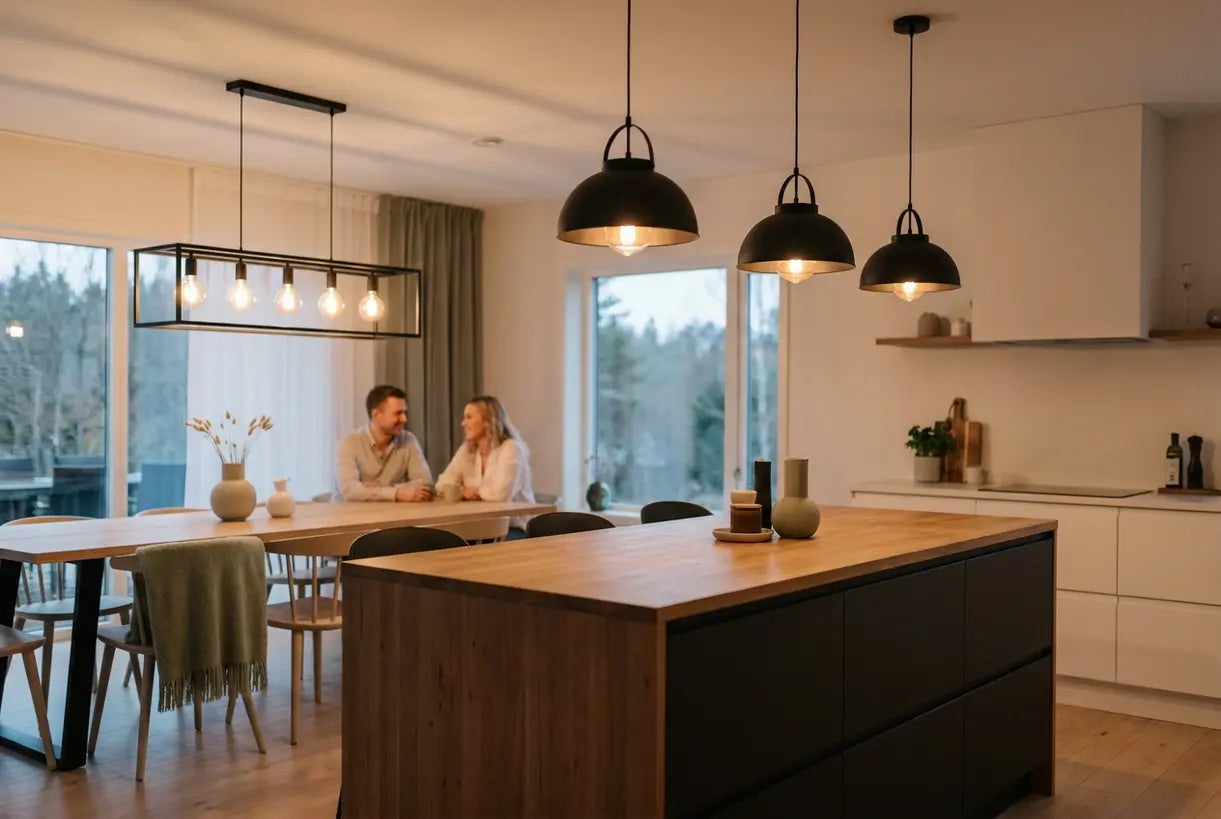
Based on current design trends and timeless principles, here are proven combinations for coordinating kitchen and dining lighting:
The Modern Nordic Approach
Pair sculptural glass pendants featuring hand-blown character with a statement chandelier that incorporates organic, natural elements. The shared glass medium and artisan quality create cohesion, while different forms provide interest.
The Elevated Classic
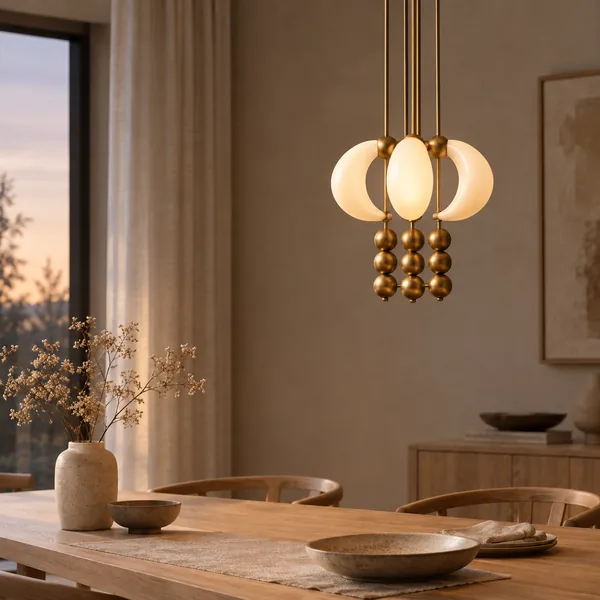
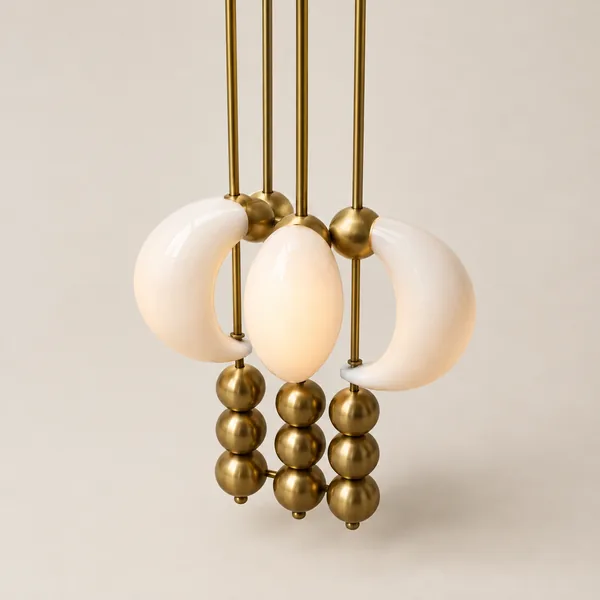
Combine vintage-inspired clear glass elements with gold hardware throughout. The transparency of glass prevents visual heaviness while the consistent metal choice unifies the scheme.
The Minimalist Statement
Choose fixtures with strong silhouettes but restrained detailing. A simple dome pendant over the island paired with an elegant chandelier featuring similar curvature speaks to sophisticated restraint.
Chandeliers
Shop all Chandeliers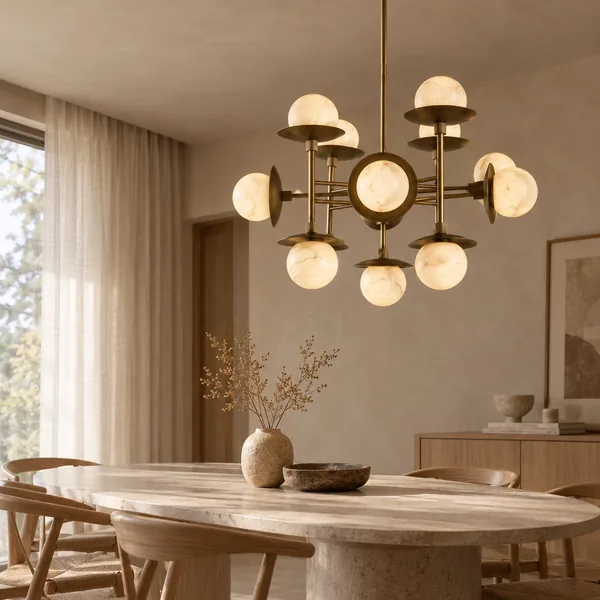
Executing Your Lighting Plan
Once you've selected your fixture direction, consider these practical implementation tips:
- Mock up the arrangement using paper templates or painter's tape to visualize proportions before installation
- Test color temperatures—consistent 2700K-3000K warm white lighting keeps both zones feeling connected
- Consider dimming capabilities for all decorative fixtures to allow atmospheric flexibility
- Think about sightlines from multiple vantage points within the open space
Elevated Fixture Combinations for Your Space
For a dining room that anchors your open-plan concept while coordinating beautifully with kitchen pendant lighting, the Stjerna Vintage French Clear Glass Chandelier offers timeless sophistication.
Its elongated oval form with rippled clear glass and mirror-polished gold hardware creates a luminous dining statement. When paired with modern glass kitchen pendants, the combination yields that sought-after balance of vintage warmth and contemporary clarity.
Curated Lighting Pairs We Love
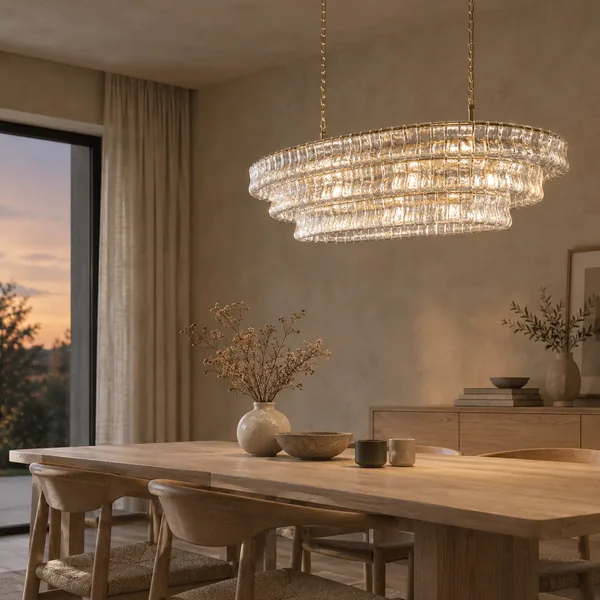 Stjerna Vintage French Clear Glass Chandelier$1,799.00$2,259.00
Above the dining table specifically, the Glødform Nordic Hand-Blown Glass Pendant Light brings artisan character through its mouth-blown glass dome. The sculptural presence and warm ambient glow establish a focal point that draws the eye while harmonizing with clear glass pendants in the adjacent kitchen zone.
Styling Tip: When mixing fixture styles, anchor the relationship through one dominant shared element—whether that's glass clarity, metal finish, or overall shape language. One strong common thread is more effective than several weak ones.
Creating Your Cohesive Open-Plan Lighting Story
The art of coordinating kitchen island and dining room lighting ultimately comes down to intentional choices that honor both function and aesthetic harmony. Your kitchen pendants work hard to illuminate meal preparation and casual dining, while your chandelier sets the mood for more formal gatherings. Together, they tell a unified story about your home's character.
By focusing on coordinating elements—shared materials, complementary proportions, and a consistent design philosophy—rather than literal matching, you create a lighting scheme that feels curated rather than catalog-ordered. The result is an open-plan space that flows visually while supporting the varied activities that make your home uniquely yours.
Skonne is committed to providing lighting that embodies Scandinavian warmth and intentional design. Our collections are thoughtfully curated to make coordinating fixtures effortless, whether you're drawn to organic glass forms, vintage-inspired elegance, or modern minimalism. Explore our complete lighting collections to discover pieces that elevate your open-concept living vision.
Related Article
Oil Rubbed Bronze Dining Room Lighting: Dark, Warm Metallic Fixtures for Traditional & Transitional Dining SpacesExplore oil rubbed bronze dining room lighting options. Dark, warm metallic fixtures that bridge traditional and transitional styles for your dining space.