
Craftsman Home Decor: Arts & Crafts Style for a Warm, Handcrafted Interior
Summary›
There's something deeply comforting about spaces that honor the human hand. When you walk into a room where every element tells a story of intention and care, it feels different—it feels like home. craftsman home decor embodies this philosophy perfectly, celebrating the marriage of honest materials with skilled craftsmanship that emerged during the Arts and Crafts movement of the late 19th century.At Skonne, we recognize the profound connection between this heritage style and the Scandinavian design values we hold dear. Both traditions champion natural materials, quality over quantity, and the beauty inherent in purposeful objects. Whether you're curating a dedicated mission style decor aesthetic or simply seeking to weave artisanal warmth into your contemporary space, this guide explores how to create interiors that honor the past while embracing modern living.
What Is a Craftsman Style Home Interior?
The craftsman style home interior emerged as a direct response to the Industrial Revolution's mass production. Pioneers like William Morris and Gustav Stickley championed a return to handcraftsmanship, believing that well-made objects enriched daily life. This philosophy created spaces defined by exposed joinery, natural wood grain, and an appreciation for the maker's touch.Key characteristics include:- Natural wood tones—typically oak, walnut, cherry, and maple left in their honest state
- Quality materials—celebrating grain patterns, knots, and the organic variations that make each piece unique
- Handcrafted details—visible joinery, hand-hammered hardware, and artisan lighting
- Warm, layered lighting—avoiding harsh overhead illumination in favor of ambient, task, and accent light sources
Key Design Elements of Arts & Crafts Style
Understanding the foundational principles helps create an authentic craftsman interior design that resonates with intention. The Arts & Crafts movement wasn't merely a visual style—it was a philosophy about how we live.Wood as center stage. Whether through furniture, trim, or architectural elements, wood dominates craftsman spaces. The material isn't hidden under paint or veneer; instead, its natural character becomes the design statement. Consider built-in shelving, window seats with exposed joinery, or hardwood floors that age gracefully.Artisan lighting. The right lighting transforms a room from functional to atmospheric. In true craftsman form, fixtures should highlight quality materials—think hand-forged iron, blown glass, or turned wood. These pieces aren't merely sources of light; they're functional sculptures that honor traditional techniques.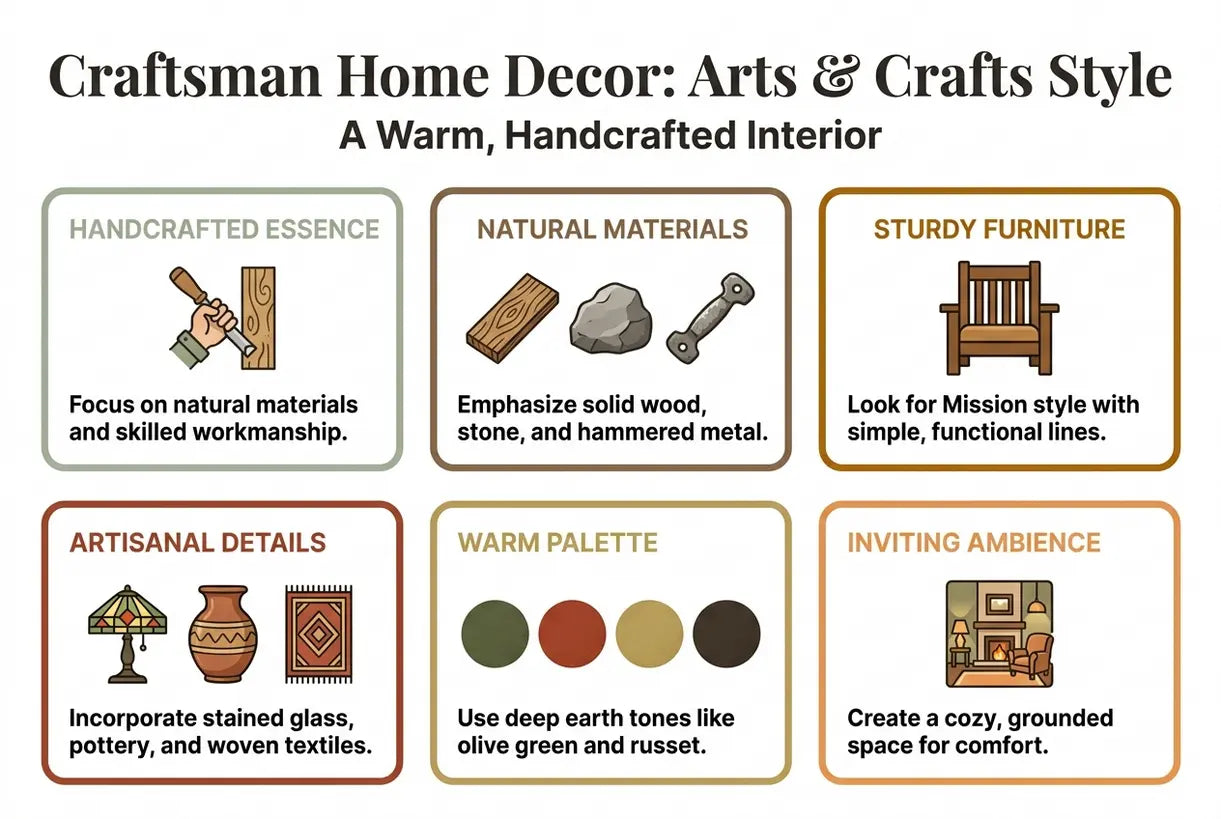 The most cohesive craftsman interiors balance heritage pieces with modern functionality. You needn't live in a 1920s bungalow to embrace these principles—the aesthetic translates beautifully to contemporary homes.
How to Make Your House Look Craftsman Style
Creating a craftsman-inspired home doesn't require a complete renovation. Strategic choices in materials, lighting, and accessories can transform any space.Start with warm wood home decor elements. Introduce solid wood furniture with simple, honest construction. Look for pieces that showcase dovetail joints, wooden pegs, or hand-rubbed finishes. These details speak to the Arts & Crafts commitment to visible craftsmanship.Layer textures through natural materials. Linen, wool, leather, and hand-thrown ceramics complement wood beautifully. These tactile elements invite touch and age gracefully—essential qualities in a home designed for living, not just displaying.Your lighting choices fundamentally shape the atmosphere. Handcrafted home decor lighting fixtures cast distinctive shadows and glows that mass-produced alternatives simply cannot replicate. Consider how light pools and disperses, creating intimate zones within larger rooms.The Eldorm Handcrafted Wabi-Sabi Iron Wall Sconce exemplifies this approach. Its rustic iron frame and linen shade honor the Arts & Crafts tradition of honest materials, ideal for hallways or bedside walls where warm, directional light creates intimate moments.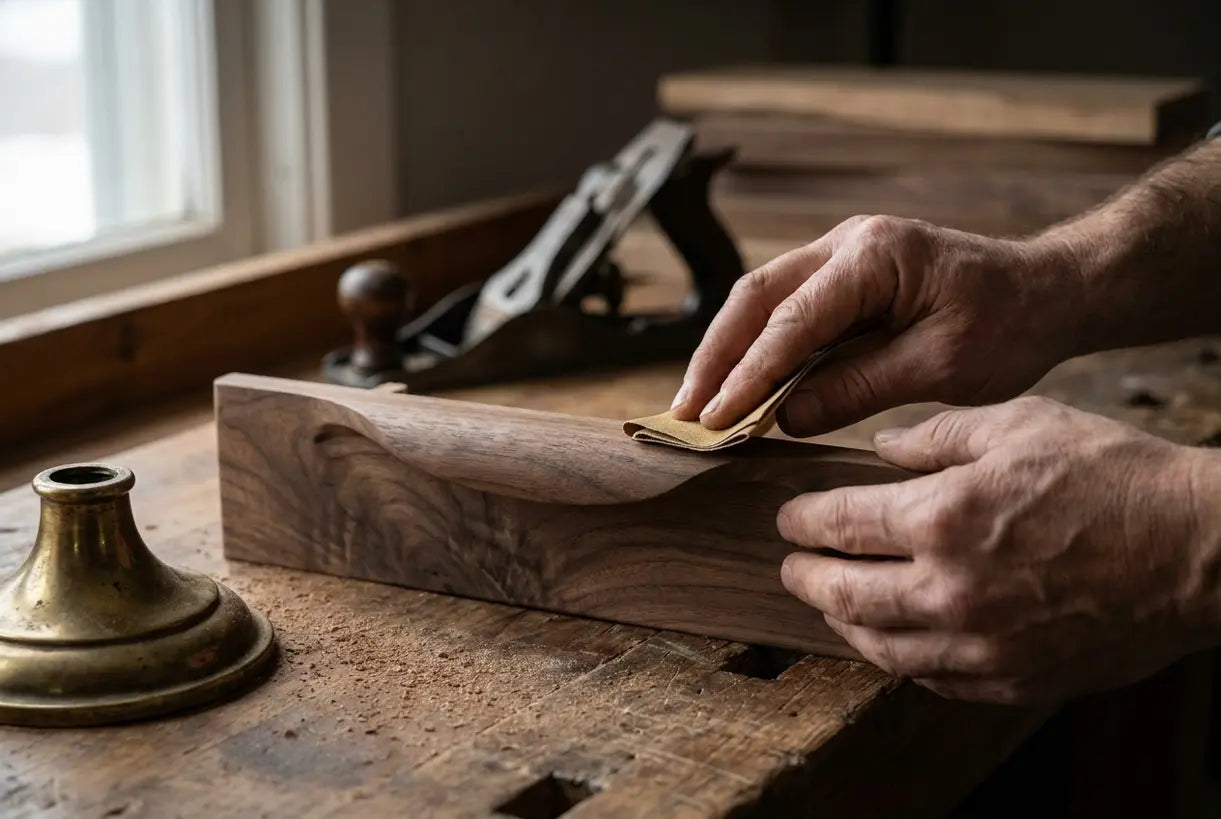
Modern Craftsman Style: Bridging Heritage and Today
The most successful modern craftsman style interiors don't replicate museum pieces—they reinterpret timeless principles for contemporary life. This means embracing open floor plans, cleaner lines, and updated functionality while maintaining the soul of the original movement.Color palettes remain grounded in nature: sage greens, warm terracottas, deep burgundies, and cream tones complement wood beautifully. These hues create the cozy, enveloping feeling that craftsman homes are known for.Scale matters in modern interpretations. While historical craftsman interiors sometimes feel heavy by today's standards, current interpretations favor lighter proportions and airier silhouettes. The commitment to quality and craftsmanship remains unchanged; only the visual weight shifts.Creating a Craftsman Style Living Room
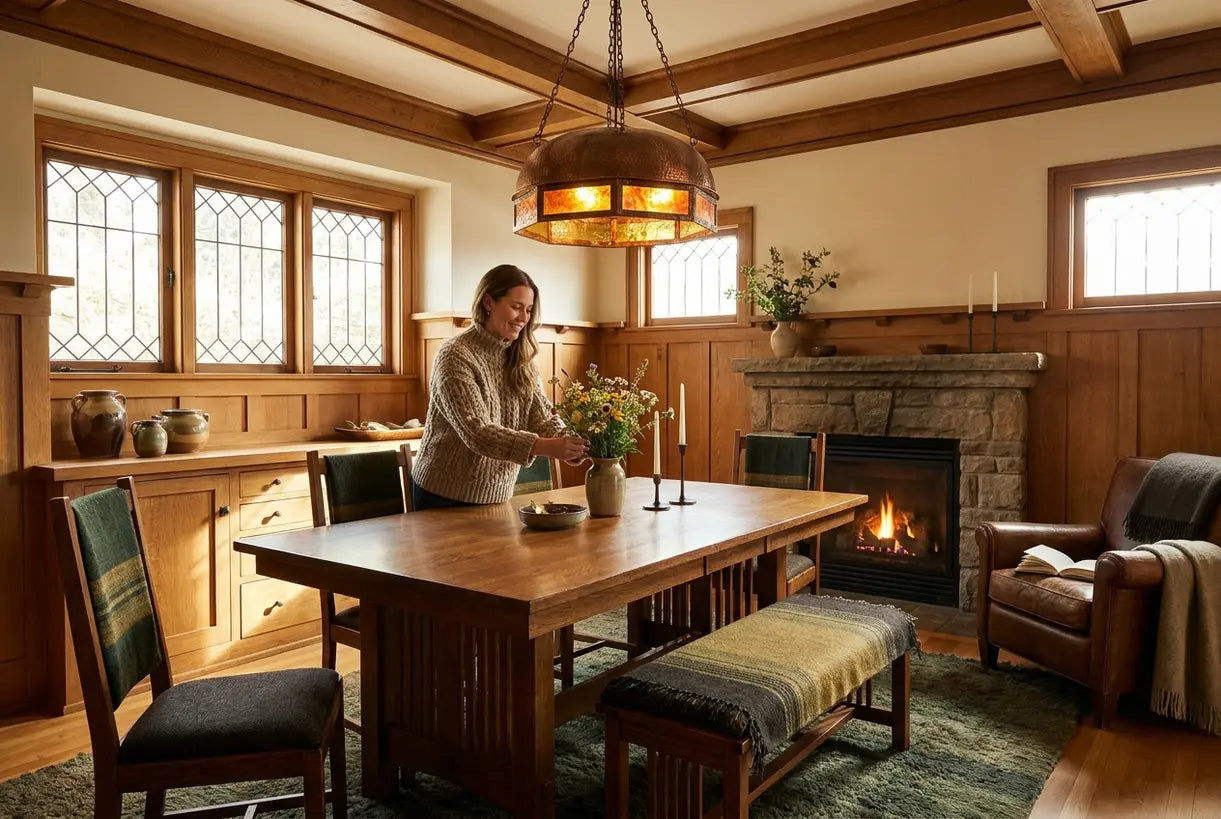
The living room serves as the heart of any home, and in craftsman style, it becomes a sanctuary. A craftsman style living room prioritizes comfort and conversation over formal display.Begin with a substantial piece of solid wood furniture—a media console, bookshelf, or coffee table—as your anchor. Surround it with seating upholstered in natural materials like linen or leather. The goal is lived-in elegance: pieces that improve with age and use.Lighting transforms this space from merely attractive to truly welcoming. Layer multiple sources—a statement pendant overhead, wall sconces for ambient glow, and Table Lamps for intimate reading nooks. Each fixture should feel considered, contributing to the room's collected-over-time aesthetic.Handcrafted Lighting for Your Craftsman Space
The Gloda Walnut Brass French Style Pendant Light brings natural materials front and center with its rich walnut wood and warm brass accents. The artisan-crafted glass diffuser casts the soft, ambient glow that Arts & Crafts interiors are known for—perfect above a dining table or in an entryway.For intimate corners, the Solvæv Handwoven Linen Table Lamp embodies the craftsman ethos through its organic texture and handwoven construction. Its warm light echoes the Arts & Crafts movement's celebration of honest, handcrafted decor.
What Are the 4 Styles of Craftsman Homes?
While this article focuses on interior decor, understanding the architectural foundations helps contextualize your design choices. The four primary styles are:- Bungalow: The most common form, featuring low-pitched roofs, wide porches, and open floor plans
- Prairie Style: Associated with Frank Lloyd Wright, emphasizing horizontal lines and integration with the landscape
- Mission Revival: Drawing from Spanish colonial architecture with stucco exteriors and tile roofs
- Four Square: Boxy, practical designs with symmetrical facades and centered dormers
Embracing the Craftsman Philosophy
True craftsman home decor extends beyond purchasing the right furniture—it's a mindset about how we inhabit our spaces. It's choosing quality over convenience, meaning over trend, and soul over speed.When you select pieces that honor traditional craftsmanship, you're not just decorating; you're curating heirlooms. These are objects that tell stories, improve with age, and create environments where life unfolds meaningfully.At Skonne, we believe that lighting plays a pivotal role in this philosophy. The right fixture doesn't just illuminate—it transforms. It honors the materials it's made from and the hands that shaped it. Whether you're drawn to the heritage of Arts & Crafts or the warmth of Scandinavian design (or the beautiful space where they overlap), we're here to help you create spaces that feel genuinely like home.Explore our curated collections and discover lighting that honors craftsmanship, celebrates natural materials, and brings intentional beauty to your everyday life.Related Article
Home Decor Books: The Best Interior Design Books for Inspiration & LearningDiscover the best home decor books to inspire your interior design journey. From timeless classics to modern coffee table books, elevate your space and knowledge.
Frequently asked questions
Craftsman homes pair beautifully with decor that emphasizes natural materials and honest construction. Solid wood furniture in oak, walnut, or cherry creates a strong foundation. Linen and leather textiles add layers of texture, while artisan lighting fixtures crafted from iron, brass, or hand-blown glass honor the movement's reverence for skilled craftsmanship. Handwoven rugs, ceramic vases, and framed botanical prints complement the aesthetic without overwhelming it.
A Craftsman style home interior is defined by honest materials, visible craftsmanship, and warm, organic tones. Key elements include exposed wood joinery, built-in shelving and seating, natural wood trim, and handcrafted lighting. The aesthetic emphasizes quality over ornamentation—beauty derived from function and materials rather than applied decoration. Colors tend toward earth tones: sage, terracotta, burgundy, and cream against rich wood backgrounds.
To create a Craftsman look, focus on four key areas: materials, lighting, furniture, and details. Incorporate natural wood through furniture, shelving, or trim. Add layered lighting with handcrafted fixtures that showcase artisan techniques. Choose furniture with visible joinery and honest construction over mass-produced pieces. Finally, introduce handcrafted details—hand-thrown ceramics, woven baskets, or artisan hardware. You needn't renovate; even small touches like changing lighting or adding wood accents can evoke the Craftsman aesthetic.
The four main styles of Craftsman homes are Bungalow (most common, with wide porches and open plans), Prairie Style (horizontal lines emphasizing connection to landscape, associated with Frank Lloyd Wright), Mission Revival (influenced by Spanish colonial architecture with stucco and tile), and Four Square (boxy, symmetrical design with practical layouts). While architectural details vary, all share the Craftsman commitment to quality materials and honest construction.
Arts & Crafts style centers on several core principles: natural materials displayed honestly (particularly wood with visible grain), handcrafted objects that show the maker's touch, functional beauty where form follows function, warm earth-toned palettes, and quality construction meant to last generations. The movement rejected mass production in favor of pieces that improved with age and honored the craftsperson's skill. Lighting, textiles, and accessories should all reflect these values of intentionality and material honesty.