
Desk Lamps: The Complete Guide to Styles, Types & How to Choose
Summary›
The humble desk lamp has evolved from purely functional office equipment into a statement piece that defines your workspace aesthetic. Whether you're curating a minimalist home office or seeking the perfect ambient glow for late-night reading, choosing the right lighting transforms how you experience your space. Today's discerning homeowner understands that the desk lamp sitting on their workspace does more than illuminate—it creates atmosphere, reduces eye strain, and reflects their personal design philosophy.
At Skonne, we believe lighting should feel intentional and warm, never clinical or harsh. This guide walks you through everything you need to know about selecting, positioning, and styling desk lamps, with particular attention to the Scandinavian design principles our community cherishes. By the end, you'll understand not only what makes a quality desk lamp, but how to choose one that brings genuine hygge to your daily rituals.
Understanding Desk Lamp Styles
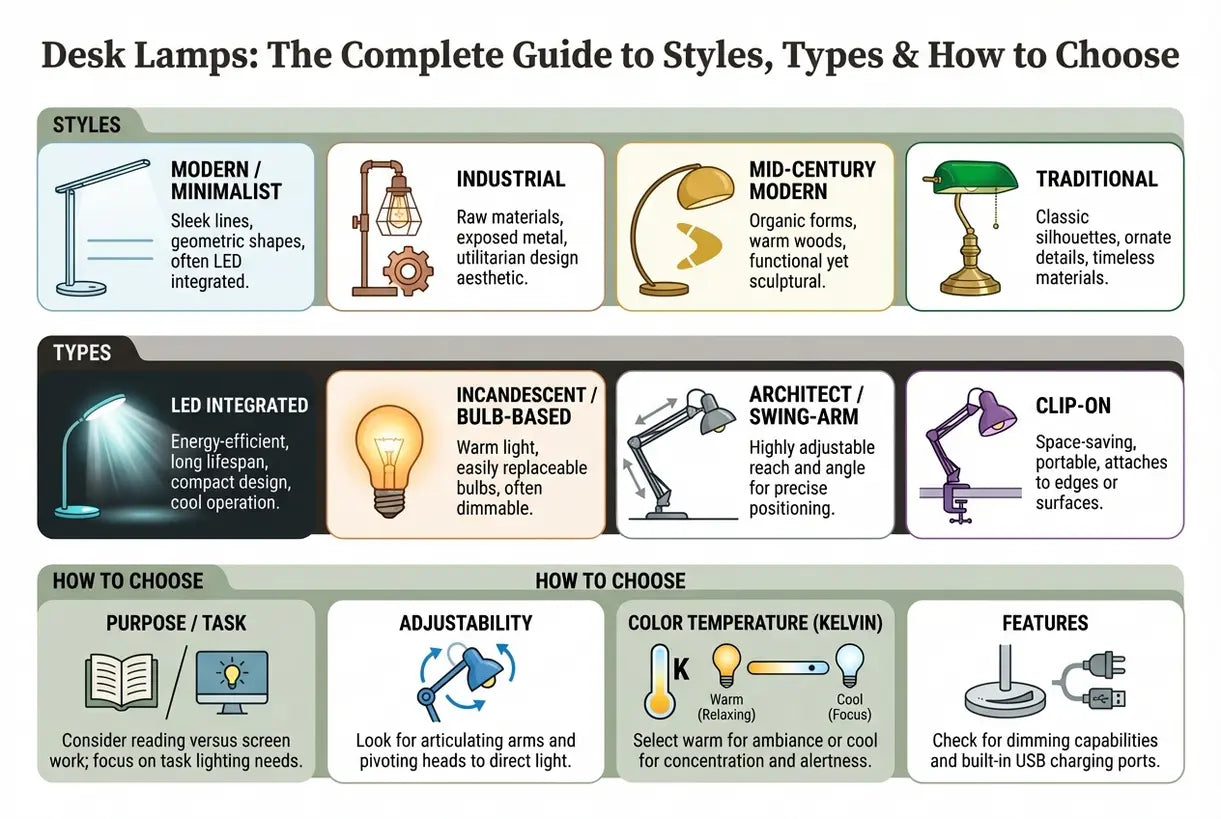
Before diving into technical specifications, let's explore the aesthetic landscape of modern desk lamps. The right style speaks to your space's personality while serving practical needs.
Designer desk lamps embrace sculptural forms, treating illumination as an art form. These pieces often feature unexpected materials, asymmetrical silhouettes, or gallery-worthy profiles that command attention even when switched off. They work beautifully in spaces where the lamp serves as a focal point.
Simple desk lamps honor the Scandinavian principle of lagom—just enough. Clean lines, neutral palettes, and unfussy construction define this category. They integrate seamlessly into existing interiors without competing for attention, making them ideal for serene, uncluttered workspaces.
Ambient desk lamps prioritize atmosphere over task lighting. With diffused shades, dimmable elements, and warm color temperatures, they create layers of gentle illumination that transform harsh overhead lighting into something more nurturing. These lamps excel in multi-purpose spaces where you transition from focused work to relaxed evening activities.
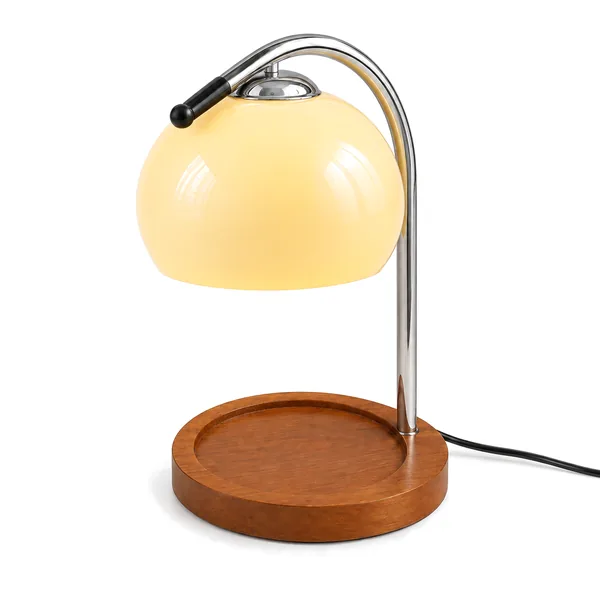
Dome desk lamps reference mid-century modern aesthetics with their rounded, bowl-shaped shades. The dome shape directs light downward for effective task illumination while casting a softer glow upward, striking that delicate balance between function and ambiance.
Types of Desk Lamps & Their Best Uses
Not all desk lamps serve the same purpose. Understanding these distinctions helps you invest wisely in lighting that actually supports your needs.
LED desk lamps dominate contemporary offerings for good reason. Energy efficiency, long lifespan, and adjustable color temperatures make them practical choices for daily use. Look for options with CRI (Color Rendering Index) above 90 if color accuracy matters for your work.
Architect/Task lamps feature adjustable arms and focused beams designed specifically for detailed work. These prioritize function over form, though modern interpretations often blend both beautifully.
Banker/Traditional lamps with their iconic green glass shades have experienced a resurgence. The green glass actually serves a purpose—it diffuses light to reduce glare while maintaining warmth, explaining why the green desk lamp is so popular among those seeking vintage character with practical benefits.
Sculptural/Statement lamps treat the fixture itself as decor. These may sacrifice some adjustability for aesthetic impact, making them better suited for ambient lighting or spaces where task illumination isn't the primary concern.
For those looking to explore more options, our Home Office Lighting collection offers a curated selection designed specifically for productive, beautiful workspaces.
Table Lamps
Shop all Table Lamps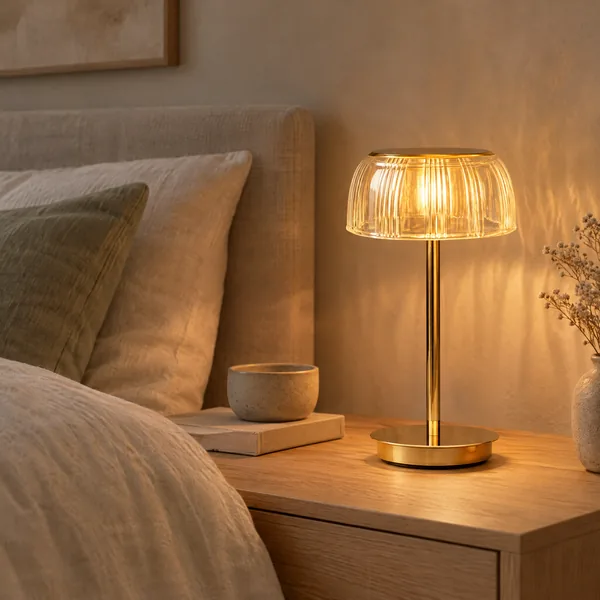
 Save $30.00
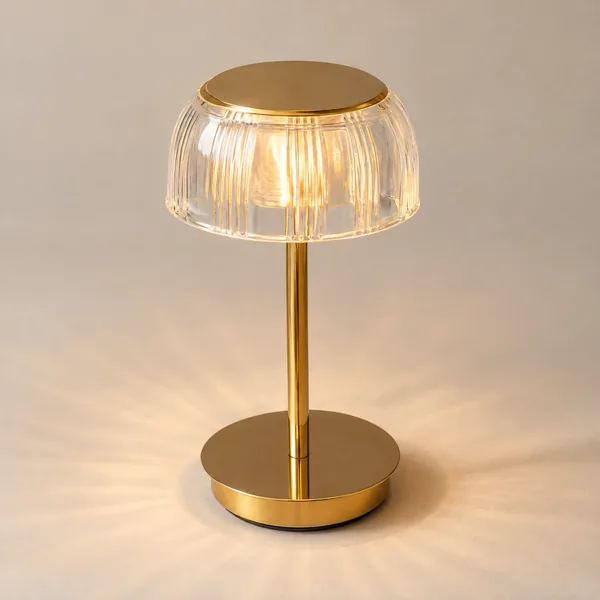
Kvalla Jellyfish LED Rechargeable Table Lamp
 Save $60.00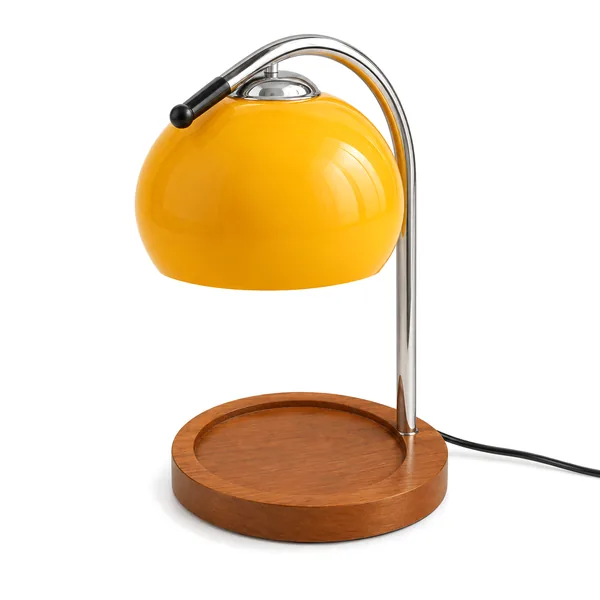
 3 options
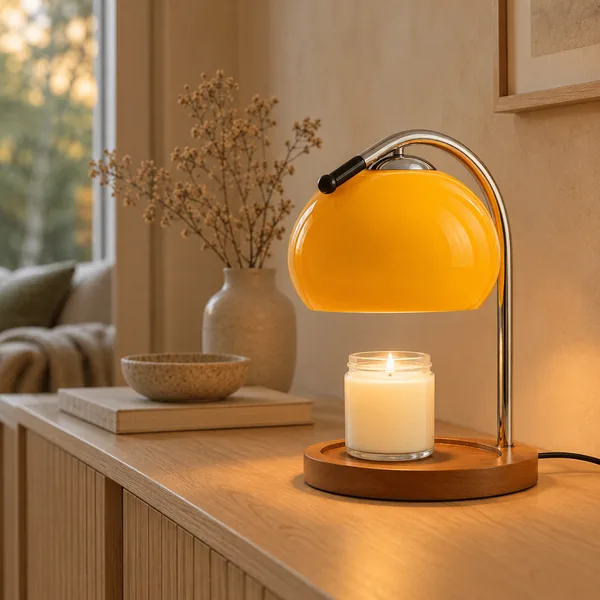
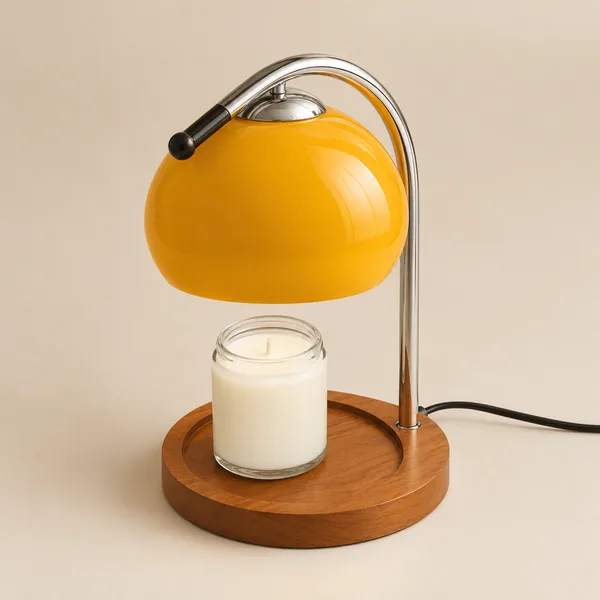
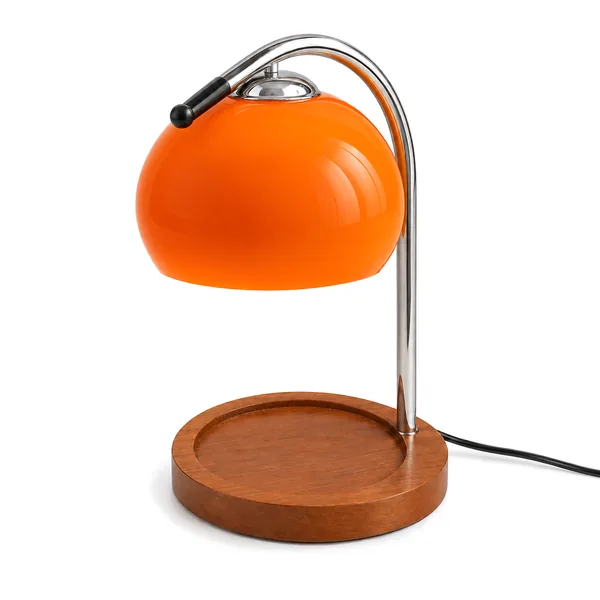
Solvarm Stained Glass Candle Warmer Table Lamp
 Save $220.00
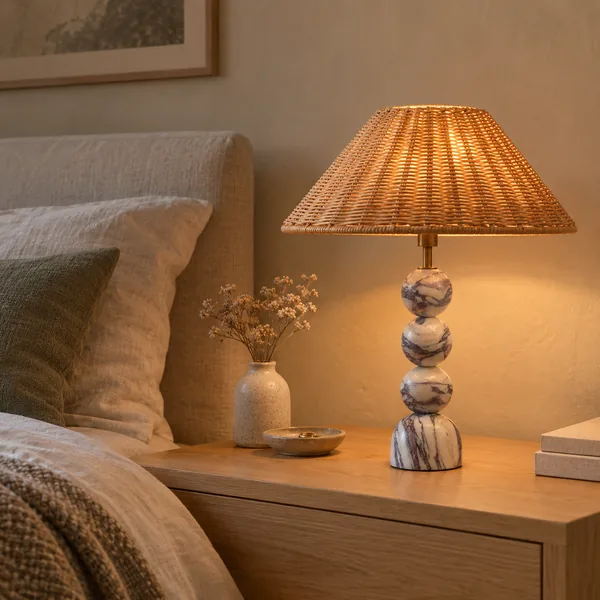
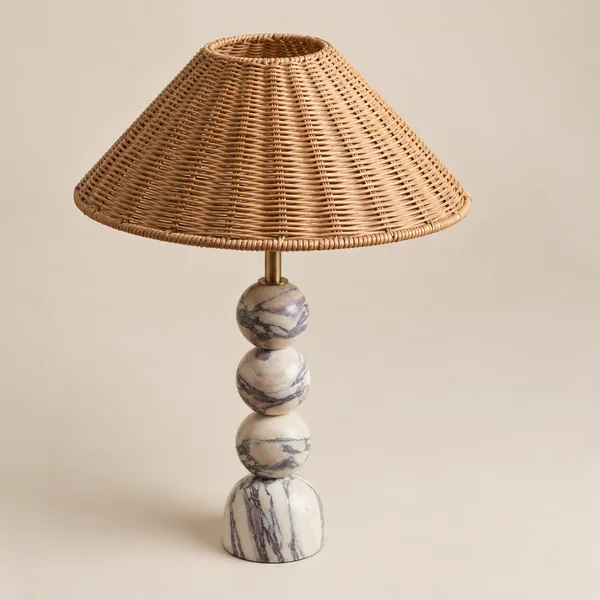
Stenglo Nordic Marble Table Lamp Rattan Shade
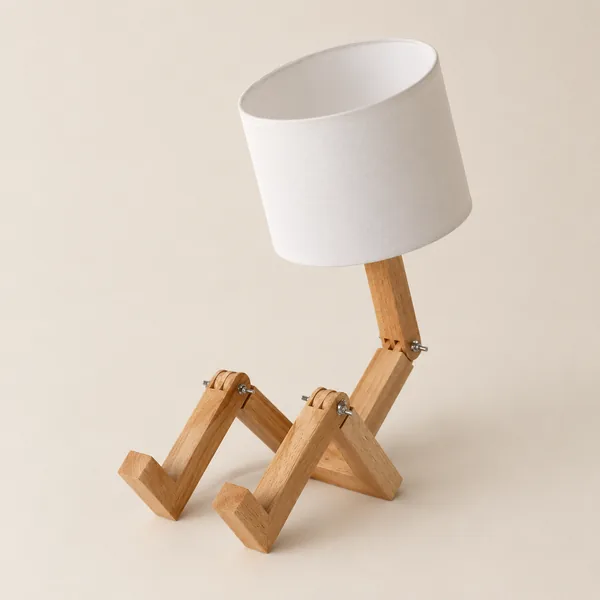
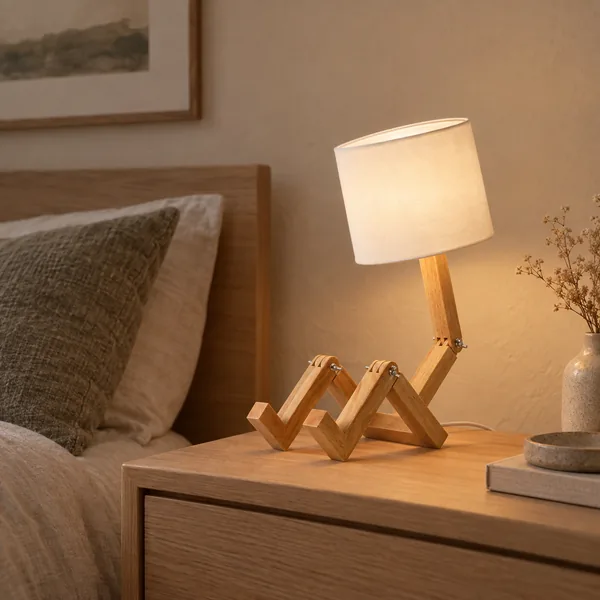 Glodbot Handcrafted Solid Wood Robot Table Lamp$79.00$129.00
How to Choose the Perfect Desk Lamp
With countless options available, narrowing your selection requires understanding your specific needs and environment.
First, assess your primary use case. Do you need focused light for detailed work like drawing or crafting? Are you seeking ambient illumination to soften your space? Will this lamp serve multiple purposes throughout the day? Answering these questions eliminates incompatible options immediately.
Consider your desk size and configuration. An oversized lamp overwhelms a compact workspace, while a too-small fixture gets lost on a large executive desk. Measure your available surface area and visualize scale before committing.
Evaluate your existing lighting. Spaces with abundant natural light may only need supplemental ambient lighting, while north-facing rooms or basement offices require more robust task illumination. Layering different light sources typically yields better results than relying on a single powerful lamp.
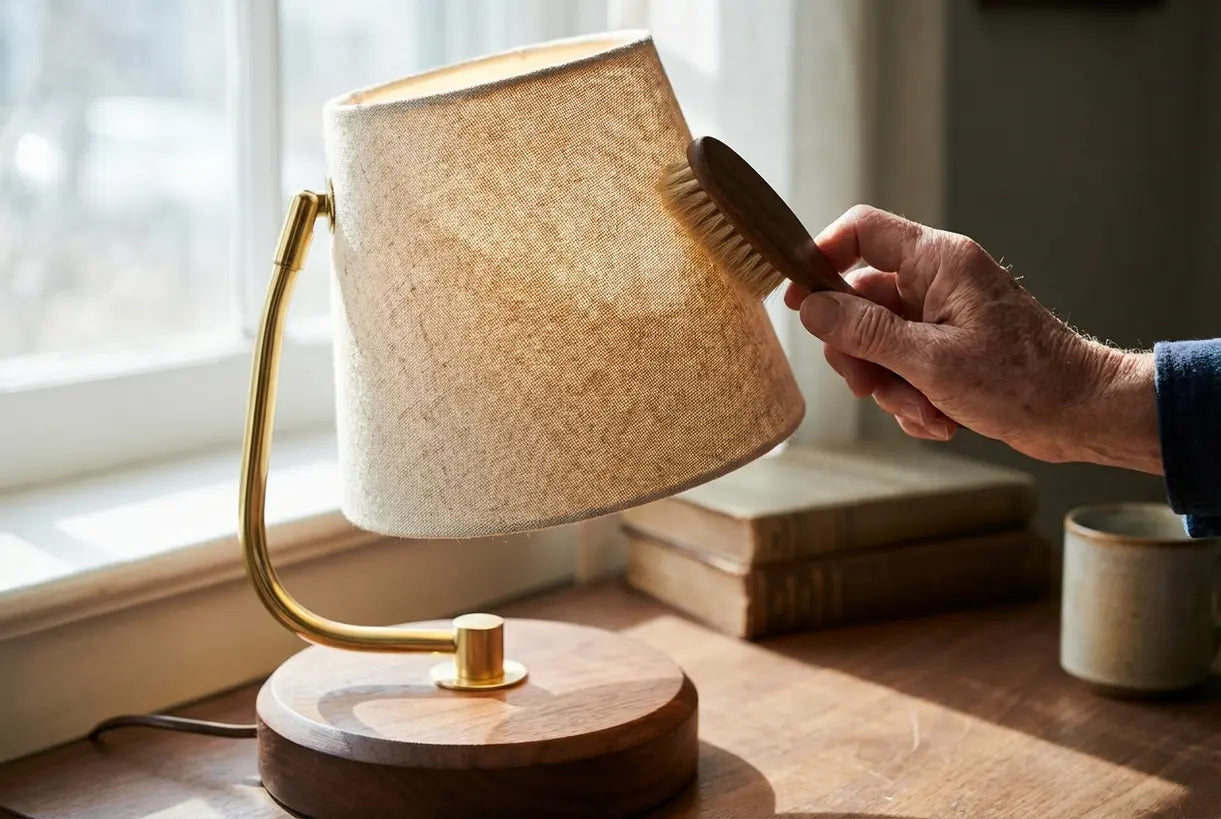
Key Features to Prioritize
When evaluating specific models, prioritize these elements:
- Adjustability: Arms that pivot, heads that rotate, and telescoping stems allow you to direct light precisely where needed throughout the day as natural light shifts
- Dimming capabilities: Brightness should match your activity and time of day
- Color temperature control: Cooler light (4000K-5000K) supports focus, while warmer temperatures (2700K-3000K) encourage relaxation
- Cable management: Clutter destroys hygge—clean lines matter
- Material quality: Solid woods, metal alloys, and premium finishes age gracefully and feel substantial
Positioning Your Desk Lamp for Optimal Comfort
Even the finest desk lamp underperforms when poorly positioned. Proper placement prevents eye strain, eliminates distracting shadows, and maximizes your investment.
The general rule positions your lamp on the opposite side of your dominant hand—right-handed individuals place lamps on the left, left-handed on the right. This prevents your writing hand from casting shadows across your work surface.
Height matters significantly. Position the light source slightly above eye level, ideally 15-20 inches above your work surface. This illuminates documents without shining directly into your eyes or causing screen glare. Adjustable lamps offer obvious advantages here, allowing customization for different activities.
Consider your computer monitor placement carefully. Position lamps to avoid reflecting in screens, which causes eye fatigue. Matte finishes on lamp bases and indirect lighting options help minimize this common issue.
For video calls and virtual meetings, strategic lamp placement eliminates the harsh shadows that make participants appear tired or unprofessional. A lamp positioned slightly off-center and above eye level creates flattering, dimensional lighting.
Curated Desk Lamp Selection
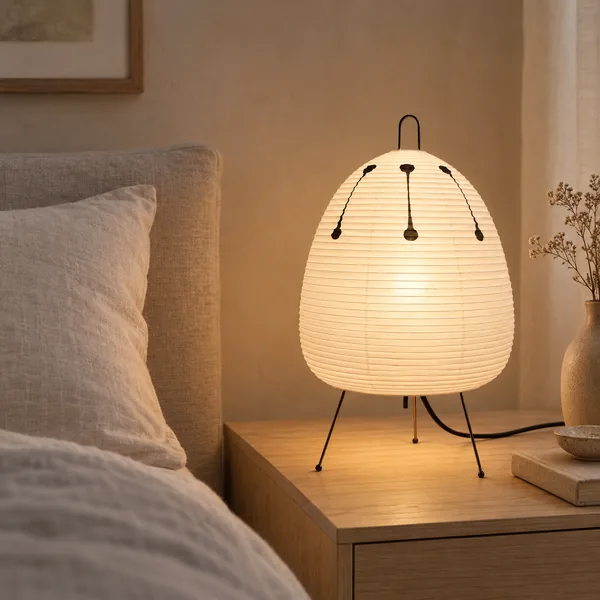 Shiro Rice Paper Table Lamp Nordic Minimalist$119.00$199.00
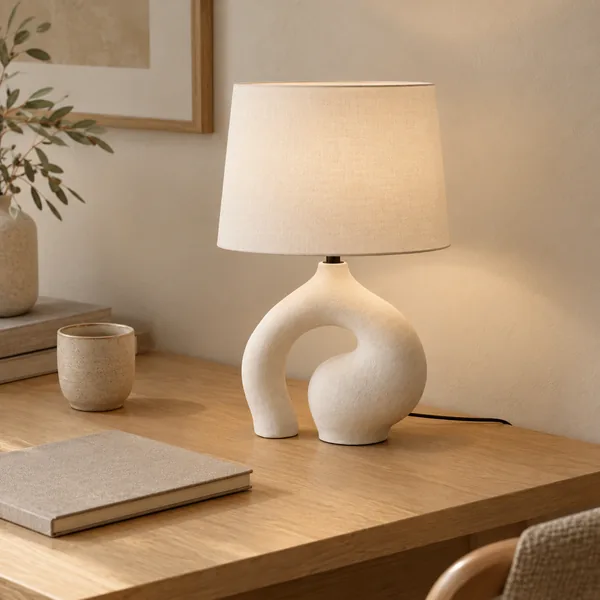 Formia Sculptural Resin Table Lamp Nordic Shade$399.00$579.00
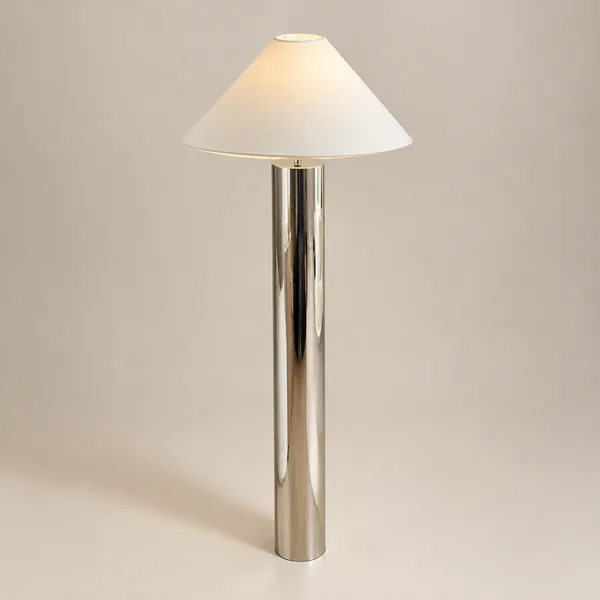
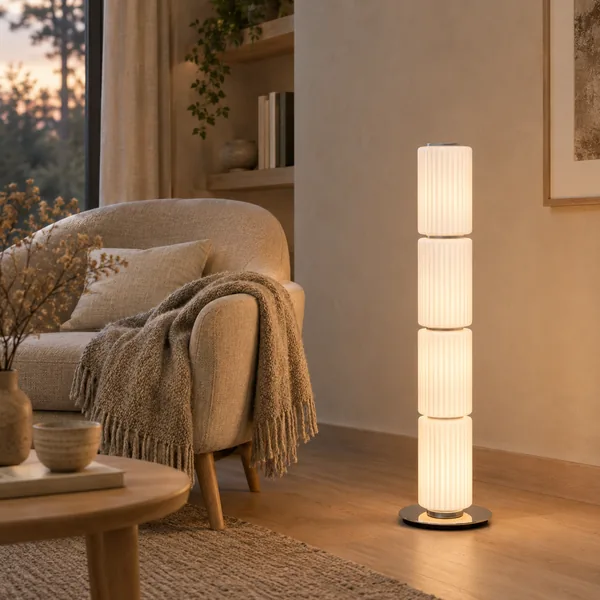
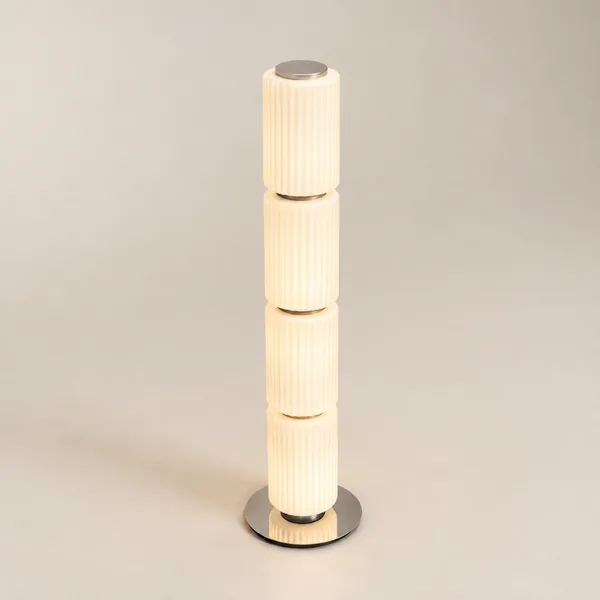
Floor Lamps
Shop all Floor Lamps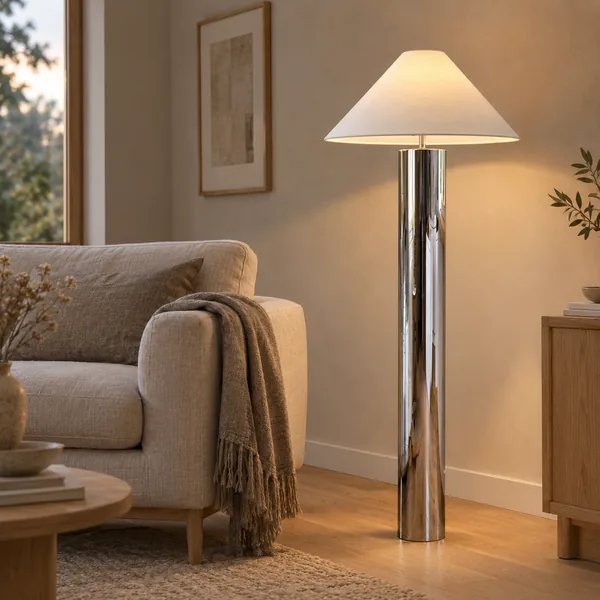
Creating a Scandinavian-Inspired Workspace
Scandinavian design principles prioritize function, natural materials, and that unmistakable feeling of calm that Nordic spaces embody so effortlessly. Your desk lamp plays a starring role in achieving this aesthetic.
Embrace natural materials—solid wood, ceramic, linen, and rice paper filters that soften harsh LED illumination. The Shiro Rice Paper Table Lamp exemplifies this approach, with its hand-crafted shade creating layered, diffused light that feels like late afternoon sun filtering through clouds.
Prioritize clean lines and intentional negative space. A cluttered desk with an elaborate, busy lamp creates visual chaos. Instead, choose pieces with considered simplicity that complement rather than compete with your workspace.
Consider warmth and personality alongside minimalism. The Glodbot Handcrafted Solid Wood Robot Table Lamp demonstrates how Scandinavian design accommodates playfulness—its sculptural form brings joy without sacrificing sophistication.
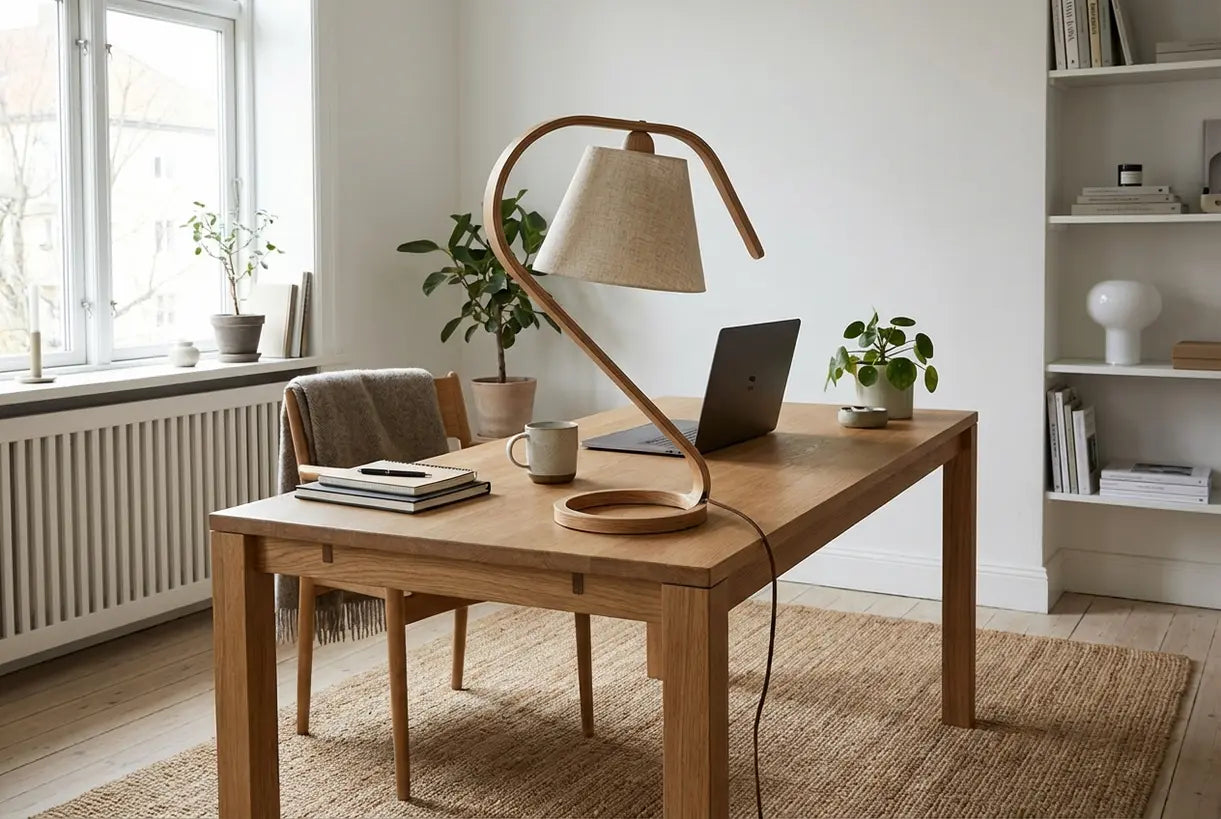
Layer your lighting intentionally. Scandinavian spaces rarely rely on single overhead fixtures. Combine your desk lamp with floor lamps, wall sconces, and candlelight to create depth and dimension. This approach allows you to adjust the mood throughout the day, supporting both productive focus and evening wind-down.
The Formia Sculptural Resin Table Lamp bridges the gap between functional task lighting and gallery-worthy art object. Its mushroom-inspired silhouette and soft Nordic fabric shade demonstrate how contemporary Scandinavian design elevates everyday objects into something worth contemplating.
Conclusion
Choosing the right desk lamp means balancing practical illumination with aesthetic harmony. Whether you gravitate toward designer statement pieces, simple minimalist forms, or ambient mood-setters, your selection should serve your daily rituals while bringing genuine pleasure each time you switch it on.
Remember that lighting transforms not just how your space looks, but how it feels. The warm, intentional glow of a thoughtfully chosen desk lamp creates the conditions for better focus, deeper creativity, and more restorative breaks from screen time. In a world that often feels overwhelming, your workspace deserves lighting that cultivates calm.
At Skonne, we curate desk lamps that honor Scandinavian design heritage while meeting contemporary needs for adjustable, eye-friendly illumination. Each piece in our collection—from playful sculptural robots to serene rice paper diffusers—has been selected for its ability to bring warmth and intention to your daily life. Your perfect desk lamp awaits.
Related Article
Bedside Lamp Sets & Pairs: How to Choose Matching Nightstand Lamps for Both Sides of the BedLearn how to choose the perfect bedside table lamp sets for symmetrical bedroom design. Discover sizing tips, style matching advice & Scandinavian inspiration.