
Farmhouse Chandeliers: Charming Fixtures for Country-Inspired & Rustic-Modern Homes

Summary›
The farmhouse aesthetic continues to capture hearts across America, and nothing anchors this beloved style quite like the perfect lighting centerpiece. A farmhouse chandelier does more than illuminate your space—it tells a story of heritage, craftsmanship, and intentional living. Whether you're renovating a century-old farmhouse or bringing rustic charm to a modern suburban home, the right chandelier transforms ordinary rooms into warm, welcoming sanctuaries.
At Skonne, we believe lighting should feel like an embrace. Our curated approach blends Scandinavian sensibilities with country-inspired warmth, offering fixtures that honor tradition while embracing contemporary living. In this guide, we'll explore everything you need to know about selecting, sizing, and styling farmhouse chandeliers—from classic wagon wheel designs to refined rustic-modern interpretations that feel fresh yet timeless.
What Defines a Farmhouse Chandelier?
Before diving into styles and sizing, let's clarify what separates a true farmhouse chandelier from other rustic lighting options. The essence lies in authentic materials, artisanal construction, and a sense of history.
Traditional farmhouse chandeliers typically feature natural elements like distressed wood, wrought iron, aged brass, or hand-blown glass. They celebrate imperfection—rough-hewn textures, visible joinery, and finishes that suggest decades of gentle wear. Unlike the sleek minimalism of pure Scandinavian design, farmhouse lighting carries a sense of warmth and nostalgia.
The modern farmhouse movement has evolved this aesthetic, pairing rustic foundations with cleaner lines and refined proportions. This hybrid approach allows these fixtures to complement both traditional country homes and contemporary interiors seeking character and soul.
Styles of Farmhouse Chandeliers
The variety within farmhouse lighting means there's truly something for every space and sensibility. Understanding the distinct styles helps you identify which resonates with your home's personality.
Wagon Wheel Chandeliers
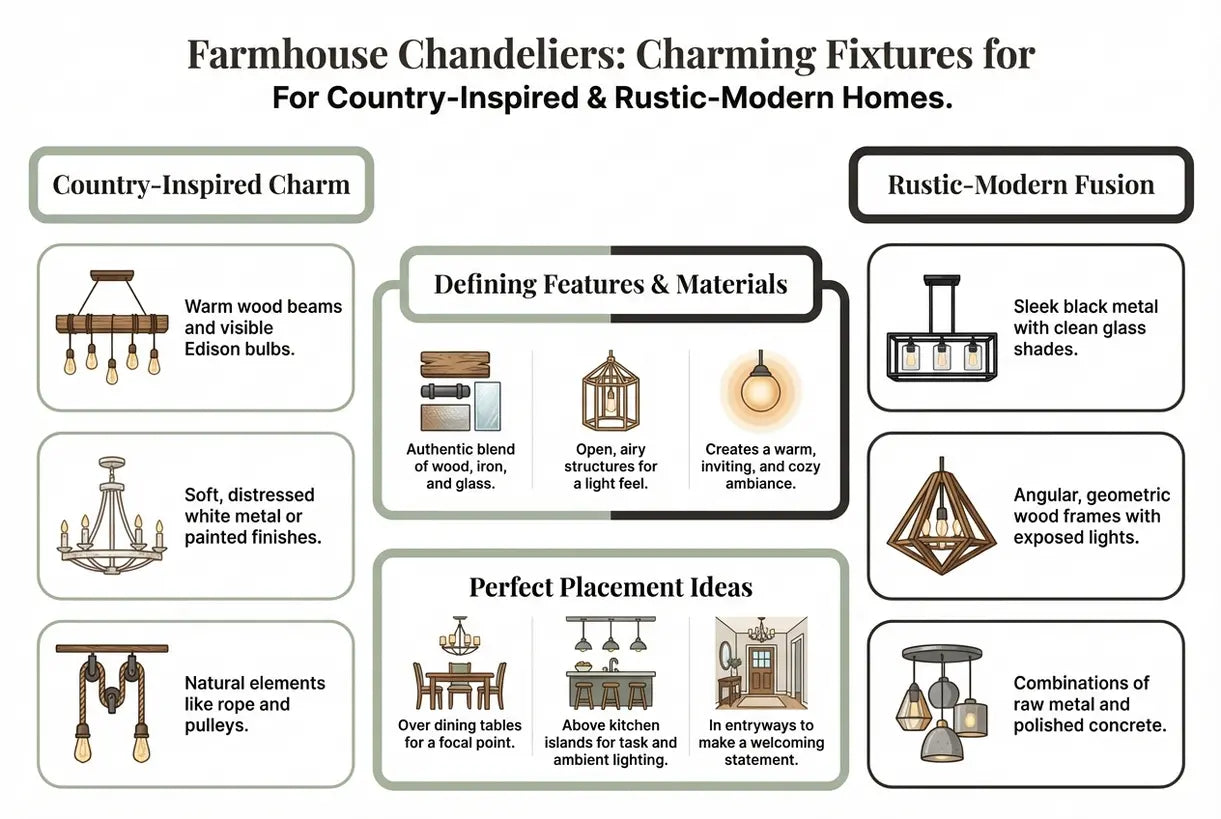
Perhaps the most iconic farmhouse style, wagon wheel chandeliers feature a circular frame reminiscent of old wooden cart wheels. These fixtures typically hold multiple lights arranged around the perimeter, casting a warm, ambient glow perfect for large dining rooms and great rooms.
Lantern-Style Fixtures
Inspired by vintage carriage lights and old-world architecture, lantern chandeliers bring structure and elegance to farmhouse interiors. These typically feature a cage-like frame of metal or wood with glass panels, creating a beautiful interplay of light and shadow.
Wood and Bead Chandeliers
For a softer, more romantic interpretation, wood and bead chandeliers layer natural materials in cascading formations. Wooden beads, whether left natural or painted in chalky whites and soft grays, add texture and movement while maintaining the organic farmhouse aesthetic.
Candle-Style Lighting
Evoking the era before electric illumination, candle-style chandeliers feature arms that mimic traditional tapers. Modern versions use flame-tipped bulbs or realistic LED candles to recreate that flickering warmth without the safety concerns of open flames.
The Modern Farmhouse Blend
Today's most compelling designs bridge rustic authenticity with contemporary refinement. These fixtures might pair dark metal frameworks with clean geometric shapes, or combine natural wood with polished brass accents. The result honors farmhouse heritage while feeling entirely current.
Choosing the Right Size Farmhouse Chandelier
Few design mistakes are as immediately noticeable as improperly scaled lighting. A chandelier that's too small disappears into the room; one that's too large overwhelms the space. Here's how to achieve perfect proportions.
The Room Measurement Formula
For general sizing, add your room's length and width in feet, then convert that number to inches. A 12-by-14-foot room calls for a chandelier approximately 26 inches in diameter. This formula provides a baseline that you can adjust based on ceiling height and furniture placement.
Dining Room Specifics
When hanging above a dining table, your chandelier should measure roughly one-half to two-thirds the width of the table itself. For a 48-inch-wide table, aim for a fixture between 24 and 32 inches in diameter. This ensures the light illuminates the entire surface without obstructing sightlines across the table.
Ceiling Height Considerations
Standard ceiling heights (8-9 feet) work best with chandeliers that hang 30-36 inches above dining surfaces. For vaulted or two-story ceilings, consider oversized fixtures or clustered pendant arrangements that fill the vertical space appropriately. The bottom of your chandelier should never hang lower than 7 feet from the floor in walkable areas.
Chandeliers
Shop all Chandeliers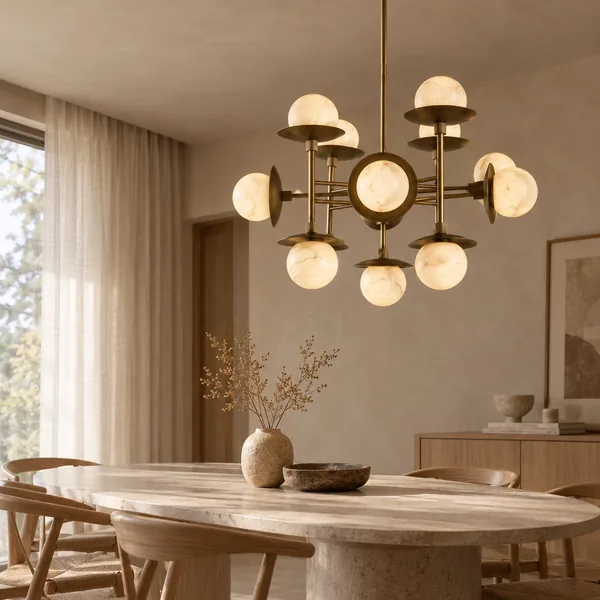
Visual Weight Matters
Size isn't just about measurements—it's about presence. An open, airy wrought-iron chandelier can be larger than a dense wooden fixture without feeling heavy. Consider the density of your chosen materials when making final size decisions.
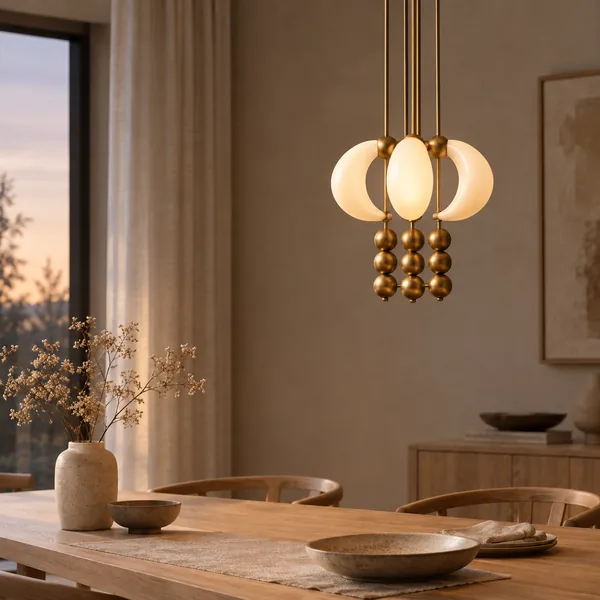
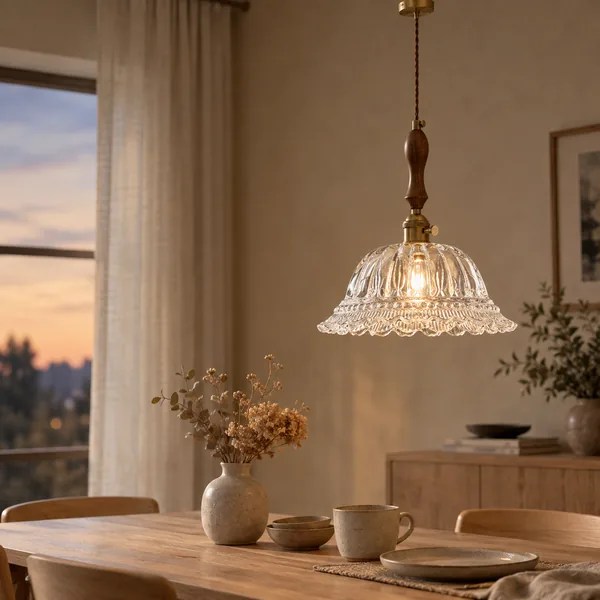 Gloda Walnut Brass French Style Pendant Light$169.00$229.00
How Much Does a Farmhouse Chandelier Cost?
Understanding price ranges helps set realistic expectations for your lighting investment. Farmhouse chandeliers span from accessible entry-level options to heirloom-quality artisan pieces.
| Price Range | What to Expect | Best For |
|---|---|---|
| $150 - $300 | Quality mass-produced fixtures, basic materials, simpler designs | Secondary spaces, first homes, budget-conscious updates |
| $300 - $600 | Most popular range, better materials, more intricate details, authentic finishes | Primary dining rooms, lasting investments, everyday homes |
| $600 - $1,500 | Premium craftsmanship, designer collaborations, unique materials | Statement spaces, design enthusiasts, luxury farmhouse aesthetics |
| $1,500+ | Artisan-made, one-of-a-kind, antique reproductions, luxury materials | Custom homes, professional interiors, heirloom pieces |
Several factors influence where a fixture falls within these ranges. Solid hardwood construction commands premium pricing compared to composite materials. Hand-applied finishes, such as distressed paint or living brass patinas, require skilled labor that increases cost. The complexity of the design—number of lights, decorative elements, and overall scale—also impacts pricing significantly.
For those looking to explore more options, our Dining Room Lighting collection offers a curated selection spanning multiple price points and styles.
Installing Your Farmhouse Chandelier
Proper installation ensures both safety and optimal aesthetics. While some homeowners feel comfortable with basic electrical work, chandelier installation often warrants professional expertise.
DIY Considerations
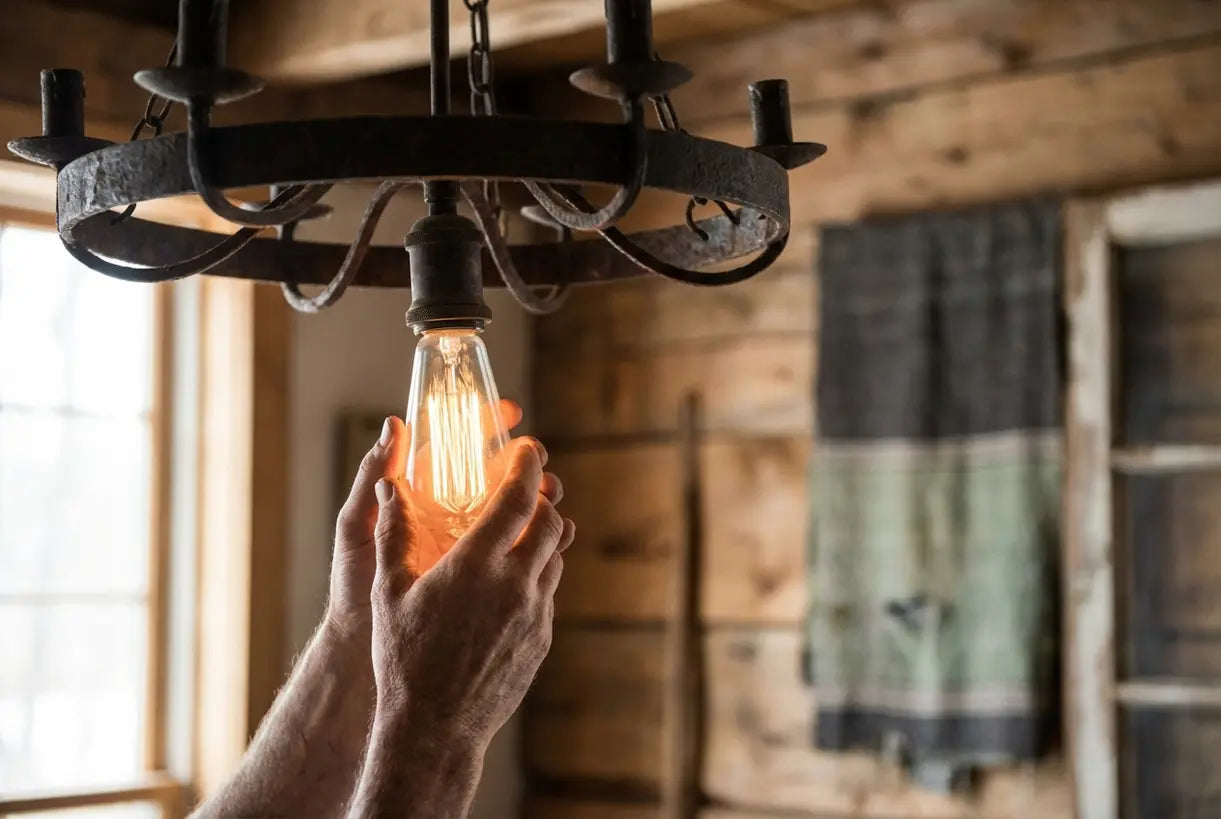
Simple fixture swaps—where you're replacing an existing light with a similar-weight chandelier on the same junction box—can be manageable DIY projects for those with electrical experience. Always turn off power at the breaker, use a voltage tester to confirm lines are dead, and follow manufacturer instructions precisely.
When to Call a Professional
Consider hiring a licensed electrician if your installation involves:
- New wiring or circuit additions
- Heavy fixtures (over 50 pounds typically require additional support)
- Ceiling medallions or custom mounting hardware
- Vaulted ceilings or challenging access
- Dimmer switch installation or smart home integration
Professional installation typically ranges from $150 to $500 depending on complexity, with most standard chandelier hangings falling around $200-$300. This investment protects both your safety and your fixture warranty.
Height and Positioning Tips
The standard 30-36 inches above dining tables assumes 8-foot ceilings. For taller spaces, add approximately 3 inches of hanging height per additional foot of ceiling. In entryways, maintain at least 7 feet of clearance beneath the fixture bottom. Over kitchen islands, 30-36 inches above the counter surface provides ideal task lighting without head-bumping hazards.
Elevated Rustic-Modern Options
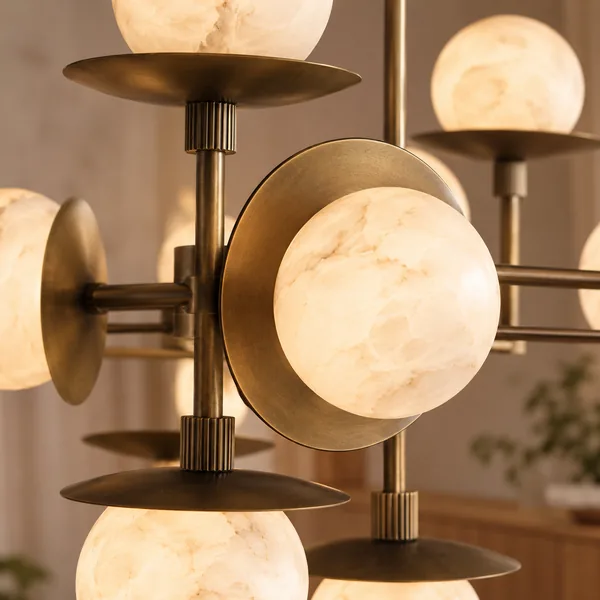
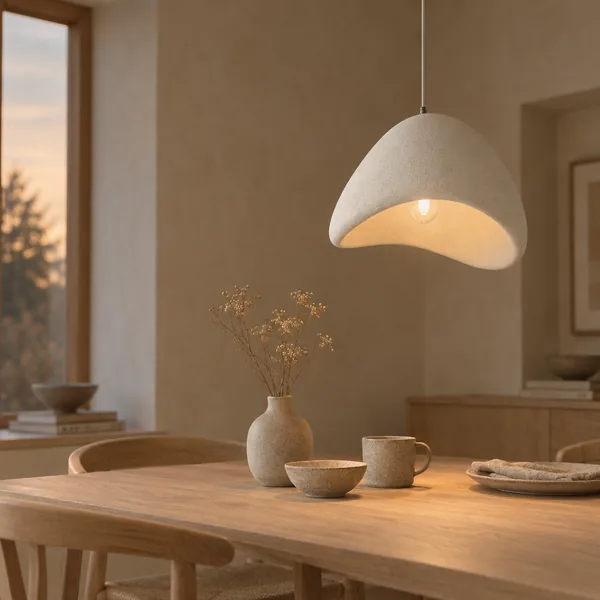 Stena Textured Stone Chandelier Pendant Light$259.00$389.00
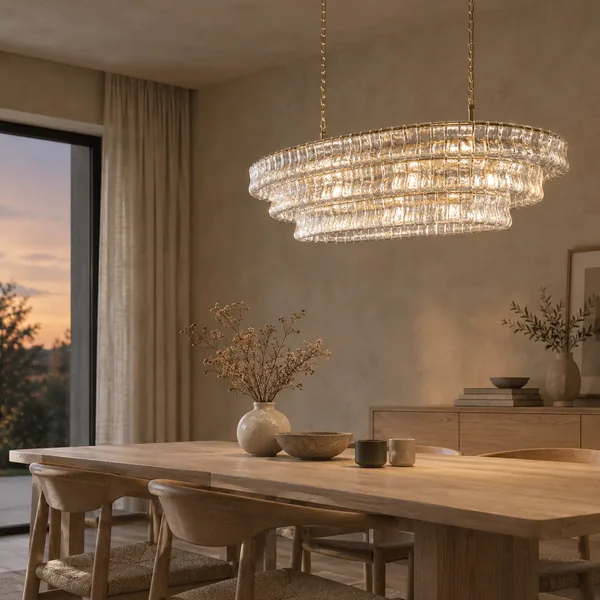 Stjerna Vintage French Clear Glass Chandelier$1,799.00$2,259.00
Understanding Farmhouse Chandelier Sizes
Farmhouse chandeliers come in standardized size categories that help narrow your search. Understanding these dimensions streamlines the selection process.
Mini Chandeliers (12-18 inches)
Perfect for small breakfast nooks, powder rooms, or accent lighting in bedrooms, mini chandeliers bring farmhouse charm to compact spaces. These petite fixtures work beautifully in pairs or clusters over longer surfaces.
Small to Medium (20-28 inches)
The most versatile category, these chandeliers suit standard dining rooms, foyers, and bedrooms. They provide substantial presence without overwhelming typical residential proportions. Most four-to-six-seat dining tables pair beautifully with fixtures in this range.
Large (30-40 inches)
For grand dining rooms, expansive entryways, and great rooms with high ceilings, large chandeliers create dramatic focal points. These statement pieces anchor substantial furniture arrangements and fill vertical space elegantly.
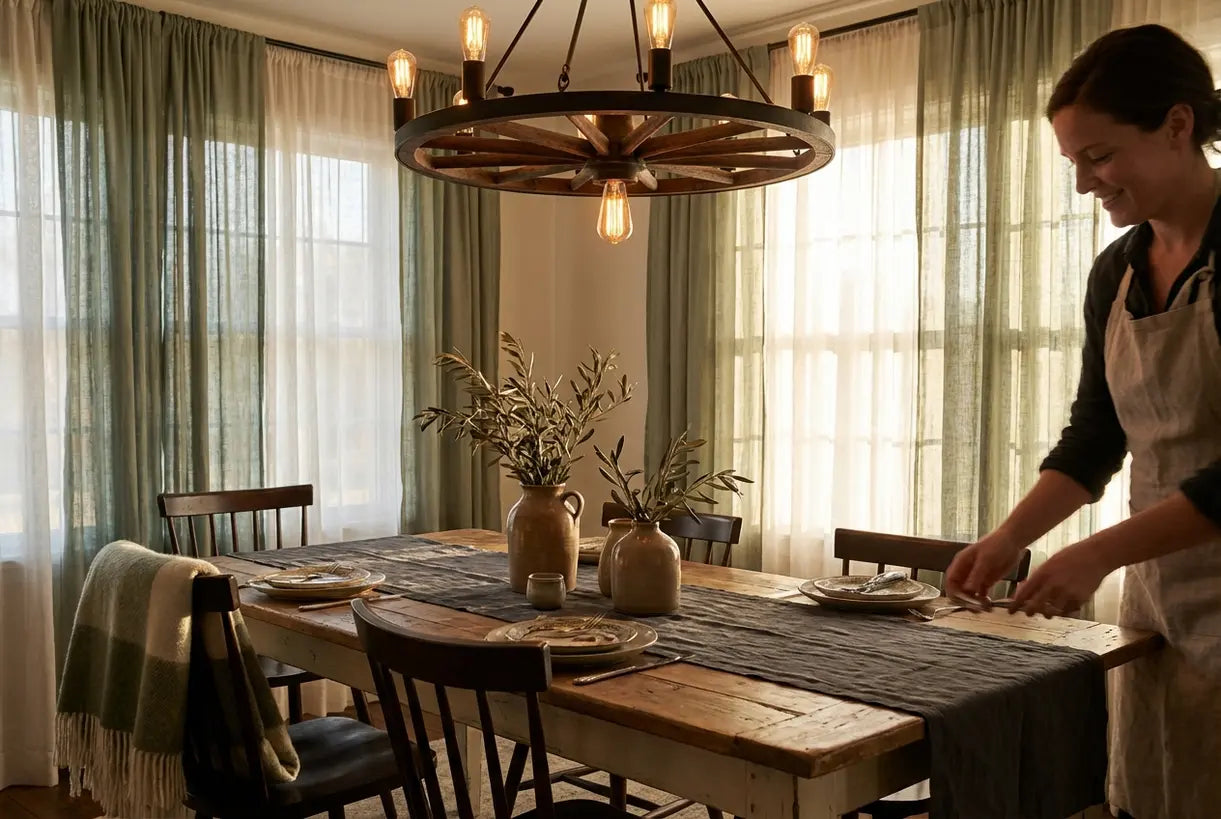
Oversized and Custom (42+ inches)
Truly exceptional spaces demand exceptional lighting. Oversized farmhouse chandeliers transform vaulted great rooms, commercial spaces, or custom homes. These pieces often require professional consultation for both selection and installation.
When selecting between sizes, err slightly larger rather than smaller. A chandelier that's just a bit too big makes a confident design statement; one that's too small always looks like a compromise.
Pendants & Chandeliers
Shop all Pendants & Chandeliers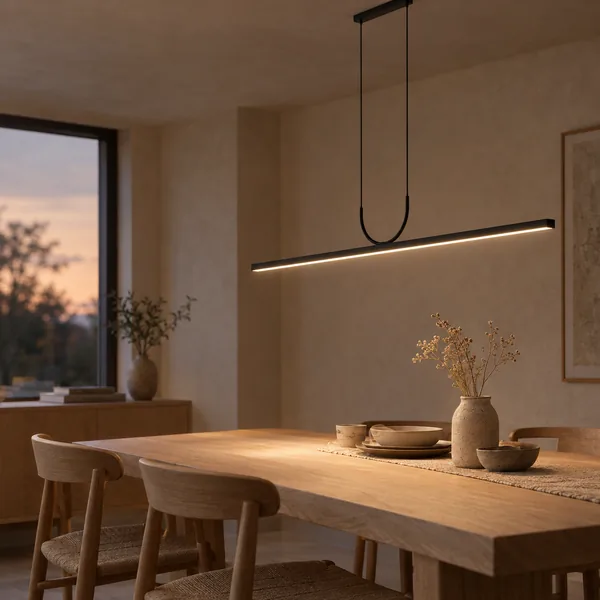
 Save $140.00
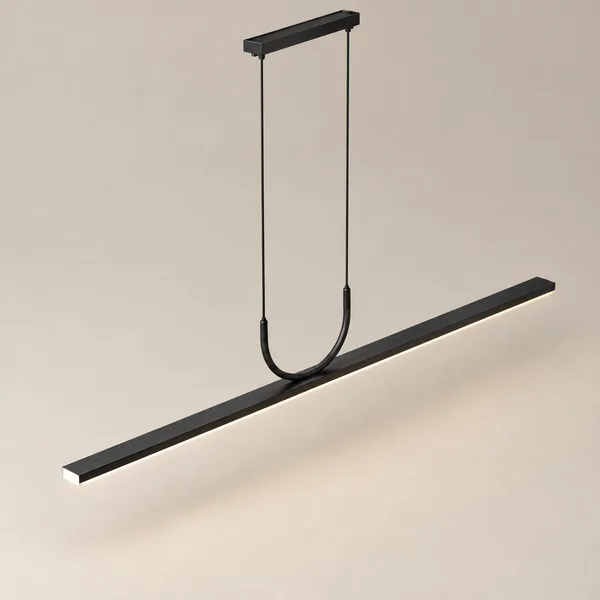
Linné Minimalist Linear Black LED Pendant Light
 Save $60.00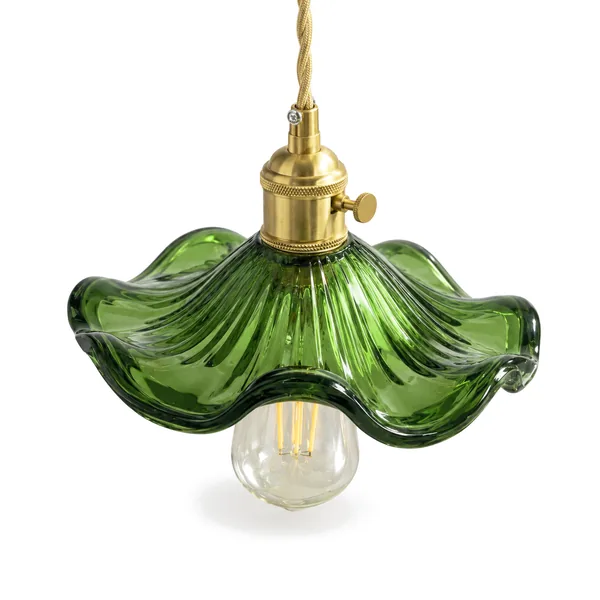
 3 options
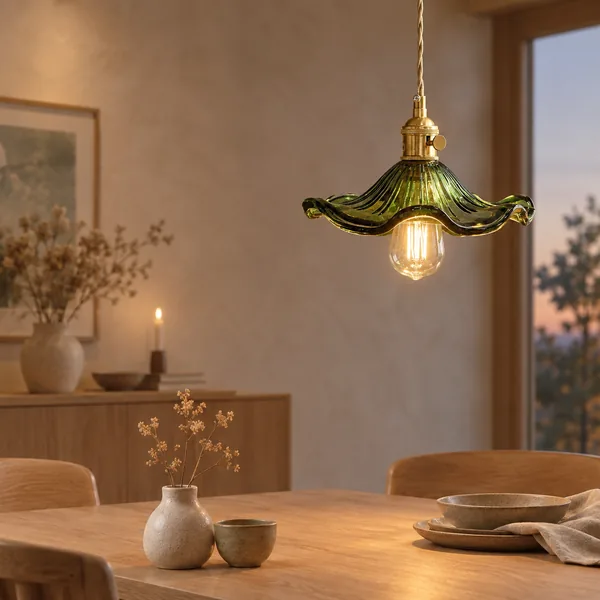
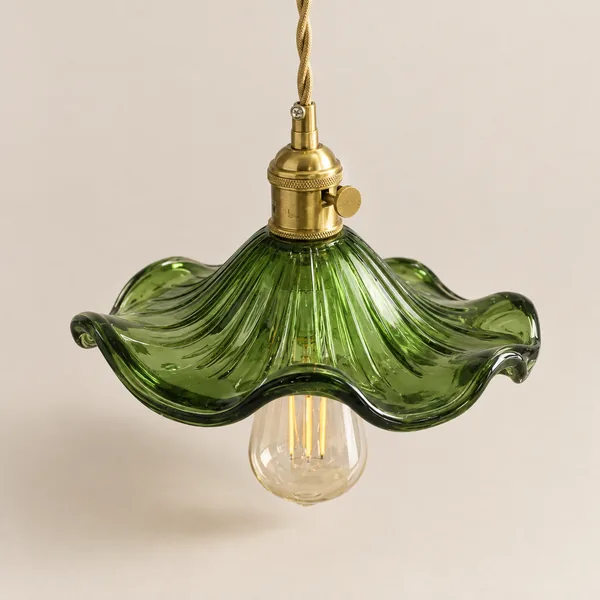
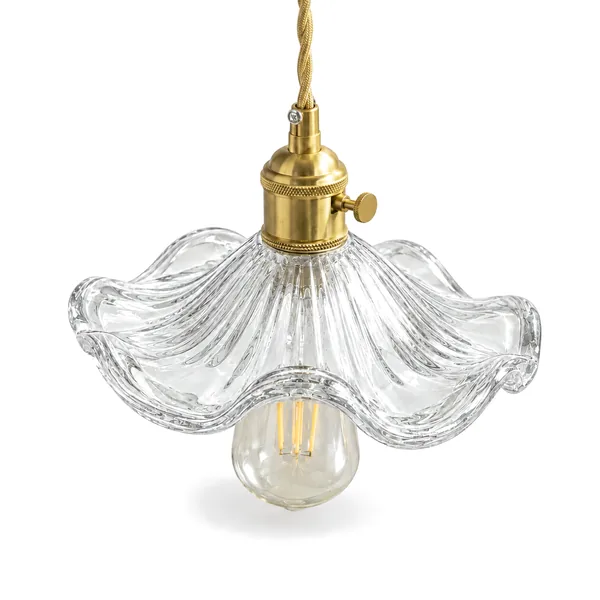
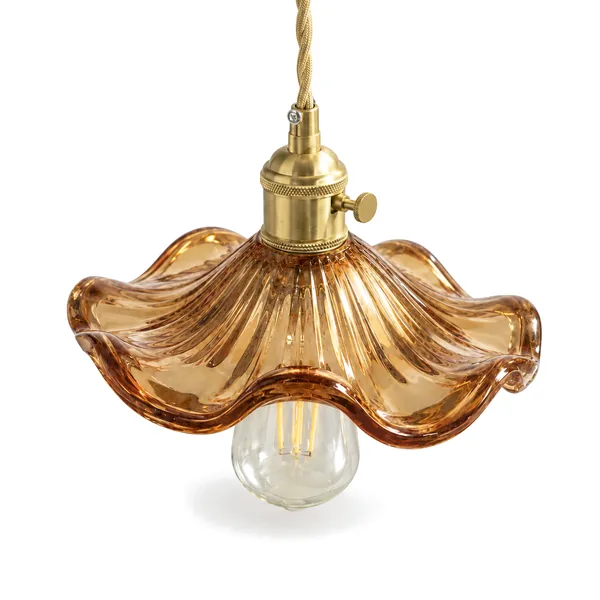
Glora Nordic Glass Pendant Light with Copper
 Save $120.00
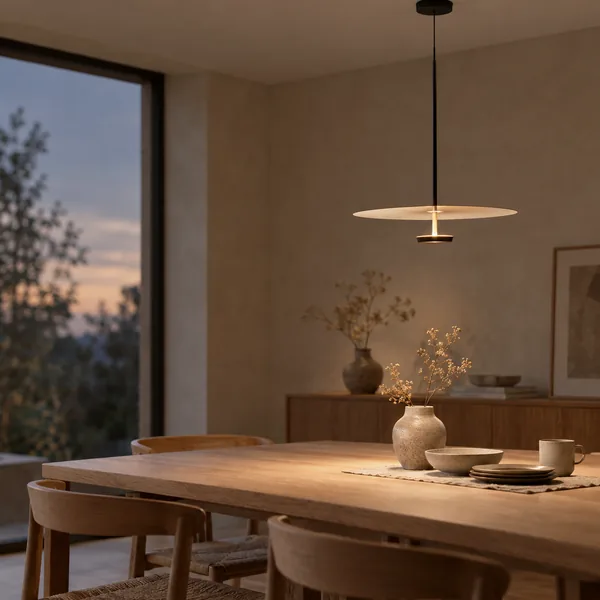
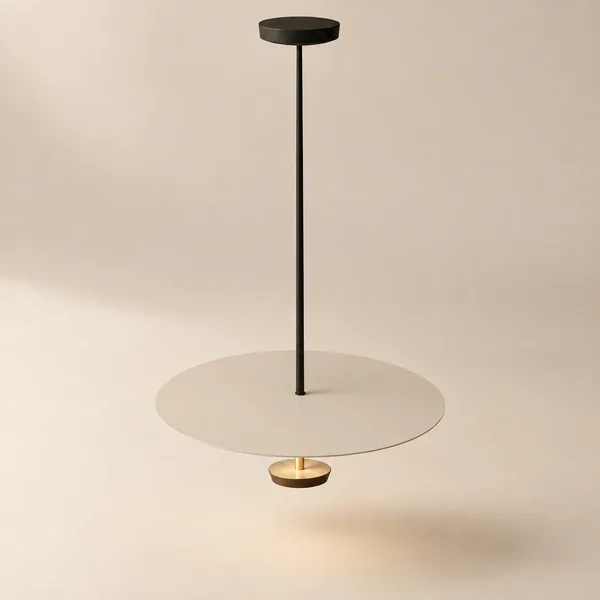
Skiva Nordic Saucer Ceiling Pendant Light LED
Bringing Farmhouse Warmth Home
The perfect farmhouse chandelier does more than illuminate—it creates atmosphere, sparks conversation, and anchors your home's aesthetic identity. Whether you gravitate toward the rustic authenticity of wagon wheel designs or the refined simplicity of modern farmhouse interpretations, the key lies in choosing quality materials, appropriate proportions, and a style that resonates with your personal vision of home.
At Skonne, we curate lighting that honors the farmhouse tradition while embracing Scandinavian principles of thoughtful design and enduring quality. Our collection spans from accessible pieces that welcome you into the farmhouse aesthetic to investment fixtures that become cherished heirlooms. Each item is selected not just for how it looks, but for how it makes you feel—because the best lighting doesn't just brighten rooms; it warms the moments you share within them.
As you embark on your farmhouse lighting journey, remember that the right chandelier grows with your home, adapting to evolving styles while maintaining its timeless appeal. Choose with intention, install with care, and enjoy the warm, welcoming glow that only authentic farmhouse lighting can provide.
Related Article
Chandelier Ceiling Fans: The Best of Both Worlds — Style & Airflow CombinedExplore how chandelier ceiling fans (fandeliers) combine stunning lighting with cooling airflow. Learn sizing tips, room placement ideas, and Scandinavian design inspiration.