
How to Style Your Living Room Sofa: 10 Expert Tips
Summary›
- Start with a Solid Foundation
- Master the Art of Cushion Arrangement
- Choose the Right Pillows for Your Aesthetic
- Layer with Intentional Textiles
- Perfect Your Sofa Arrangement
- Embrace Seasonal Sofa Styling
- Solutions for Small Living Rooms
- Avoid Common Styling Mistakes
- Final Touches for a Curated Look
- Conclusion
Your sofa is the heart of your living room, the gathering place for morning coffee, evening conversations, and lazy Sunday afternoons. In Scandinavian design philosophy, the sofa represents more than just seating—it embodies the concept of hygge, creating a warm, inviting atmosphere where life unfolds naturally. Whether you are refreshing your space or starting from scratch, learning how to style your living room sofa with intention transforms an ordinary piece of furniture into a curated centerpiece that reflects your personal aesthetic while maintaining that serene, uncluttered Nordic sensibility.
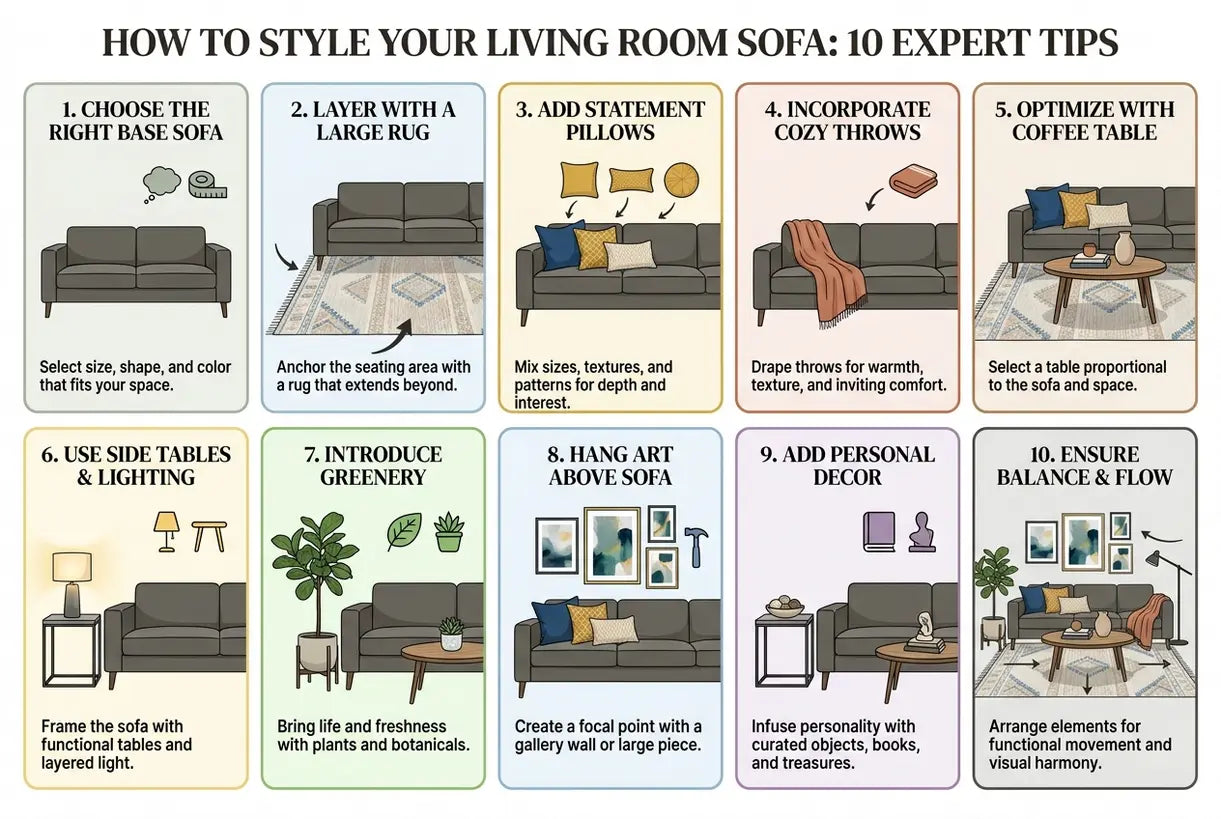
Achieving that effortlessly styled look requires balancing comfort with visual harmony. It is not about overcrowding with decorative items, but rather selecting quality pieces that serve both function and beauty. From choosing the right sofa cushions to mastering the casual drape of a throw blanket, each element contributes to a cohesive, welcoming environment that feels both elevated and livable.
Start with a Solid Foundation
Before adding decorative layers, consider your sofa's relationship to the surrounding space. In open-concept living areas, defining the seating zone creates visual structure and grounding energy. The placement of your rug plays a crucial role in this foundation—proper positioning anchors the furniture and creates a cohesive conversation area that draws people in.
The question of whether a rug should sit under the sofa or merely in front of it depends on your room's dimensions and layout. For larger spaces, position the rug so that at least the front two legs of your sofa rest upon it, creating a connected, intentional arrangement. In compact living rooms, a smaller rug placed centrally in front of the sofa can define the area without overwhelming the floor space, though ensuring the front legs touch the rug maintains that essential sense of connection.
Master the Art of Cushion Arrangement
Cushions are the most transformative accessories for sofa styling, offering an immediate injection of color, texture, and personality. The key lies in achieving that perfectly imperfect balance—curated yet relaxed, layered but not cluttered. Scandinavian design favors odd numbers and asymmetrical arrangements that feel organic rather than rigidly structured.
Pro Tip: For a standard three-seat sofa, start with three cushions on one side and two on the other, varying sizes from large (24-inch) at the back to medium (20-inch) in front, with a lumbar or small accent pillow completing the arrangement.
When determining how many cushions to put on a sofa, consider both scale and daily function. A deep, substantial sectional can handle five to seven pillows without looking overcrowded, while a compact loveseat feels most balanced with two to three carefully chosen pieces. Remember that these are living spaces, not museum displays—leave enough room for actual seating and ensure the arrangement does not require constant rearranging after every use.
Choose the Right Pillows for Your Aesthetic
Selecting what pillows to use to style a sofa involves more than matching colors to your wall paint. Consider texture, material, and the tactile experience. Natural fibers like linen, cotton, and wool align perfectly with Scandinavian principles, offering that essential connection to nature while providing visual warmth and depth.
Sofa Accessories that incorporate varied textures create that coveted layered look without relying solely on bold patterns. Think about mixing smooth linen with nubby wool, or pairing crisp cotton with chunky knits. For those working with colors that go best with a gray sofa, consider warm terracotta tones, sage greens, or muted ochres to add gentle contrast while maintaining that soothing, neutral palette characteristic of Nordic interiors.
Layer with Intentional Textiles
Throws and blankets serve dual purposes in living room decor—they offer practical warmth during cooler evenings while adding that essential "lived-in" quality that makes a space feel genuinely welcoming. The art lies in the drape: casually tossed but deliberately placed, suggesting comfort without appearing messy.
When selecting throw blankets, consider both weight and texture. Lightweight linen or cotton works beautifully in spring and summer, while wool and chunky knits provide that cozy factor during winter months. The Linen Blend Throw Pillow - Stone exemplifies this approach perfectly, offering a neutral foundation that complements virtually any color scheme while adding that subtle textural interest essential to Scandinavian design.
Position your throw blanket casually over one arm of the sofa or folded neatly at the corner, depending on whether you prefer a relaxed or more structured aesthetic. Avoid placing throws directly in the center, which can appear too staged, or hanging them precisely over the back, which often looks messy rather than effortless.
Perfect Your Sofa Arrangement
Beyond accessories, the physical sofa arrangement within your room dictates how the space feels and functions. Consider traffic flow, natural light sources, and focal points like fireplaces or windows. In Scandinavian design, creating intimate conversation areas takes precedence over formal, rigid layouts.
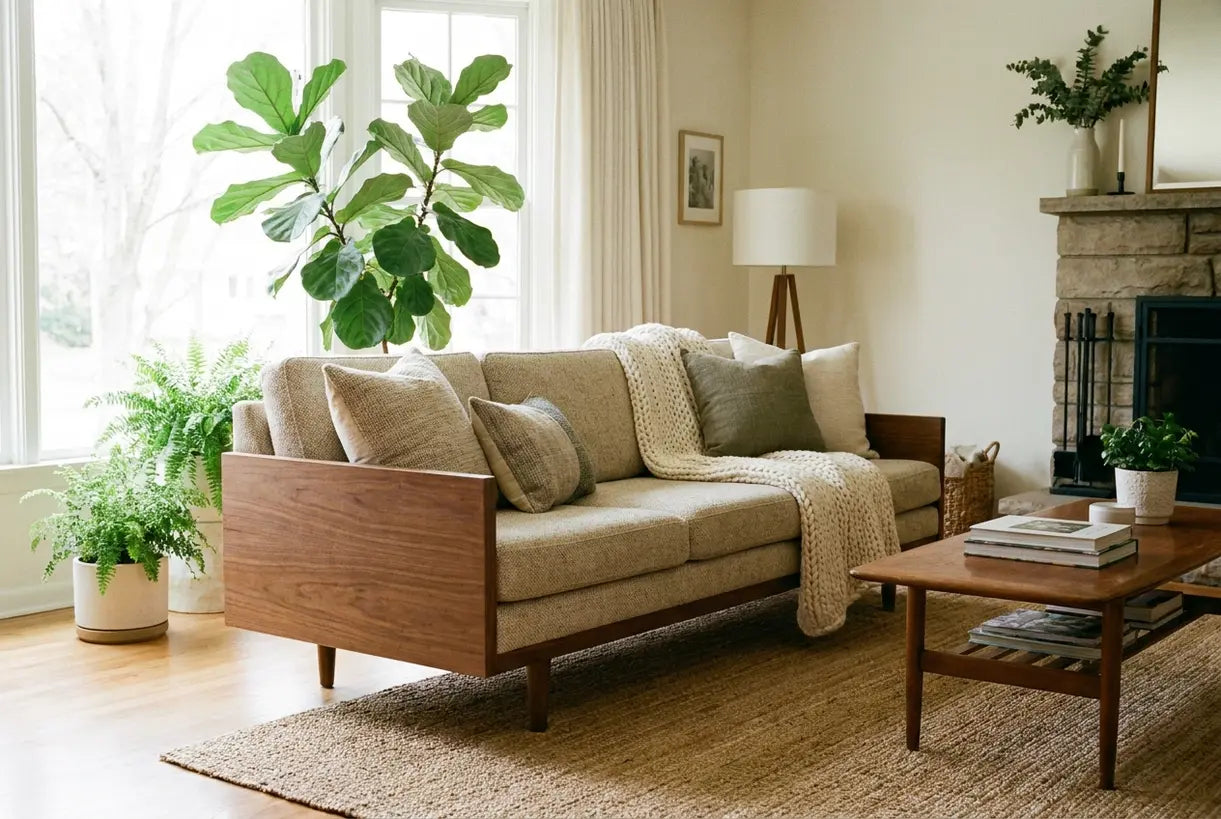
For smaller living rooms, floating your sofa away from the wall—even by just a few inches—creates breathing room and suggests a more spacious environment. Pair your sofa with a side table positioned within easy reach, ideally at arm height when seated, to maintain that functional, user-friendly approach central to Nordic design philosophy. A small cluster of candles or a simple ceramic vase on that table adds the finishing touch without creating visual clutter.
Embrace Seasonal Sofa Styling
One of the joys of how to style a sofa is the opportunity to refresh your space with the changing seasons. This does not require purchasing entirely new furniture—simple swaps in textiles and accessories transform the mood from bright and airy summers to cozy, cocooning winters.
For spring and summer, lighten your cushion covers to crisp whites, soft blues, or pale grays, and switch to lightweight linen throws. As autumn approaches, introduce deeper tones—rust, forest green, charcoal—and layer in wool or faux fur textures. Winter styling embraces the ultimate hygge aesthetic: chunky knits, candlelight, and rich, warm neutrals that invite lingering conversations and quiet moments with books.
Solutions for Small Living Rooms
When considering how to style a sofa in a small living room, every decision carries more weight. Opt for a "less but better" approach—fewer, higher-quality pieces rather than an abundance of small accessories. Choose cushions in varying sizes but stick to a cohesive color palette to avoid visual fragmentation.
Select furniture with visible legs, which creates the illusion of more floor space and lighter visual weight. Avoid oversized sectionals that dominate the room; instead, consider a compact two-seater with a single statement chair to balance the arrangement. Wall-mounted lighting frees up side table space for essential items only, maintaining that clean, uncluttered Scandinavian aesthetic even in tight quarters.
Avoid Common Styling Mistakes
Even with the best intentions, certain pitfalls can undermine your sofa decor ideas. Over-matching creates a catalog-like sterility that lacks personality, while too many competing patterns induce visual chaos. The goal is curated cohesion—elements that relate to one another without being identical.
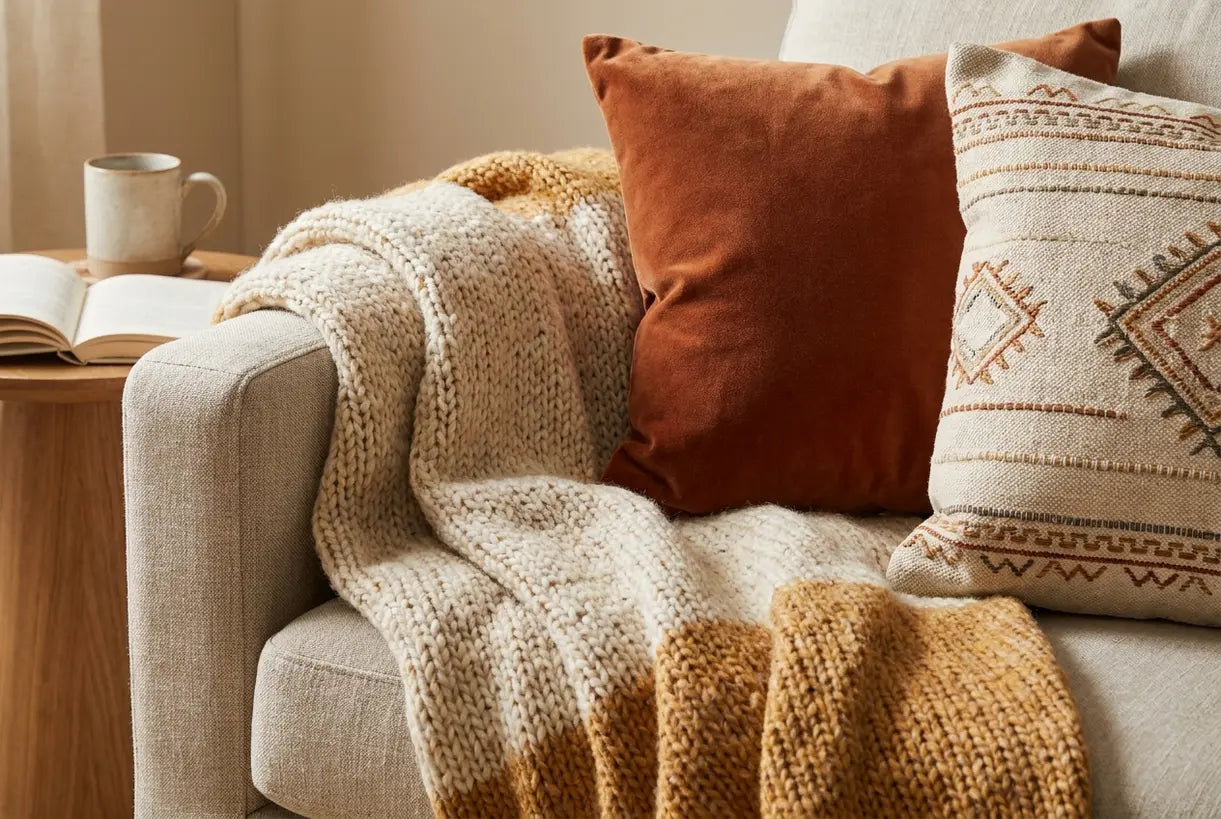
Another frequent error is neglecting scale. Tiny cushions on a deep, oversized sofa look lost and insignificant, while oversized pillows on a petite loveseat overwhelm the piece. Similarly, throws that are too small appear like afterthoughts rather than intentional design choices. Choose textiles proportional to your furniture's dimensions for that harmonious, professionally styled appearance.
When selecting how to choose a sofa throw blanket that complements your decor, consider the existing textures in your room. If your sofa features a smooth upholstery, a chunky knit or textured weave adds necessary contrast. Conversely, if your sofa already has significant texture—such as velvet or tweed—opt for smoother, simpler throws that provide balance rather than competing for attention.
Essential Sofa Styling Pieces
Final Touches for a Curated Look
The difference between a styled sofa and a truly curated one often lies in the subtle details. Consider the negative space—areas without cushions or throws—as important as the decorated sections. This breathing room allows each piece to be appreciated individually while contributing to the overall composition.
Add one unexpected element: perhaps a vintage textile with personal history, a handmade ceramic object on the nearby table, or a book with a beautiful spine displayed cover-forward. These personal touches transform a well-styled sofa into a meaningful reflection of your life and experiences, creating that authentic, welcoming atmosphere that defines the Scandinavian approach to home.
Conclusion
Styling your living room sofa is an ongoing practice of curation and intention rather than a one-time achievement. By focusing on quality materials, thoughtful arrangements, and personal touches that resonate with your lifestyle, you create a centerpiece that anchors your home in beauty and comfort. Remember that the best styled spaces feel lived-in, not staged—inviting relaxation and genuine connection.
At Skonne, we believe that exceptional living room decor begins with selecting pieces that balance aesthetic appeal with everyday functionality. Our curated collection of Scandinavian-inspired textiles, from the perfect Linen Blend Throw Pillow to the cozy Chunky Knit Throw Blanket and grounding Natural Fiber Rug, provides the essential foundations for creating that warm, intentional atmosphere where life's best moments unfold.
Related Article
Victorian Home Decor: Ornate, Antique-Inspired Style for a Period-Perfect InteriorExplore Victorian home decor essentials, from ornate chandeliers to rich textures. Learn how to create a period-perfect interior with antique-inspired styling.