
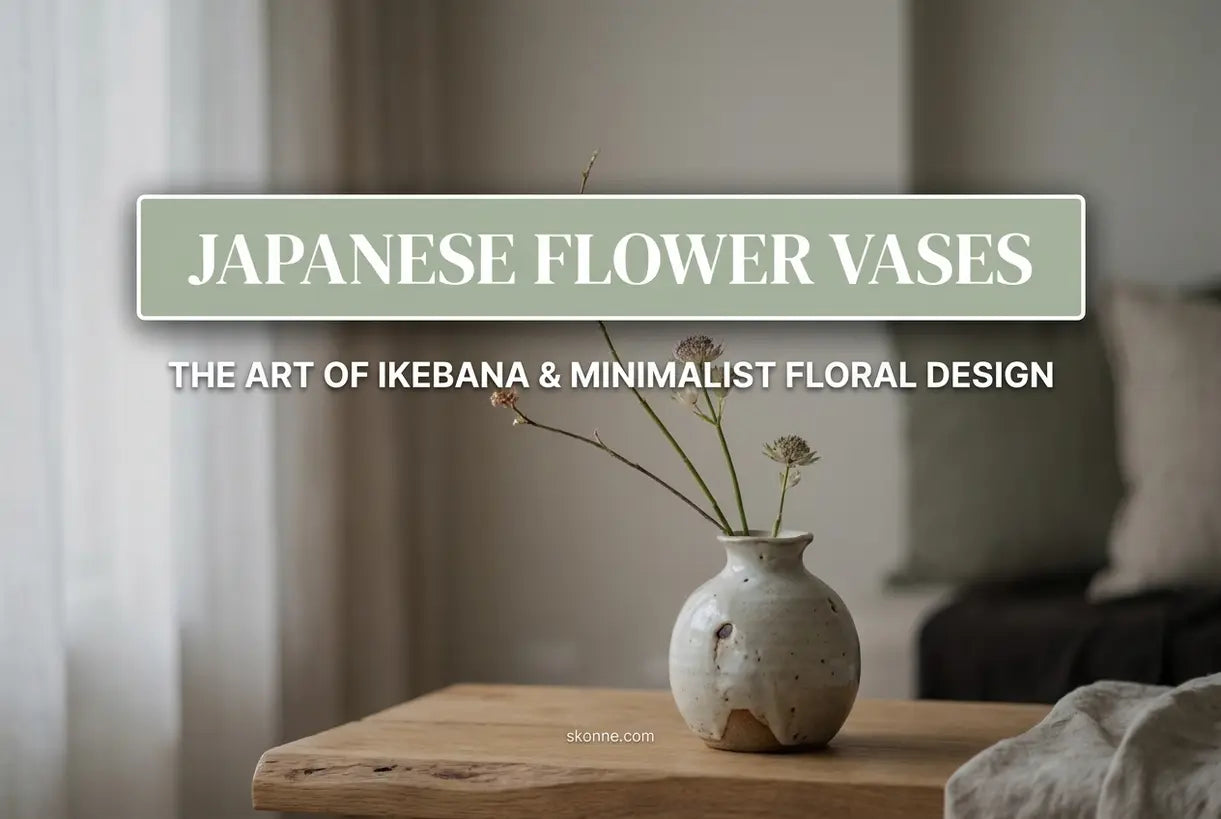
Japanese Flower Vases & Ikebana: The Art of Minimalist Japanese Floral Design
Summary›
- What Is Ikebana? The Art of Living Flowers
- The Three Rules of Ikebana Structure
- Understanding Japanese Flower Vase Types
- Wabi-Sabi: Finding Beauty in Imperfection
- Featured Vessel: The Jorde Handmade Rustic Ceramic Vase
- Creating Your First Ikebana Arrangement
- Curated Ikebana Vessels for Your Home
- Conclusion: Cultivating Presence Through Minimalist Floral Design
There's a quiet revolution happening in our homes—one that asks us to slow down, to observe, and to find profound beauty in simplicity. At the heart of this movement lies Ikebana, the centuries-old Japanese art of flower arrangement that transforms ordinary blooms into contemplative statements. Unlike Western floral design that often celebrates abundance, Ikebana finds its power in restraint, in the deliberate space between stems, and in the humble vessel that holds them.
If you've ever felt overwhelmed by cluttered interiors or sought a more mindful approach to decorating, understanding the art of the Japanese flower vase may offer exactly the perspective shift you need. In this guide, we'll explore how minimalist floral design can elevate your space, demystify the principles of Ikebana, and help you discover vessels that honor this beautiful tradition—whether you're preparing for morning meditation or simply infusing your Scandinavian-inspired living room with intentional character.
What Is Ikebana? The Art of Living Flowers
Ikebana—literally translated as "making flowers alive"—dates back to the 15th century when Buddhist monks began creating floral offerings for temple altars. What began as spiritual practice evolved into a sophisticated art form with over 3,000 established schools across the world today.
At its core, Ikebana represents more than decoration. It's a meditative practice requiring the arranger to understand line, balance, and space. Where Western arrangements often pursue symmetry and fullness, Ikebana embraces asymmetry and the beauty of incompleteness. A single branch becomes sculpture. A solitary bloom commands attention. The vase itself transforms from mere container to essential element of the composition.
Ikebana encourages us to see flowers not as objects arranged for display, but as partners in a dialogue between nature, the vessel, and the space they inhabit together.
The Three Rules of Ikebana Structure
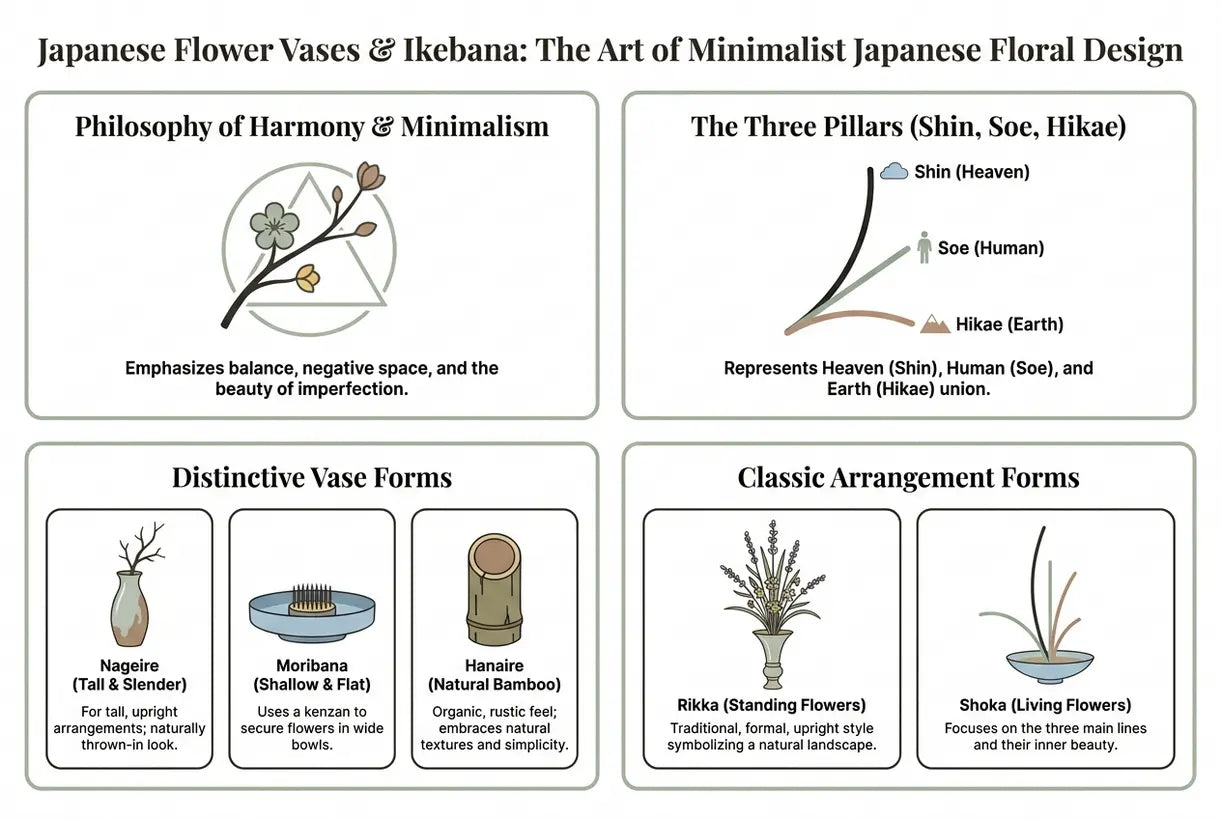
While Ikebana offers tremendous creative freedom, traditional arrangements follow a fundamental structural framework. Understanding these three primary stems—known as Shin, Soe, and Hikae—provides the foundation for creating your own minimalist floral displays.
Shin (真) represents heaven and serves as the tallest stem, establishing the arrangement's vertical axis. Typically positioned at the center back, Shin should measure between one to two times the height of the vase and expresses the eternal, the spiritual, and the infinite.
Soe (副), meaning second or accompanying, represents humanity. Positioned at approximately three-quarters of Shin's height, this stem angles forward and to the left, creating dynamic asymmetry and suggesting the relationship between heaven and earth.
Hikae (控), representing earth and the shortest of the three, anchors the composition at roughly half the height of Soe. Positioned lower and to the right, Hikae grounds the arrangement, creating a visual triangle that guides the viewer's eye through the composition while maintaining harmonious tension.
Understanding Japanese Flower Vase Types
The vessel you select for Ikebana carries as much significance as the flowers themselves. Japanese flower vases come in distinctive forms, each designed to support specific arrangement styles and seasonal expressions.
Shallow, flat containers called suiban accommodate horizontal arrangements using kenzan (spiked metal holders), while tall cylindrical vases known as nakago-gata support single-stem displays that emphasize vertical elegance. Wide-mouthed jars allow for fuller, more naturalistic compositions, and angular geometric vessels create striking contrast against organic botanical forms.
Material selection matters deeply. Ceramic vessels crafted from stoneware or porcelain offer the weight and stability necessary for larger branches, while glass containers create ethereal, floating effects. The surface texture—whether smooth, crackled, or hand-pressed—contributes to the overall sensory experience of the arrangement.
The Role of the Kenzan in Ikebana
No discussion of Japanese flower arrangement would be complete without acknowledging the kenzan—the heavy metal holder with sharpened pins that anchors stems in shallow containers. Unlike floral foam, which damages plant tissue, kenzan allows water to circulate freely while providing precise control over stem positioning. The reflective metal surface doubles as a water mirror, creating additional visual interest in minimalist compositions.
Decorative Vases
Shop all Decorative Vases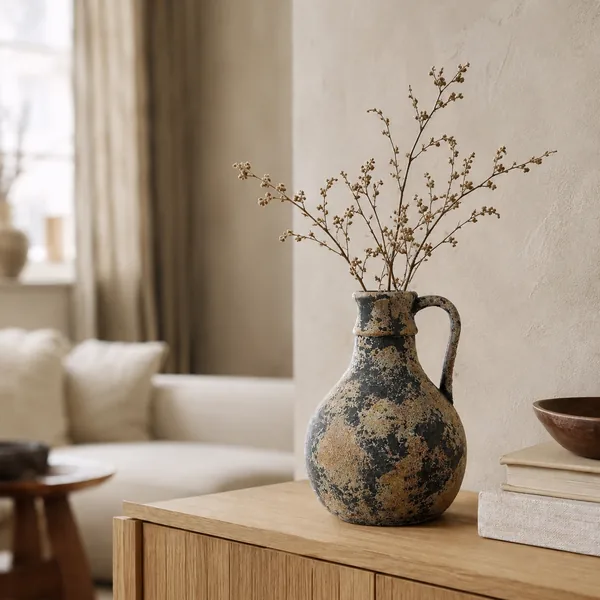
 Save $40.00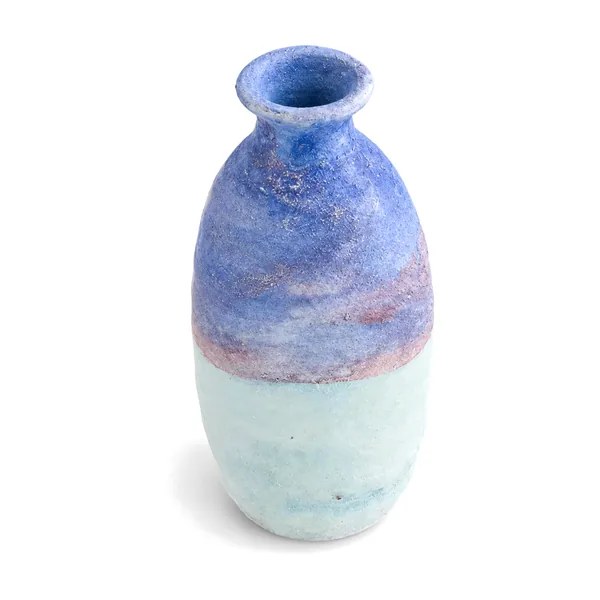
 4 options
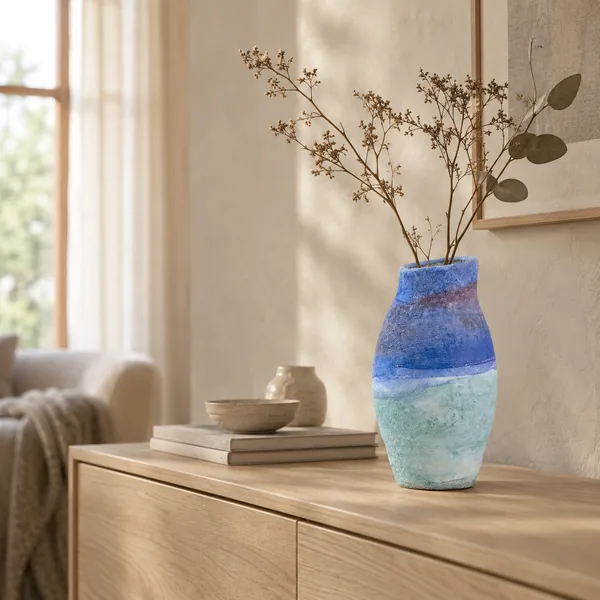
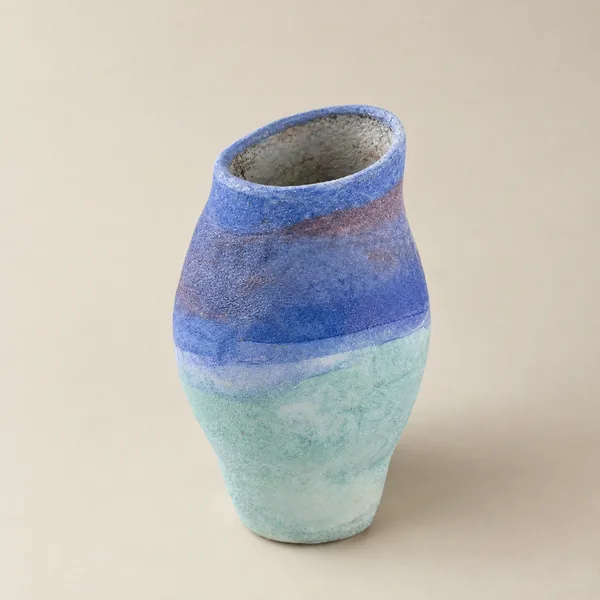
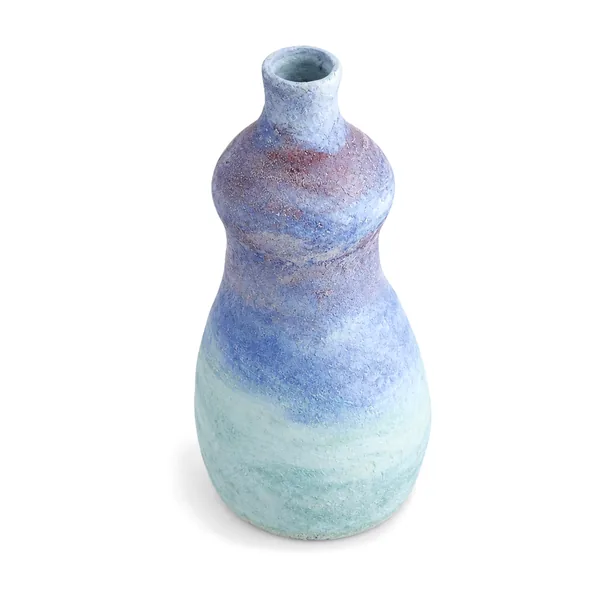
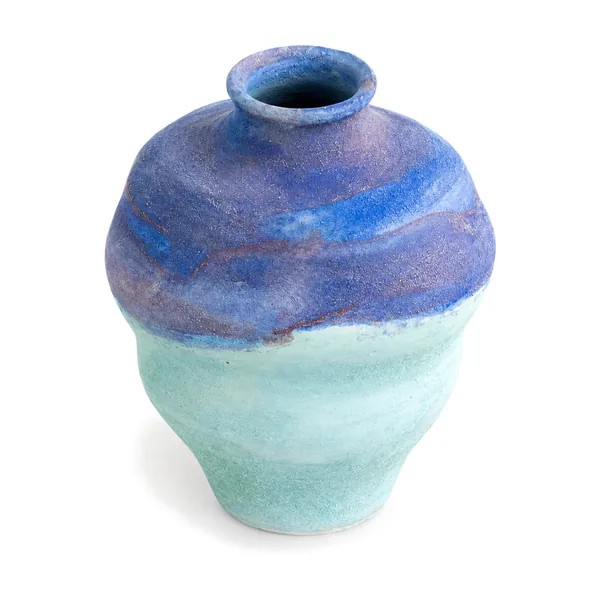
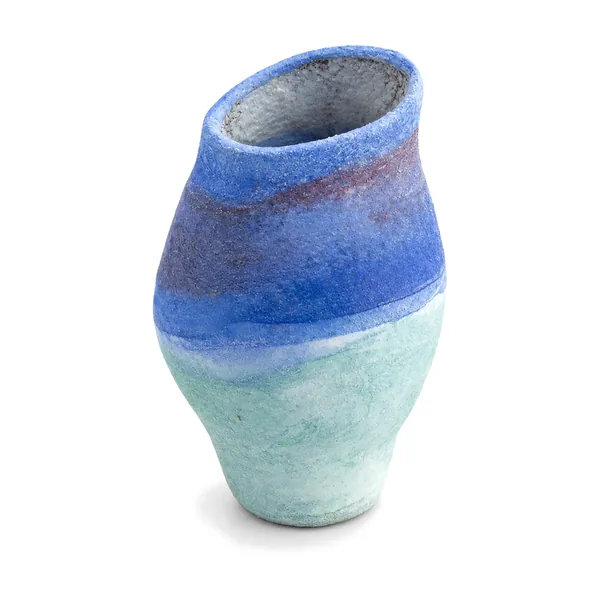
Dyvna Blue Gradient Ceramic Vase for Home Decor
Wabi-Sabi: Finding Beauty in Imperfection
Wabi-sabi aesthetics lie at the heart of Japanese ceramic traditions and profoundly influence Ikebana vessel design. This philosophy celebrates asymmetry, roughness, simplicity, and the natural cycles of growth and decay. In a wabi-sabi vase, finger impressions remain visible, glaze drips create organic patterns, and clay bodies reveal their earthly origins.
For those seeking to incorporate this philosophy into contemporary spaces, our Homeware collection offers thoughtfully curated pieces that honor these principles while complementing Scandinavian design sensibilities. The intersection of Japanese minimalism and Nordic functionality creates spaces that feel both ancient and refreshingly modern.
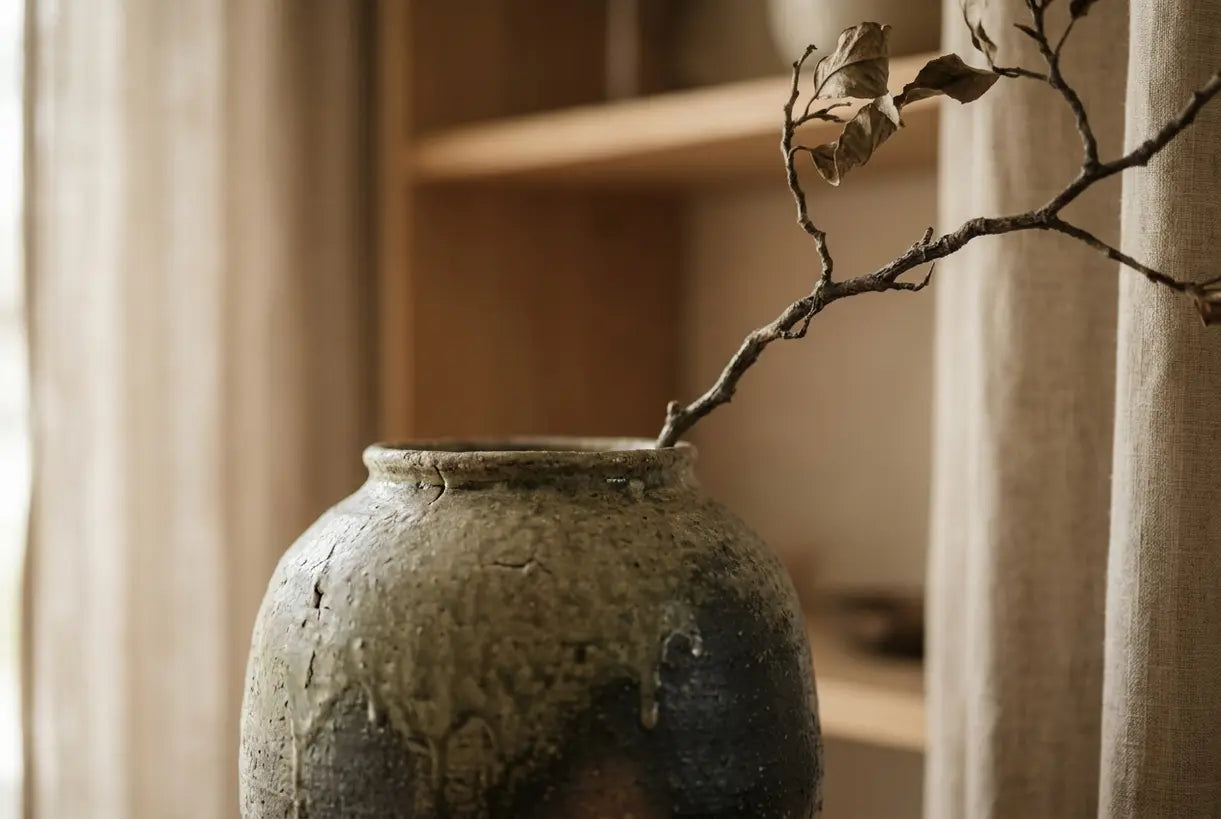
When selecting a wabi-sabi vessel, look for irregular silhouettes, organic glaze variations, and tactile surfaces that invite touch. These intentional imperfections remind us that beauty exists not despite flaws, but because of them. A hand-shaped vase with a slightly off-center opening encourages more thoughtful stem placement, while crackled surfaces create patina that only deepens with age.
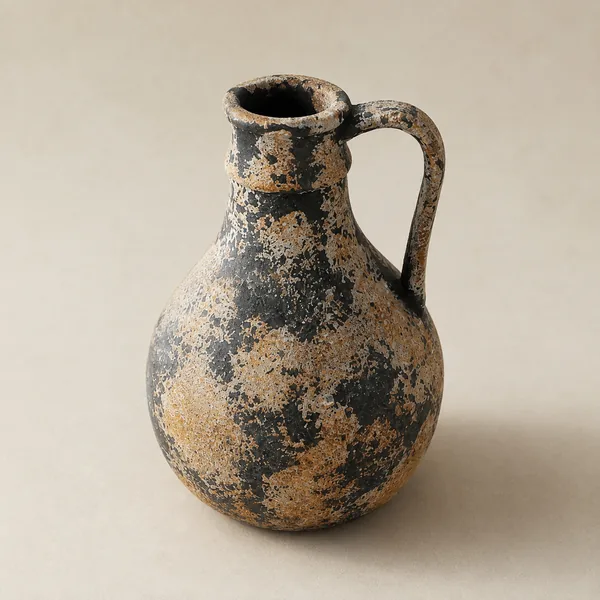
Featured Vessel: The Jorde Handmade Rustic Ceramic Vase
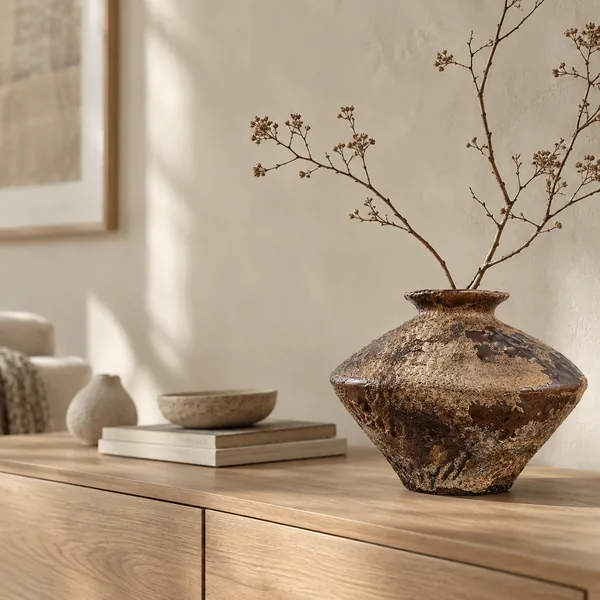 Jorde Handmade Rustic Ceramic Vase Home Decor$129.00$189.00
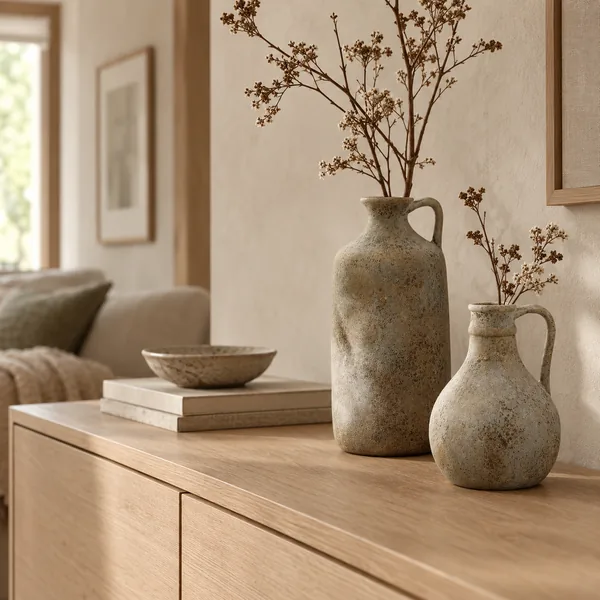
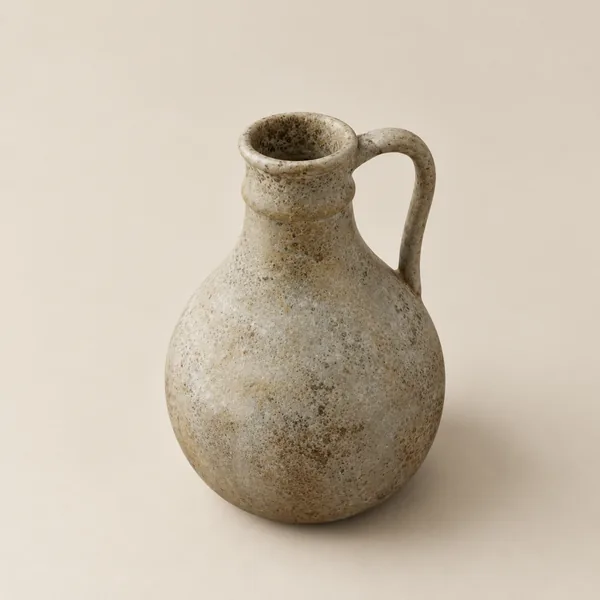
The Jorde Handmade Rustic Ceramic Vase embodies everything we cherish about Japanese-inspired vessel design. Available in two distinctive forms—Terra with its grounded, earthy presence and Solace with its contemplative curves—this piece celebrates the beauty of intentional imperfection. The active glaze creates organic variations across each surface, ensuring no two vessels are exactly alike.
At 7.5 inches tall, Jorde accommodates both single-stem Ikebana displays and small dried arrangements. The narrow opening naturally supports vertical compositions, while the substantial ceramic body provides stability for branches that might topple lighter vessels. Whether positioned on a dining table, beside a reading chair, or as the centerpiece of a minimalist entryway console, this vase invites pause and presence.
Creating Your First Ikebana Arrangement
Beginning your Ikebana journey requires neither formal training nor exotic materials. Start with what grows in your immediate environment—a bare branch from a winter tree, wild grasses from a neighborhood walk, or a single bloom from your local market.
Select your vessel thoughtfully. The Japanese flower vase should feel harmonious with your botanical materials—rough earthenware for woody branches, smooth porcelain for delicate blossoms. Consider the season: autumn arrangements benefit from the weight of stoneware, while spring compositions feel at home in lighter ceramics or glass.
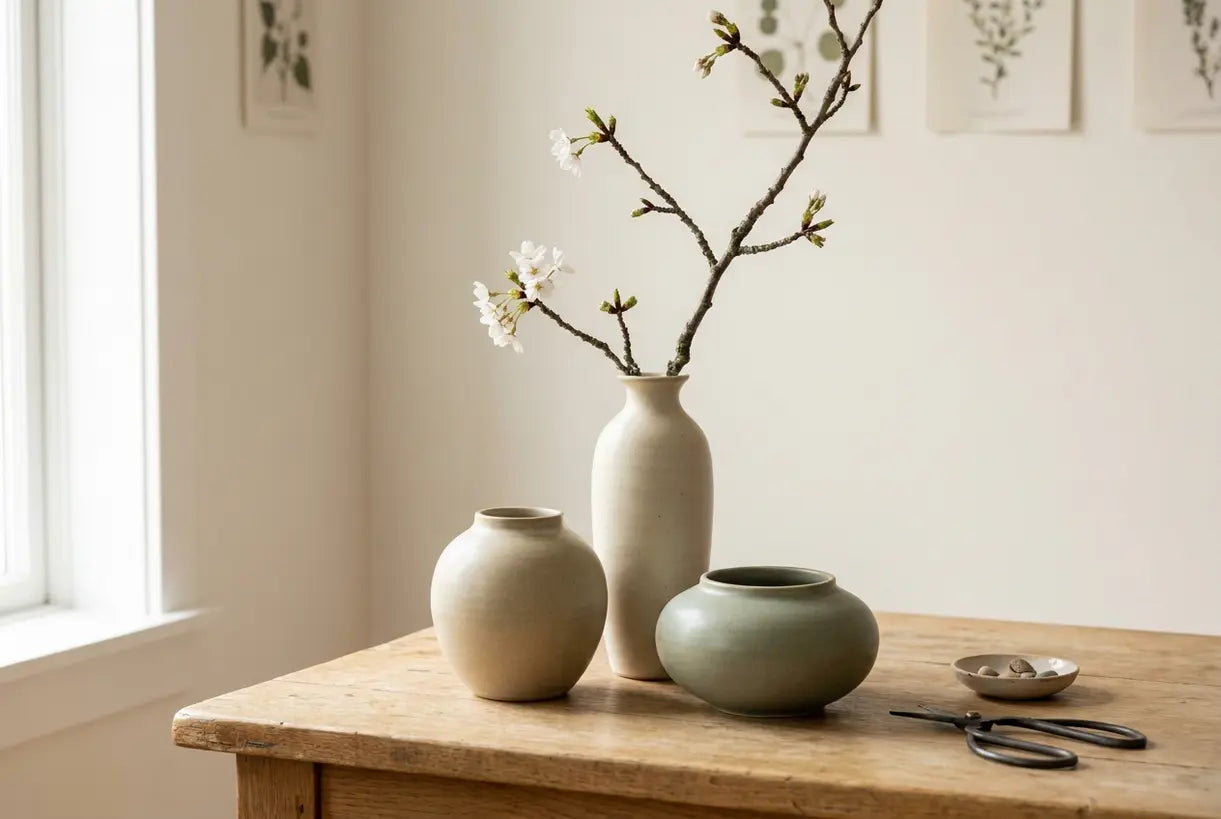
Establish your Shin stem first, cutting it at an angle for maximum water absorption. Position it confidently, understanding that this line represents your arrangement's spiritual spine. Add Soe and Hikae working methodically, rotating the vase frequently to evaluate balance from all perspectives. Remember that space is as important as substance—leave room for breath, for shadow, for the arrangement to exist in dialogue with its surroundings.
According to the World Association of Flower Arrangers, regular practice of Ikebana has been shown to reduce stress and enhance spatial awareness. The meditative quality of this art form aligns perfectly with the Scandinavian concept of hygge—creating cozy, intentional moments within daily life.
Decorative Trays & Bowls
Shop all Trays & Bowls
Curated Ikebana Vessels for Your Home
For those ready to deepen their practice, we've selected two additional pieces that exemplify the wabi-sabi philosophy while accommodating diverse arrangement styles. Each vessel offers distinct characteristics suited to different botanical materials and spatial contexts.
Wabi-Sabi Collection: Artisan Japanese Flower Vases
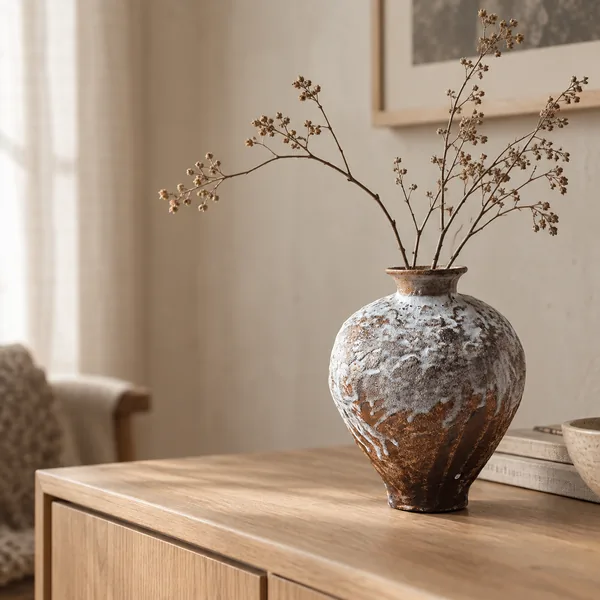 Stille Small Jingdezhen Ceramic Wabi-Sabi Vase$129.00$189.00
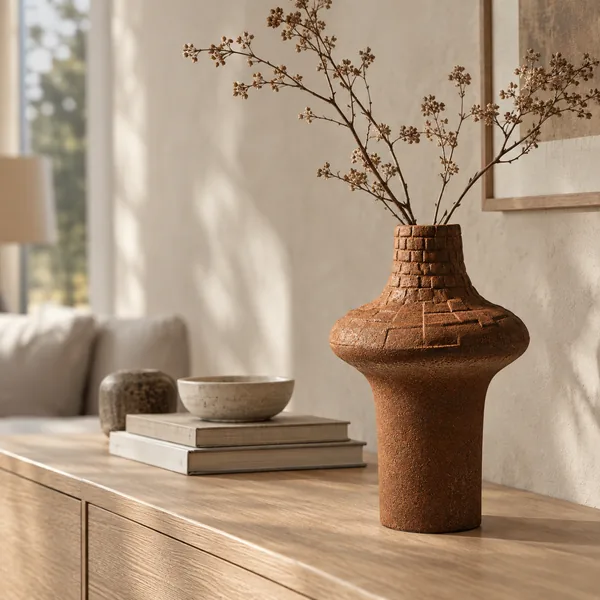 Torva Rustic Plaid Ceramic Vase Artisan Decor$149.00$219.00
The Stille Small Jingdezhen Ceramic Wabi-Sabi Vase honors the ancient porcelain traditions of China's porcelain capital through contemporary minimalist form. Hand-shaped using techniques refined over centuries, this vessel speaks to the dialogue between Japanese and broader East Asian ceramic traditions. Its modest scale—just 5.5 inches—makes it perfect for intimate spaces: a bedside table, a bathroom shelf, or a quiet corner of your workspace.
For those drawn to more textural presence, the Torva Rustic Plaid Ceramic Vase offers a distinctive surface pattern that captures and plays with ambient light. The hand-pressed plaid texture creates subtle shadows that shift throughout the day, animating the vessel even when not holding botanicals. Its generous 9-inch height accommodates substantial branches while maintaining the proportional grace essential to Ikebana composition.
Conclusion: Cultivating Presence Through Minimalist Floral Design
The journey into Japanese flower vases and Ikebana practice offers something increasingly precious in our accelerated world: permission to slow down. When you select a single branch, place it deliberately in a handcrafted vessel, and position it where daily life unfolds, you create an anchor for mindfulness. You establish a visual reminder that elegance need not be complicated, that refinement often whispers rather than shouts.
At Skonne, we believe that the objects we choose for our homes should do more than fill space—they should elevate our experience of living within that space. Whether you're drawn to the organic warmth of the Jorde Handmade Rustic Ceramic Vase, the refined heritage of the Stille Small Jingdezhen Vase, or the textural character of the Torva Rustic Plaid Ceramic Vase, each piece in our collection has been selected to support your practice of intentional living.
As you explore the art of minimalist floral design, remember that perfection lies not in symmetry or abundance, but in the quality of attention you bring to the arrangement. Let your Japanese flower vase become a daily invitation to pause, observe, and appreciate the profound beauty inherent in simplicity.
Related Article
Cylindrical Flower Vases: Sleek Tube, Rectangular & Skinny Designs for Modern SpacesExplore sleek cylindrical flower vase styles for modern spaces. From tall tube designs to skinny minimalist forms, elevate your home decor today.