
Does a Ceiling Lamp Use More Electricity Than a Table Lamp? The Complete Energy Comparison Guide
Summary›
- Understanding Energy Consumption: The Basics of Lighting Efficiency
- Does a Ceiling Light Use More Electricity Than a Lamp?
- How Usage Patterns Impact Your Energy Bill
- LED Technology: The Ultimate Equalizer
- How Much Does It Cost to Run a Ceiling Light vs Table Lamp?
- Is It Cheaper to Use Lamps or Ceiling Lights? The Strategic Answer
- Which Type of Lighting Is Most Energy Efficient?
- Conclusion: Making Your Lighting Work Smarter
Mounted Ceiling Lights
Shop all Ceiling Lights
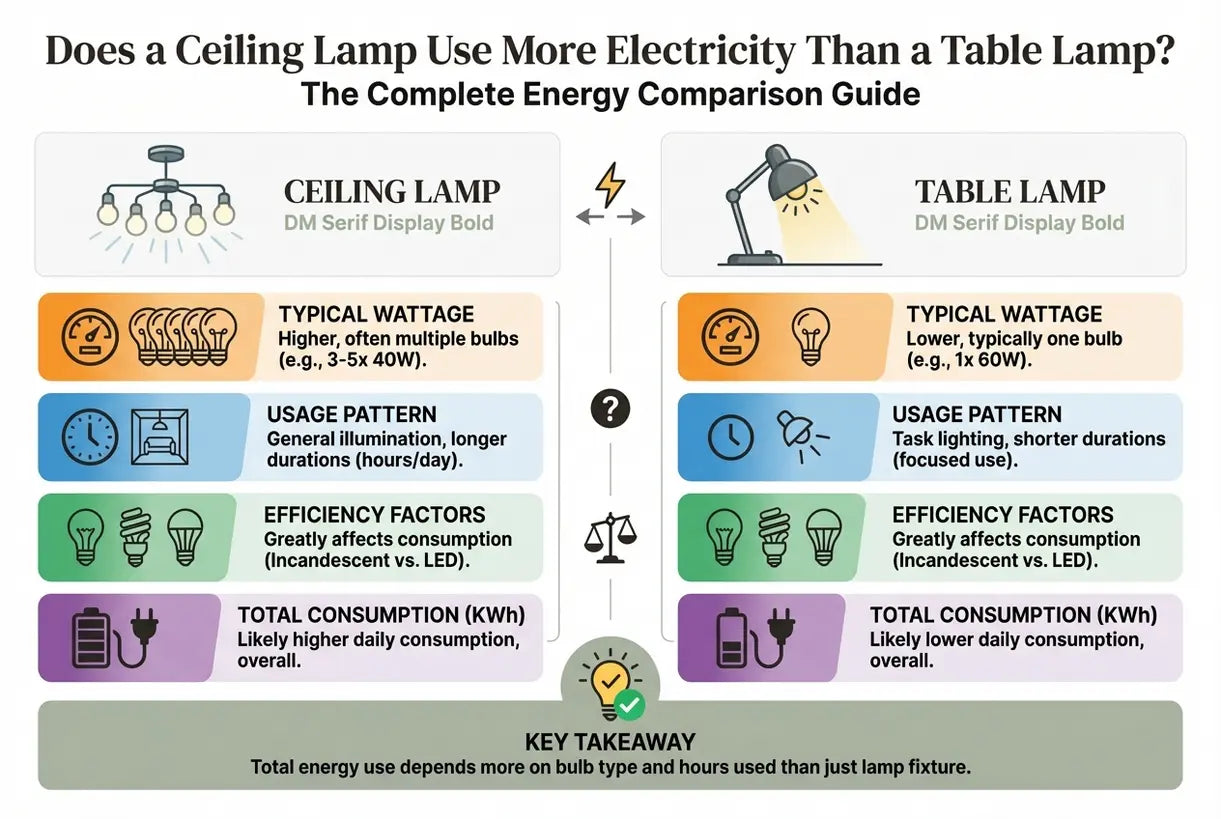
Understanding Energy Consumption: The Basics of Lighting Efficiency
Before diving into the comparison, it's essential to understand how electricity consumption actually works. Lighting efficiency is measured in watts—the amount of energy a bulb consumes per hour—while your electricity bill is calculated in kilowatt-hours (kWh). This distinction matters because it helps you understand that the type of bulb matters far more than the fixture itself.
Traditional incandescent bulbs consume 60-100 watts, while modern LED alternatives use only 8-12 watts to produce the same brightness. This means when comparing ceiling light vs lamp electricity usage, the single most important factor isn't the fixture style—it's the technology inside the bulb. The question then becomes: which fixture type allows you to use the most efficient lighting for your needs?
Does a Ceiling Light Use More Electricity Than a Lamp?
The short answer is: it depends entirely on the bulbs and usage patterns. Ceiling lights typically use multiple bulbs and illuminate larger spaces, which can lead to higher consumption. However, a single-bulb ceiling fixture with an LED bulb often uses less electricity than a multi-bulb chandelier or a table lamp with an inefficient bulb.
Here's where it gets interesting: table lamp electricity usage often appears lower per fixture, but homeowners tend to use multiple lamps simultaneously to achieve adequate lighting. Meanwhile, one well-positioned ceiling light with proper brightness might serve the same purpose while actually consuming less energy overall. This nuanced reality challenges simple assumptions about fixture efficiency.
For those looking to explore more options, our Pendant Lights collection offers a curated selection of energy-efficient overhead lighting that combines Scandinavian aesthetics with modern LED technology—perfect for achieving ambient illumination without excessive power consumption.
Ceiling Light Wattage Comparison by Fixture Type
Understanding ceiling light power consumption requires looking at typical usage across different fixtures:
- Flush mount ceiling lights: Single LED bulb (8-15W) or 2-3 LED bulbs (24-45W total)
- Semi-flush fixtures: 2-3 LED bulbs (24-45W total)
- Pendant lights: Single LED bulb (8-15W)
- Chandeliers: 3-8 bulbs (24-120W total with LEDs)
The key insight here is that ceiling fixtures designed for broader illumination often incorporate multiple bulbs by design. However, with LED technology, even multi-bulb chandeliers can be surprisingly efficient—consuming less electricity than a single old incandescent table lamp.
Table Lamp Power Consumption Reality
Table lamp power consumption typically involves single-bulb setups, but don't assume they're automatically more efficient. A vintage-style desk lamp with a 60W incandescent bulb consumes far more energy than a modern LED ceiling fixture. The critical variables are:
- Bulb technology (LED vs CFL vs Incandescent)
- Bulb wattage
- Hours of daily use
Many homeowners use 3-4 table lamps in a single room, which can collectively consume more electricity than one strategically placed overhead light. This brings us to the most overlooked factor in the lamp vs ceiling light energy consumption debate: usage patterns matter as much as wattage ratings.
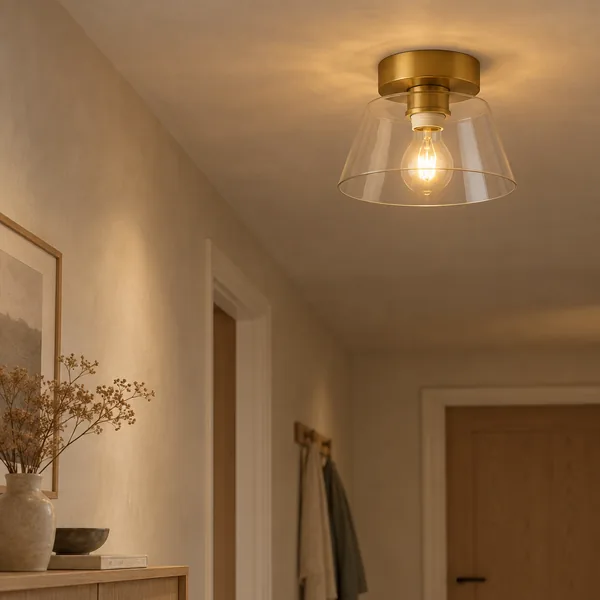 Klara Nordic Glass Ceiling Light for Interiors$109.00$169.00
How Usage Patterns Impact Your Energy Bill
Perhaps the most overlooked aspect of energy efficient lighting comparison is how people actually use different fixtures. Table lamps are frequently left on for hours while watching television or working, accumulating significant runtime. Ceiling lights are often used for specific tasks—cooking, cleaning, entertaining—and turned off afterward.
Consider a typical evening: three table lamps burning for 5 hours at 10W each (LED) equals 150 watt-hours. One ceiling fixture with three LED bulbs used for 2 hours equals 60 watt-hours. Despite having three times as many bulbs, the ceiling light consumed less than half the energy because of shorter usage time. This practical reality demonstrates why blanket statements about fixture efficiency can be misleading.
Your Klara Nordic Glass Ceiling Light represents an elegant solution to this efficiency challenge—offering soft ambient glow with LED compatibility, transforming your space while keeping energy consumption minimal. Its glass ceiling light design distributes light beautifully across the room, potentially reducing the need for multiple supplementary lamps.
The Scandinavian Approach to Layered Lighting
Scandinavian design philosophy embraces layered lighting—combining ambient, task, and accent lighting efficiently rather than relying on a single overpowering source. This approach naturally distributes electricity usage and reduces waste:
- Ambient: One energy-efficient ceiling fixture providing baseline illumination
- Task: Targeted table lamps only where needed
- Accent: Wall sconces or floor lamps for visual interest
This strategic approach to light fixture electricity usage comparison recognizes that different spaces require different solutions. A bedroom might benefit from a soft table lamp for bedtime reading, while a kitchen workspace demands bright overhead illumination for safety and functionality.
LED Technology: The Ultimate Equalizer
Modern energy efficient lighting options have completely transformed the ceiling vs lamp debate. LED bulbs use up to 90% less energy than incandescent equivalents while lasting 25 times longer. This technological leap means that fixture type has become far less consequential for your electricity bill than the bulbs inside them.
When both your ceiling lights and table lamps use LED technology, the wattage difference becomes negligible. A 9W LED in a table lamp consumes essentially the same electricity as a 9W LED ceiling bulb. The focus shifts from "which fixture uses more" to "which lighting solution creates the most functional and beautiful environment."
Comparing LED Efficiency Across Fixture Types
To understand does a lamp use more electricity than a ceiling light with modern technology, let's compare scenarios assuming all LED bulbs:
| Fixture Type | Typical LED Wattage | 4 Hours Daily Cost* |
|---|---|---|
| Single bulb table lamp | 9W | $0.013 |
| Single pendant ceiling light | 9W | $0.013 |
| Multi-bulb flush mount (3 LEDs) | 27W | $0.039 |
| 3 Table lamps (LED) | 27W | $0.039 |
*Based on average US electricity rate of $0.13/kWh
As the data reveals, with LED technology, the electricity cost depends on total wattage consumed—not whether the fixture hangs from the ceiling or sits on a table. The real efficiency gains come from choosing LEDs and using lighting strategically.
Table Lamps
Shop all Table Lamps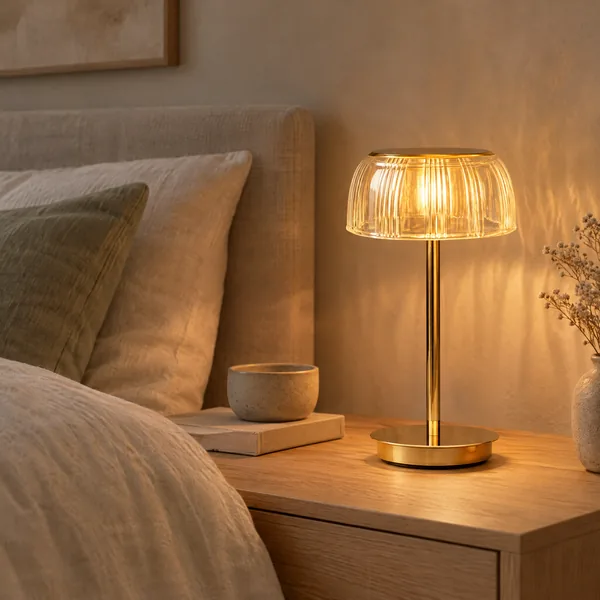
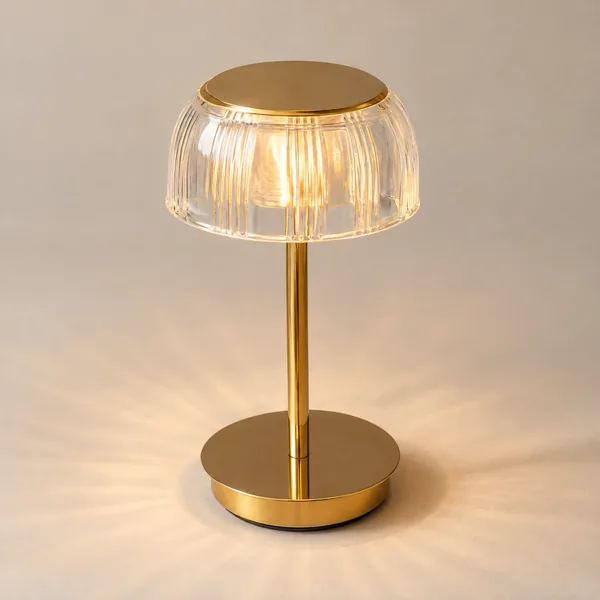 Save $30.00
Kvalla Jellyfish LED Rechargeable Table Lamp
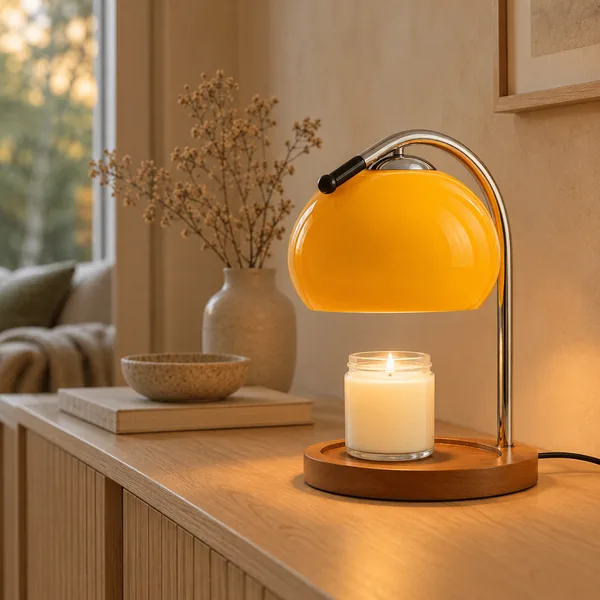
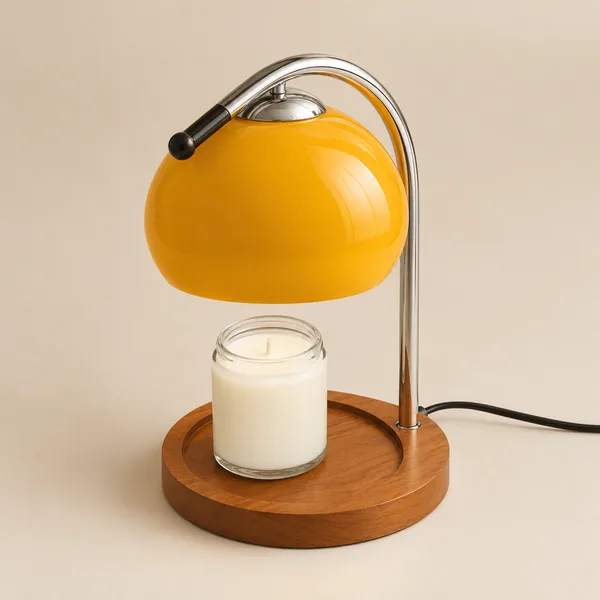 Save $60.00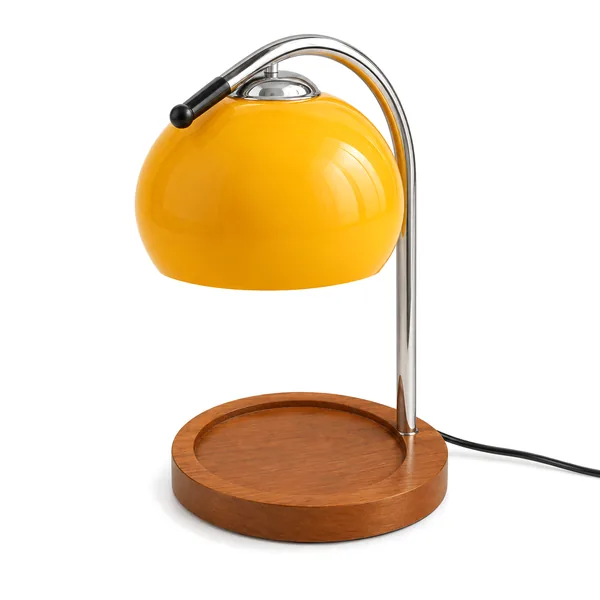
 3 options
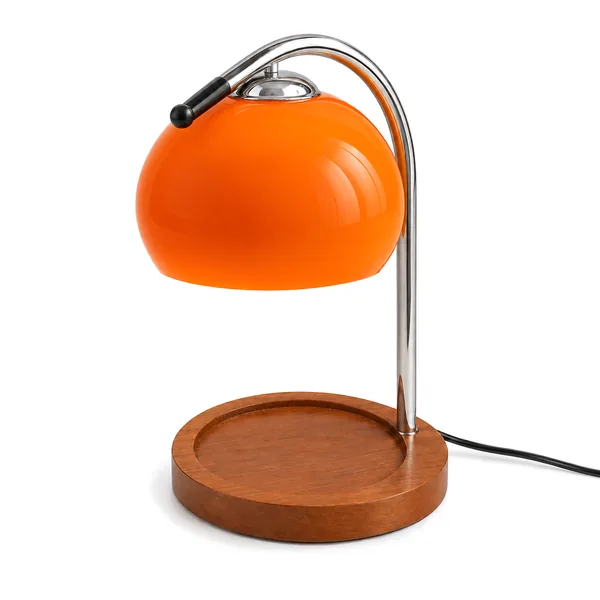
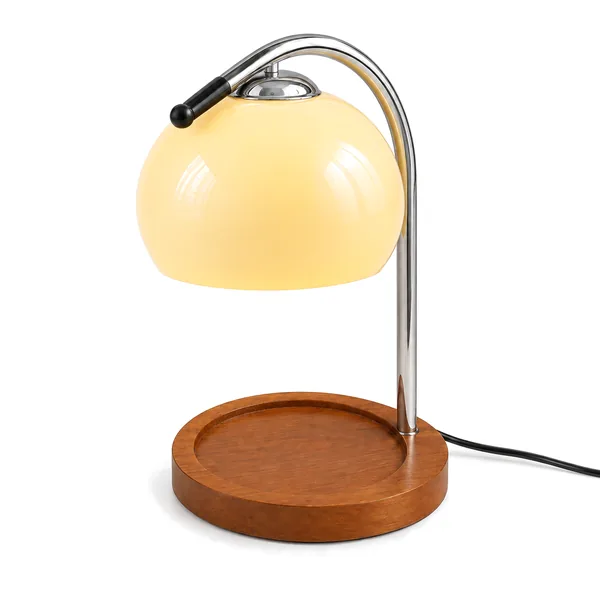
Solvarm Stained Glass Candle Warmer Table Lamp
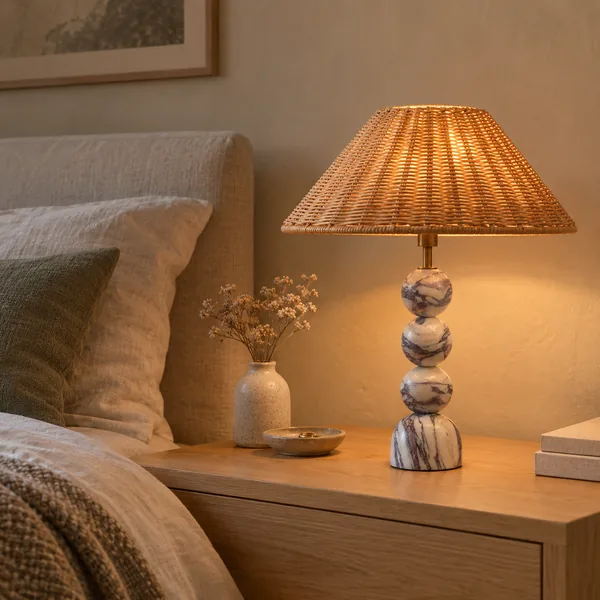
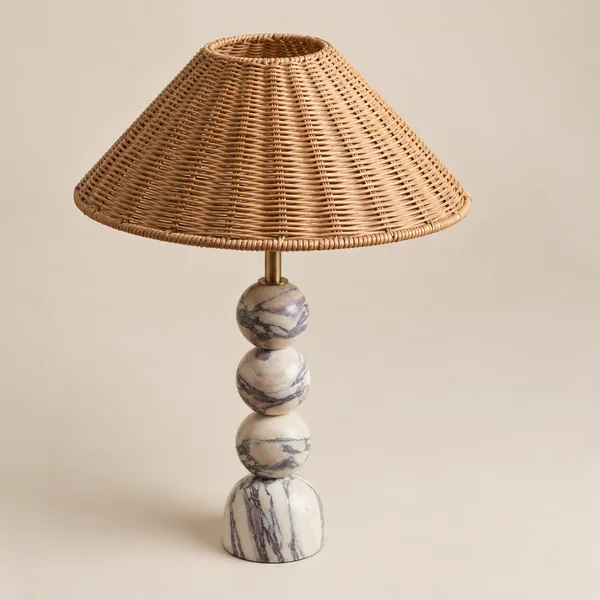 Save $220.00
Stenglo Nordic Marble Table Lamp Rattan Shade
How Much Does It Cost to Run a Ceiling Light vs Table Lamp?
For homeowners focused on practical budgets, here's the concrete breakdown. Let's assume you pay the average US electricity rate of $0.13 per kWh and use your lighting for 6 hours daily:
Single LED Table Lamp (9W):
Daily: 0.054 kWh = $0.007
Monthly: $0.21
Yearly: $2.55
Single LED Ceiling Light (12W):
Daily: 0.072 kWh = $0.009
Monthly: $0.28
Yearly: $3.41
The difference between one table lamp and one ceiling light is roughly $1 per year—essentially negligible. However, most rooms require multiple light sources. A living room with three table lamps versus one ceiling fixture with comparable brightness shows the ceiling light actually becoming more cost-effective when viewed holistically.
Beyond Electricity: The Full Picture
When evaluating ceiling light wattage comparison, consider the complete lifecycle cost:
- LED lifespan: 25,000-50,000 hours (rarely needing replacement)
- Heat generation: LEDs produce minimal heat, reducing cooling costs in summer
- Brightness equivalence: LEDs deliver more lumens per watt than any other technology
These factors mean that choosing LED-ready fixtures like those in Skonne's collection delivers long-term value beyond the immediate electricity savings. The Shiro Rice Paper Table Lamp exemplifies this philosophy—bringing warm Nordic ambiance with gentle LED lighting that creates a cozy atmosphere while keeping operational costs minimal.
Energy-Efficient Scandinavian Lighting Solutions
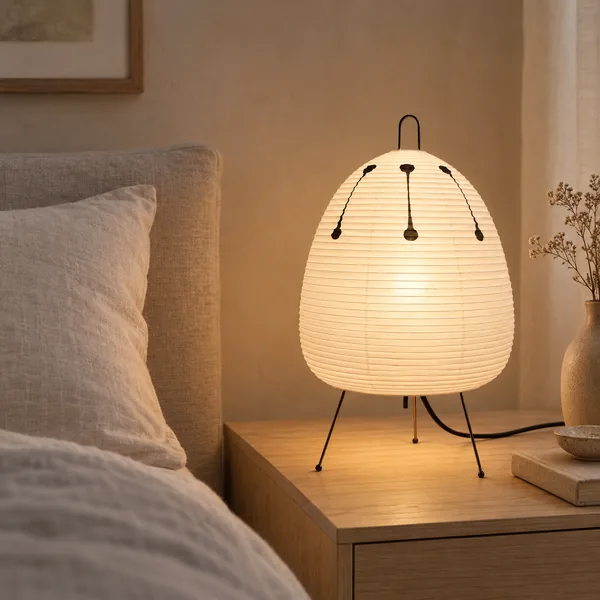 Shiro Rice Paper Table Lamp Nordic Minimalist$119.00$199.00
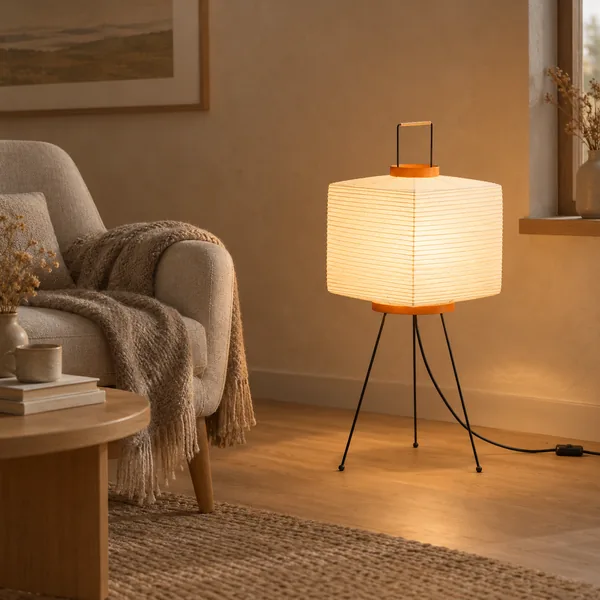 Papira Handcrafted Rice Paper Ambient Floor Lamp$159.00$249.00
Is It Cheaper to Use Lamps or Ceiling Lights? The Strategic Answer
The question "is it cheaper to use lamps or ceiling lights" doesn't have a universal answer—it depends on your specific needs and habits. Here's the strategic framework for making cost-effective decisions:
Choose Ceiling Lights When:
- You need ambient illumination for the entire room
- Multiple people share the space
- You want to minimize the number of fixtures (and therefore total potential wattage)
- The ceiling fixture positions light optimally for room activities
Choose Table Lamps When:
- You need focused task lighting (reading, working)
- You want to create intimate, cozy atmosphere
- Roommates or family members have different lighting preferences
- You desire flexibility in rearranging light sources
The most cost-effective approach is often combining both strategically—using energy-efficient ceiling lights for general illumination and targeted lamps only when needed. The Papira Handcrafted Rice Paper Floor Lamp demonstrates how artisanal rice paper floor lighting can elevate your living space while its LED technology keeps energy consumption minimal.
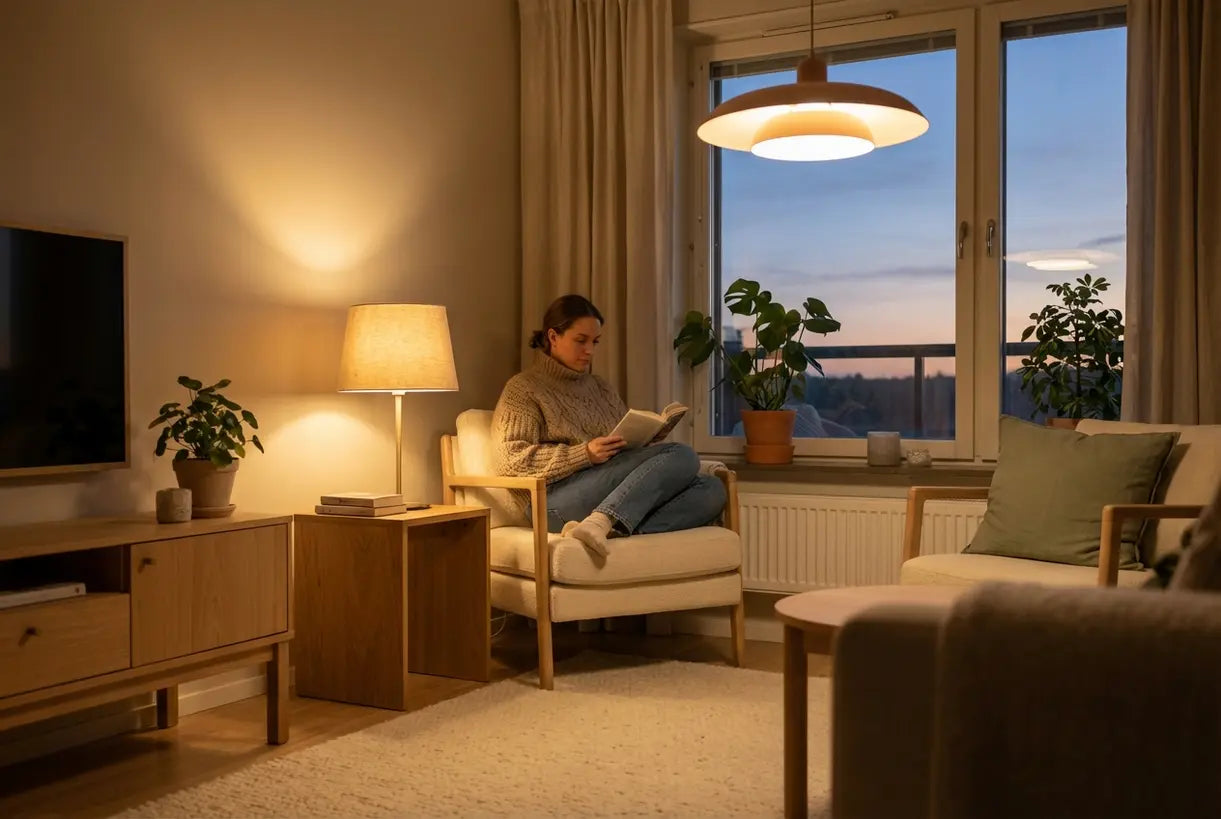
Key Insight: The difference between lamp and ceiling light electricity usage is minimal with LED technology. Your lighting strategy—how many fixtures you use and for how long—has far greater impact on your energy bill than fixture type alone.
Maximizing Efficiency in Your Lighting Design
To achieve optimal energy efficient lighting options regardless of fixture type:
- Audit your bulbs: Replace any remaining incandescent or CFL bulbs with LEDs
- Use dimmer switches: Reduce wattage when full brightness isn't needed
- Install timers or smart controls: Automatic shutoffs prevent wasted electricity
- Right-size your fixtures: Don't use overly powerful bulbs for the space
- Consider daylight: Maximize natural light to reduce artificial lighting needs
Which Type of Lighting Is Most Energy Efficient?
Based on comprehensive comparison, LED lighting in any fixture type represents the most energy-efficient option available today. Whether mounted on your ceiling or placed on your side table, LED technology transforms electricity into light with minimal waste.
The fixture that delivers the best efficiency is ultimately the one that:
- Uses LED bulbs exclusively
- Provides adequate lighting for your specific activity
- Discourages the need for additional supplementary lighting
- Aligns with your natural usage patterns
Skonne's Scandinavian-inspired collection emphasizes this efficiency philosophy—beautiful, intentional lighting that serves your space without excessive energy consumption. From the soft glow of rice paper to the elegant efficiency of modern glass fixtures, every design prioritizes both aesthetics and responsible energy use.
Conclusion: Making Your Lighting Work Smarter
The question "does a lamp use more electricity than a ceiling light" reveals a truth that empowers homeowners: with modern LED technology, the fixture type matters far less than the bulbs inside and how you use them. A single energy-efficient ceiling light can illuminate an entire room economically, while strategic table lamps provide focused functionality without waste.
Your lighting choices should reflect how you actually live—where you read, where you gather, where you work. By choosing LED-compatible fixtures, using lighting strategically, and layering your illumination intelligently, you create beautiful spaces that don't inflate your energy bills.
Skonne's curated selection of Scandinavian lighting offers the perfect foundation for this balanced approach. Whether you're drawn to the ambient glow of ceiling fixtures or the intimate warmth of table lamps, each piece is designed with efficiency and timeless beauty in mind—helping you create spaces that feel both luxurious and responsible.
Related Article
DIY Ceiling Lamp: How to Install, Wire & Customize Your Own Overhead FixtureComplete guide to DIY ceiling lamp installation, wiring, and customization. Create beautiful overhead lighting for your Scandinavian-inspired home.