
How to Choose the Perfect Pendant Lighting for Your Kitchen Island
Summary›
Your kitchen island is more than just a prep surface—it's where morning coffee brews, homework happens, and friends gather during dinner parties. The right pendant lighting transforms this central hub from purely functional to genuinely inviting, casting warm pools of light that define the space while guiding the eye upward. Whether you're renovating a compact galley kitchen or designing an open-concept culinary sanctuary, understanding how to select, size, and position island pendants ensures your lighting serves both practical tasks and aesthetic ambitions.
In this guide, we'll explore the essential principles of pendant light placement, from calculating the perfect diameter to determining hanging height and spacing intervals. While these decisions might seem technical, approaching them with intention creates that effortless Scandinavian hygge feeling—where every element feels curated yet comfortable, functional yet beautiful.
Understanding Scale: What Size Pendant Lights Work Best?
Before browsing styles or finishes, establish the proper scale for your space. Oversized pendants overwhelm narrow islands, while diminutive fixtures disappear in grand kitchens. The rule of thumb suggests selecting pendants with diameters between 10-12 inches for standard installations, though this varies based on your island's dimensions and ceiling height.
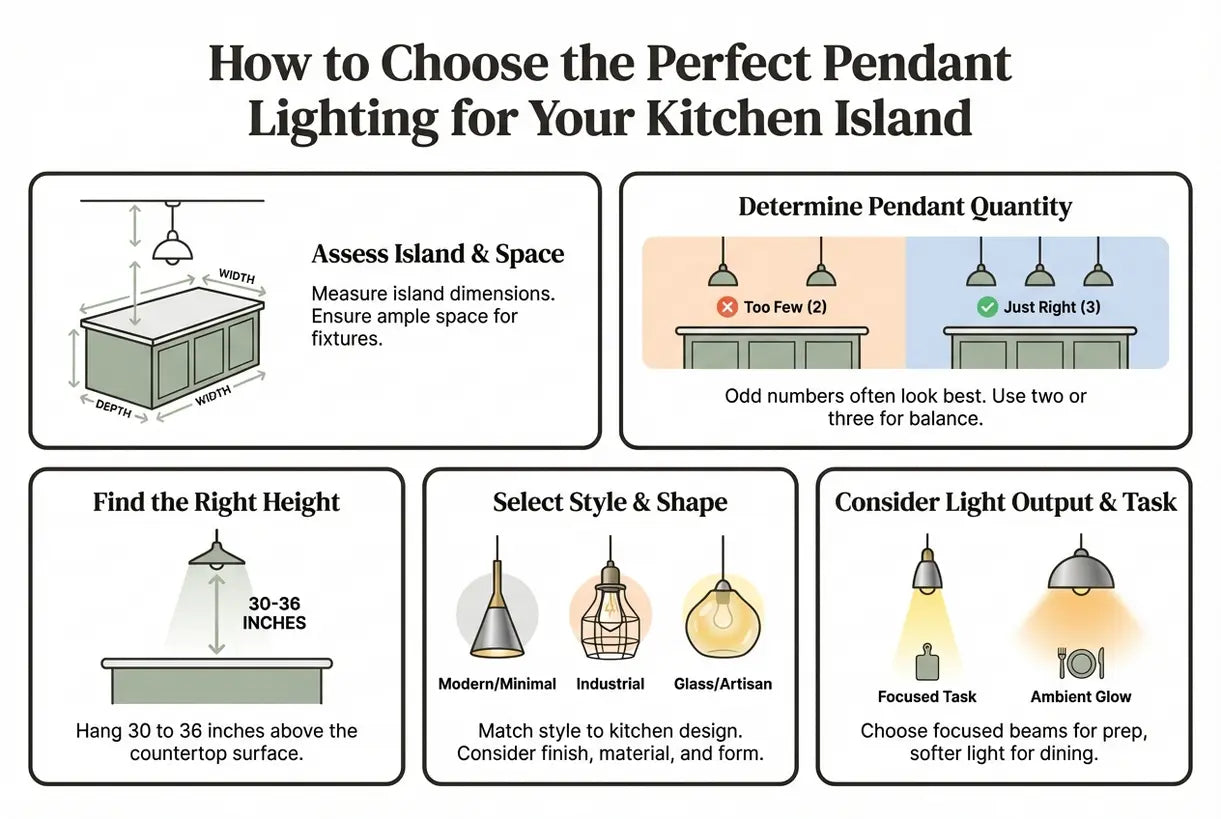
Consider your island's length when determining fixture size. For islands measuring six to seven feet, three medium pendants (8-10 inches each) create pleasing rhythm without crowding. Longer islands—eight feet or more—accommodate larger pendants (12-16 inches) or additional fixtures. The goal is achieving visual balance; your lighting should relate proportionally to both the surface below and the room's overall volume.
Calculating Quantity and Spacing
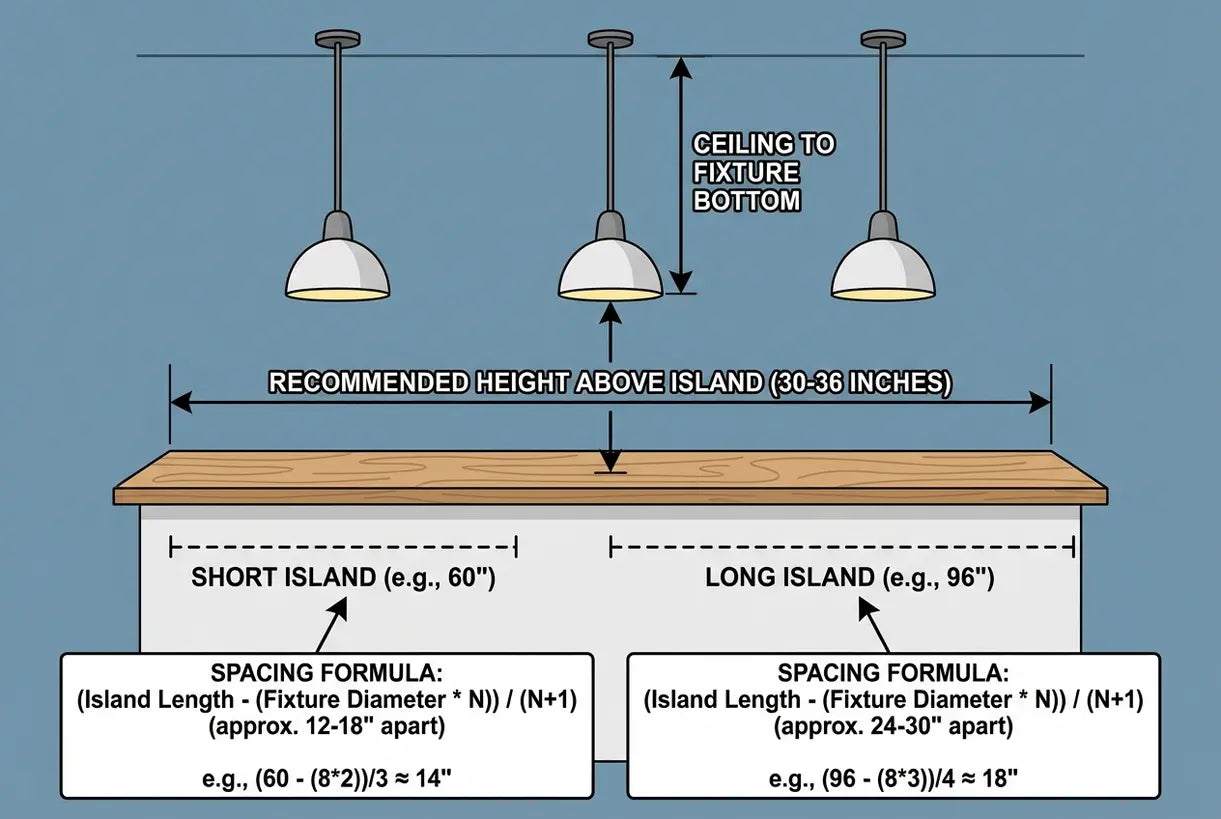
Determining how many pendants to hang involves simple math guided by aesthetics. Multiply your island's length in feet by two to find the approximate inches between fixture centers. For example, a seven-foot island suggests 14-inch spacing intervals. However, practical installation requires adjusting based on pendant diameter—ensure at least 30 inches of walking clearance between the island edge and pendant edge to prevent head bumps during enthusiastic cooking sessions.
For those seeking versatility, consider the Aurelia Brushed Brass Mini Pendant (3-Pack). These adjustable-height fixtures with opal glass diffusers work beautifully over six-to-eight-foot islands, offering flexibility as your spatial needs evolve.
Hanging Heights: Finding the Sweet Spot
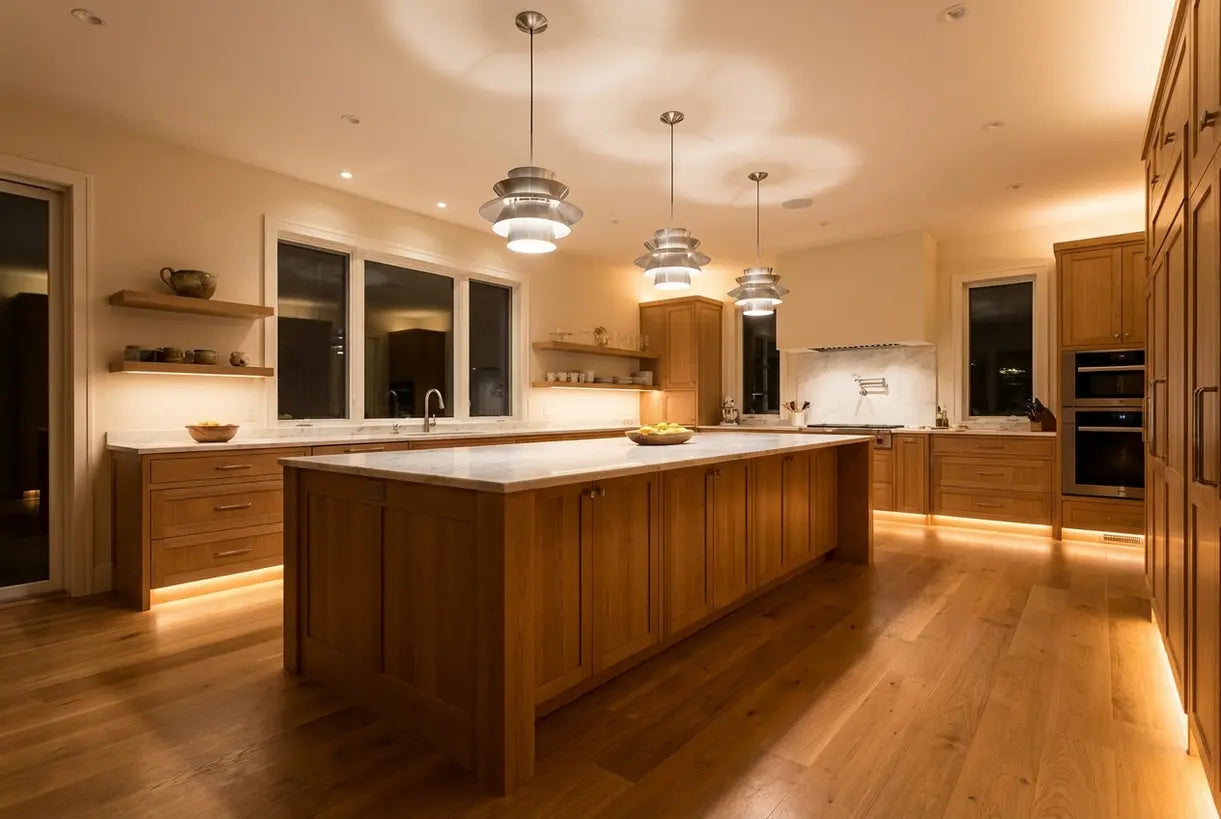
Placement height affects both functionality and atmosphere. Standard guidelines recommend suspending pendants 30-36 inches above the countertop surface—low enough to create intimacy and task-focused illumination, yet high enough to maintain sight lines across the kitchen. If your household includes taller individuals or if the island serves primarily as a buffet during entertaining, lean toward the higher end of this range.
Ceiling height introduces additional variables. In rooms with nine-foot ceilings or higher, consider adjusting the drop length to maintain that 30-36 inch clearance above the counter rather than fixing the canopy at a specific height. This preserves the cozy, grounded feeling essential to Scandinavian design principles while maximizing usable light.
Coordinating Styles with Your Kitchen's Architecture
While matching metal finishes across hardware and lighting creates cohesion, Scandinavian design embraces thoughtful contrast. Your pendant lights needn't match every cabinet pull or faucet exactly, but they should converse with the room's material palette. Warm brass pendants complement oak shelving and terracotta accents, while matte black fixtures anchor spaces featuring stark white cabinetry and concrete countertops.
Modern kitchen islands particularly shine with clean-lined pendants featuring cylindrical or globe shapes. Avoid overly ornate details that compete with minimalist cabinetry. Instead, prioritize fixtures with interesting material textures—hand-blown glass, brushed metal, or natural linen shades—that add depth without visual clutter.
Task Lighting Considerations
Kitchen islands serve multiple functions—food prep, casual dining, remote work—requiring adaptable illumination. Pendant lights excel at task lighting when properly specified, directing focused downward light onto work surfaces while eliminating shadows cast by overhead cabinets. Look for designs with broad, downward-facing diffusers rather than purely decorative uplighting for cooking-focused islands.
For islands with rustic or industrial decor schemes, the Industrial Cage Pendant - Antique Copper showcases filament-style LED bulbs through an open-cage design, delivering both ambient atmosphere and functional task light. Its height-adjustable canopy accommodates various ceiling configurations while maintaining that coveted Pendant Lights aesthetic.
Bulb Selection and Dimming Capabilities
The quality of light matters as much as the fixture itself. For kitchen islands, aim for bulbs between 2700K-3000K color temperature—warm enough to flatter skin tones and food presentation, yet crisp enough for precise knife work. LEDs now offer excellent color rendering index (CRI) ratings above 90, ensuring your heirloom tomatoes look as vibrant under artificial light as they do in natural daylight.
Dimming functionality transforms your kitchen from energetic prep zone to intimate cocktail hour venue. Ensure your chosen pendants support dimmable bulbs and pair them with compatible wall switches or smart home systems. This layering capability proves essential for open-concept homes where the kitchen flows into living spaces, allowing you to adjust mood without sacrificing visibility.
Curated Pendants for Every Island Style
For smaller islands or linear arrangements, the Matte Black Drum Pendant - 16" offers broad, downward task light through its sleek cylindrical shade. Use it as a singular statement over compact surfaces or align multiple fixtures for expansive culinary workspaces.
Installation Tips for Long-Term Satisfaction
Professional installation ensures safety and optimal positioning, particularly when dealing with vaulted ceilings or concrete structures requiring specialized anchors. During installation, hang fixtures temporarily before final wiring to verify sight lines and walking clearances. This step lets you experience the spatial relationship between pendants and countertops, making micro-adjustments that CAD drawings cannot capture.
Consider the electrical load as well. If replacing a single central fixture with multiple pendants, ensure your circuit accommodates the combined wattage. Modern LED bulbs alleviate many historical concerns about overloading circuits, but verify amperage ratings when mixing lighting types or adding under-cabinet accents to your island lighting scheme.
Creating Your Kitchen's Centerpiece
Selecting pendant lighting for your kitchen island balances mathematical precision with intuitive design sensibility. By attending to scale, spacing, height, and light quality, you create an environment that supports daily rituals and special occasions alike. The best kitchen lighting doesn't merely illuminate—it defines zones, creates atmosphere, and elevates the quotidian act of preparing meals into something approaching ceremony.
At Skonne, we curate Pendant Lights that honor Scandinavian principles of intentional simplicity and warm functionality. From the adjustable elegance of brushed brass mini pendants to the commanding presence of industrial cage designs, our collection offers solutions for islands of every dimension and design philosophy. Browse our selection to discover fixtures that bring both clarity and coziness to your kitchen's most important gathering place.
Related Article
Plaster-In Wall Lights: Architectural, Recessed Fixtures for a Seamless, Built-In LookPlaster-in wall lights integrate seamlessly into drywall for invisible, architectural illumination. Discover recessed fixtures that create clean, minimalist walls.