
How to Choose the Perfect Pendant Lights for Your Kitchen
Summary›
Kitchens have evolved far beyond simple cooking spaces—they are now the heart of our homes, where we gather, create, and connect. The right lighting transforms these moments, casting warmth and intention over every interaction. When chosen thoughtfully, pendant Pendant Lights become more than illumination; they serve as sculptural anchors that define your kitchen's personality while delivering the precise brightness needed for everyday tasks.
Whether you are renovating a compact city apartment or curating the finishing touches on your dream home, understanding how to select kitchen pendant lighting requires balancing aesthetic vision with practical considerations. In this guide, we will explore everything from spatial measurements to installation nuances, ensuring you feel confident illuminating your space with pieces that reflect the Scandinavian values of purposeful beauty and warm functionality that define our curated collection.
Why Pendant Lights Transform Your Kitchen Space
Unlike recessed lighting that fades into the ceiling or harsh overhead fixtures, hanging lights create intentional pools of illumination that draw the eye and establish clear zones within open-concept layouts. The vertical drop of glass pendant shades introduces depth and dimension, breaking up horizontal sightlines and adding layers of visual interest to your kitchen architecture.
For those embracing Scandinavian-inspired interiors, modern pendant lights embody the essence of hygge—that Danish concept of cozy contentment through thoughtful design. These fixtures provide direct, usable light for meal preparation while simultaneously setting an inviting mood for evening conversations. When selected with care, they bridge the gap between utilitarian necessity and the elevated aesthetic sensibility that transforms a house into a home.
Sizing Guidelines for Kitchen Islands
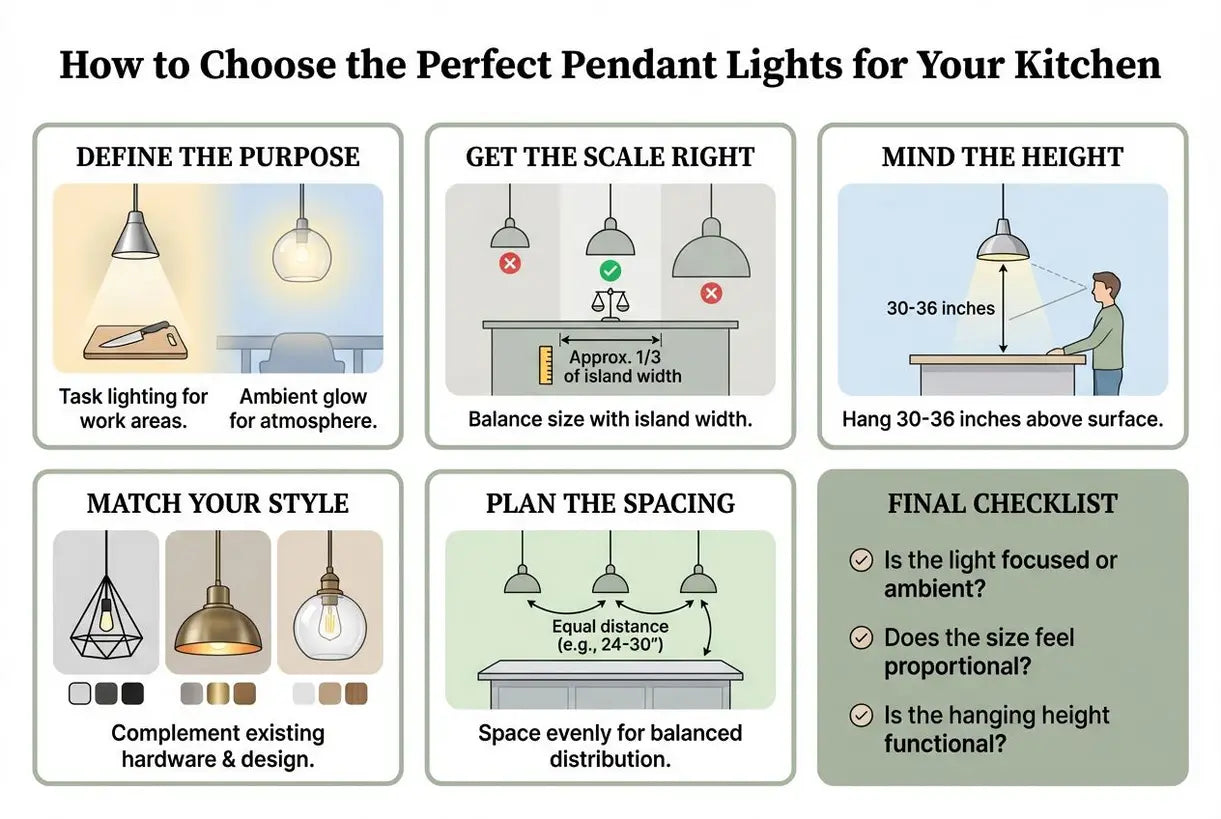
One of the most common questions we hear from homeowners concerns proper proportions. Selecting the correct pendant light size prevents your fixtures from overwhelming the space or disappearing against your backsplash. For standard kitchen islands measuring 7 to 8 feet in length, a trio of pendant lights typically creates the most balanced composition—providing even illumination across the entire surface while maintaining comfortable conversational sightlines across the counter.
Pro Tip: The combined width of your pendant lights should span approximately two-thirds to three-quarters of your island length, with roughly 30-32 inches of space between each fixture for visual harmony.Smaller galley kitchens or peninsulas may only accommodate a single statement piece or a pair of mini pendant lights. The scale should relate directly to your island width; oversized fixtures in narrow spaces create visual heaviness, while undersized selections fail to anchor the space adequately. Consider the Atria Glass Pendant for medium to large islands where transparency helps maintain an airy aesthetic without sacrificing the presence needed to properly frame your workspace.
What Size Pendant Light Do I Need for an Island?
The diameter of your chosen fixture depends largely on your island dimensions and ceiling height. For islands between 6 to 7 feet wide, select pendant lights ranging from 12 to 16 inches in diameter. Larger islands exceeding 8 feet can comfortably handle statement pieces up to 20 inches across, or groupings of smaller pendants arranged in geometric patterns.
Height matters as much as width. High ceilings above 10 feet accommodate longer suspensions and larger volume fixtures, while standard 8-foot ceilings require more streamlined silhouettes that do not crowd the vertical space. Always measure your available drop carefully, accounting for both the fixture body and the decorative chain or rod that connects it to your ceiling canopy.
Height and Placement Mastery
Proper positioning ensures your island lighting performs its dual function effectively—brightening work surfaces while preserving the social atmosphere that makes kitchen islands so beloved. Too high, and you lose task lighting intensity; too low, and you disrupt sightlines and risk head bumps during meal prep.
How High Should Pendant Lights Hang Over a Kitchen Island?
The industry standard places the bottom of pendant lights approximately 30 to 36 inches above the finished countertop surface. This elevation provides optimal illumination for chopping vegetables or reading recipes while maintaining open discussion across the island. For higher ceilings, increase this measurement proportionally—add 3 inches of height for every additional foot of ceiling height above the standard 8-foot baseline.
Consider your household's specific needs when fine-tuning this measurement. Taller family members may require slightly higher placement for safety, while those using the island primarily for baking and detailed work might prefer lower positioning (closer to 30 inches) for enhanced task visibility. The Atria Glass Pendant allows precise height adjustment during installation, accommodating various ceiling heights and personal preferences with its customizable suspension system.
Spacing between pendants proves equally crucial. When installing multiple fixtures, maintain equal distances between lights—typically 30 inches between pendants of standard size, adjusting slightly based on fixture diameter. Visualize creating equal segments along your island length, placing the center of each pendant within its designated zone.
Style Selection for Scandinavian-Inspired Kitchens
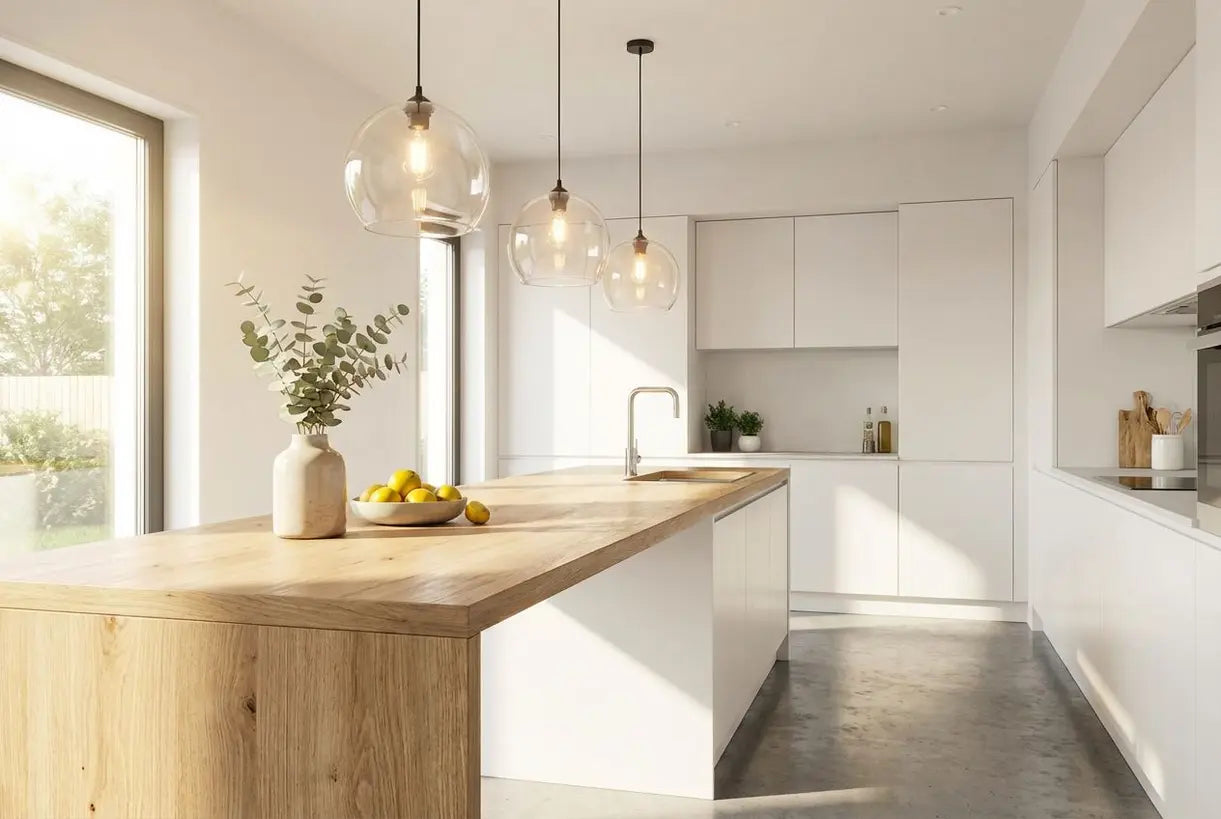
Materiality defines the character of your island lighting. Clear glass shades, like those featured in the Atria Glass Pendant, offer timeless versatility—allowing light to diffuse beautifully while maintaining visual lightness that complements Nordic-inspired interiors. The transparency complements both light and dark cabinetry schemes, making them ideal for transitional spaces.
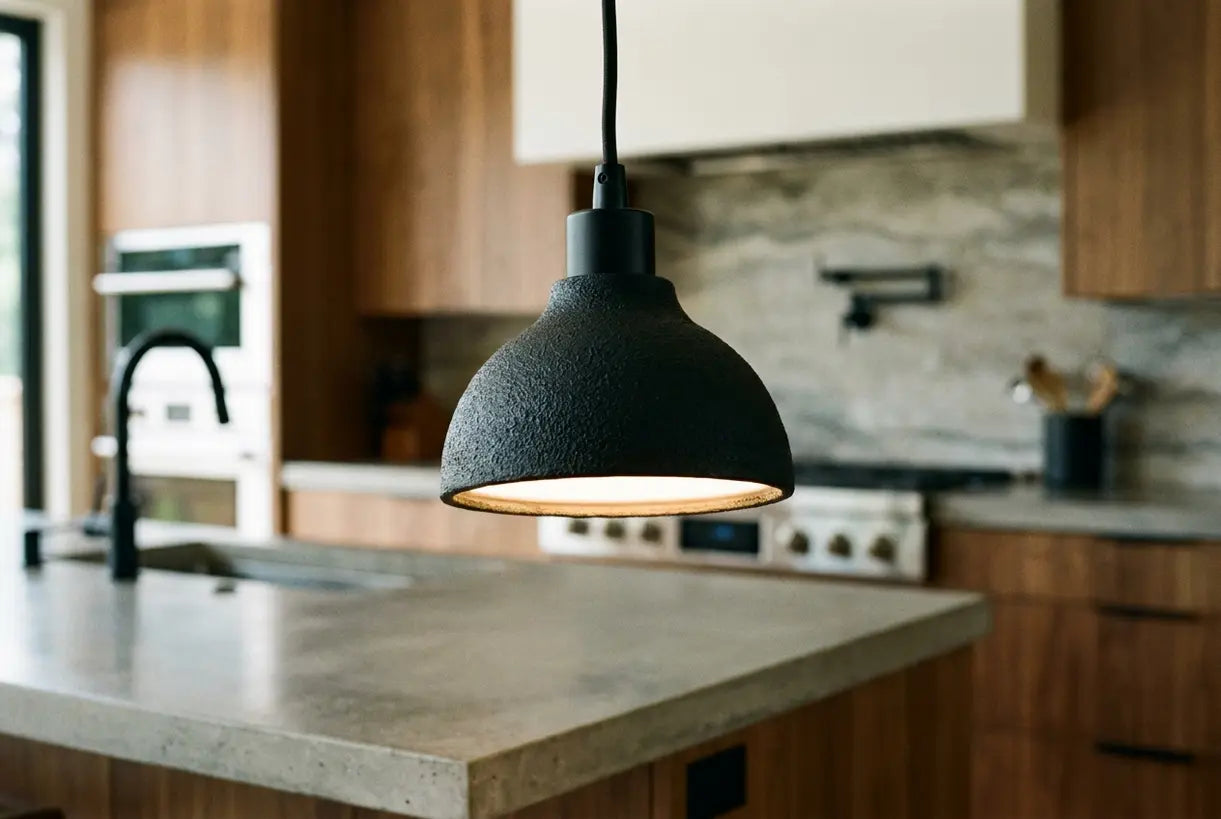
Matte black finishes signify contemporary Scandinavian sophistication without feeling cold. The subdued texture absorbs rather than reflects light, creating depth against white or wood-toned backdrops. Brass and brushed nickel metal tones introduce warmth while maintaining the clean lines essential to modern Nordic aesthetics.
Cord and chain materials also impact your overall design. Fabric-wrapped cords add subtle texture and soften the industrial edge of exposed suspension systems, while sleek metal rods suggest precision and modern minimalism. Consider your kitchen's existing metal finishes—faucets, cabinet hardware, and appliances—to ensure your new lighting coordinates rather than competes with established elements.
Task Lighting Versus Ambient Illumination
Kitchen islands serve multiple functions throughout the day, from morning coffee preparation to evening homework sessions and dinner party gatherings. Your pendant lights must adapt to these varying requirements through thoughtful bulb selection and dimmer compatibility.
Can Pendant Lights Be Used as Task Lighting?
Absolutely—when specified correctly. Effective kitchen task lighting requires adequate brightness (measured in lumens) and appropriate color temperature. For food preparation areas, aim for 3500K to 4000K color temperatures that render colors accurately, helping you distinguish between ripe produce and spot imperfections in your ingredients. Install dimmer switches to transition between alert task lighting and relaxed ambient glow for entertaining.
The Linea Mini Pendant and Cordo Cluster Pendant demonstrate two approaches to functional island lighting. The Linea Mini Pendant focuses intensity through its directional LED design, providing concentrated illumination perfect for detailed work zones. Meanwhile, the Cordo Cluster Pendant allows you to distribute multiple light sources across extensive islands, ensuring no corner remains shadowed while creating visual rhythm through adjustable rod configurations.
Task-Optimized Lighting Solutions
Installation Know-How
Understanding the installation process helps you budget appropriately and decide whether to embrace DIY approaches or engage professional electricians. The complexity depends largely on your existing electrical infrastructure and whether you are replacing existing fixtures or establishing entirely new circuits.
Are Pendant Lights Easy to Install or Do I Need an Electrician?
Replacement installations—where junction boxes already exist from previous fixtures—often fall within capable homeowners' skill sets, provided you possess basic electrical knowledge and proper safety equipment. Turn off power at the breaker box, verify no current exists with a voltage tester, and follow manufacturer mounting instructions carefully. Most modern pendant systems include canopy hardware that covers existing ceiling boxes while accommodating minor positional shifts.
New installations requiring drywall cutting, electrical line running, or junction box additions demand professional expertise for safety and code compliance. Complex configurations like the Cordo Cluster Pendant with multiple suspension points particularly benefit from professional installation to ensure rods hang perfectly plumb and electrical connections remain secure.
Lverify local building codes before beginning work—many jurisdictions require licensed electricians for kitchen electrical modifications to ensure GFCI protection meets safety standards. Professional installation typically ranges from $100-$300 per fixture depending on regional labor rates and installation complexity. This investment ensures warranty protection and peace of mind that your beautiful new lighting remains safely secured for years of enjoyment.
Creating Cohesive Lighting Schemes
Island pendants represent just one layer of your kitchen's lighting ecosystem. Complement these hanging lights with under-cabinet task lighting for countertop work zones, recessed ceiling fixtures for general ambient illumination, and accent lighting to highlight architectural features or display shelves. This layered approach prevents harsh shadows while allowing adjustments for different times of day and activities.
For those looking to explore more options, our Pendant Lights collection offers a curated selection spanning minimalist Scandinavian designs to bold statement pieces suitable for any kitchen aesthetic. Each fixture balances the clean lines and warm functionality that define Nordic-inspired spaces.
Conclusion: Illuminating with Intention
Selecting the perfect pendant lights for your kitchen transcends mere functional necessity—it represents an opportunity to express your personal aesthetic while enhancing daily rituals. By carefully considering scale, suspension height, materiality, and light quality, you create an illuminated environment that supports both culinary creativity and meaningful connection.
At Skonne, we believe that lighting should feel as intentional as the soft glow of candlelight and as practical as morning sunlight streaming through Nordic windows. Whether you gravitate toward the warm transparency of the Atria Glass Pendant, the task-focused precision of the Linea Mini Pendant, or the sculptural presence of the Cordo Cluster Pendant, our curated collections offer solutions that honor both form and function. May your kitchen always glow with the warmth and welcome that transforms cooking spaces into gathering places.
Related Article
Round Ceramic Vases: Globe, Bubble & Oval Shapes for Soft, Organic InteriorsExplore round ceramic vases in globe, bubble, and oval shapes. Add soft, organic elegance to your home with these timeless pieces.