
Recessed Kitchen Lighting: Layout, Spacing & Planning Guide for Can Lights in Your Kitchen
Summary›
- Understanding Recessed Kitchen Lighting Fundamentals
- Planning Your Recessed Kitchen Lighting Layout
- Critical Spacing Guidelines for Recessed Kitchen Lighting
- 4 Inch vs 6 Inch Recessed Lighting: Making the Right Choice
- Layering Decorative Fixtures with Recessed Lighting
- Executing Your Lighting Plan
- Latest Trends in Recessed Kitchen Lighting
- Conclusion: Creating Your Perfect Kitchen Lighting Plan
Your kitchen deserves lighting that works as hard as you do. Whether you're preparing morning coffee, hosting dinner parties, or simply enjoying quiet moments with family, recessed kitchen lighting creates the foundation for every activity. At Skonne, we believe thoughtful illumination transforms spaces—and that begins with proper planning.
This comprehensive guide will help you master the art of recessed lighting placement kitchen planning. You'll learn spacing calculations, layout strategies, and how to layer can lights with decorative fixtures to achieve that warm, intentional Scandinavian aesthetic we cherish.
Understanding Recessed Kitchen Lighting Fundamentals
Recessed lighting—also known as can lights, downlights, or pot lights—installs directly into your ceiling, creating a clean, streamlined look that maximizes headroom and minimizes visual clutter. In kitchen design, this recessed lighting kitchen spacing approach offers distinct advantages over surface-mounted fixtures.
The primary benefit of recessed lighting for kitchen island zones and general task areas is the ability to achieve even, shadow-free illumination exactly where you need it. Unlike pendant lights or chandeliers that create focal points, can lights distribute light broadly across work surfaces, cabinetry, and walkways.
Before diving into layout calculations, consider these foundational elements:
- Ceiling height impacts beam spread and fixture selection
- Room dimensions determine how many fixtures you'll need
- Existing electrical may influence placement flexibility
- Complementary fixtures like Linear Pendant Lights add layers of warmth
Planning Your Recessed Kitchen Lighting Layout
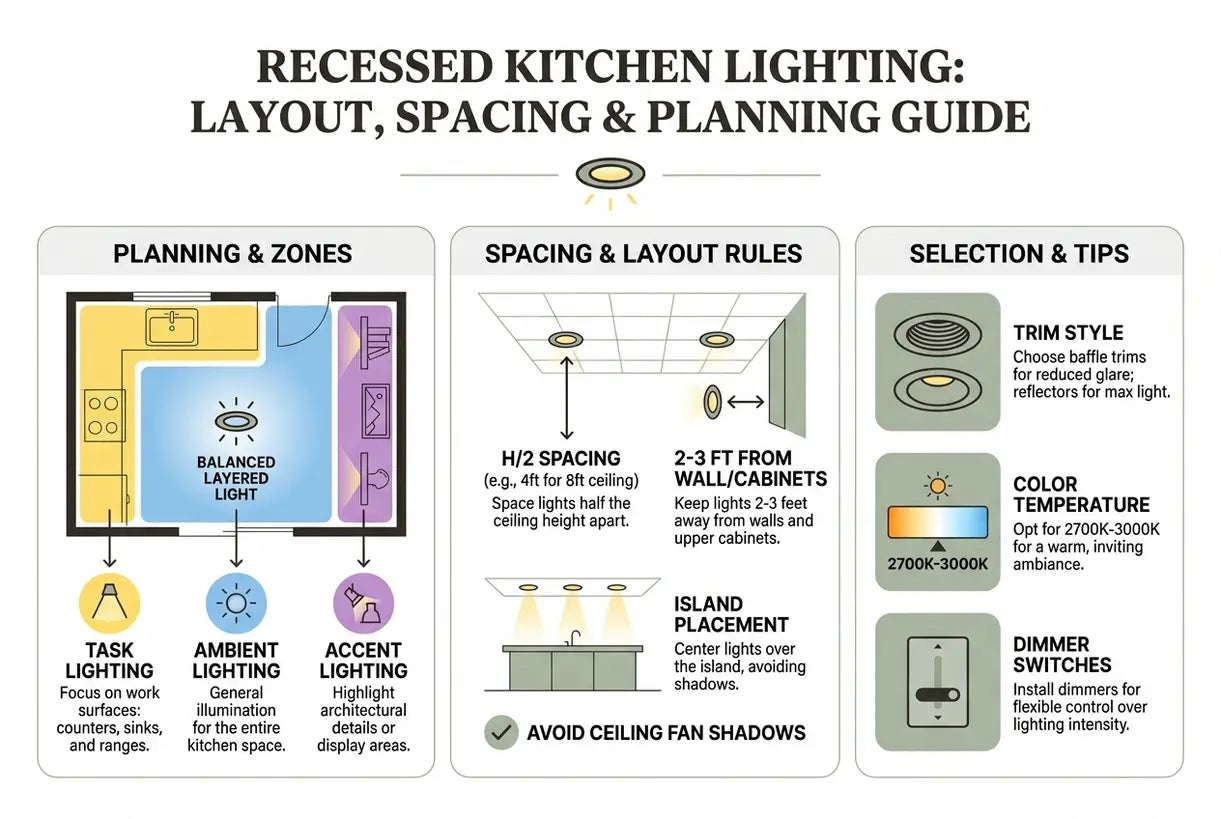
The most successful kitchen recessed lighting layout plans begin with zones. Rather than thinking about your kitchen as one large space, divide it into functional areas requiring different light levels.
Start by mapping these zones on paper or using design software:
- Task zones: Countertops, cooking surfaces, and sinks
- Traffic zones: Walkways and entry points
- Accent areas: Display shelves, art, or architectural features
- Ambient coverage: General illumination for the entire space
For task-focused areas like over your primary prep counter, you'll want higher light density. In circulation areas, spacing can be more generous. This strategic approach to recessed lighting in kitchen ideas ensures every corner feels welcoming without overwhelming glare.
Mounted Ceiling Lights
Shop all Ceiling Lights
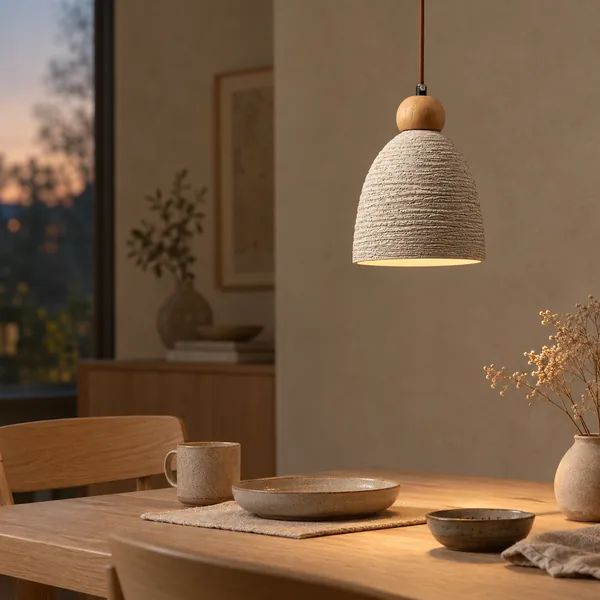
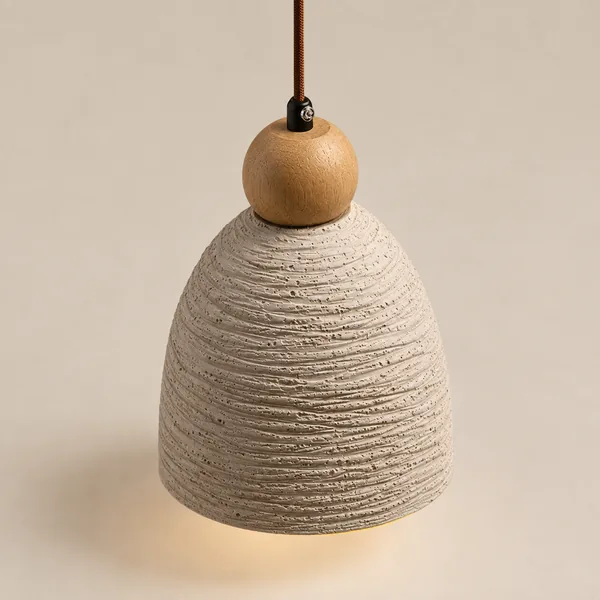
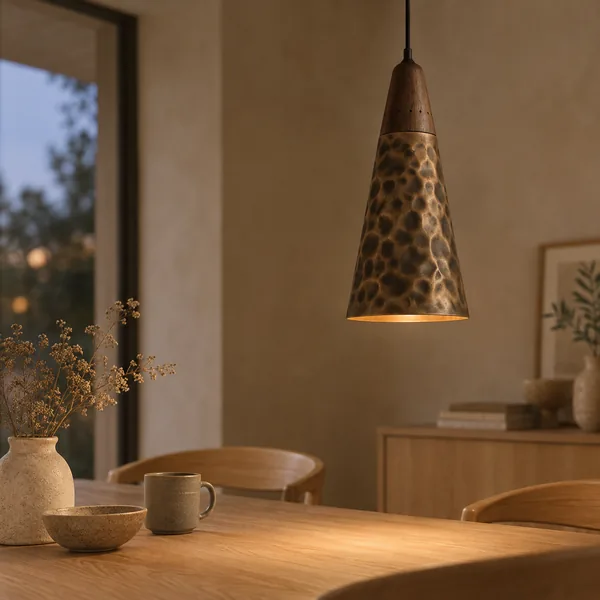
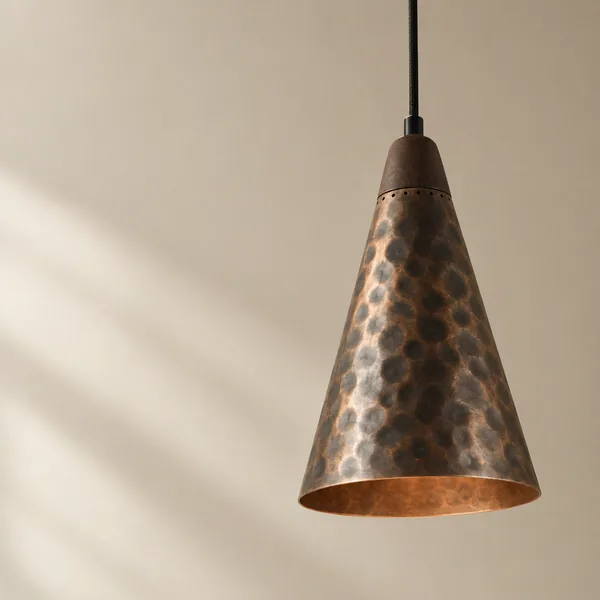
When planning your layout, remember that Scandinavian design philosophy emphasizes intentionality—every fixture should serve a purpose. Avoid the temptation to simply install lights in a grid pattern without considering how you'll actually use each space.
Critical Spacing Guidelines for Recessed Kitchen Lighting
Proper spacing separates amateur installations from professional-quality results. The general rule for recessed lighting distance from wall placement is to position fixtures approximately 24 to 36 inches from walls, measuring from the center of the can light.
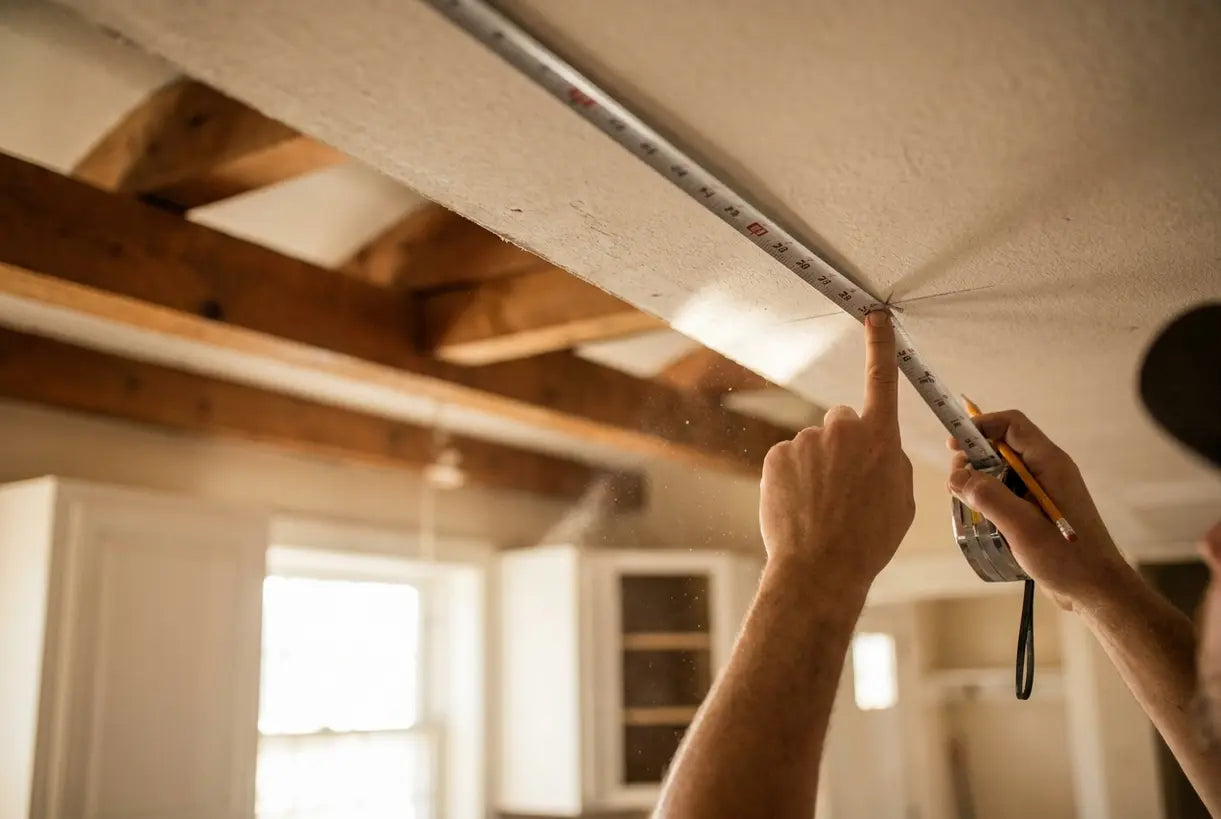
The spacing between fixtures themselves depends on your ceiling height. Use this formula as your starting point:
| Ceiling Height | Spacing Between Fixtures |
|---|---|
| 8 feet | 4 to 5 feet apart |
| 9 feet | 4.5 to 5.5 feet apart |
| 10 feet | 5 to 6 feet apart |
For recessed lighting over kitchen sink placement specifically, position a fixture directly centered above the basin. If your sink is particularly wide or part of a larger island, two fixtures spaced 24 to 30 inches apart may provide better coverage.
Always verify calculations by measuring actual light spread on your ceiling. A helper holding a flashlight or laser pointer at fixture height can help visualize beam coverage before you commit to placement.
4 Inch vs 6 Inch Recessed Lighting: Making the Right Choice
Fixture size significantly impacts both aesthetics and performance. Understanding when to use 4-inch versus 6-inch fixtures helps you achieve the layered lighting approach central to Scandinavian design.
4-inch fixtures work beautifully for:
- Smaller kitchens where you want a subtle, refined look
- Accent lighting highlighting specific features
- Task lighting over narrow countertops
- Rooms with lower ceilings (8 feet or less)
6-inch fixtures excel when you need:
- Higher lumen output for cooking tasks
- Fewer fixtures while maintaining coverage
- Better performance with higher ceilings (9+ feet)
- More cost-effective installation for large kitchens
Many designers now combine sizes within a single space—using 6-inch fixtures for general ambient lighting and 4-inch fixtures for targeted task areas. This best recessed lighting for kitchen strategy creates visual interest while optimizing functionality.
After installing your recessed base layer, consider introducing sculptural accent pieces that complement the clean ceiling lines. The Kupa Cream Sculptural Flush Mount Ceiling Light offers an organic Nordic form that pairs beautifully with recessed layouts, providing warm, diffused ambient light in areas where you want decorative impact alongside functional illumination.
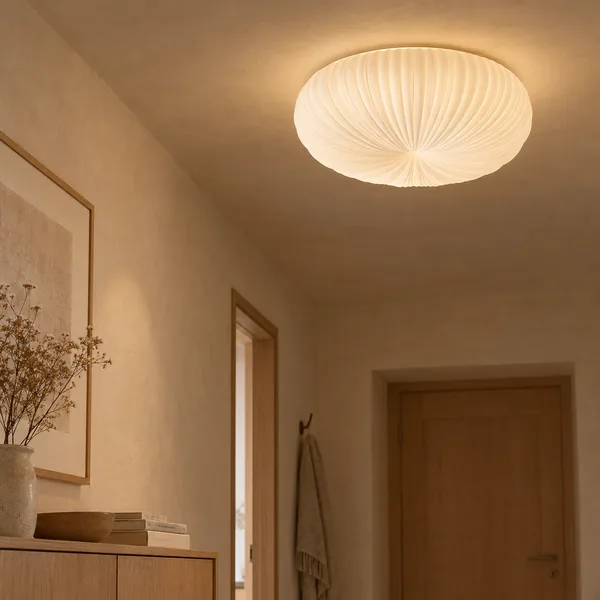 Kupa Cream Sculptural Flush Mount Ceiling Light$295.00$389.00
Layering Decorative Fixtures with Recessed Lighting
The most inviting kitchens combine recessed can lights with statement fixtures that express personality. At Skonne, we view recessed lighting as the foundation—the reliable, even illumination that supports daily tasks—while pendants and ambient fixtures add warmth, texture, and hygge comfort.
Consider these layering strategies:
- Island illumination: While recessed lights provide general coverage, pendant lights create intimate gathering spaces
- Dining transitions: Linear Pendant Lights installed over eat-in kitchen tables work harmoniously with recessed ambient lighting
- Ceiling interest: Flush mounts or semi-flush fixtures add sculptural elements without competing with recessed task lighting
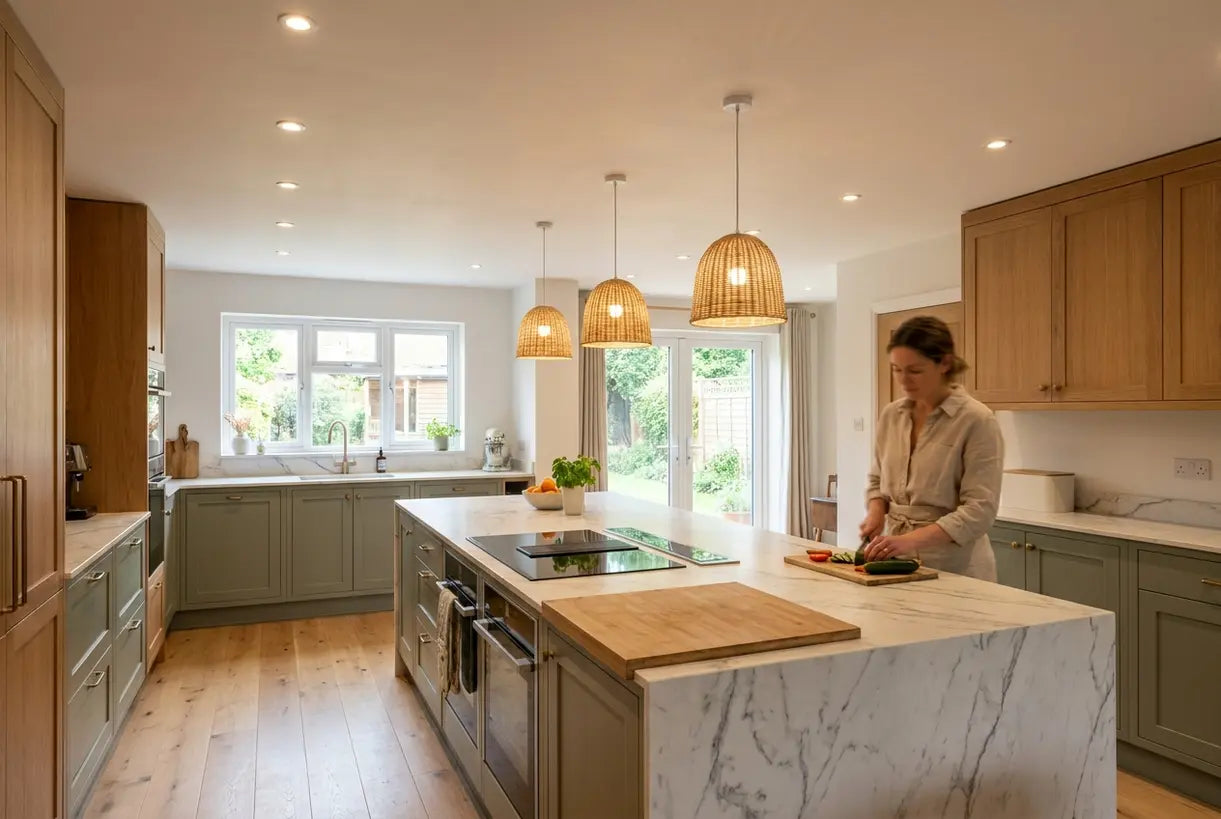
This layered approach prevents the "operating room" feeling that poorly planned recessed lighting can create. By balancing functional downlighting with softer accent sources, you achieve the curated, elevated atmosphere Scandinavian design celebrates.
For recessed lighting in small kitchen spaces, layering becomes even more crucial. Strategic placement of fewer can lights combined with one or two carefully chosen decorative fixtures often creates better results than over-lighting with multiple recessed fixtures.
Executing Your Lighting Plan
With your layout mapped and spacing calculated, it's time to bring your vision to life. The following video demonstrates professional techniques for planning recessed light placement, including valuable tips for working with existing electrical and structural considerations.
When selecting fixtures, prioritize LED recessed kitchen lighting options. Modern LED technology offers superior energy efficiency, longer lifespan, and better dimming performance than traditional incandescent or fluorescent alternatives. Look for fixtures with high CRI (Color Rendering Index) ratings above 90 to ensure food and finishes appear true to color.
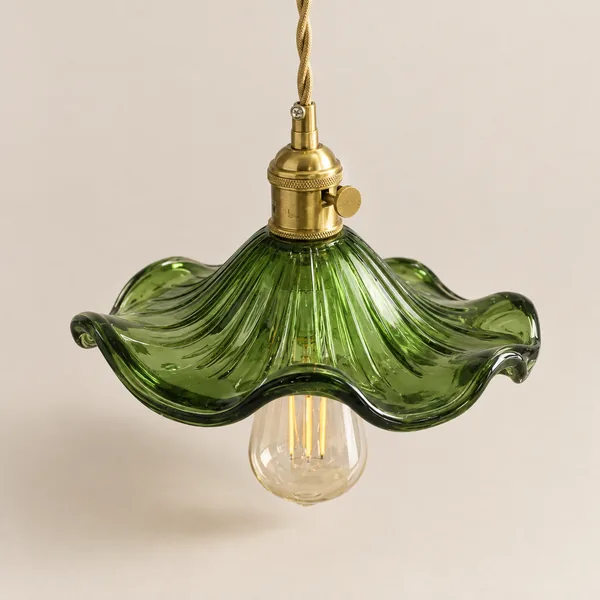
As you finalize your selections, consider fixtures that complement your recessed base layer. The Dropa Glass Drop Pendant Light brings Nordic elegance to kitchen islands and dining areas, its softly diffused glow working in perfect harmony with recessed task lighting. Similarly, the Grönlys Green Glass Ceiling Light adds sophisticated ambient illumination with its rich emerald-tinted glass, creating depth and interest at the ceiling plane.
Scandinavian Fixtures That Layer Beautifully with Recessed Lighting
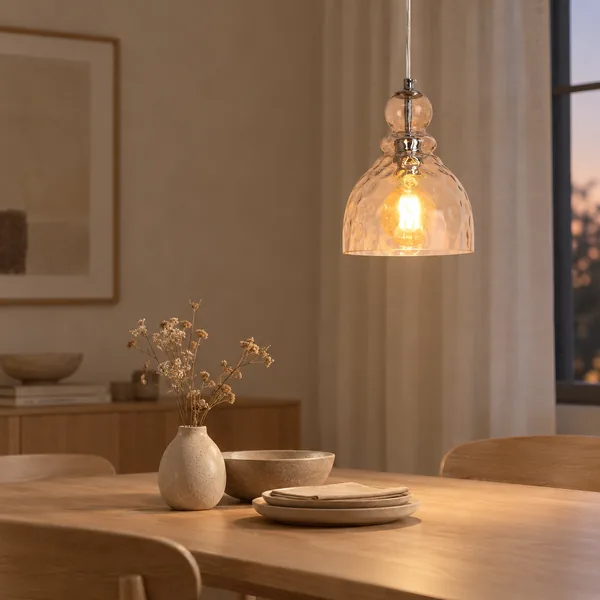 Dropa Glass Drop Pendant Light for Kitchen Dining$79.00$119.00
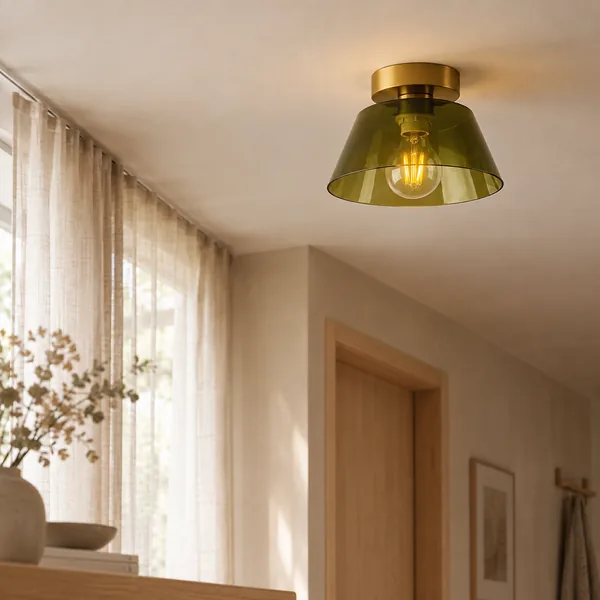 Grönlys Green Glass Ceiling Light Living Room$109.00$169.00
Pendant Lights
Shop all Pendant Lights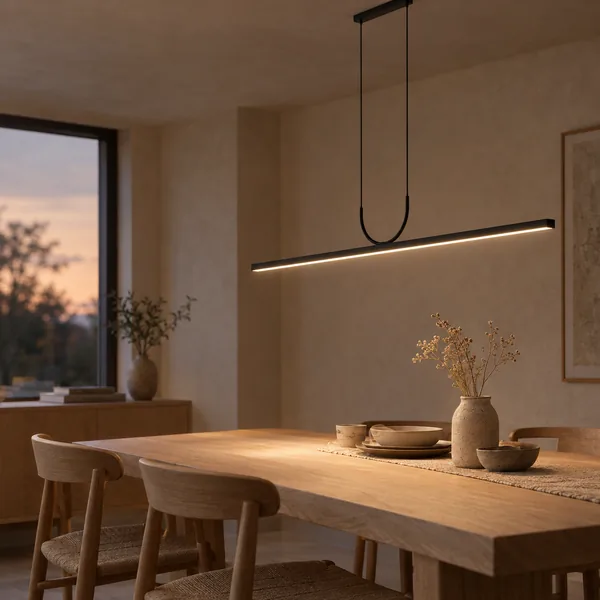
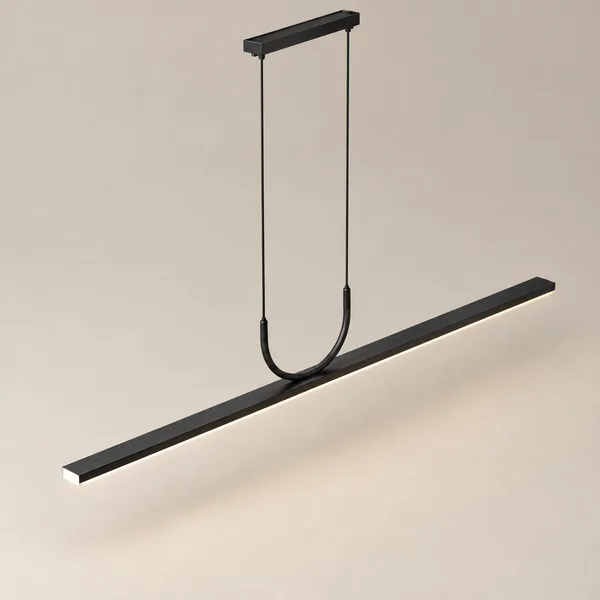 Save $140.00
Linné Minimalist Linear Black LED Pendant Light
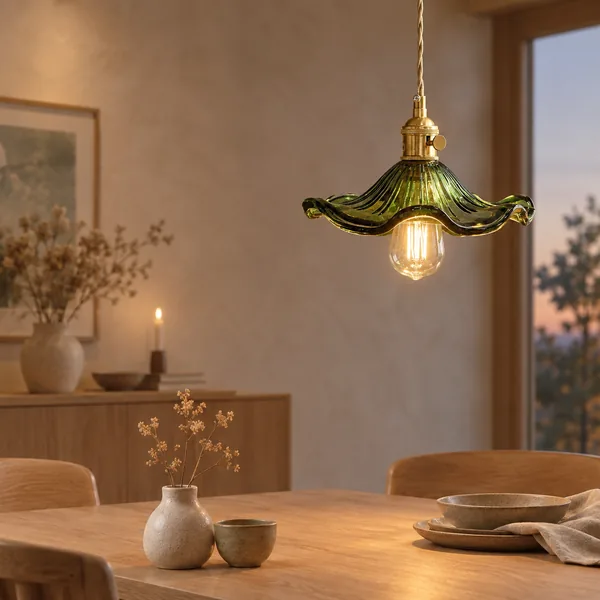
 Save $60.00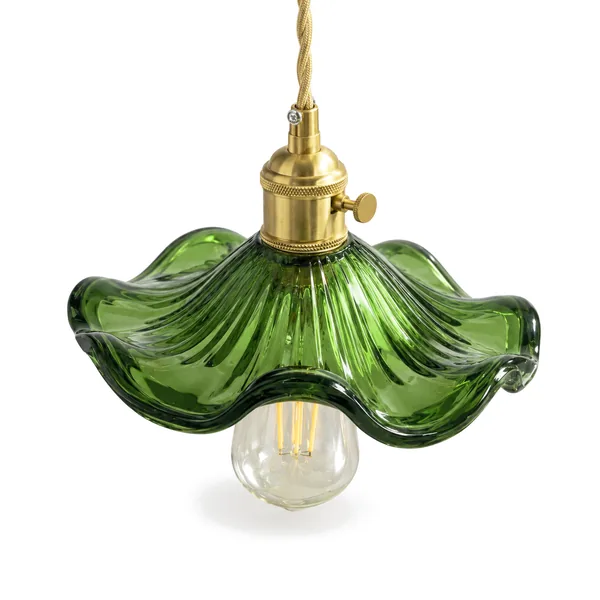
 3 options
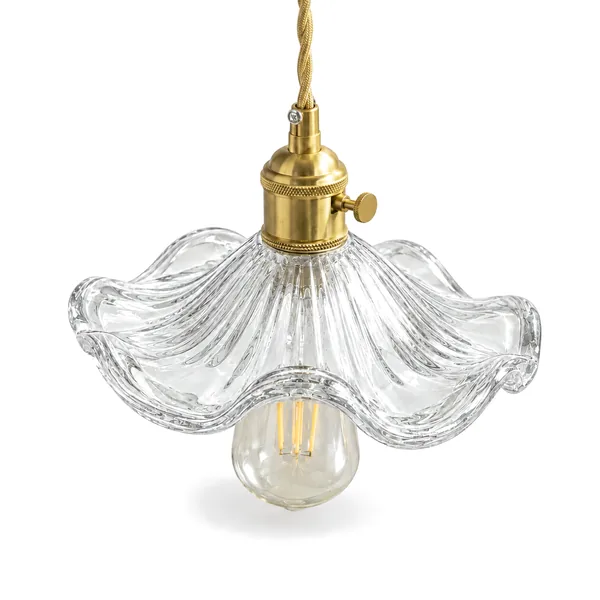
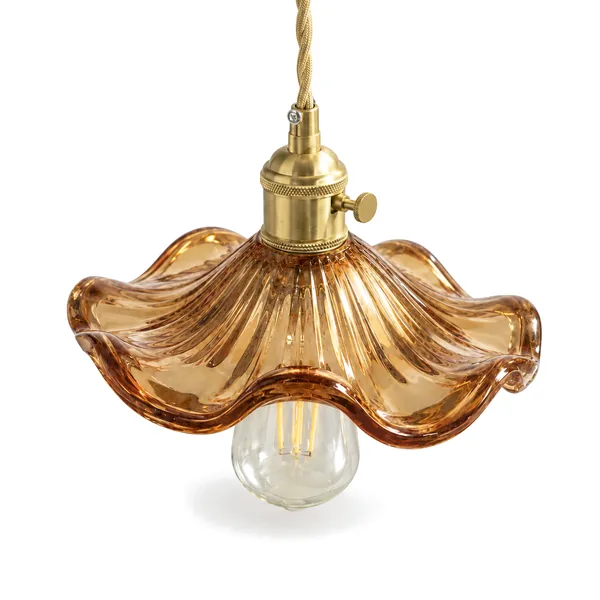
Glora Nordic Glass Pendant Light with Copper
 Save $120.00
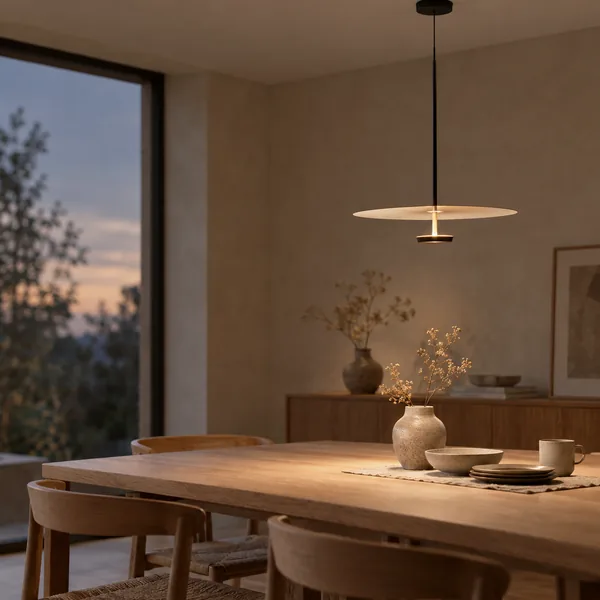
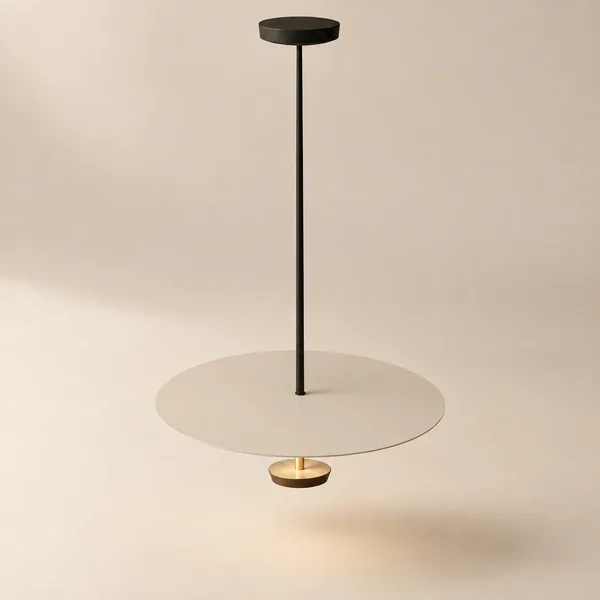
Skiva Nordic Saucer Ceiling Pendant Light LED
Latest Trends in Recessed Kitchen Lighting
Contemporary recessed kitchen lighting ideas are evolving beyond basic white plastic trims. Today's designers embrace fixtures that integrate seamlessly with upscale kitchen aesthetics while offering advanced functionality.
Trimless designs create a flush, architectural appearance where the fixture virtually disappears into the ceiling plane. This approach suits minimalist kitchens where visual continuity matters.
Adjustable gimbal fixtures provide flexibility, allowing you to direct light onto changing work surfaces or highlight seasonal decor. These prove especially valuable in open-concept kitchens where lighting needs may vary throughout the day.
Smart controls represent the most significant recent innovation. Tunable white fixtures let you shift from energizing cool light for morning meal prep to warm, relaxing tones for evening entertaining. When paired with decorative fixtures featuring compatible color temperatures, you can orchestrate complete lighting scenes from your smartphone.
For additional insights on complementary lighting solutions, the EPA's ENERGY STAR lighting resources offer valuable guidance on efficiency and performance standards.
Conclusion: Creating Your Perfect Kitchen Lighting Plan
Thoughtful recessed kitchen lighting planning transforms functional necessity into design opportunity. By understanding spacing guidelines, selecting appropriate fixture sizes, and layering with decorative Scandinavian fixtures, you create a kitchen that feels both practical and deeply personal.
At Skonne, we curate lighting that honors the Nordic values of intentionality and warmth. Whether you're undertaking a complete renovation or simply upgrading your existing layout, our collection of pendant lights, ceiling fixtures, and design accessories helps you achieve that perfect balance of function and hygge comfort.
Begin your lighting journey with a clear plan, measure twice, and remember that the best kitchens are those that welcome you home—day after day, meal after meal.
Related Article
Under-Cabinet Kitchen Lighting: Best LED Strips, Puck Lights & Hardwired Options for Every KitchenTransform your kitchen with under cabinet lighting solutions. Explore LED strips, puck lights & hardwired options for a brighter countertop workspace.