
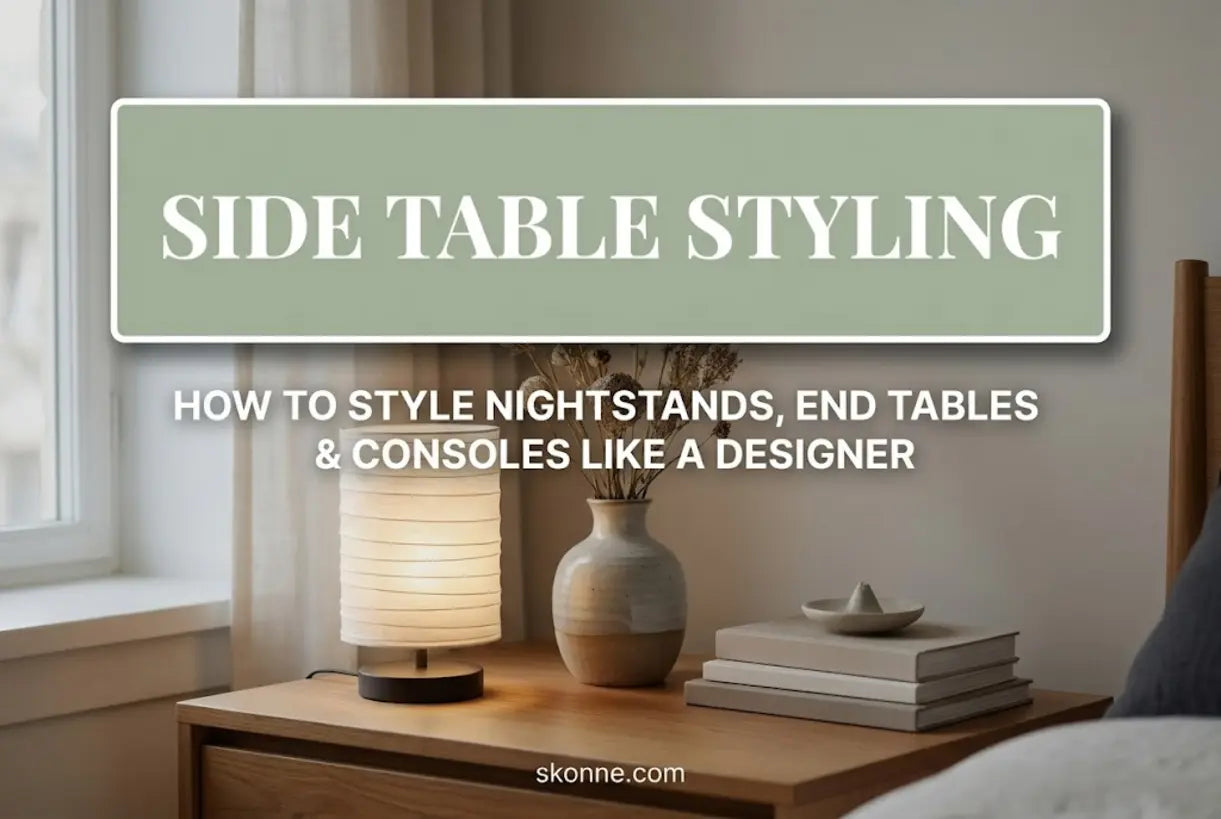
Side Table Home Decor: How to Style Your Nightstand, End Table & Console
Summary›
- The Designer Approach to Side Table Styling
- Styling Nightstands: Curating Your Evening Ritual
- Living Room End Tables: Creating Conversation Corners
- Console Table Mastery: Making First Impressions Count
- Balance, Symmetry, and the Art of Arrangement
- Seasonal Refreshing and Everyday Maintenance
- Bringing It All Together: Your Side Table Story
There's something quietly transformative about a perfectly styled side table. Whether it's the nightstand that greets you each morning, the end table anchoring your favorite reading chair, or the console table creating a welcoming first impression in your entryway, these small surfaces hold outsized potential. Side table home decor is where Scandinavian design philosophy truly shines—embracing intentionality, balance, and that unmistakable sense of hygge warmth.
The challenge? Most of us know what we want—a curated, Instagram-worthy vignette—but struggle to achieve that effortless designer look. Too many objects feel cluttered; too few feel unfinished. In this guide, you'll discover the proven principles professional designers use to style nightstands, end tables, and console tables with confidence. Along the way, we'll reveal how the right lighting and thoughtfully chosen accents from Skonne can transform any surface into a moment of everyday beauty.
The Designer Approach to Side Table Styling
Professional interior designers don't simply arrange objects—they create visual stories. When approaching any side table, the first question isn't what to place, but what feeling you want to evoke. For bedrooms, that might be serenity and calm. For living room end tables, perhaps warmth and invitation. For console tables, drama and welcome.
The Scandinavian approach to side table styling emphasizes these core principles:
- Function first: Every piece should earn its place through utility or emotional resonance
- Negative space: Leave breathing room; crowding creates visual noise
- Vertical layering: Vary heights to create depth and visual interest
- Natural materials: Wood, ceramic, glass, and rice paper bring organic warmth
- Controlled color palettes: Stick to 2-3 dominant tones plus accents
These principles work across all table types, from compact nightstands to sprawling console surfaces. The key is adapting the approach to your specific piece while maintaining that essential sense of Scandinavian restraint.
Styling Nightstands: Curating Your Evening Ritual
Your nightstand is more than a landing zone for your phone—it's the last thing you see before sleep and the first upon waking. Thoughtful nightstand styling can transform your bedtime routine into a deliberate, calming ritual.
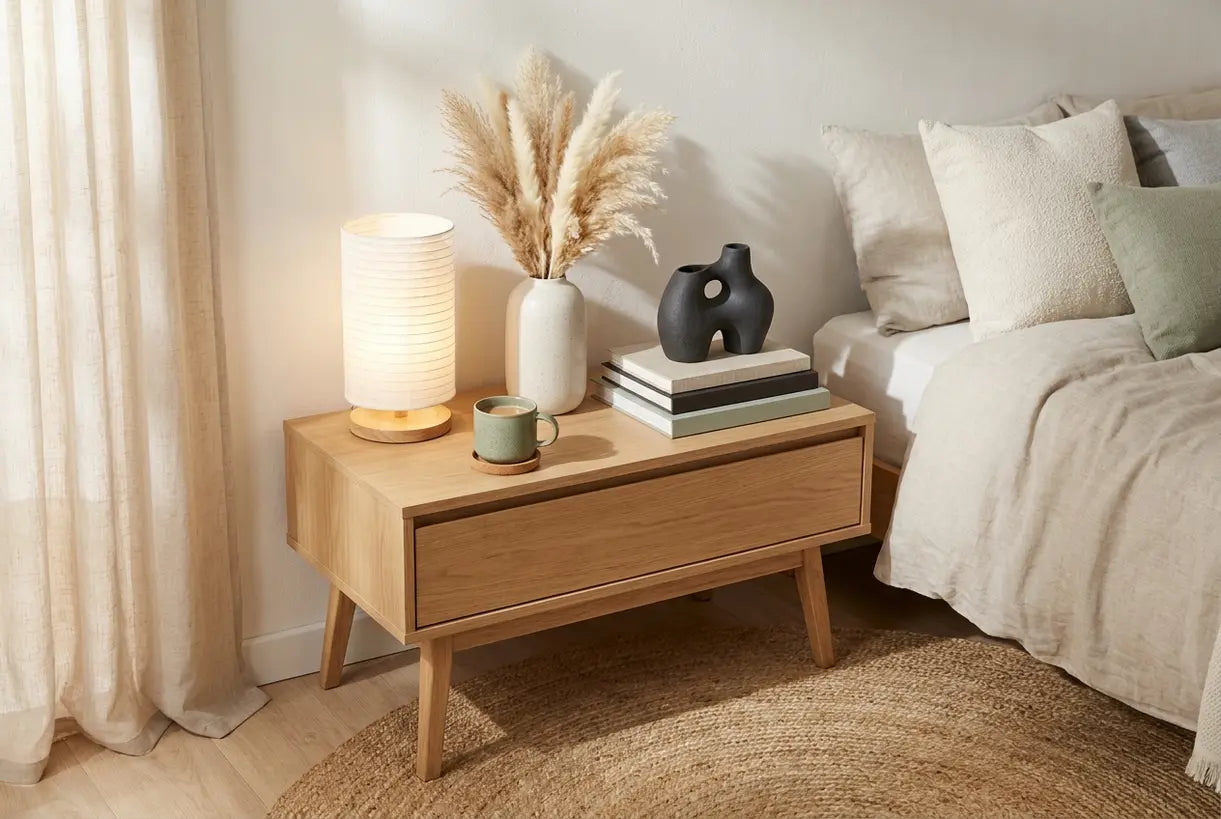
Start with the essential trinity: light, storage, and personal meaning. A table lamp provides task lighting for evening reading while casting that warm glow essential to Scandinavian hygge. The Shiro Rice Paper Table Lamp Nordic Minimalist embodies this perfectly—its handcrafted rice paper shade diffuses light softly, creating an atmosphere of intentional calm rather than harsh illumination.
Beyond lighting, consider:
- A vessel for water – Hydration becomes a small act of self-care
- Storage solution – A ceramic dish for jewelry or a small tray for essentials
- Personal memento – One small photograph, a favorite book, or a piece of art
Keep surfaces clear enough to accommodate your glasses, phone, and nightly water without rearranging your styling. The goal is curated, not cluttered—elevated function that supports your rhythm rather than complicating it.
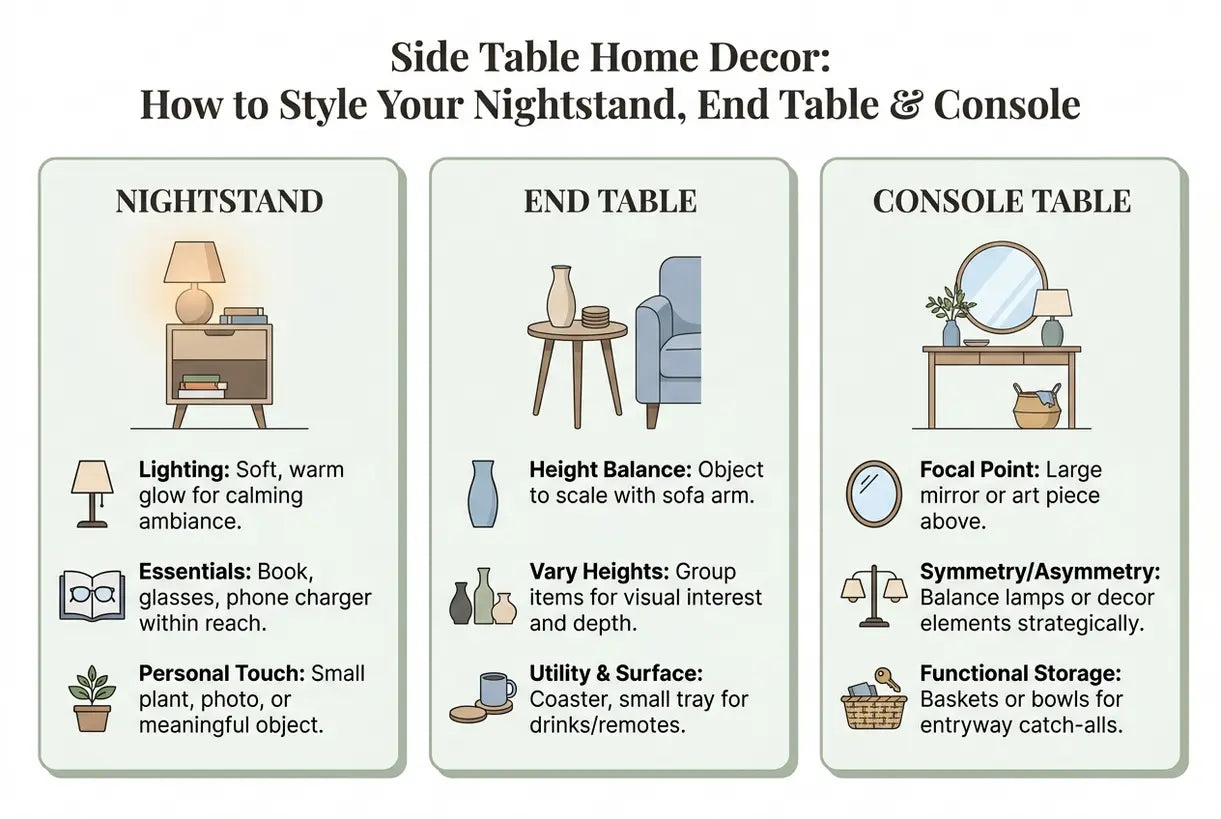
Table Lamps
Shop all Table Lamps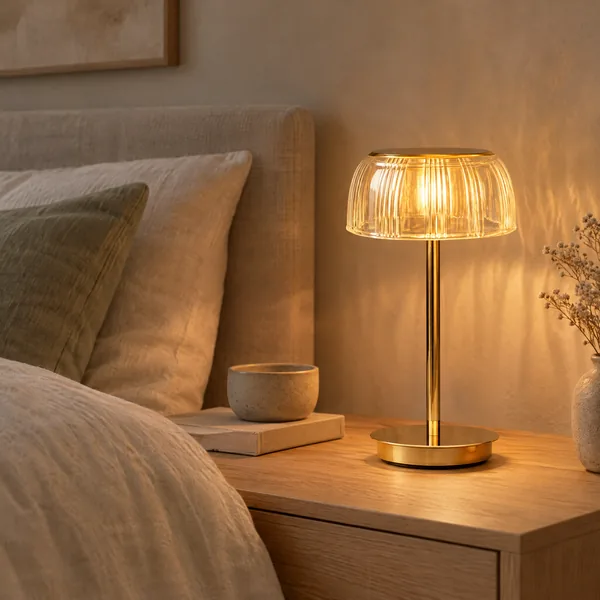
 Save $30.00
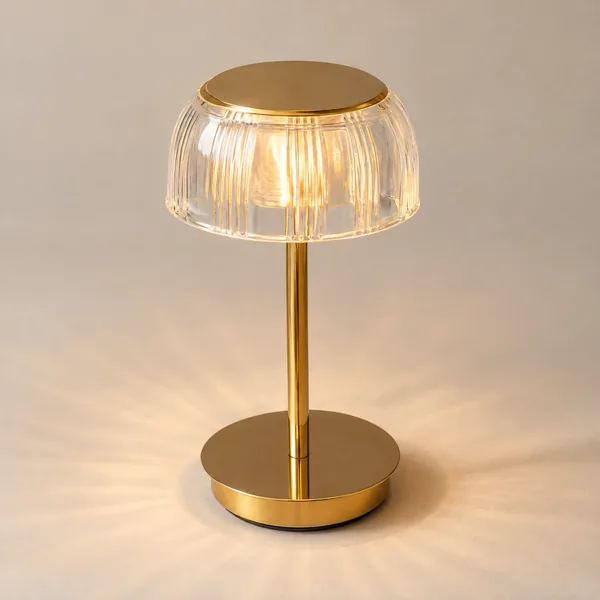
Kvalla Jellyfish LED Rechargeable Table Lamp
 Save $60.00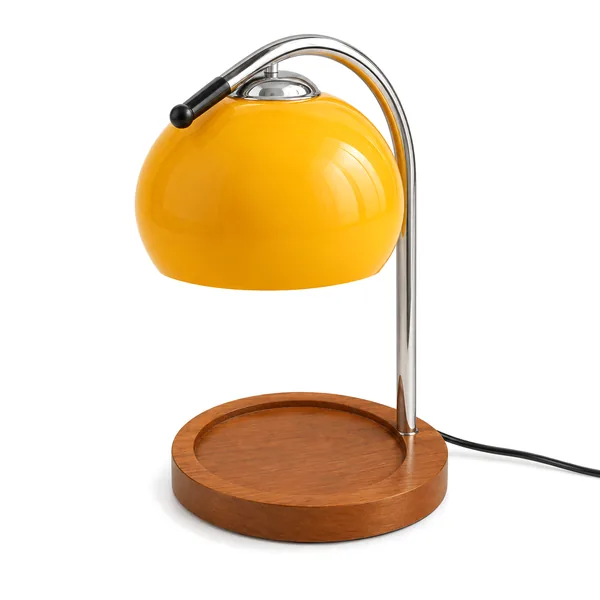
 3 options
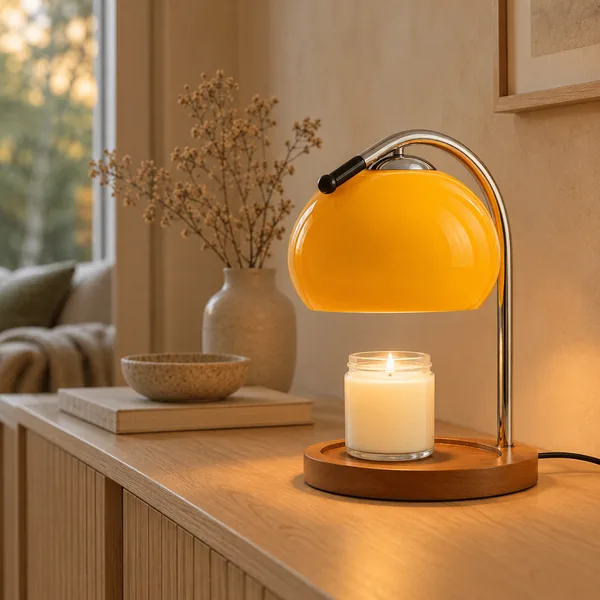
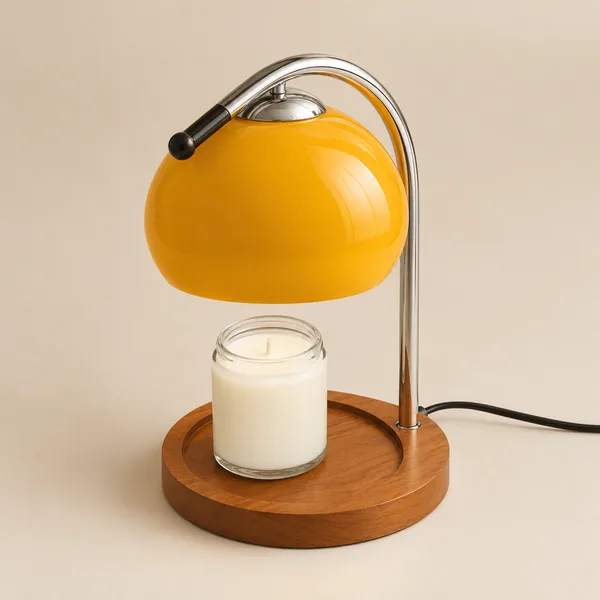
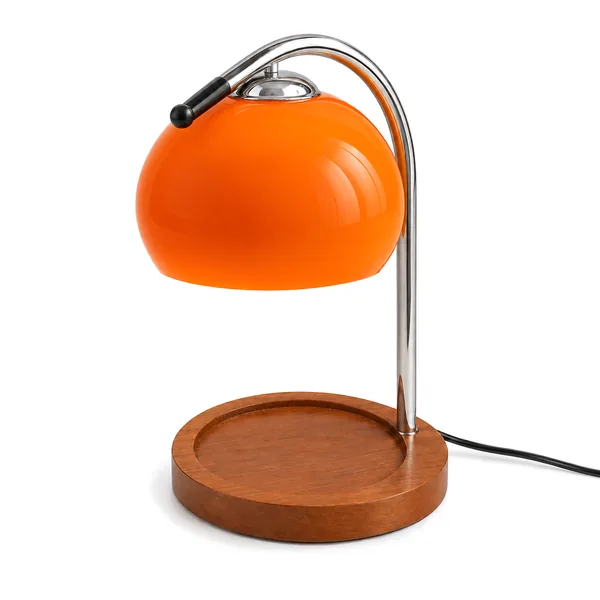
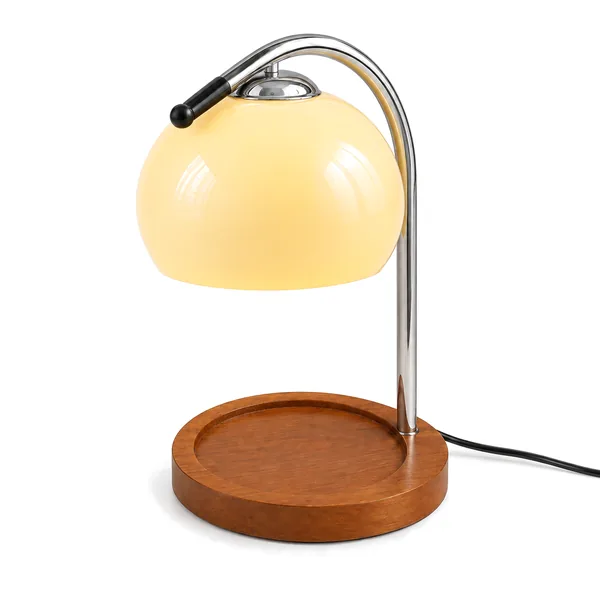
Solvarm Stained Glass Candle Warmer Table Lamp
 Save $220.00
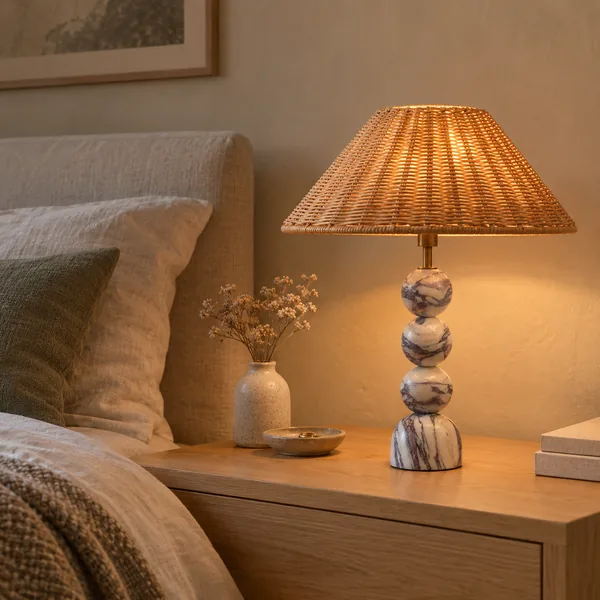
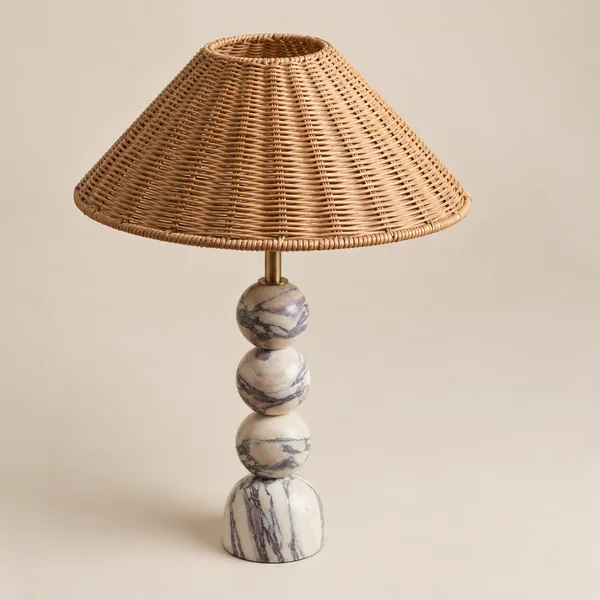
Stenglo Nordic Marble Table Lamp Rattan Shade
Living Room End Tables: Creating Conversation Corners
End tables flank our most-used spaces—the sofas and armchairs where we gather, read, and pause. Unlike nightstands, which serve private ritual, end table decor creates opportunities for connection. These surfaces should invite interaction while maintaining that essential Scandinavian simplicity.
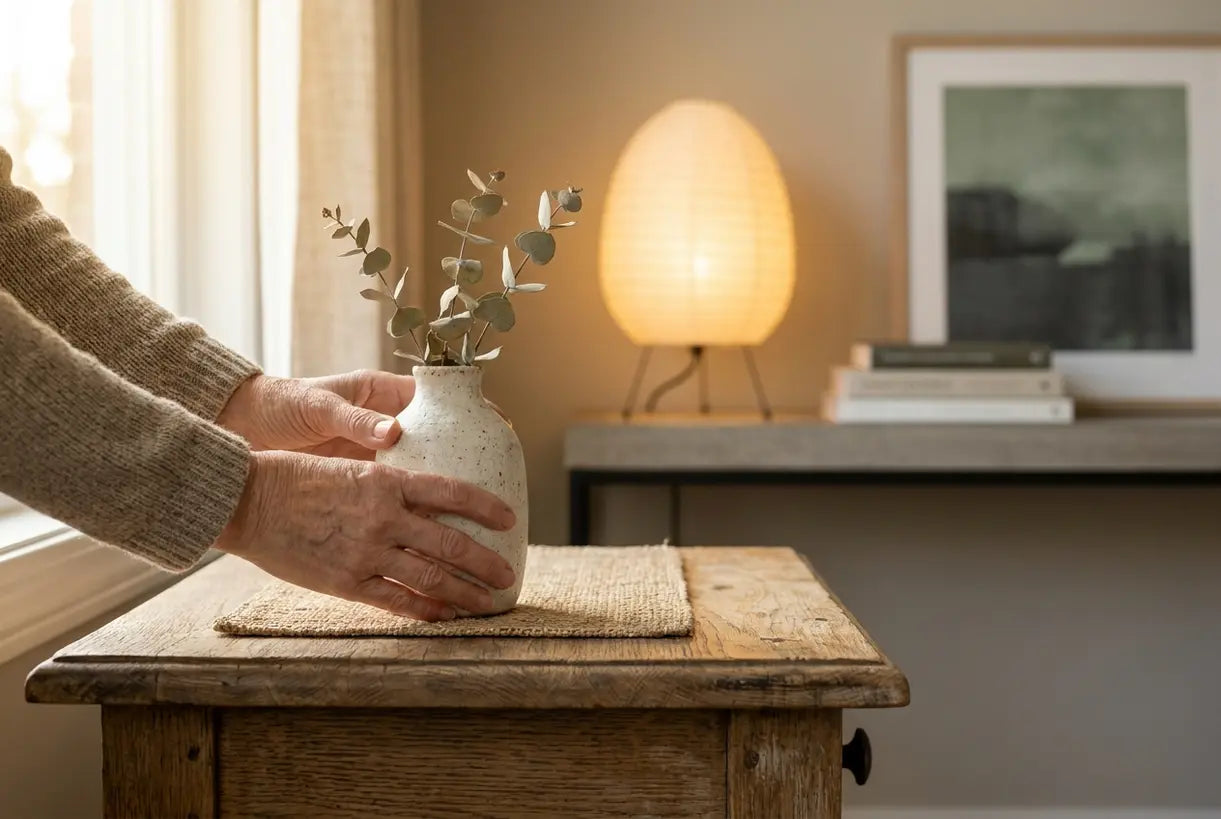
The secret to styling end tables in shared spaces lies in the rule of three: one dominant piece (usually lighting), one supporting element (a book stack or sculptural object), and one organic accent (a small plant, flowers, or a ceramic vessel). This creates visual triangle—a fundamental design principle that feels inherently balanced to the human eye.
Scale matters enormously here. A petite end table overwhelmed by a massive lamp loses its purpose; equally, a large surface with only a small object feels abandoned. Measure your table's footprint and choose objects proportional to its dimensions. For most standard end tables (approximately 20-24 inches square), aim for:
- One lamp under 18 inches tall
- One or two coffee table books as a base layer
- One sculptural object 4-8 inches in height
- Optional: one living element (fresh flowers, a small plant, or dried botanicals)
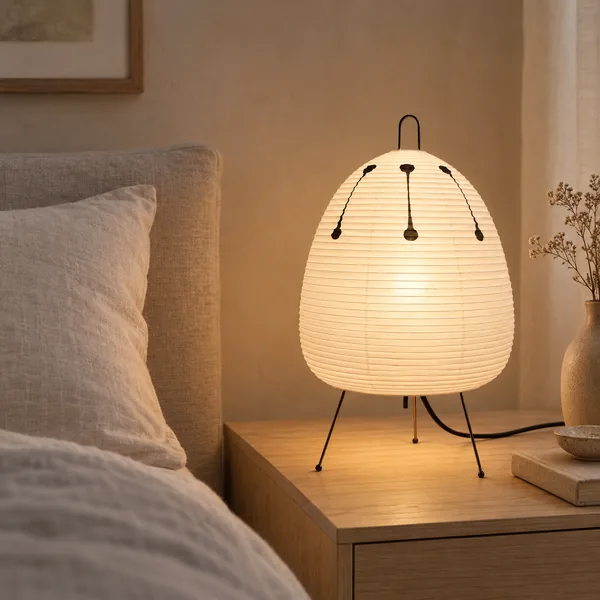 Shiro Rice Paper Table Lamp Nordic Minimalist$119.00$199.00
Console Table Mastery: Making First Impressions Count
The console table occupies unique territory—often positioned in entryways, hallways, or behind sofas, it's typically the first or last surface guests encounter in your home. This placement demands console table styling that makes an impression while maintaining livability.
Console tables offer the most generous real estate for styling, but that freedom can feel overwhelming. The key is creating visual rhythm across the entire surface. Rather than clustering everything in the center (leaving empty, sad corners), distribute your styling in what designers call a "landscape arrangement"—varying heights and textures from one end to the other.
A winning console formula often includes:
Console Table Formula: Anchor with a mirror or artwork above, ground the center with a lamp or substantial object, then flank with asymmetrical arrangements—perhaps a stack of books with a small sculpture on one side, and a vase with branches on the other.
Balance, Symmetry, and the Art of Arrangement
One of the most common questions in tabletop styling concerns balance: How do you achieve that intuitive sense of "rightness" that makes a styling arrangement sing?
The answer lies in understanding visual weight. A large, dark ceramic object exerts more visual gravity than a clear glass vessel. A tall lamp demands counterbalance lower on the opposite side. Think of your table surface as a scale—you want elements to feel equally distributed without being mirror-image identical.
There are two primary approaches:
- Symmetrical styling: Perfect for formal spaces or when you want maximum calm. Identical lamps, matching frames, or paired objects create this classic look.
- Asymmetrical balance: More dynamic and contemporary. Achieve this by placing a tall lamp on one side and a cluster of shorter objects (books, small sculpture, vessel) on the other. The visual weight equals out, but the arrangement feels collected and organic.
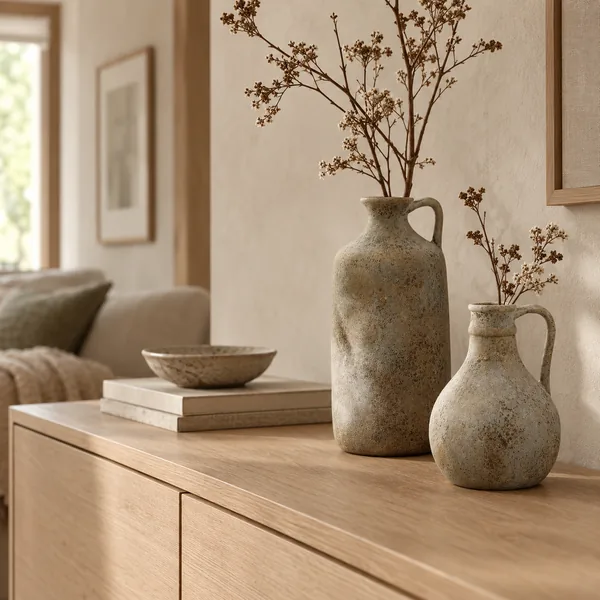
The Jorde Handmade Rustic Ceramic Vase Home Decor embodies the kind of sculptural presence that anchors asymmetric arrangements beautifully. Its reactive glaze catches light and casts subtle shadows, adding depth without demanding attention. Similarly, the Vårka Borosilicate Round Glass Vase for Flowers offers airy sophistication—its crystal-clear construction allows it to add height and form without visual heaviness, making it ideal for balancing heavier elements on your side tables.
Essential Vessels for Your Styled Surface
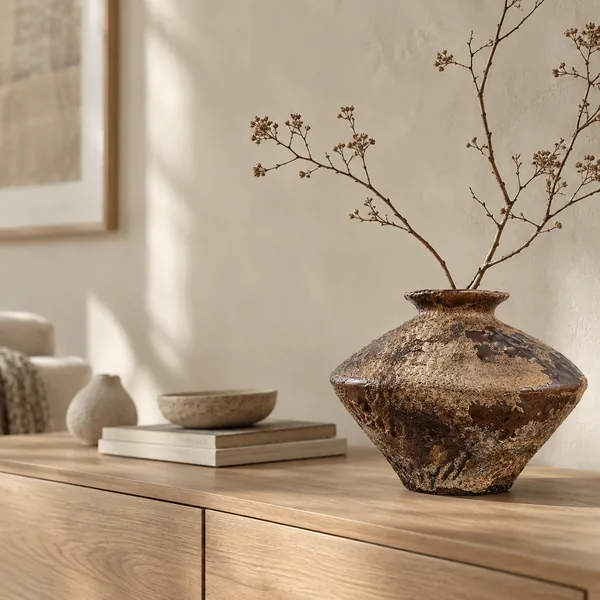 Jorde Handmade Rustic Ceramic Vase Home Decor$129.00$189.00
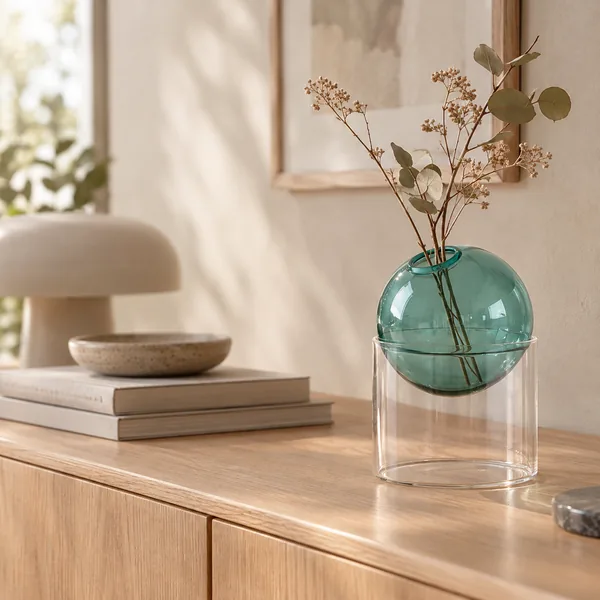 Vårka Borosilicate Round Glass Vase for Flowers$38.00$59.00
Seasonal Refreshing and Everyday Maintenance
One of the joys of small table decorating ideas is their flexibility. Unlike major furniture investments, these vignettes can—and should—evolve with seasons, moods, and changing needs. A summer nightstand might feature a small vase of fresh herbs and lighter linens; winter calls for candlelight, richer textures, and cozy elements.
However, resist the urge to constantly rearrange. Part of the Scandinavian approach is honoring what already works and allowing arrangements to settle into their space. When you do refresh, focus on one element at a time: swap out flowers seasonally, rotate books, or introduce a new ceramic piece. These small changes keep your space feeling alive without overwhelming your daily experience.
Practical maintenance tips for styled surfaces:
- Keep a small tray or dish for daily essentials (keys, jewelry, loose change) to protect your styled arrangement
- Dust weekly—you'll notice your styling more and appreciate it
- Rotate fresh flowers or botanicals before they wilt; dried arrangements should be aired occasionally
- Adjust lamp heights based on evening activities—reading requires task lighting; ambient evenings call for softer illumination
Decorative Vases
Shop all Decorative Vases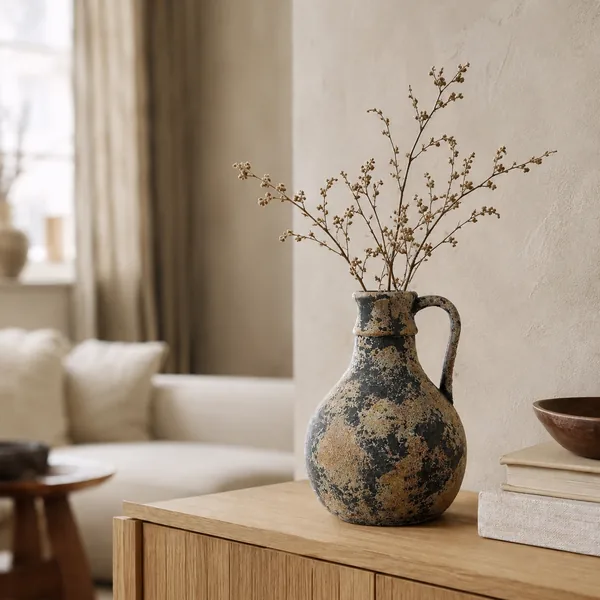


 Save $40.00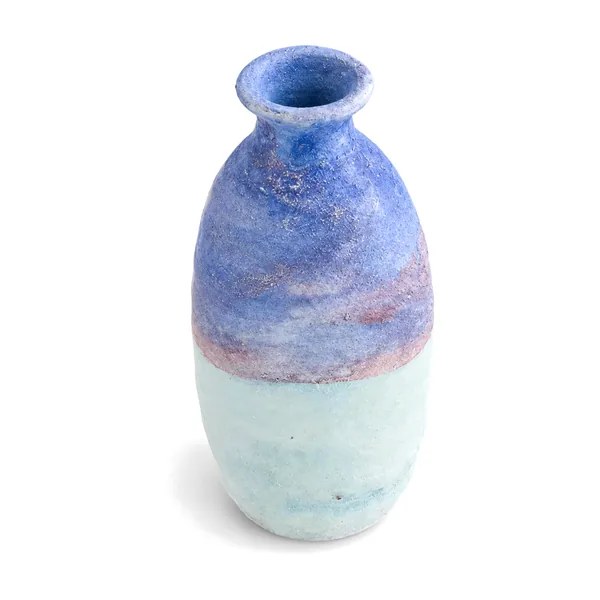
 4 options
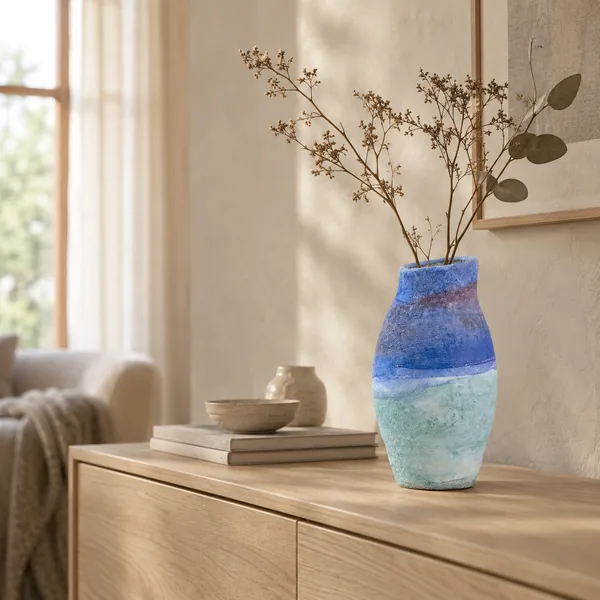
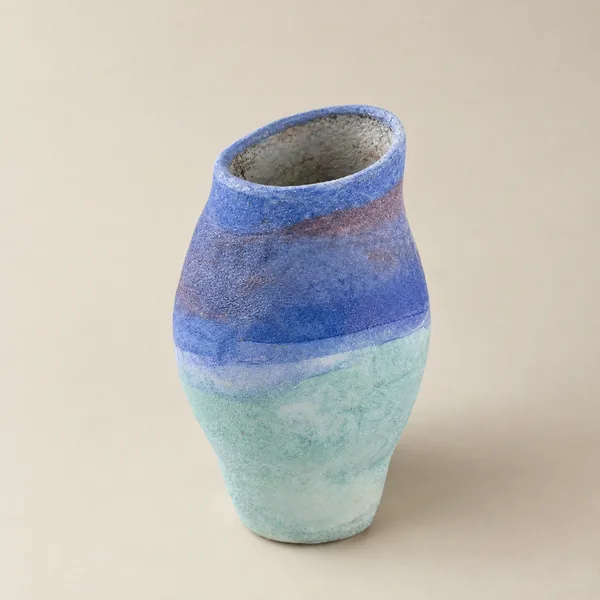
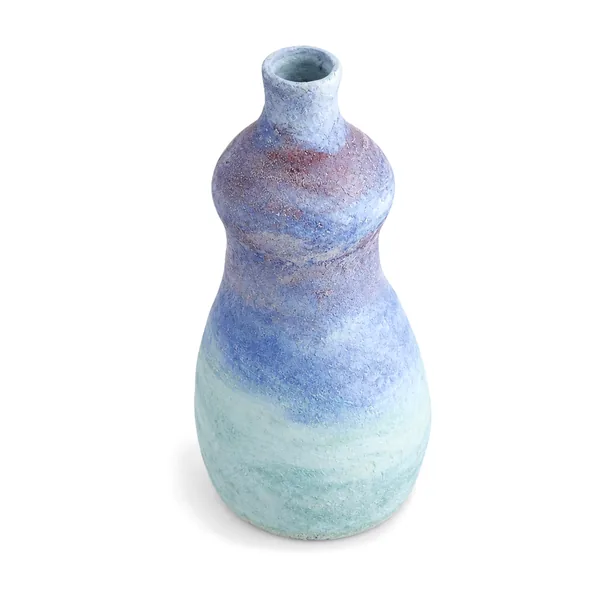
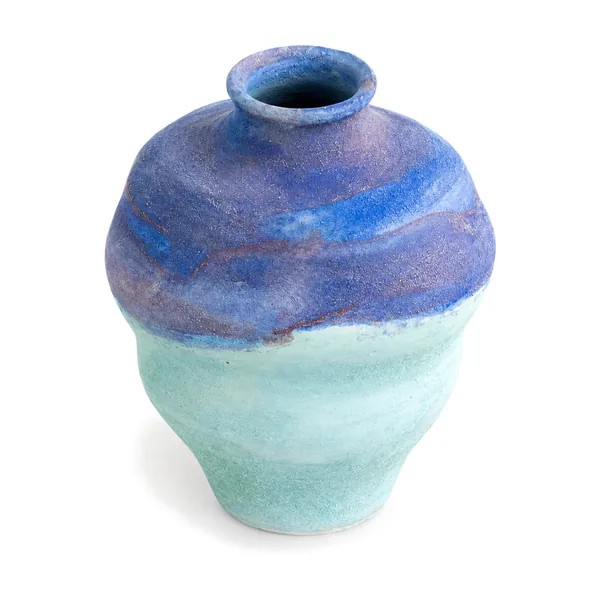
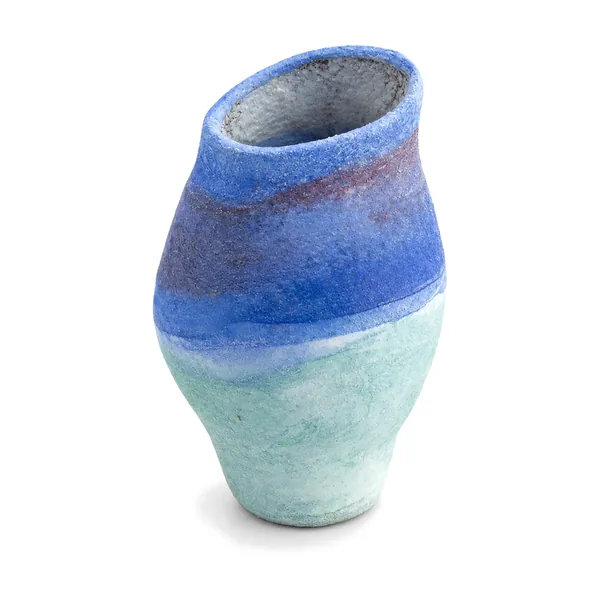
Dyvna Blue Gradient Ceramic Vase for Home Decor
Bringing It All Together: Your Side Table Story
Side table home decor at its best tells your story—your reading habits, your aesthetic preferences, the objects that hold meaning in your daily life. The Scandinavian design philosophy that guides Skonne's curation isn't about creating picture-perfect museum pieces; it's about crafting surfaces that support and enhance the way you actually live.
Whether you're styling a compact nightstand beside your bed, anchoring a living room conversation area with end tables, or making a grand entry statement with a console, the principles remain constant: intention over accumulation, balance over symmetry, and warmth over perfection. Start with lighting that creates atmosphere, add vessels and objects that speak to you, and leave space for life to happen.
The transformation from cluttered surface to curated vignette doesn't require a complete overhaul—often, simply removing half your items and arranging the remaining pieces with intention creates that designer look you've been seeking. Your side tables are waiting to become something more than functional surfaces; they're ready to become moments of beauty in your everyday life.
Related Article
Personalized Home Decor: Custom, Meaningful Pieces & Thoughtful Gift IdeasDiscover personalized home decor ideas for creating a meaningful, curated home. From custom pieces to thoughtful home decor gifts, find artisan finds that tell your story.