
Traditional Chandeliers: Timeless, Classic Fixtures for Formal & Elegant Homes
Summary›
Selecting the perfect traditional chandelier transforms ordinary rooms into curated sanctuaries of warmth and refinement. Unlike fleeting trends, classic illumination fixtures anchor your space with intentional craftsmanship that speaks to generations of design heritage. At Skonne, we believe formal lighting should feel approachable yet elevated—creating those meaningful moments of hygge that make a house truly feel like home.
Whether you're restoring a historic Georgian residence or infusing a modern loft with timeless character, understanding the nuances of timeless chandelier fixtures ensures your investment delivers both beauty and function. This guide explores how to identify authentic traditional elements, determine ideal hanging heights, and select materials—from burnished brass to hand-cut crystal—that harmonize with your existing architecture while meeting contemporary needs for adjustable illumination and sustainable craftsmanship.
The Enduring Appeal of Traditional Chandelier Design
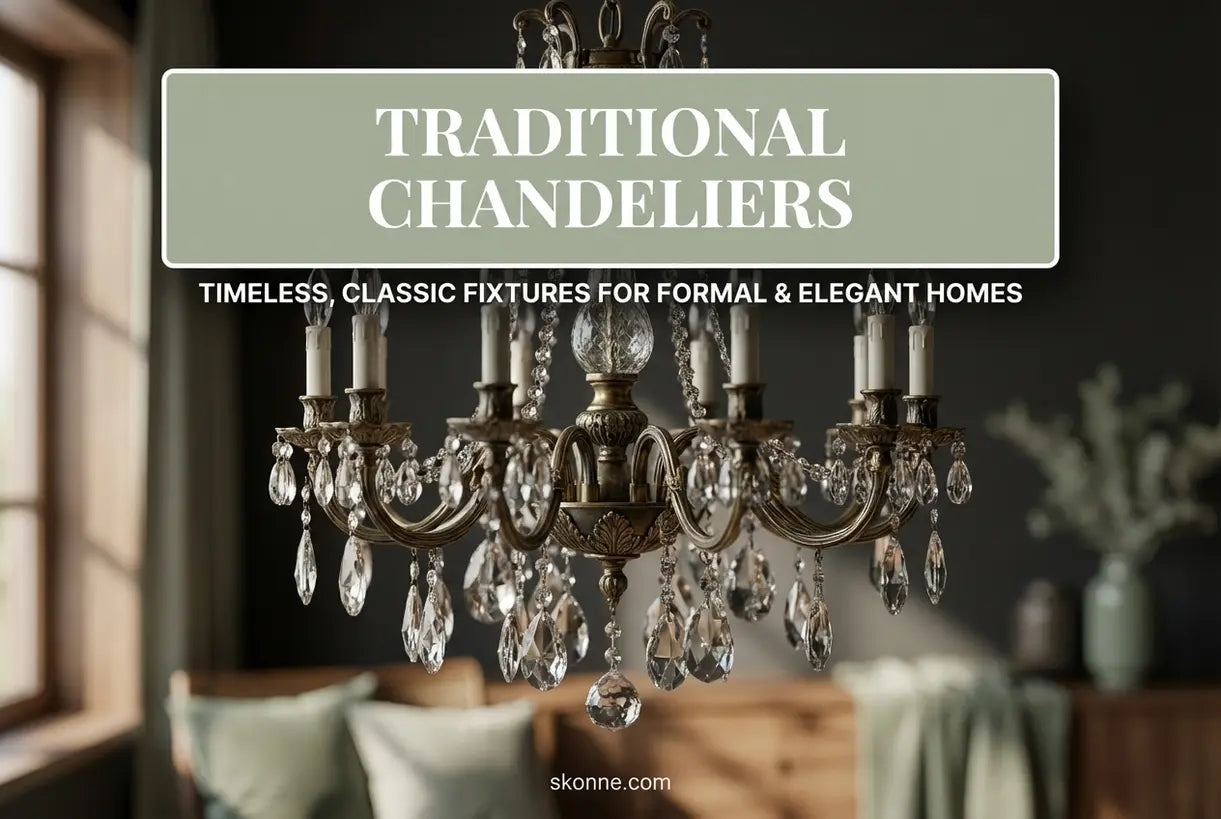
What defines a classic chandelier in today's design landscape? The answer lies in a delicate balance between historical reverence and livable luxury. Traditional fixtures draw from centuries of European artistry—particularly the ornate ironwork of medieval banquet halls and the gilded elegance of French salons—yet adapt these forms for modern formal dining rooms, grand foyers, and intimate sitting areas.
The hallmark of authentic traditional lighting rests in three essential qualities: substantial material presence (think solid brass arms and genuine crystal drops), symmetrical silhouettes that command attention without overwhelming, and hand-finished details that reveal themselves slowly over time. Unlike minimalist contemporary pieces, crystal chandeliers in the traditional vein celebrate ornamentation as storytelling—each prismatic tear catching afternoon light differently than evening candlelit dinners.
For homeowners navigating the intersection of heritage and contemporary living, the sophistication of brass chandeliers offers particular versatility. Warm metallic tones complement both antique mahogany dining sets and bleached oak Scandinavian minimalism—a duality that defines the Skonne aesthetic of intentional, cross-generational design.
Defining Characteristics: From Medieval Roots to Modern Formality
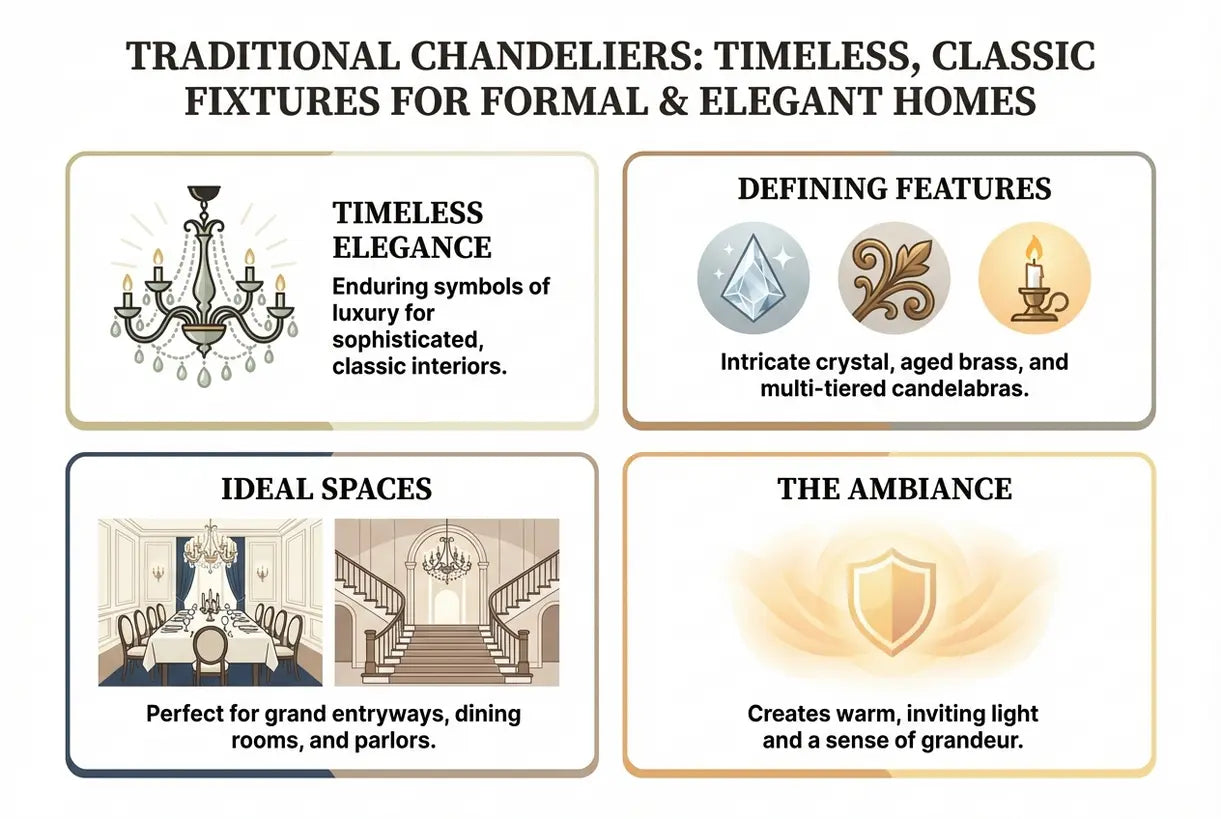
Understanding what separates traditional fixtures from transitional or modern alternatives requires examining historical precedent. Traditional chandeliers typically feature:
- Candle-style arms: Whether holding actual tapers or precision-engineered LED equivalents, the vertical arm structure references pre-electric illumination
- Ornate metalwork: Scroll details, botanical motifs, and hand-forged flourishes distinguish artisan pieces from mass-produced imitations
- Weighted proportions: Substantial hanging hardware (often 20-40 pounds for dining room centerpieces) ensures visual gravitas
- Layered crystal or glass elements: From Murano techniques to Bohemian cutting methods, refractive materials amplify ambient glow
When considering a formal dining chandelier, these characteristics serve practical purposes beyond aesthetics. The vertical arm configuration provides 360-degree illumination across table surfaces, while crystal elements diffuse harsh overhead lighting into flattering, atmospheric warmth—essential for entertaining that extends from casual brunches to celebratory midnight conversations.
Material Mastery: Selecting Crystal, Brass, and Hand-Finished Glass
The sensory experience of a traditional lighting fixture depends significantly on material authenticity. Crystal chandeliers remain the pinnacle of formal illumination, but not all crystals perform equally. Full-cut leaded varieties (containing approximately 24-30% lead oxide) produce the signature rainbow prisms that dance across walls during golden hour—an effect that machine-pressed glass simply cannot replicate.
Meanwhile, brass traditional chandeliers develop living finishes that evolve with your home's atmosphere. Unlacquered brass develops a soft patina in humid coastal environments, while antiqued or brushed finishes maintain consistent warmth in arid climates. For those seeking the gravitas of vintage aesthetics without maintenance concerns, contemporary plated finishes offer sophisticated alternatives that withstand daily use in busy households.
Chandeliers
Shop all Chandeliers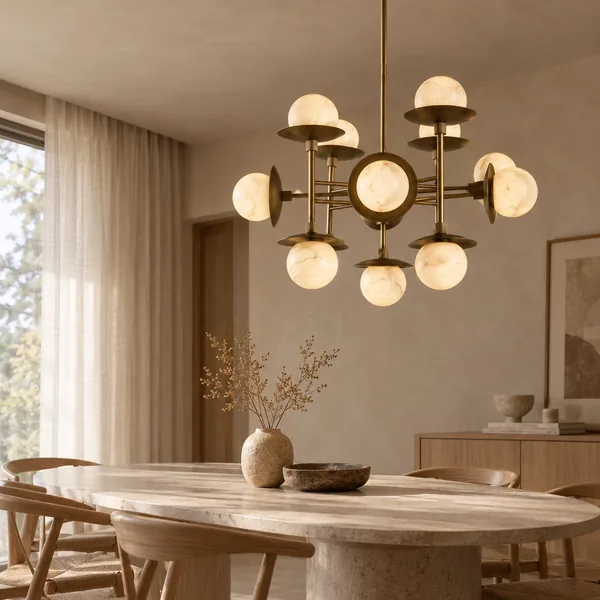
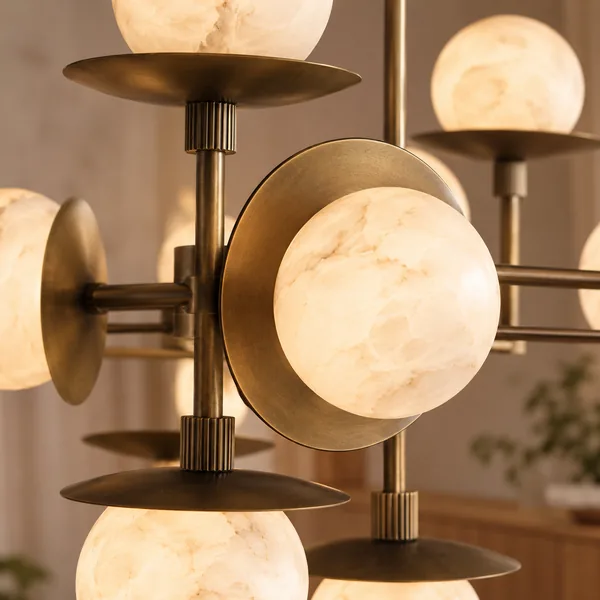
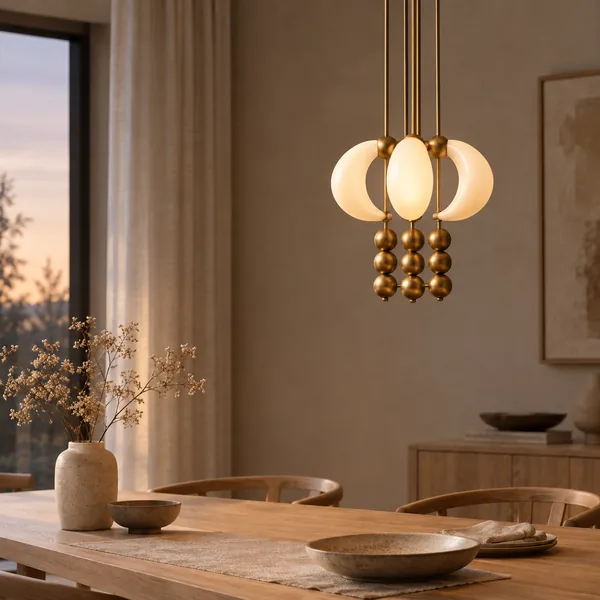
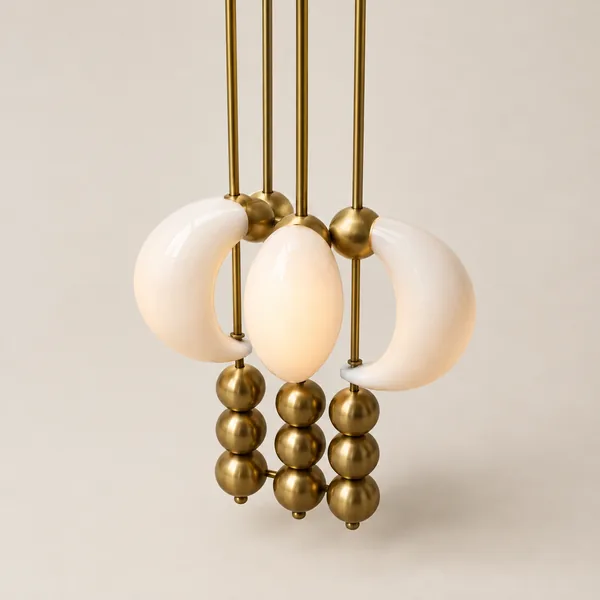
Beyond crystal and metal, hand-blown glass artistry introduces organic variation that prevents traditional spaces from feeling museum-like. Artisan techniques create subtle bubbles, striations, and color gradations—whether in clear, amber, or the emerging trend of sage and moss tones—that establish immediate visual interest without competing with architectural details.
Size, Scale, and the Art of Installation
Perhaps no decision impacts chandelier success more profoundly than proportional sizing. The standard formula—adding room dimensions in feet, then converting to inches for fixture diameter—provides merely a starting point. For large traditional chandeliers in formal dining contexts, consider the table rather than the room:
- Fixtures should measure approximately 12 inches narrower than table width on all sides (allow 6 inches clearance from table edge)
- Total hanging length from ceiling to fixture bottom typically ranges 30-34 inches above table surfaces in rooms with 8-foot ceilings, adding 3 inches for each additional foot of ceiling height
- For spaces with ceilings exceeding 10 feet, consider multi-tier designs or add decorative chain/cord to establish proper visual weight
The vertical positioning of your traditional crystal chandelier dramatically affects both task illumination and ambient atmosphere. Too high, and the fixture becomes merely decorative; too low, and sight lines suffer across dining surfaces. We recommend testing heights with adjustable chain before final installation—a service many refined lighting boutiques offer during the selection process.
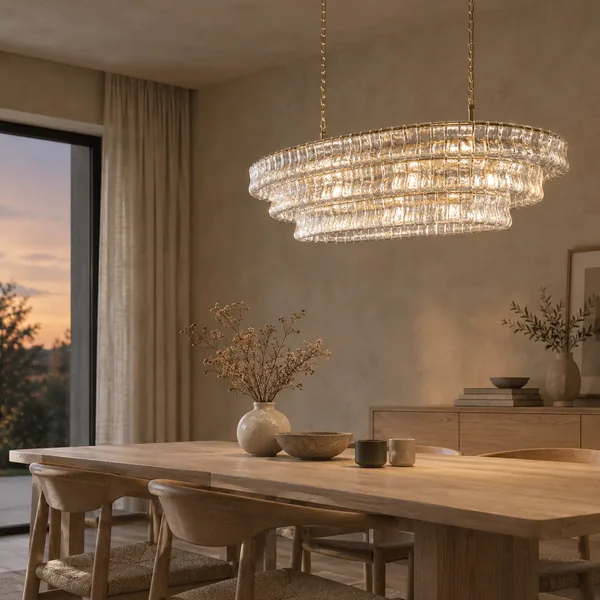 Stjerna Vintage French Clear Glass Chandelier$1,799.00$2,259.00
For those curating an intentional entertaining space, the Stjerna Vintage French Clear Glass Chandelier embodies the approachable sophistication central to Scandinavian-heritage design. Its clear glass construction maintains visual openness in intimate dining rooms while the warm gold hardware introduces the refined material presence essential to traditional aesthetics. The adjustable suspension system accommodates both standard 8-foot ceilings and dramatic double-height entryways—a versatility that defines investment-worthy lighting.
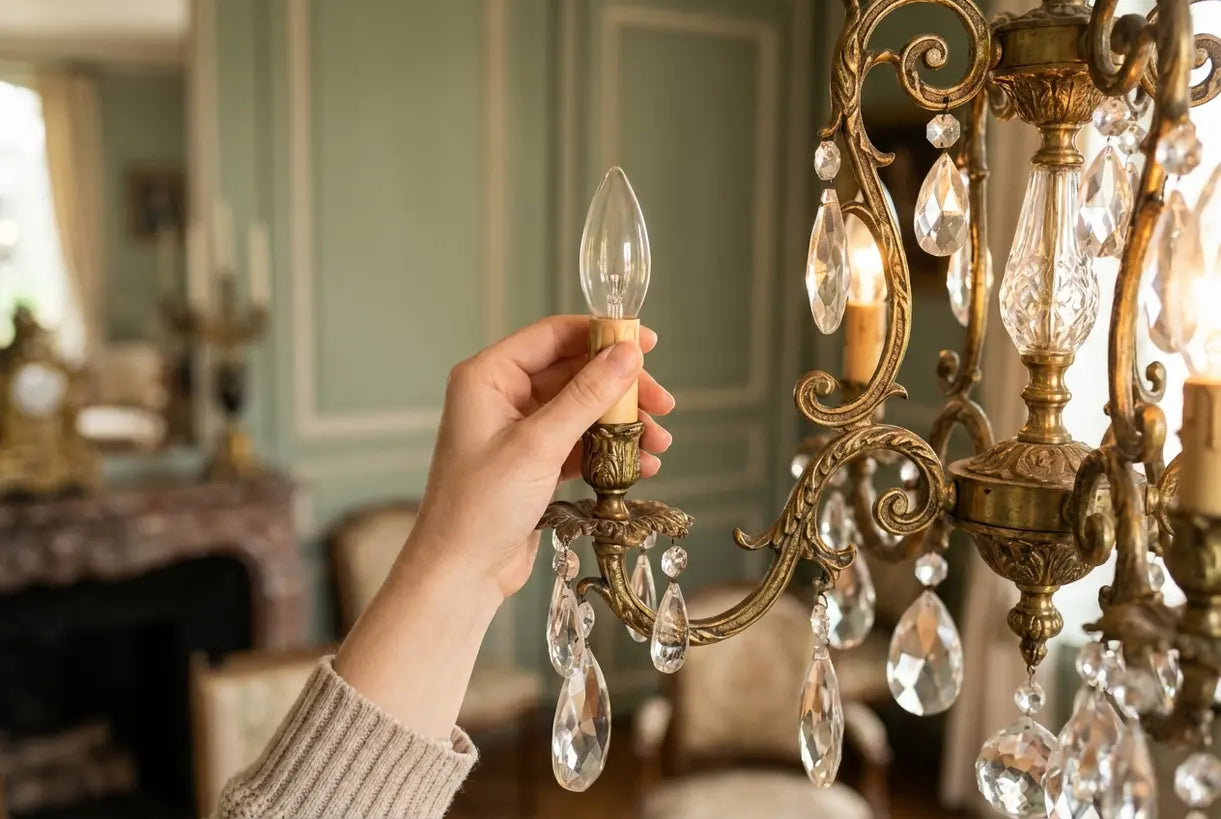
Curating Atmosphere: Traditional Styles for Specific Spaces
The application of traditional chandelier fixtures varies significantly by architectural context. In formal dining rooms—where the genre arguably originated—fixtures serve as natural gathering points that reinforce the room's ceremonial function. Here, crystal chandeliers with dimmable capabilities transition seamlessly from practical task lighting during homework sessions to romantic glow during dinner parties.
Entryways and foyers present different opportunities for classic chandelier installation. In these transitional spaces, fixtures establish immediate design intent while providing essential illumination for safe navigation. The scale can be more dramatic than dining applications—consider that foyers often benefit from fixtures with 16-20 inch diameters even in moderately sized homes, as the vertical volume of stairwells and two-story spaces demands substantial visual counterweights.
Create a Relevant Ambiance with Precision Crystal Craftsmanship
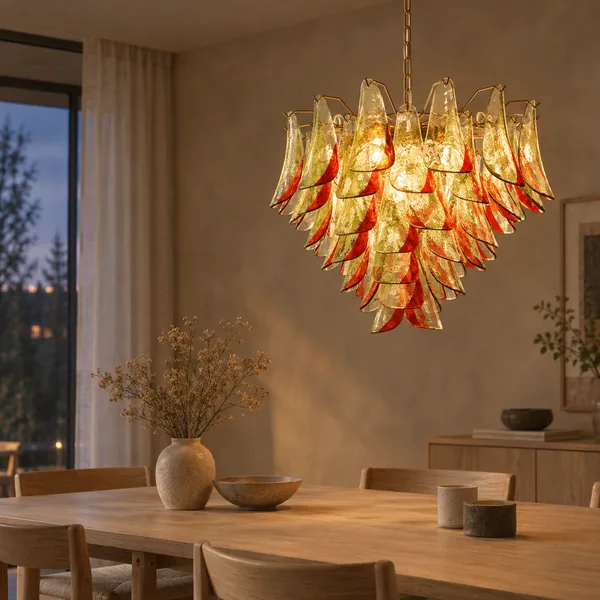 Klarglod Dimmable Nordic K9 Crystal Chandelier$889.00$1,279.00
Bedrooms and dressing areas represent emerging territories for timeless chandelier fixtures—provided scale remains intimate. Miniature versions (12-16 inch diameters) or single-tier designs introduce hotel-suite refinement without overwhelming personal sanctuaries. When selecting fixtures for these private spaces, prioritize dimmable options and consider the interplay between chandelier glow and natural morning light.
The Klarlgd Dimmable Nordic K9 Crystal Chandelier addresses the specific frustration of inflexible illumination in formal entertaining spaces. Its remote-controlled dimming system eliminates the need for complicated wall dimmers or inaccessible hardwiring modifications—particularly valuable in rental properties or historic homes where electrical updates prove challenging. The K9 crystal (optically pure synthetic crystal with exceptional clarity) captures and refracts light with brilliance approaching fine leaded varieties, while the gold-finished iron frame introduces warmth that complements both traditional mahogany and contemporary bleached woods.
Addressing Contemporary Concerns: Efficiency, Maintenance, and Adaptability
Traditional lighting's reputation for impracticality—a relic of dripping wax candles and fragile glass requiring weekly dusting—no longer reflects contemporary manufacturing realities. Modern brass chandeliers and crystal fixtures integrate LED compatibility, motorized lift systems for high-ceiling maintenance, and modular construction allowing component replacement rather than complete fixture failure.
Dining Room Lighting
Shop all Dining Room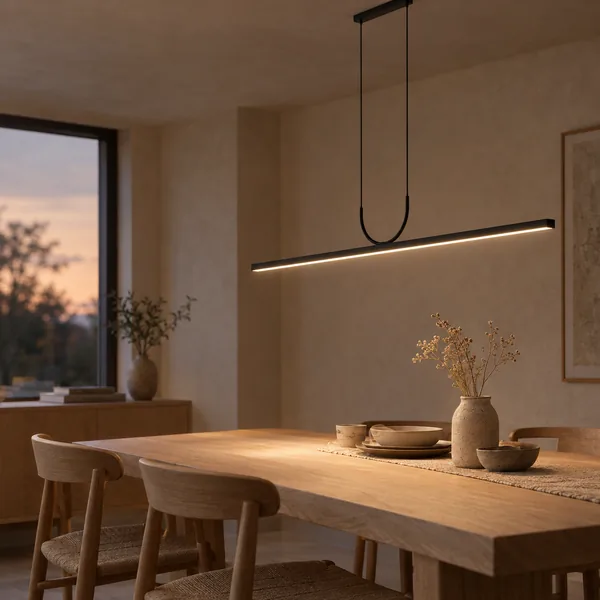
 Save $140.00
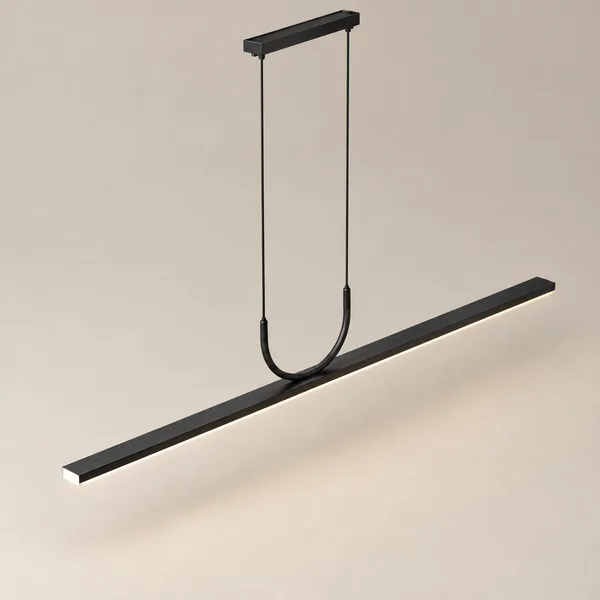
Linné Minimalist Linear Black LED Pendant Light
 Save $60.00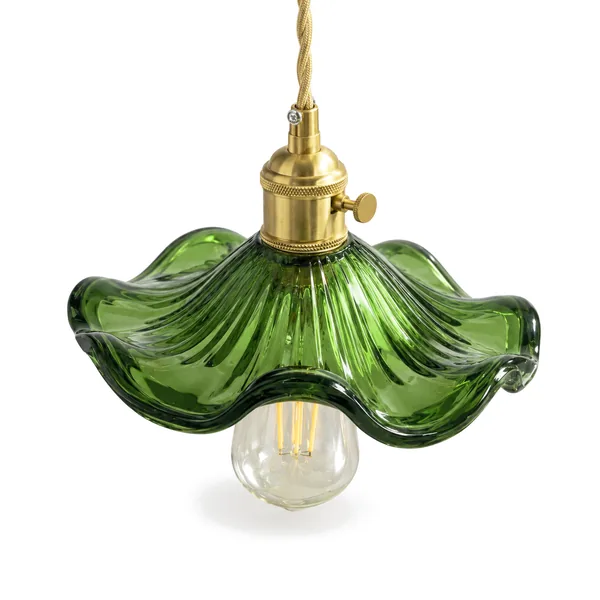
 3 options
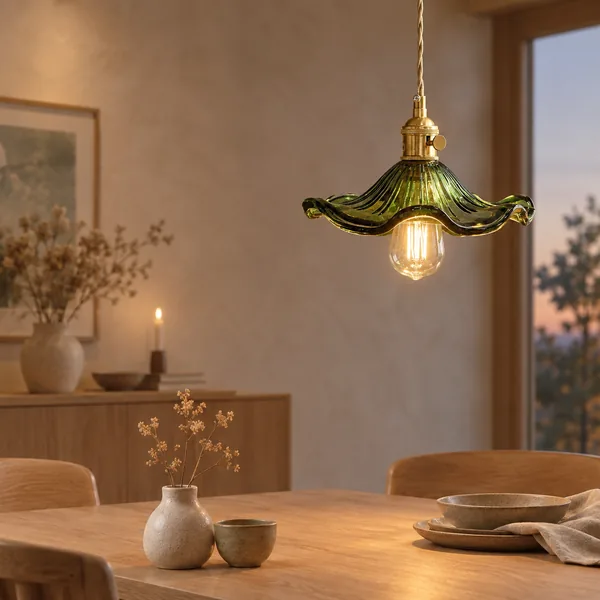
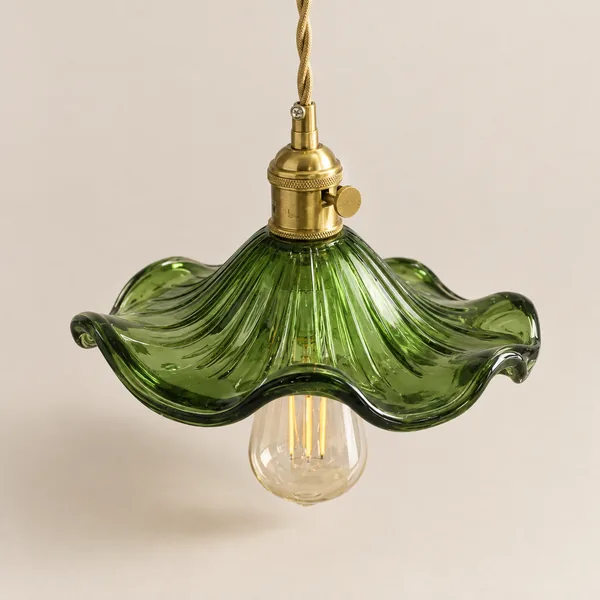
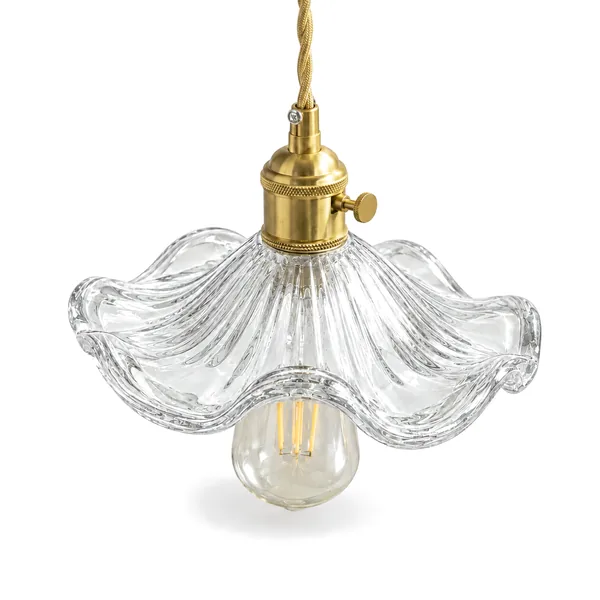
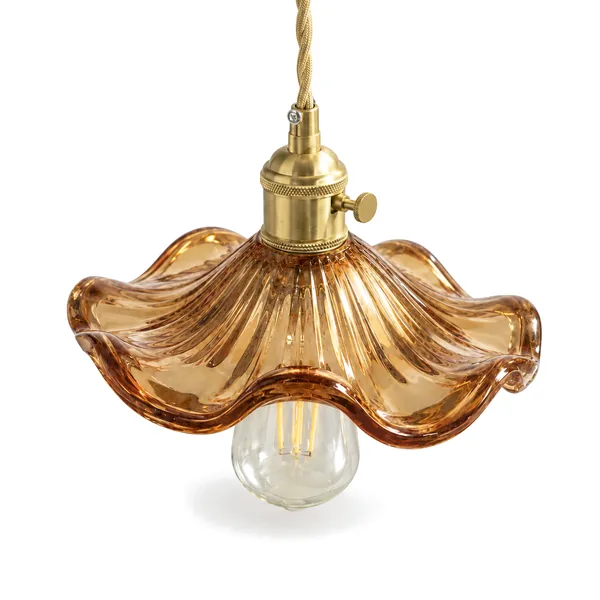
Glora Nordic Glass Pendant Light with Copper
 Save $120.00
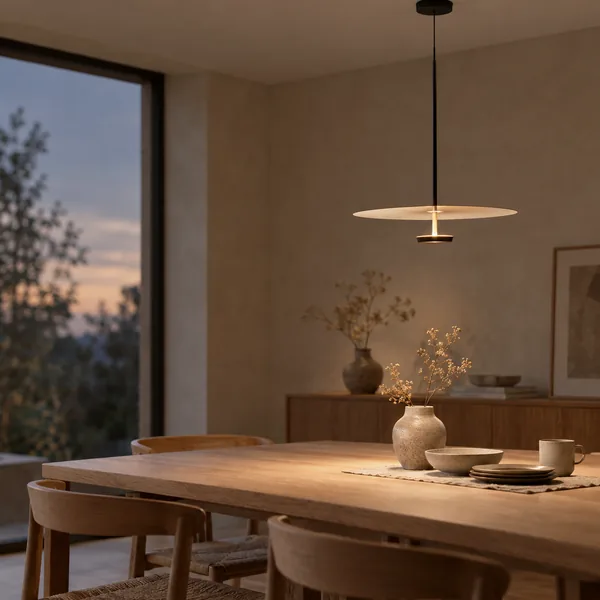
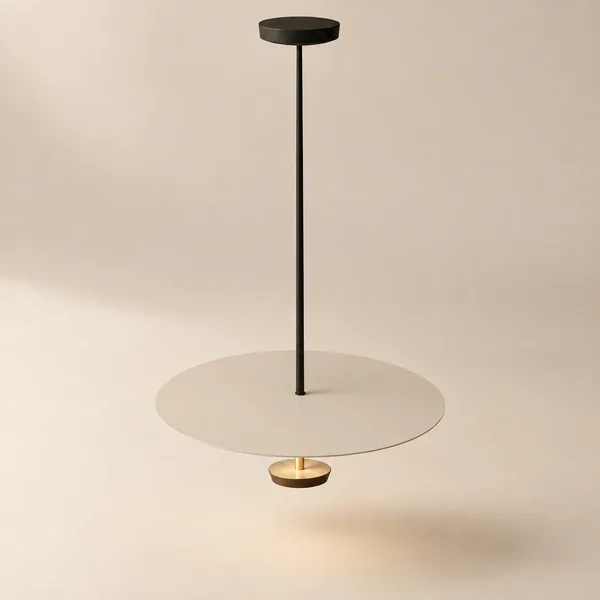
Skiva Nordic Saucer Ceiling Pendant Light LED
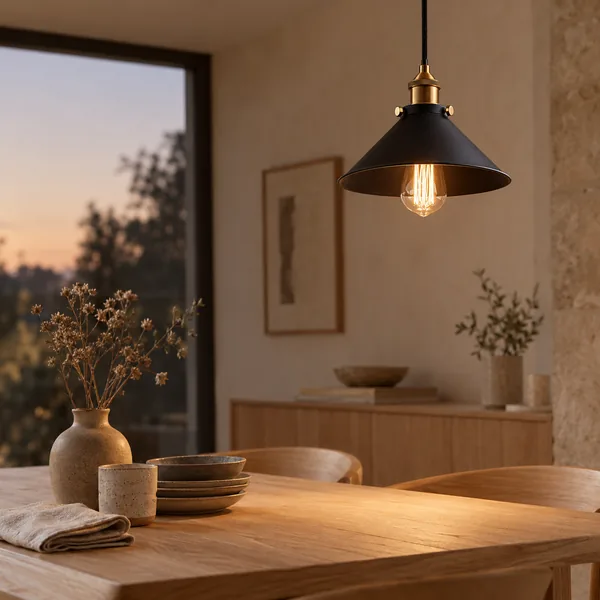
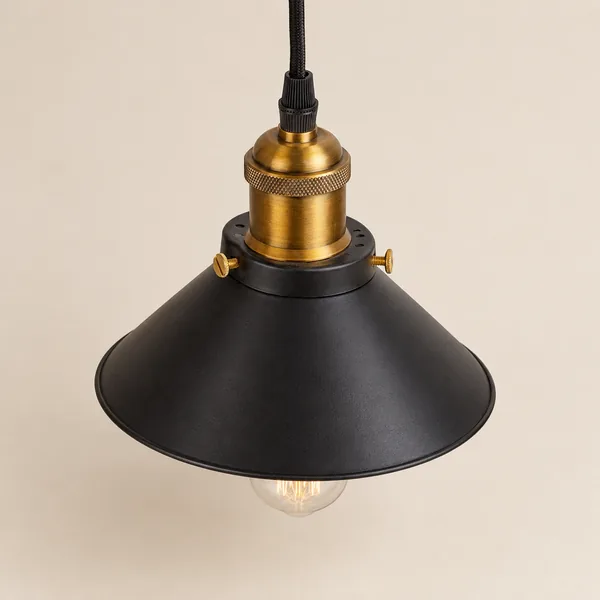
Maintenance protocols have similarly evolved. Gone are the days of dismantling entire fixtures for cleaning; today's protective coatings and precision-engineered caging allow gentle surface wiping while fixtures remain suspended. For traditional crystal chandelier owners, annual professional cleaning (typically $200-$400 depending on size and complexity) preserves optical performance and protects investment value—particularly for fixtures in the $2,000-$11,000 range that anchor entire design schemes.
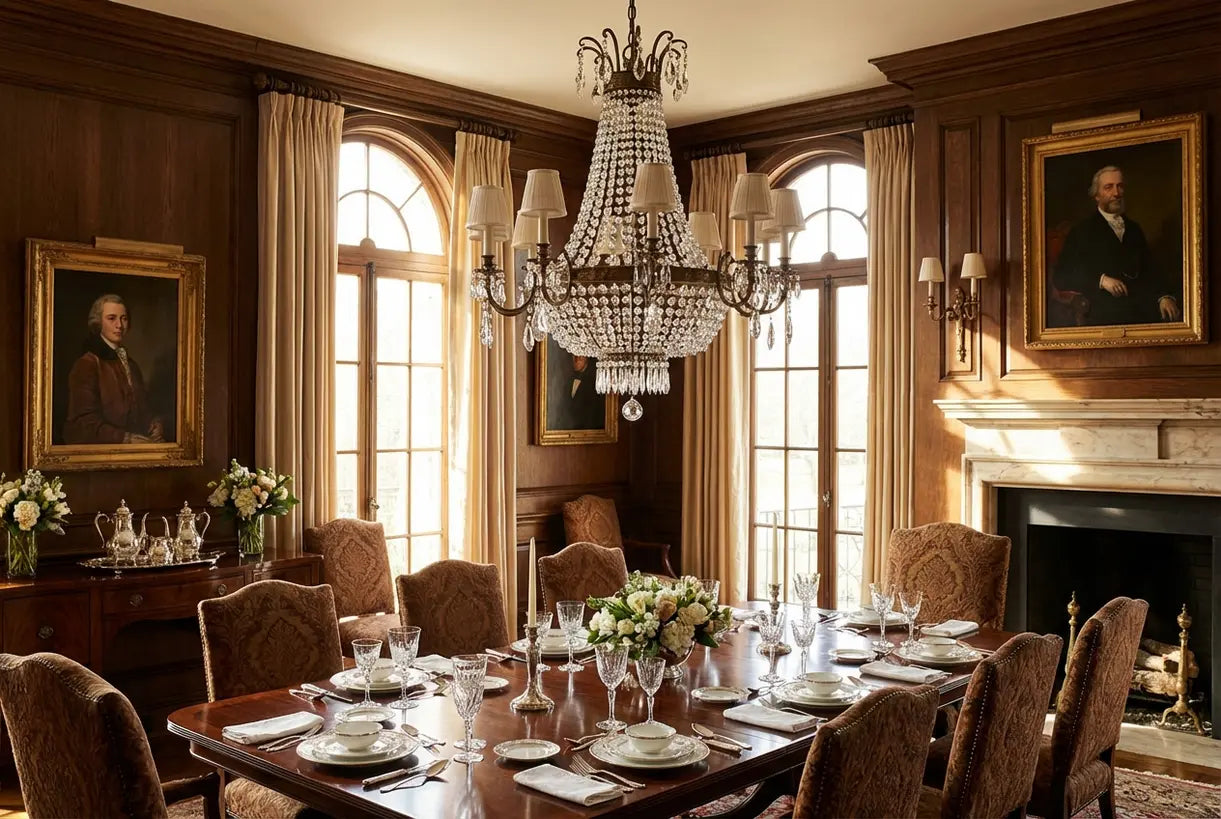
For those seeking sophisticated alternatives to conventional clear crystal, mounted ceiling lights in artisan glass finishes offer curated selection for spaces where full chandeliers prove architecturally incompatible. These intentional alternatives maintain traditional material presence—hand-blown glass, brass hardware, warm metallics—while adapting to lower ceilings or minimalist structural constraints.
Statement Pieces for Discerning Collections
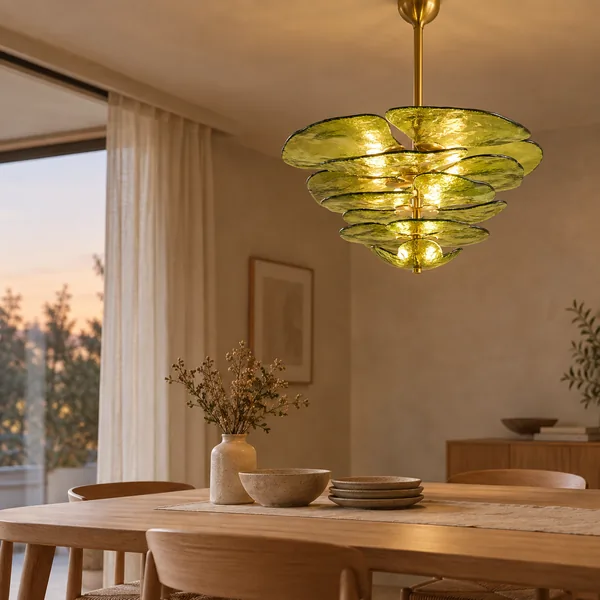 Grønja Stained Green Glass Ceiling Chandelier$899.00$1,289.00
The Grønja Stained Green Glass Ceiling Chandelier exemplifies how traditional craftsmanship evolves for contemporary sensibilities. Its moss-toned stained glass introduces an organic color narrative rarely found in conventional crystal fixtures—ideal for spaces where greenery, natural wood tones, or earth-toned textiles dominate. The hand-applied patination ensures each fixture carries subtle variation, preventing the sterile uniformity of mass-produced lighting while maintaining the elevated material standards expected in formal environments.
The Investment Perspective: Quality Indicators and Value Retention
Discerning traditional chandelier acquisition requires understanding value markers beyond surface aesthetics. Authentic craftsmanship reveals itself in weight distribution (quality fixtures feel substantial when handled), hardware integrity (solid brass or bronze rather than plated substrates), and optical performance (crystal clarity and cutting precision). These elements distinguish heirloom-quality pieces—those retaining or appreciating value over decades—from disposable trend items requiring replacement within five years.
Price architecture in the traditional lighting market reflects these quality differentials meaningfully. Entry-level pieces ($19-$99) typically serve accent or temporary purposes; core investment ranges ($100-$500) offer genuine material presence suitable for primary living spaces; while statement pieces ($500-$2,000 and beyond) showcase artisan techniques, rare materials, or historical reproduction fidelity. The Skonne curation emphasizes this middle-to-premium tier—where timeless chandelier fixtures deliver both immediate aesthetic impact and long-term value retention.
When evaluating vintage style chandeliers or reproduction pieces, documentation matters. Provenance records, artisan certifications (particularly for Murano, Bohemian, or Baccarat crystal), and warranty terms indicate manufacturer confidence in product longevity. Reputable sources provide clear specifications regarding weight capacity, electrical compatibility, and maintenance protocols—transparency that protects your investment and ensures safe installation.
Design Professional Insight: For traditional fixtures in historic homes or heritage districts, consult local preservation guidelines before purchasing. Some municipalities require specific finishes, scale limitations, or darkness-sky compliance for exterior-visible fixtures—regulations that impact both selection and installation costs.
Conclusion: Cultivating Timeless Illumination
The selection of a traditional chandelier represents far more than functional lighting decisions—it constitutes an investment in daily experience and heirloom-quality craftsmanship. By understanding proportional sizing, material authenticity, and the specific atmospheric needs of your formal spaces, you transform architectural necessity into curated art.
Whether you gravitate toward the refractive brilliance of crystal chandeliers, the warm patina evolution of brass traditional chandeliers, or the artisan coloration of contemporary stained glass, the Skonne collection offers intentionality at every price tier. Our curated assemblies bridge Scandinavian restraint with European formal traditions—creating lighting solutions that honor heritage while embracing contemporary needs for efficiency, adaptability, and approachable maintenance.
Ready to elevate your formal dining room, foyer, or entertaining space? Explore Skonne's complete mounted ceiling lights collection to discover fixtures that transform your vision of timeless, elevated living into illuminated reality.
Related Article
Gothic Chandeliers: Dark, Dramatic Fixtures for Moody & Statement InteriorsTransform your space with gothic chandeliers that command attention. Discover dark, dramatic fixtures featuring wrought iron and moody finishes.