
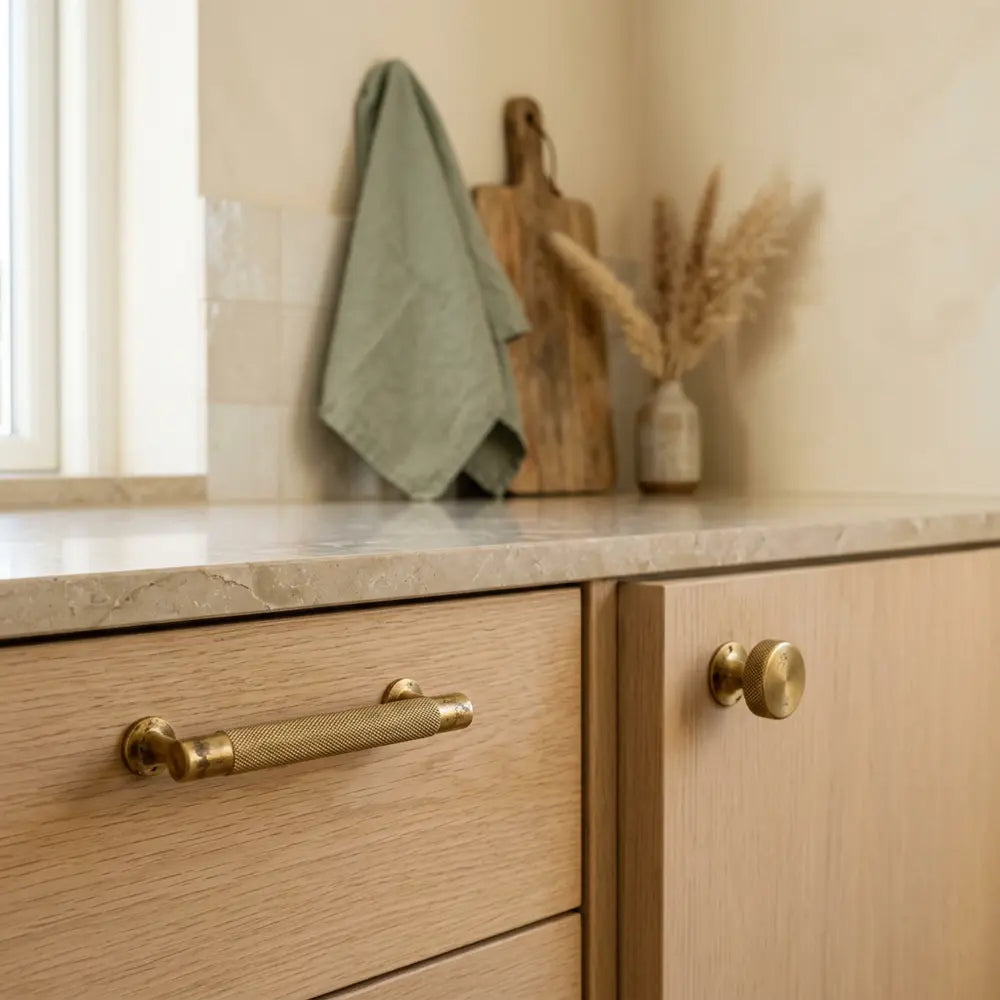
Cabinet Hardware
Showing 1 - 3 of 3 products
 Save $23.00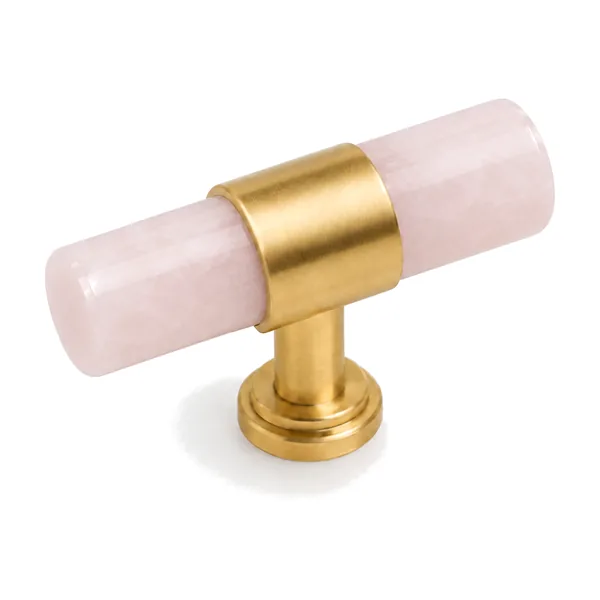
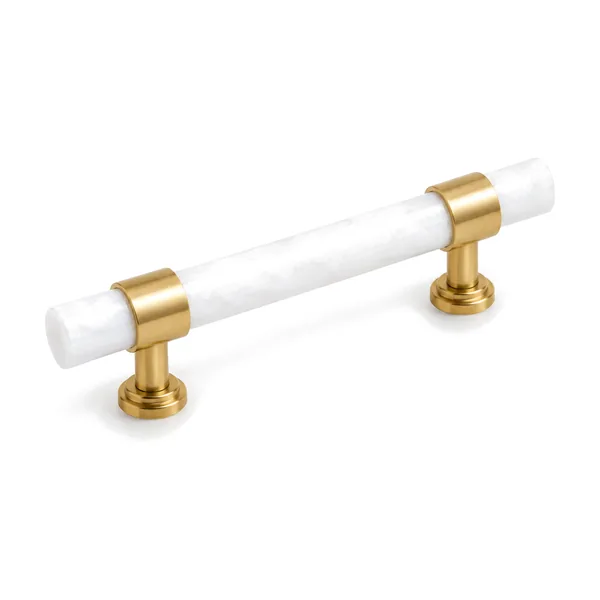
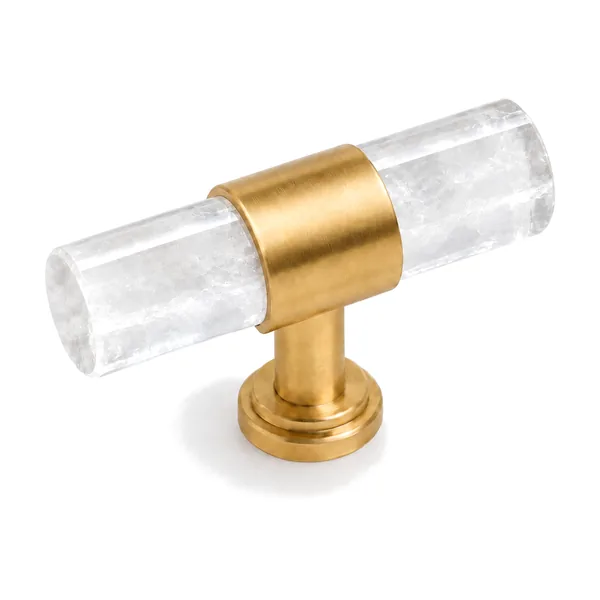
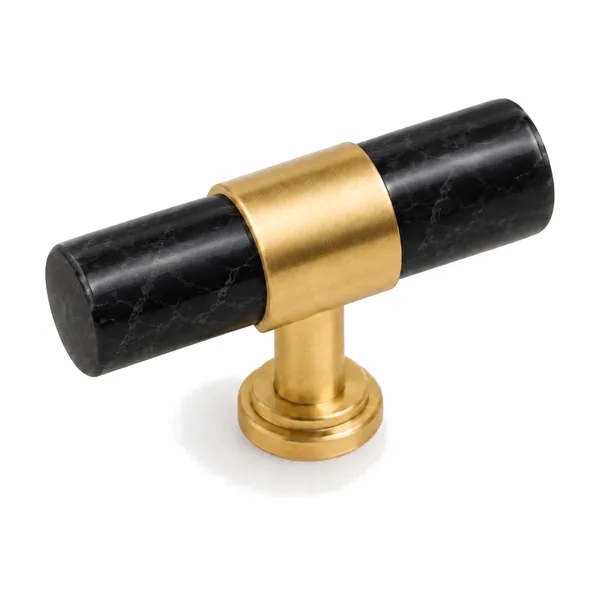 +112 options
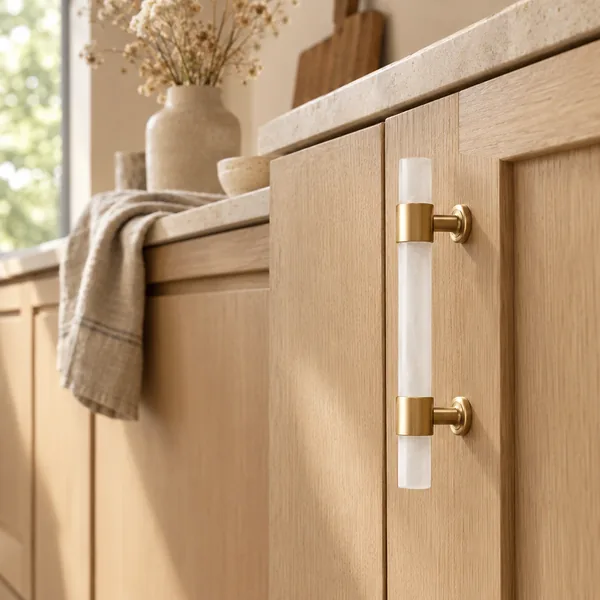
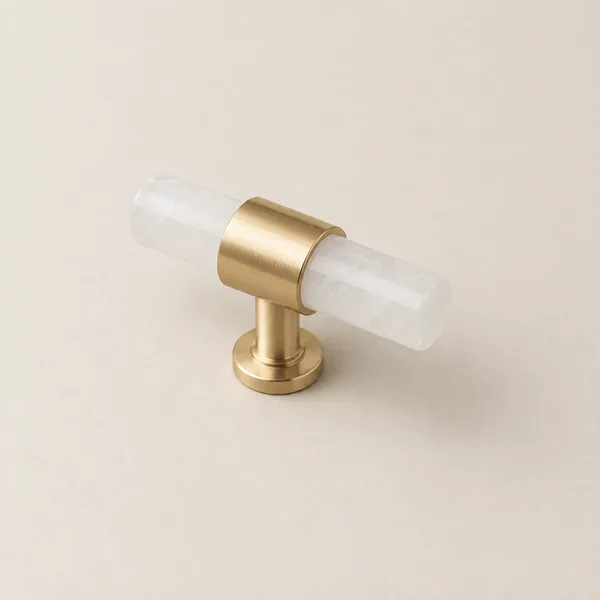
Stenvei Marble Brass Cabinet Pulls and Knobs
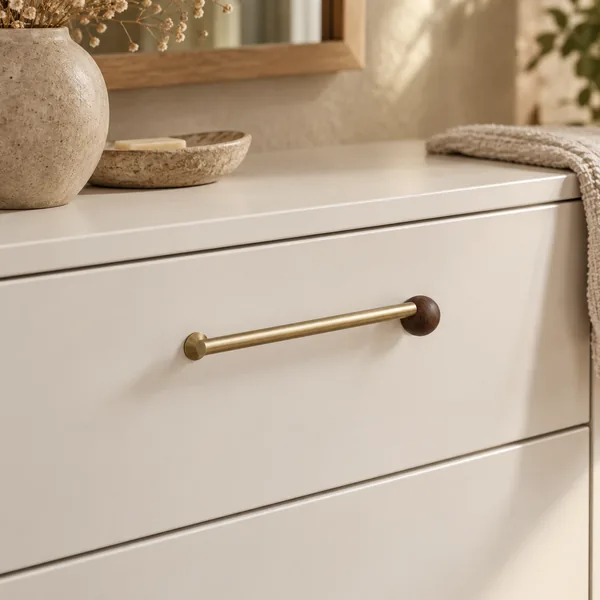
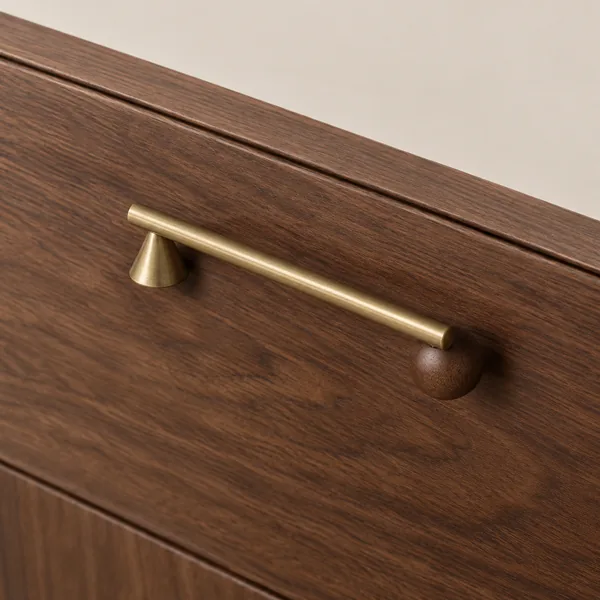 Save $23.00
Kvista Brass and Walnut Cabinet Pull Handles
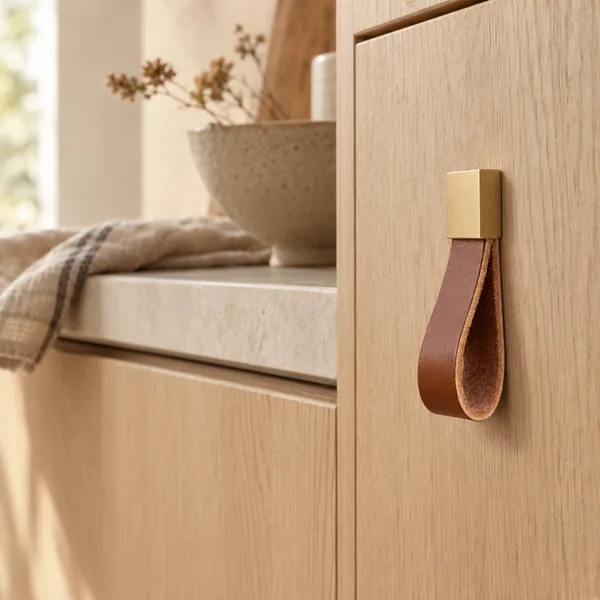
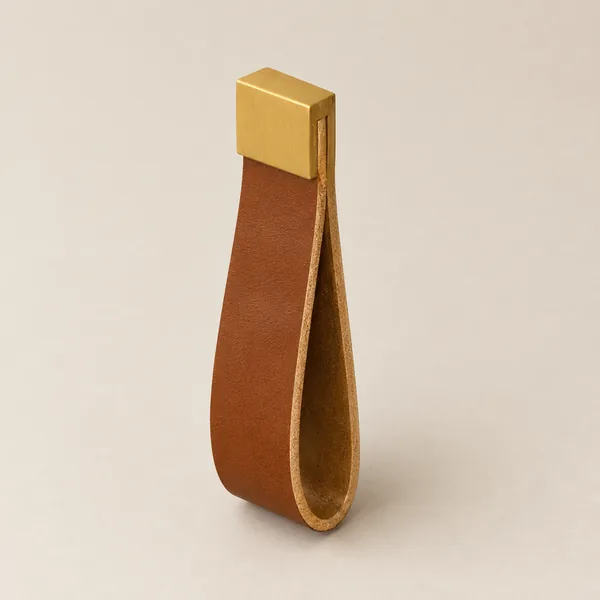
There's something quietly transformative about the moment you swap out tired cabinet hardware for pieces that truly belong in your home. At Skonne, we believe the details that your hands touch every day deserve as much intention as the larger design choices you make — and cabinet hardware is one of the most powerful, accessible ways to shift the entire feeling of a kitchen, bathroom, or living space.
This collection brings together Nordic-curated knobs, pulls, and hinges designed to work beautifully across every cabinet style — from sleek, modern kitchens to warm, traditional cabinetry. Whether you're planning a full renovation or simply refreshing what's already there, the right kitchen cabinet hardware changes everything.
Why Cabinet Hardware Is the Detail That Changes Everything
Cabinet hardware sits at the intersection of function and feeling. You interact with it dozens of times each day — pulling open a drawer, closing a cupboard door, reaching for a spice — and yet it's easy to underestimate just how much these small pieces shape the character of a room.
In Scandinavian design philosophy, every element in a home should earn its place. Hardware is no different. A beautifully proportioned pull in unlacquered brass brings warmth and lived-in elegance. A set of clean matte black knobs adds graphic precision to white cabinetry. The right choice doesn't just look good — it makes your home feel more like *you*.
At Skonne, we approach cabinet hardware the way a thoughtful curator approaches any collection: with an eye for quality craftsmanship, considered proportion, and finishes that age gracefully rather than trend out of existence.
Types of Cabinet Hardware for Doors and Drawers
Understanding the range of hardware available helps you make choices that are both functional and cohesive. The main categories are knobs, pulls, and hinges — each with distinct variations suited to different applications.
Cabinet Knobs
Decorative knobs are typically used on cabinet doors rather than drawers, where a single point of contact is all that's needed. They come in round, square, oval, and novelty shapes, and in materials ranging from solid brass and ceramic to porcelain and glass. Knobs add a classic, artisan quality to cabinetry and tend to read as more traditional or cottage-inspired, though sleek, minimal knobs work beautifully in modern spaces too.
Cabinet Pulls and Handles
Drawer pulls and handles offer a more secure grip across a wider span, making them practical for heavier drawers and frequently used cabinet doors. Bar pulls are a perennially popular choice for contemporary kitchens — clean, linear, and easy to grip. Finger pulls and edge pulls are a more refined option for handleless kitchen aesthetics, sitting flush with the cabinet face for a seamless look. For large pantry doors or appliance-style cabinets, longer appliance pulls provide a bold, architectural statement.
Cabinet Door Hinges
Hinges are the quiet workhorses of any cabinet system. While often concealed, the quality of your hinges is felt every time a door opens and closes. Soft close hinges are now considered essential in modern kitchen design — they eliminate the sharp sound of slamming doors and extend the life of your cabinetry. Exposed hinges in decorative finishes are also making a return, adding a deliberate, crafted quality to furniture-style cabinetry.
Drawer Slides and Additional Hardware
Beyond the visible hardware, drawer slides and internal mechanisms contribute significantly to the everyday experience of your kitchen. Smooth, well-engineered slides that extend fully and close softly reflect the same standard of quality as the hardware you can see. At Skonne, we curate both the visible and the functional with equal care.
Standard Sizes for Cabinet Hardware and How to Measure Correctly
Getting the sizing right is one of the most important steps in any cabinet hardware project — and one of the easiest places to make a mistake. The good news is that once you understand the conventions, measuring becomes straightforward.
Understanding Center-to-Center Measurement
For pulls and handles, the key measurement is center-to-center — the distance between the centers of the two mounting holes. The most common sizes are 96mm (approximately 3¾ inches) and 128mm (approximately 5 inches), which fit the vast majority of standard cabinet configurations. Longer pulls in 160mm, 192mm, and 256mm spacings are increasingly popular for wider drawers and appliance pulls.
Before purchasing, measure your existing hole spacing with a ruler or use the mounting template often included with new hardware. If you're drilling new holes, decide on your preferred pull size first, then mark the positions using the template before committing.
The 1/3 Rule for Cabinet Hardware Sizing
A helpful guideline when selecting hardware proportions is the 1/3 rule: choose a pull whose length is approximately one-third the width of the drawer front. So a 300mm drawer would be well-balanced with a 96–128mm pull. This isn't a rigid law, but it provides a reliable starting point for visually harmonious proportions.
Knob Sizing and Placement
Knobs are typically 1 to 1.5 inches in diameter for standard cabinets, with larger statement knobs up to 2 inches for oversized doors. On upper cabinet doors, knobs are traditionally placed in the lower corner closest to the door's opening edge. On lower cabinet doors, they sit in the upper corner on the same side. Consistency in placement is more important than any single rule — a uniform approach reads as intentional and deliberate.
Choosing the Right Cabinet Hardware to Match Your Kitchen Style
There's no single "correct" hardware choice — the right decision is the one that coheres with your space, your lifestyle, and the feeling you want your home to evoke. That said, a few guiding principles make the decision much clearer.
Match the Metal to Your Broader Design Palette
Consider the other metals already present in your kitchen — faucets, light fixtures, appliance trim. Hardware doesn't have to match exactly, but it should feel intentional in relation to those existing tones. Brushed nickel works harmoniously in cool-toned kitchens with stainless appliances. Unlacquered brass develops a warm patina over time and pairs beautifully with stone countertops and natural wood. Oil rubbed bronze brings depth and a sense of history to traditional cabinetry.
Consider Your Cabinet Color and Finish
Dark cabinetry — charcoal, navy, deep green — tends to read beautifully with brass or gold tones, creating warmth and contrast. White and cream cabinetry is highly versatile, pairing well with matte black, brushed nickel, brass, or even ceramic knobs depending on the overall mood. Natural wood cabinetry benefits most from hardware that complements its organic warmth — unlacquered brass and oil rubbed bronze are natural partners here.
Knobs or Pulls — Which Looks Better on Cabinets?
This is one of the most common questions in kitchen design, and the honest answer is that both can be right depending on context. Pulls are generally more ergonomic on drawers where you need to open with a sweeping motion — especially for heavy-duty lower drawers. Knobs work well on doors where a gentle tug is all that's required. Many designers mix the two intentionally: pulls on drawers, knobs on doors. The key is consistency within each type to maintain visual order.
Match Hardware Style to Your Design Era
The silhouette and surface texture of your hardware should align with the design language of your space. Sleek bar pulls with a minimal footprint suit modern cabinet hardware schemes. Cup pulls and decorative knobs in aged brass or ceramic are at home in Shaker-style or farmhouse kitchens. Knurled textures — those finely ridged surfaces — are a current design-forward choice that bridges traditional craft and contemporary aesthetics elegantly.
Current Trends in Cabinet Hardware Finishes and Styles
Cabinet hardware trends evolve more slowly than surface-level décor, which is part of what makes a considered hardware choice such a sound investment. The best pieces feel current without chasing trends — and the current direction in hardware design aligns closely with Skonne's Scandinavian curation philosophy.
Warm Metal Tones Are Leading the Way
Brass has been the dominant story in hardware for several years, and it shows no sign of retreating. What's evolved is the *type* of brass — away from the polished, lacquered brass of the 1990s and toward unlacquered brass, satin brass, and aged or antique brass finishes that develop character over time. Warm metal tones in general — including bronze, copper-adjacent finishes, and champagne gold — continue to be the most searched and selected finishes in kitchen renovation projects.
Matte Finishes Over High Polish
Across all metals, matte and brushed finishes are preferred over high-shine alternatives. Matte black remains a strong performer in modern and transitional kitchens. Brushed nickel continues to be valued for its durability and understated versatility. The consensus is clear: surfaces that show intention rather than spectacle are where design is heading.
Tactile Details and Artisan Touches
There's a growing appetite for hardware that feels handcrafted — pieces with knurled textures, hand-hammered surfaces, or irregular profiles that signal human making rather than machine uniformity. Ceramic and porcelain knobs are also experiencing renewed appreciation as homeowners seek warmth and tactile richness in their everyday objects.
Integrated and Minimal Solutions
At the same time, the handleless kitchen trend continues to drive demand for finger pulls and edge pulls — subtle channels routed into the cabinet face that maintain a seamless visual plane. These work particularly well in contemporary kitchens where uninterrupted surfaces are a design priority.
Explore Our Cabinet Hardware Collections
To help you find exactly the right piece for your cabinetry, we've organized our hardware into focused collections. Browse by type to discover what works best for your project.
- Cabinet Pulls and Handles: Explore our full range of bar pulls, cup pulls, finger pulls, and appliance handles — available in brass, matte black, brushed nickel, and more, across a wide range of center-to-center sizes.
- Decorative Cabinet Knobs: Browse our curated selection of knobs in brass, ceramic, porcelain, and modern geometric styles — each chosen to bring character and craftsmanship to cabinet doors throughout your home.
Whether you're refining a single room or working through your whole home, Skonne's cabinet hardware collection is curated to make every choice feel considered — and every handle, pull, and knob feel worth reaching for. For a broader look at home improvement essentials curated with the same Nordic intention, explore our Home Improvement collection.
Frequently Asked Questions about Cabinet Hardware
3 products