
Bauhaus Interior Design: Functional Beauty & Geometric Modernism for Today's Homes
Summary›
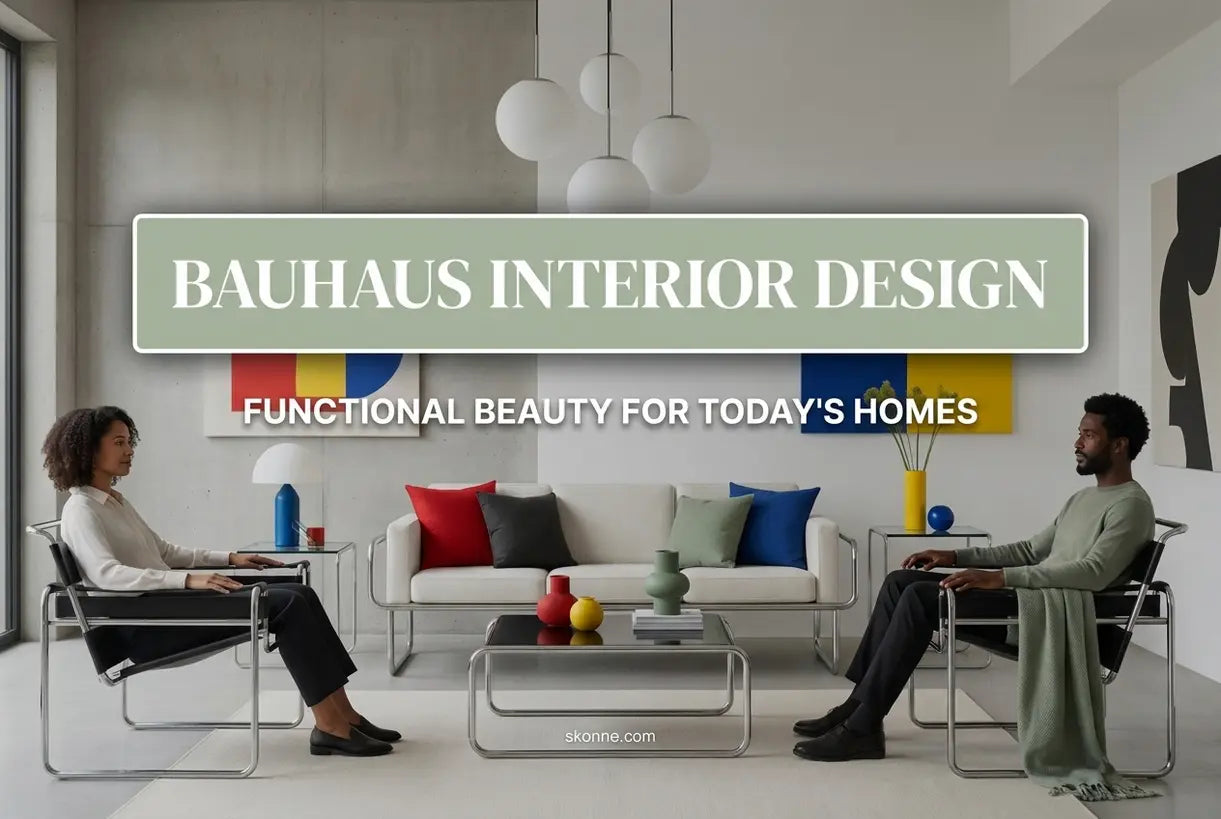
Some design movements fade with the seasons, but bauhaus interior design has remained a beacon of timeless sophistication for over a century. Born from a revolutionary German art school in 1919, this approach to creating spaces continues to captivate homeowners and design enthusiasts who crave both beauty and purpose in their surroundings. Whether you're furnishing your first apartment or refreshing a beloved family home, understanding Bauhaus principles opens the door to interiors that feel intentionally curated yet effortlessly functional.
At Skonne, we believe that exceptional design should solve real problems while stirring genuine emotion. This philosophy aligns perfectly with the Bauhaus movement's core tenet: that art and functionality need not compete, but rather should coexist in harmonious balance. As you explore how geometric modernism and form follows function can transform your living spaces, you'll discover carefully selected pieces that embody this enduring design language.
What Is Bauhaus Interior Design?
Bauhaus interior design emerged from the legendary Staatliches Bauhaus school founded by Walter Gropius in Weimar, Germany. The school operated from 1919 to 1933, yet its influence on architecture, furniture, and decorative arts remains undiminished. The movement rejected the ornate excess of Art Deco in favor of honest materials, clean lines, and designs that served human needs first.
The essence of this style lies in its radical simplicity. Every element within a Bauhaus-inspired space must earn its place through utility. Decorative flourishes aren't banned—they simply need to emerge naturally from an object's purpose. A table lamp isn't merely a source of illumination; it's a sculptural statement that celebrates light itself through pure geometric forms and industrial materials.
The connection between Bauhaus and Scandinavian design runs deep, sharing a mutual appreciation for honest craftsmanship and human-centered spaces. Both movements prioritize natural light, uncluttered environments, and objects that improve daily life. This shared DNA makes Bauhaus principles particularly accessible to fans of Nordic aesthetics.
The Seven Characteristics That Define Bauhaus Design
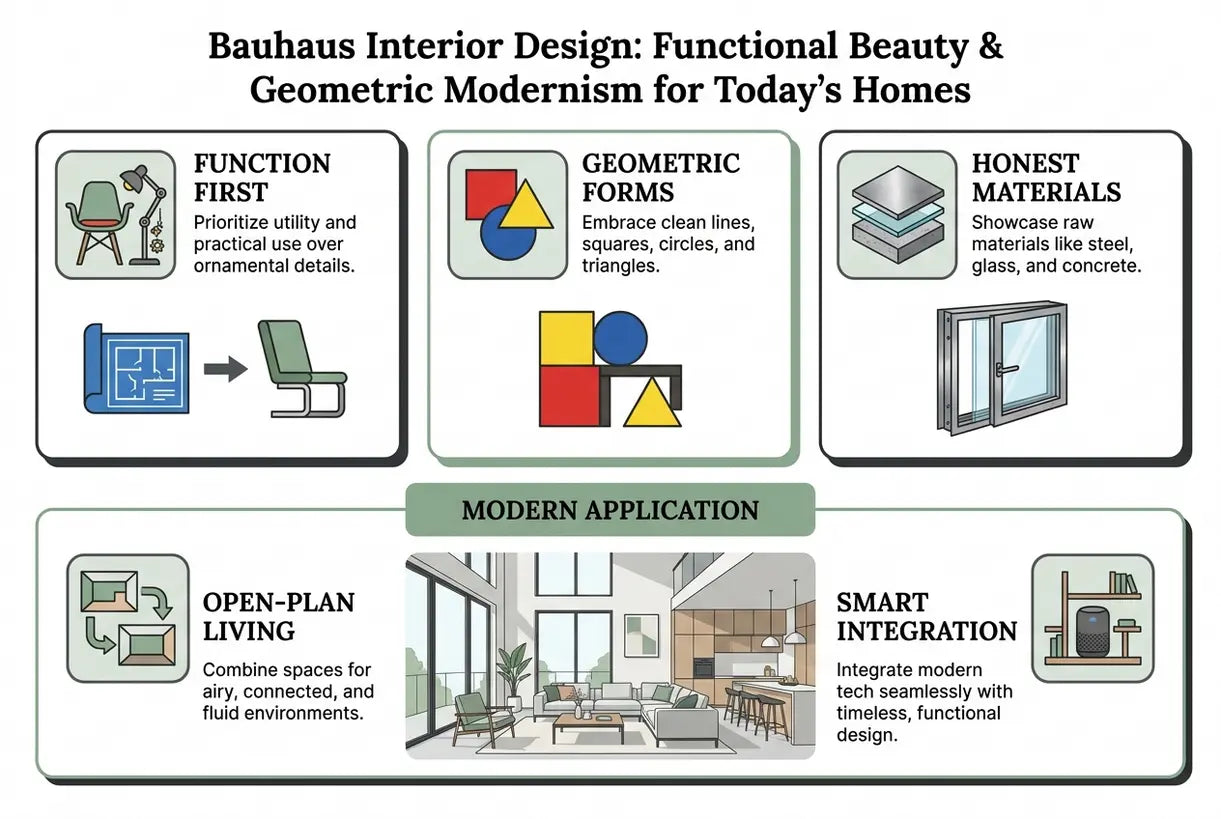
Authentic bauhaus interior design relies on distinct visual and philosophical elements that work together to create cohesive spaces. Understanding these characteristics helps you recognize genuine Bauhaus influences and incorporate them thoughtfully into your home.
Geometric purity tops the list—circles, squares, triangles, and rectangles dominate the visual vocabulary. These shapes appear not as decoration but as the fundamental building blocks of functional objects. You'll find spherical shades on angular lamp bases, circular mirrors in rectangular frames, and furniture that celebrates cube-like simplicity.
Industrial materials play a starring role. The Bauhaus school embraced steel, glass, concrete, and tubular metal as worthy artistic mediums. These materials spoke to the machine age while offering durability and honest beauty. Chrome finishes, exposed metal frameworks, and matte black ironwork remain signatures of the style.
Additional defining characteristics include:
- Function over ornamentation — Every design decision answers to utility
- Primary colors — Bold reds, yellows, and blues punctuate neutral backgrounds
- Open floor plans — Spaces flow freely without unnecessary walls or barriers
- Honest construction — Fasteners, joints, and mechanisms remain visible rather than hidden
- Asymmetrical balance — Visual weight distributes dynamically rather than rigidly
Pendant Lights
Shop all Pendant Lights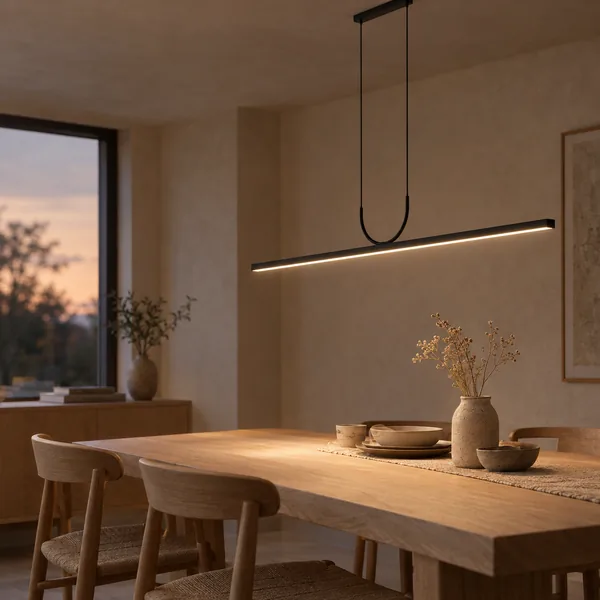
 Save $140.00
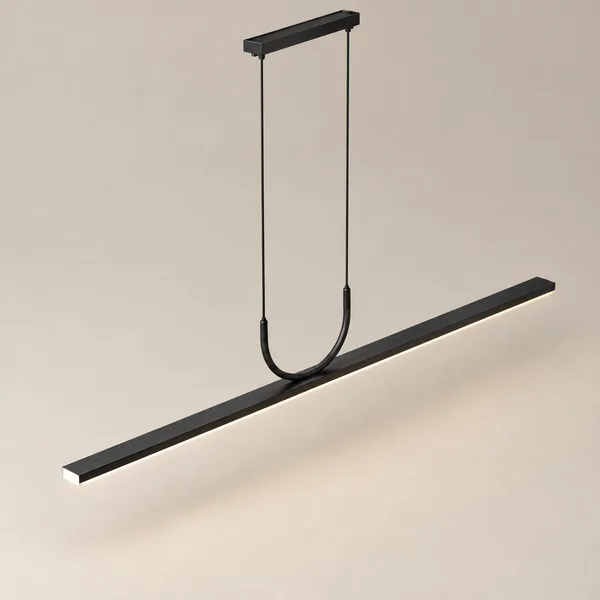
Linné Minimalist Linear Black LED Pendant Light
 Save $60.00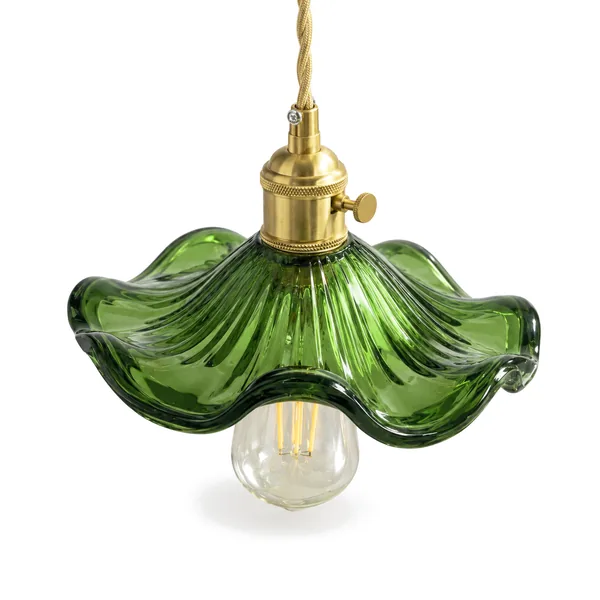
 3 options
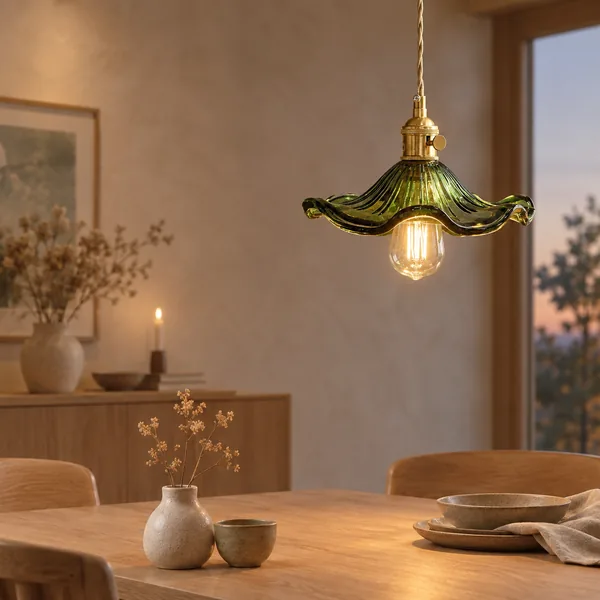
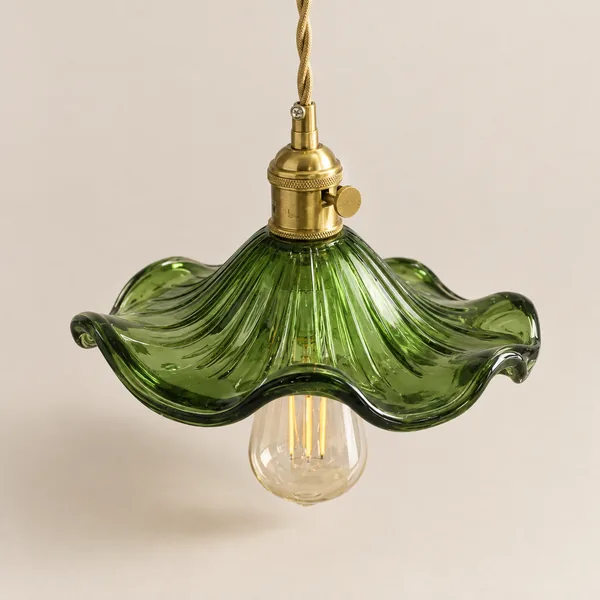
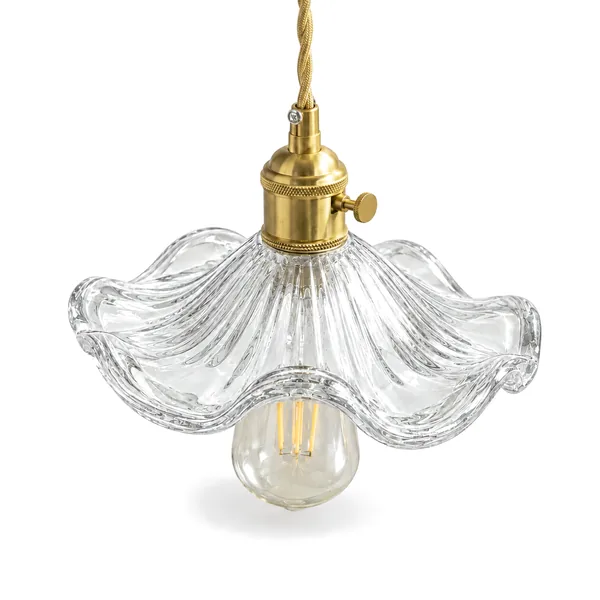
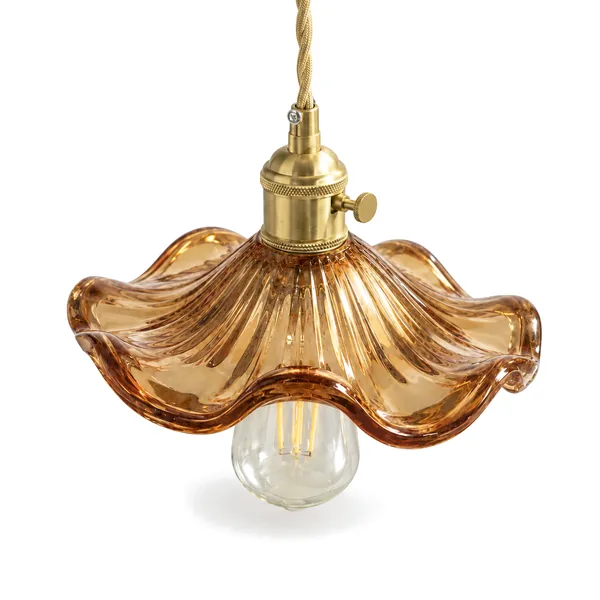
Glora Nordic Glass Pendant Light with Copper
 Save $120.00
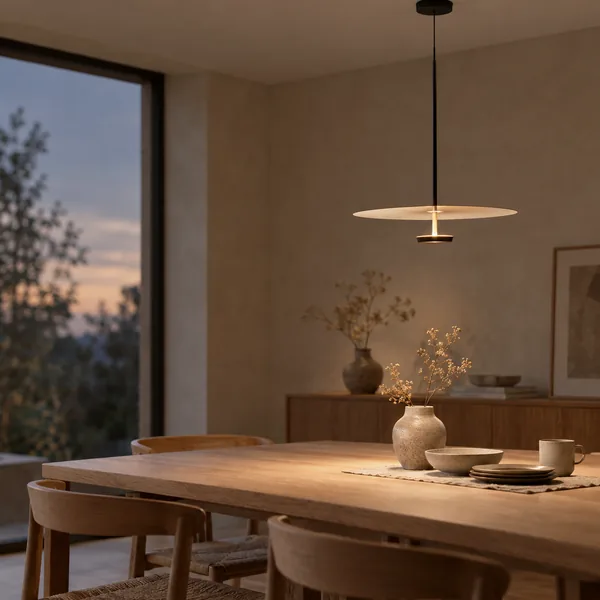
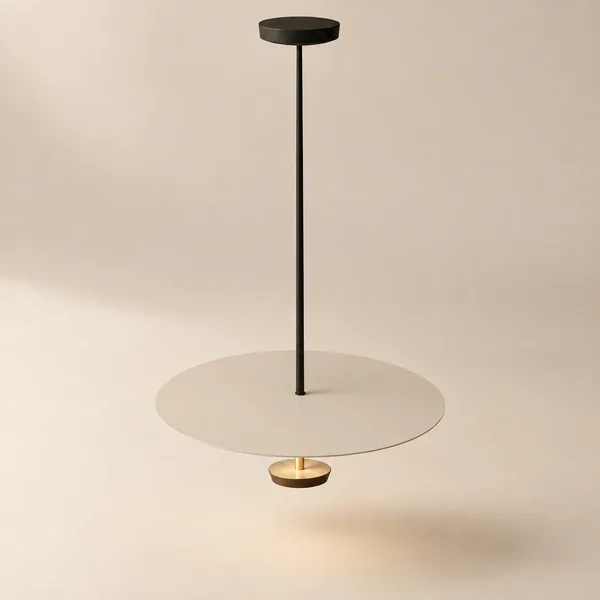
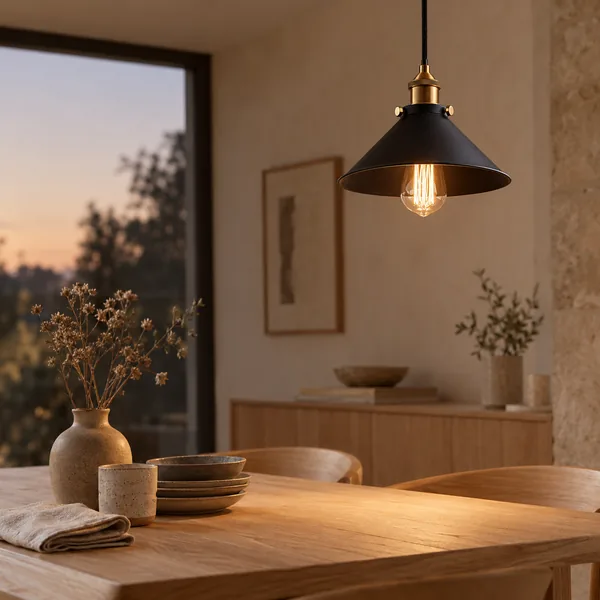
Skiva Nordic Saucer Ceiling Pendant Light LED
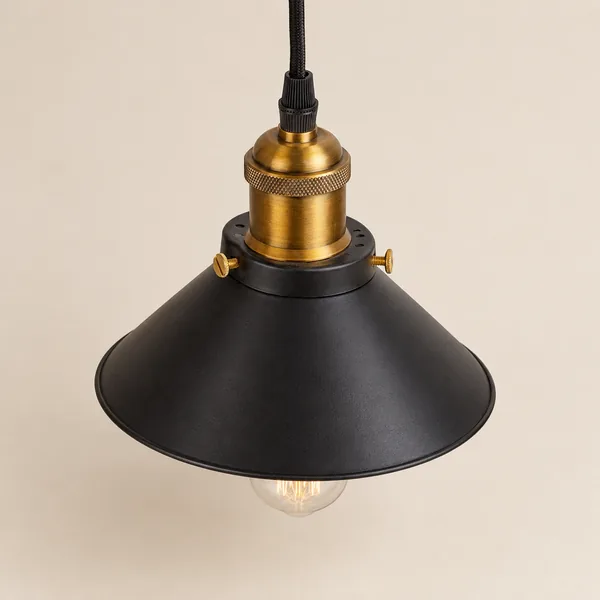
Form Follows Function: The Core Philosophy
Louis Sullivan first articulated the principle that form follows function, but the Bauhaus movement elevated this concept into an entire design philosophy. In practice, this means that a chair should look like a chair because of how it supports the human body—not because of added decorative elements that serve no structural purpose.
This philosophy liberates interior spaces from visual clutter. When every object earns its place through genuine utility, rooms breathe differently. They feel more intentional, more honest, and ultimately more peaceful. The result is that coveted minimalist bauhaus decor aesthetic that remains perpetually relevant.
Lighting demonstrates this principle beautifully. A Bauhaus-inspired fixture doesn't hide its functional elements—it celebrates them. The way light falls, the mechanics of adjustment, the materials that conduct electricity: all become part of the visual poetry. Consider how the Forma Geometric LED Lamp Bauhaus Design Style embodies this ethos perfectly, with its sculptural LED orbs suspended within a clean geometric metal frame. The design reveals rather than conceals, creating a piece that functions as both task lighting and modernist sculpture.
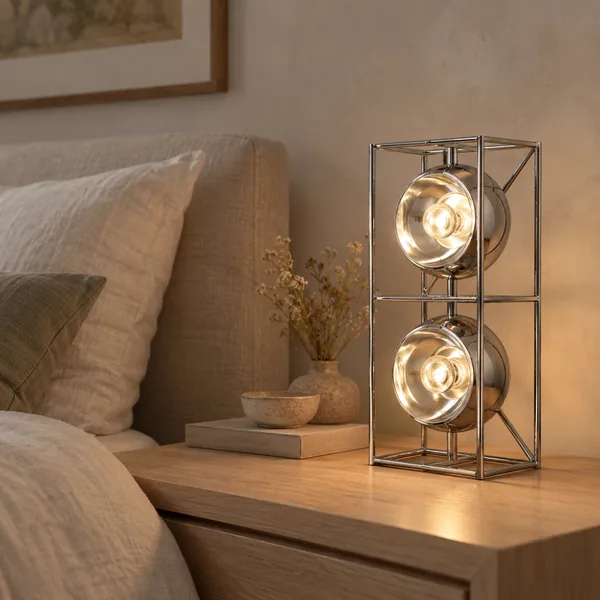 Forma Geometric LED Lamp Bauhaus Design Style$399.00$559.00
Geometric Modernism in Practice
The visual language of geometric interior design separates Bauhaus spaces from other modernist movements. Where some styles soften edges and embrace curves, Bauhaus celebrates the mathematical precision of straight lines and pure shapes. This isn't cold or clinical—it's a celebration of human achievement in understanding and manipulating physical space.
Implementing geometric modernism begins with understanding scale and proportion. Large geometric forms anchor rooms as focal points, while smaller shapes provide rhythm and visual interest. A substantial floor lamp with a tripod base creates architectural presence, while geometric throw pillows or wall art add layers of interest without overwhelming the space.
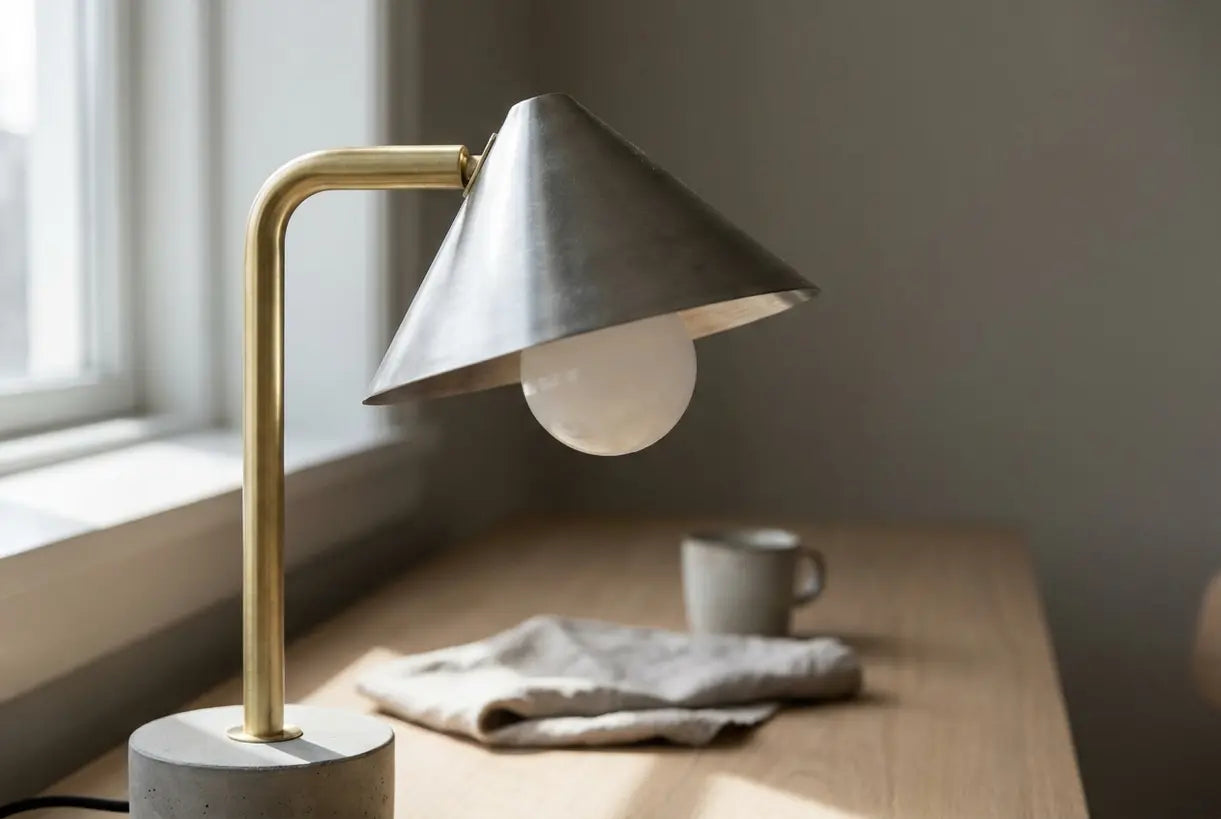
Color plays a supporting role in geometric composition. The typical Bauhaus palette begins with a foundation of black, white, and natural wood tones. Against this neutral canvas, strategic pops of primary colors draw the eye and emphasize geometric relationships. A red accent on a lamp switch, a yellow interior on a shelving unit, or a blue panel on a room divider—all serve to highlight form through chromatic contrast.
Industrial Materials and Timeless Appeal
The Bauhaus movement democratized design by embracing materials that could be produced efficiently and affordably. Steel tubing, plate glass, molded plywood, and tubular metal weren't just cost-effective—they offered honest beauty that decorative veneers and applied ornamentation couldn't match.
Today's modern bauhaus style continues this material honesty. Brushed chrome catches light differently than painted surfaces. Clear glass reveals rather than conceals. Concrete and stone provide weight and permanence. These materials age gracefully, developing patinas that tell stories of use and time.
The intersection of Bauhaus and Scandinavian design creates particularly compelling interiors. Both movements share reverence for natural materials and human-centered spaces. Where Bauhaus brings industrial edge and geometric rigor, Scandinavian tradition contributes warmth through wood tones and textile softness. This marriage results in spaces that feel contemporary yet livable—sleek without sterility.
When considering overhead illumination that honors these principles, our Mounted Ceiling Lights collection offers carefully curated options that balance industrial materials with refined geometric forms.
Bringing Bauhaus Into Your Home
Implementing bauhaus interior design doesn't require renovating your entire home or investing in museum-quality originals. The movement's democratic spirit encourages thoughtful curation over expensive acquisition. Start with one statement piece, then build around it with considered intention.
Begin in high-impact areas like entryways or living rooms where guests immediately experience your aesthetic. A striking wall clock serves as both functional timepiece and sculptural art. The Tvilling Dual-Sided Geometric Metal Wall Clock anchors modern interiors with architectural presence through its triangular form and sophisticated metal finishes.
Lighting transformations offer dramatic impact with minimal commitment. Replace ornate fixtures with clean, geometric alternatives that celebrate their functional purpose. Wall-mounted options work particularly well in smaller spaces, providing illumination without consuming floor area.
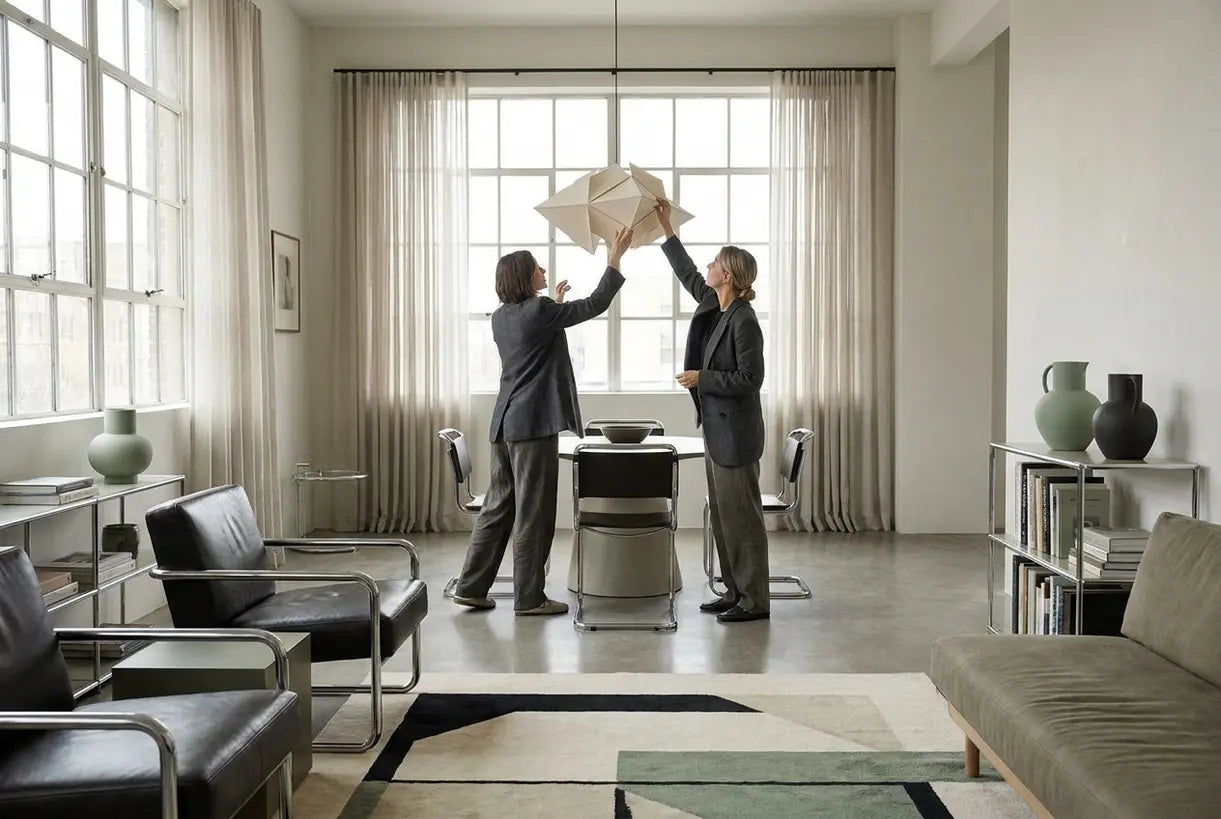
The Vindla Geometric LED Wall Lamp Nordic Design transforms bare walls into modernist focal points. Where intersecting circles meet angular lines, soft tunable LED light creates museum-quality presence that honors both Bauhaus and Nordic design traditions.
Featured Bauhaus-Inspired Pieces
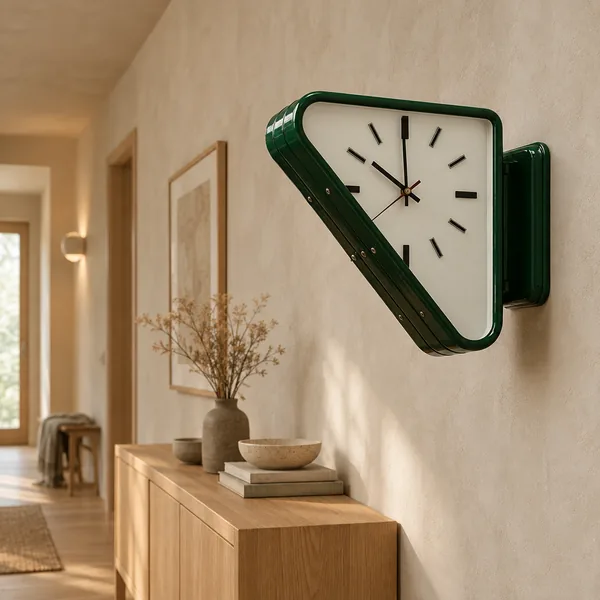 Tvilling Dual-Sided Geometric Metal Wall Clock$269.00$379.00
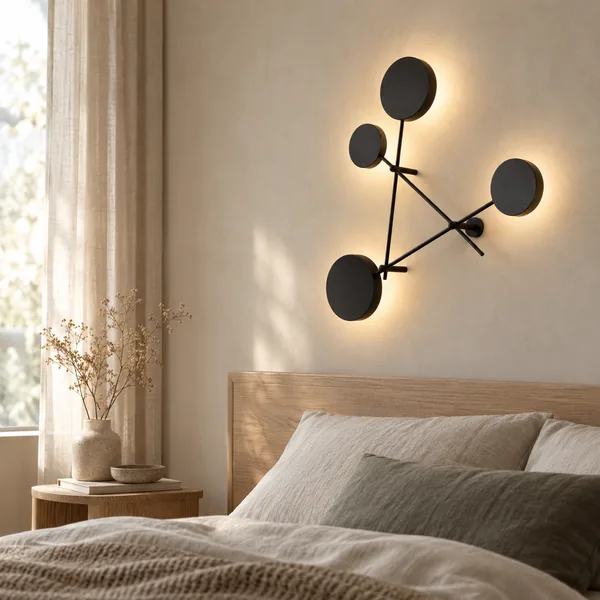 Vindla Geometric LED Wall Lamp Nordic Design$369.00$529.00
Curating a Bauhaus-inspired space reveals connections you might not initially anticipate. The same geometric principles that guide furniture selection inform lighting choices. The industrial materials featured in architecture suggest appropriate metal finishes for decorative objects. This coherence—where every element speaks the same visual language—creates that unmistakable sense of intentional design.
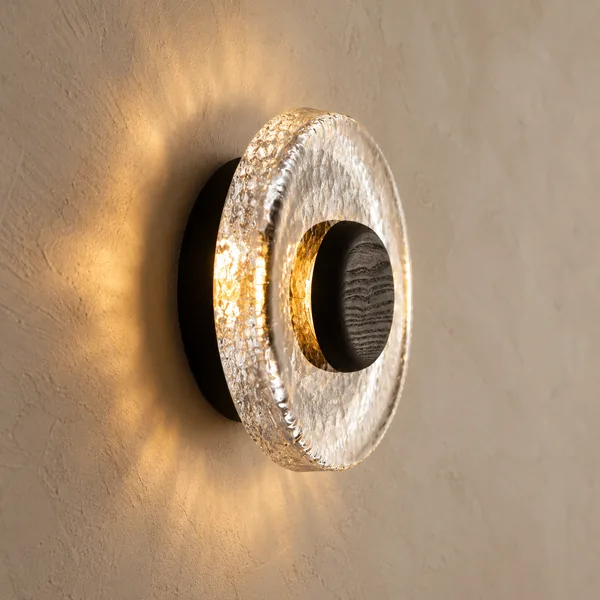
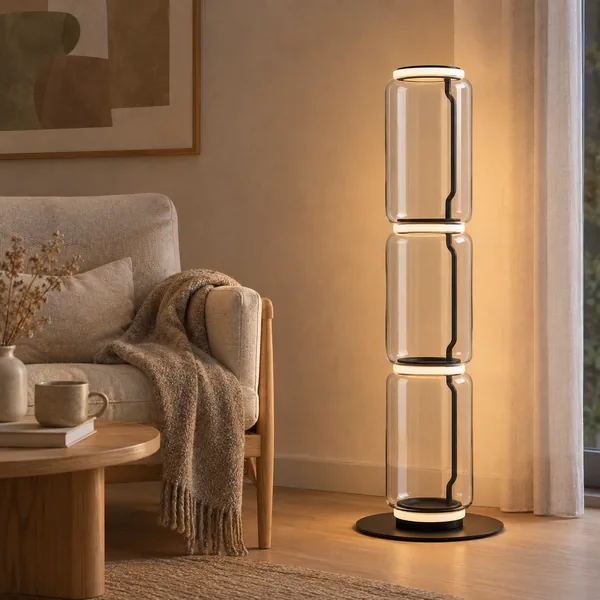
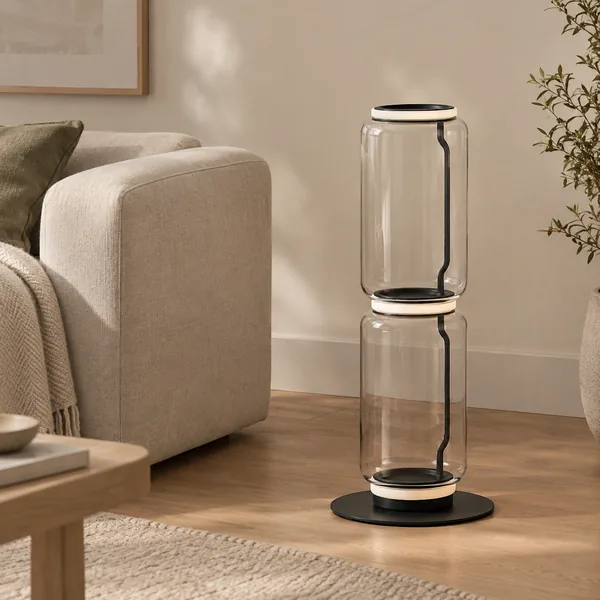
Glass Lighting
Shop all Glass Lighting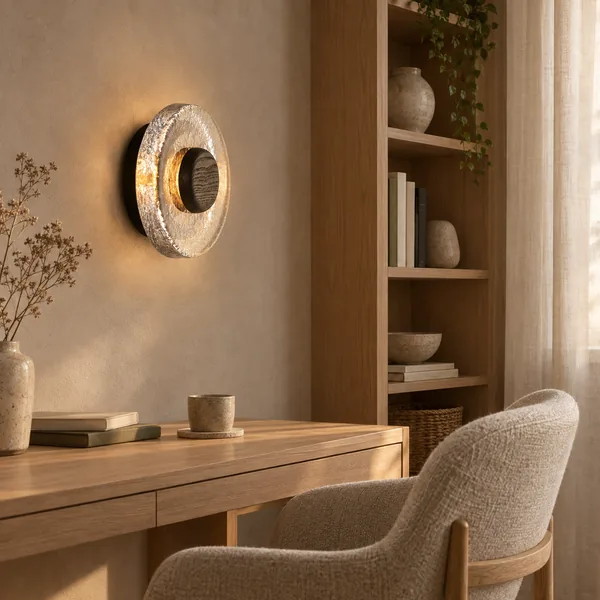
Conclusion: The Enduring Relevance of Bauhaus
Bauhaus interior design transcends mere aesthetic preference—it represents a philosophy about how we should live. By prioritizing function, celebrating honest materials, and embracing geometric purity, we create spaces that serve our daily needs while elevating our spirits. The movement's century-long influence testifies to the universal appeal of this approach.
At Skonne, we've curated collections that honor these timeless principles while meeting contemporary needs for quality and sustainability. Each piece in our selection—from sculptural lighting to architectural timepieces—has been chosen to help you build spaces that feel both historically grounded and perfectly current.
Whether you're taking first steps into modernist design or refining an established aesthetic, remember that authentic style emerges from understanding rather than imitation. Learn the principles, trust your instincts, and select pieces that genuinely resonate with how you want to live. The result will be spaces that feel unmistakably yours—functional, beautiful, and timelessly modern.
Related Article
Mediterranean Interior Design: Sun-Soaked Style, Warm Textures & Timeless EleganceDiscover how to bring sun-soaked Mediterranean style into your home with warm textures, earthy tones, and timeless coastal elegance that transforms any space.