
Dark Academia Interior Design: Moody, Scholarly & Atmospheric Style for Your Home
Summary›
- What Is Dark Academia Interior Design?
- Key Elements of Dark Academia Decor
- Creating the Perfect Color Palette
- Layered Lighting for Scholarly Atmosphere
- Essential Furniture & Textures
- Styling Your Dark Academia Space
- The 3-5-7 Rule in Dark Academia Decorating
- Conclusion: Creating Your Intellectual Sanctuary
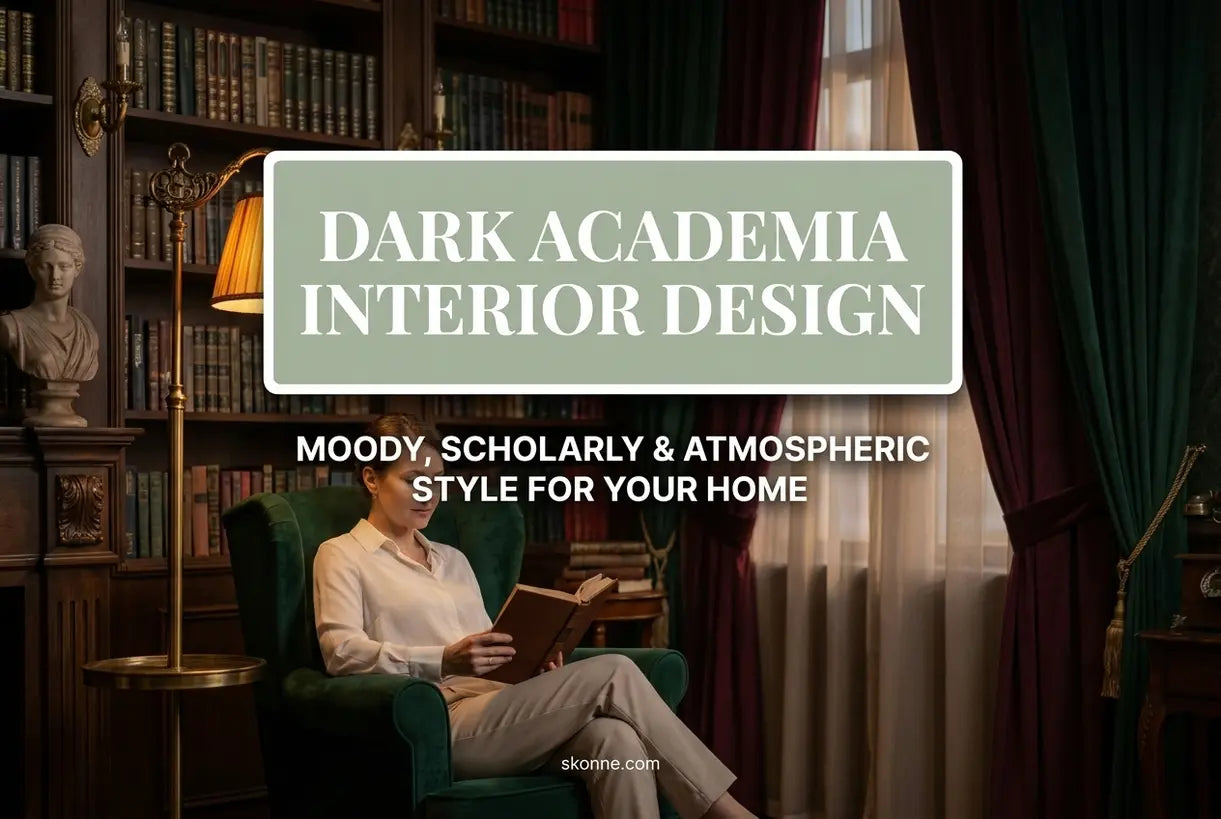
There is something undeniably captivating about spaces that feel steeped in history, wisdom, and quiet contemplation. Dark academia interior design has emerged as one of the most compelling aesthetic movements in contemporary home decor, blending moody sophistication with scholarly charm. This style transcends mere trends—it creates environments that invite you to slow down, get lost in a leather-bound novel, and savor the warmth of amber lamplight against weathered wood.
Whether you are curating your first apartment or transforming a longtime family home, achieving that coveted balance of brooding elegance and intellectual warmth requires intentionality. The right lighting, textures, and antiquarian accents work in harmony to craft spaces that feel both timeless and deeply personal. In this guide, we will explore how to bring this evocative aesthetic into your home, with carefully selected pieces that honor the dark academia philosophy while maintaining the elevated Scandinavian sensibility that defines true quality.
What Is Dark Academia Interior Design?
Dark academia draws its inspiration from the hallowed halls of historic universities, private libraries, and the romanticized image of scholarly life. This aesthetic celebrates the pursuit of knowledge, classical literature, and the tactile beauty of aged materials. Unlike minimalism or stark modernism, dark academia embraces clutter—but the curated, meaningful kind that tells a story.
At its core, moody interior design within the dark academia framework centers on rich, saturated color palettes, layered textures, and lighting that creates atmosphere rather than mere illumination. Think of Oxford reading rooms, Parisian cafes where philosophers once gathered, or the private study of a classical literature professor. These spaces feel lived-in, loved, and intellectually vibrant.
The style has gained remarkable traction among design enthusiasts aged 28-45 who seek refuge from the sterility of digital life. By surrounding themselves with vintage academic aesthetic elements, they create physical sanctuaries that ground them in analog beauty and slow living principles.
Key Elements of Dark Academia Decor
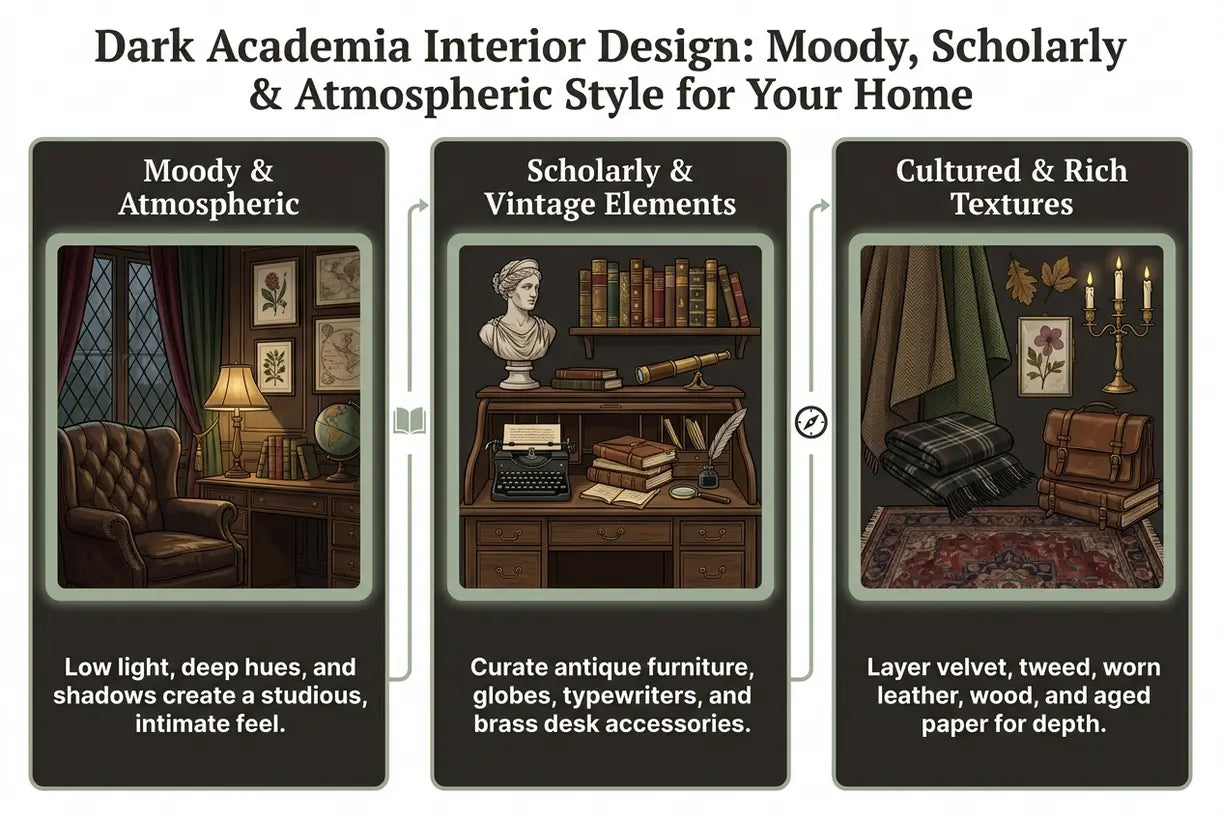
Creating an authentic dark academia environment requires understanding its foundational components. While individual expression remains paramount, certain elements consistently appear in the most successful implementations of this style.
Rich, Saturated Color Palettes
The dark academia color story draws from nature's deepest tones: forest emerald, burgundy wine, midnight navy, and warm caramel. These hues create the cocooning effect that makes scholarly spaces feel so inviting. Walls might wear a coat of charcoal or forest green, while textiles introduce layers of cognac leather, velvet, and wool in complementary shades.
Natural Materials with Patina
Authenticity matters profoundly in old world interior design. Materials should feel organic and age gracefully: solid walnut, brass that develops character over time, distressed leather, and linen that softens with use. New pieces should possess the gravitas of heirlooms, while actual antiques add irreplaceable soul.
Thoughtful Lighting Layers
Lighting in dark academia spaces serves a dual purpose: functionality and atmosphere. The glow should be warm—never harsh or clinical—casting dancing shadows that animate the room. This is where your Desk Lamps become essential tools, providing focused pools of light for reading while contributing to the overall moody ambiance.
Creating the Perfect Color Palette
Understanding color theory elevates dark academia from costume to sophisticated interior statement. The palette operates on three tiers: your foundational neutrals, your dominant moody hues, and your accent metallics.
Foundation colors anchor the space—think warm greige, deep charcoal, or olive-tinted neutrals. These provide the backdrop upon which everything else layers. Dominant colors introduce personality: perhaps a burgundy velvet sofa or forest green drapery. These should appear in significant pieces that command attention.
Finally, accent metallics—primarily brass, bronze, and aged gold—add warmth and refinement. These metallic notes catch the light and provide visual relief from darker tones. When selecting lighting fixtures, prioritize those with substantial brass elements that will develop a living finish over time.
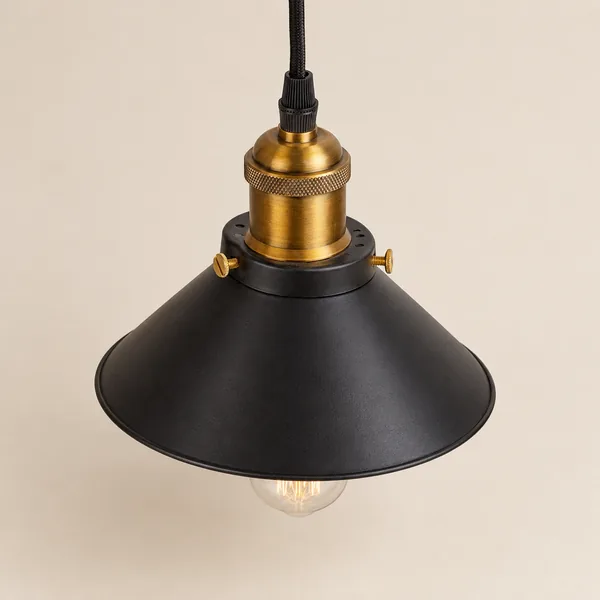
Pendant Lights
Shop all Pendant Lights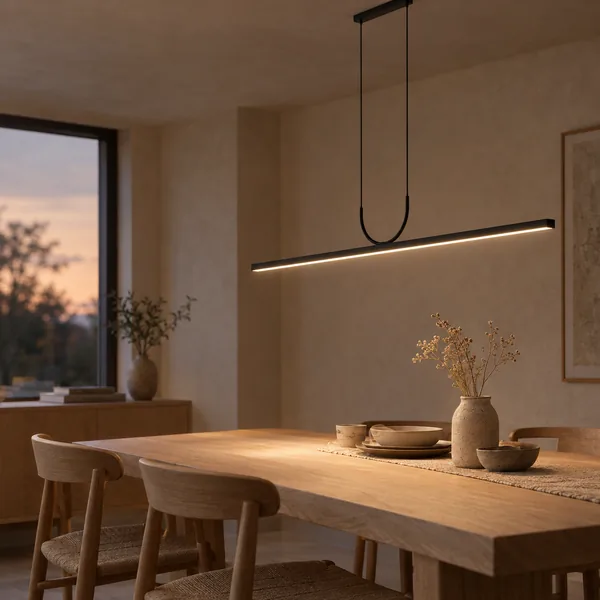
 Save $140.00
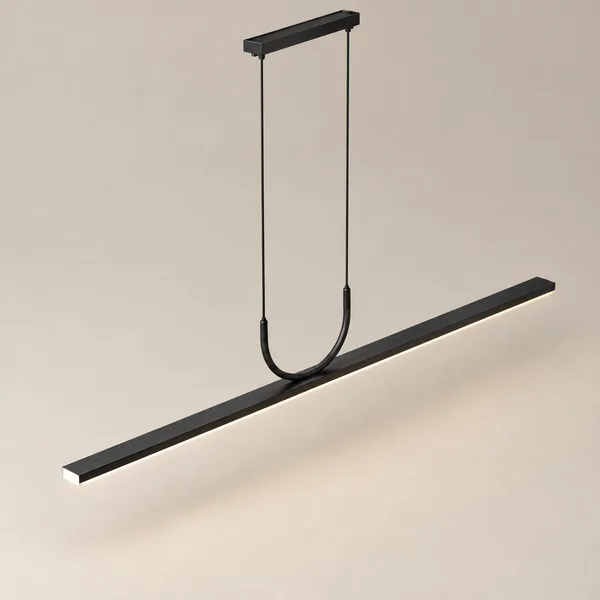
Linné Minimalist Linear Black LED Pendant Light
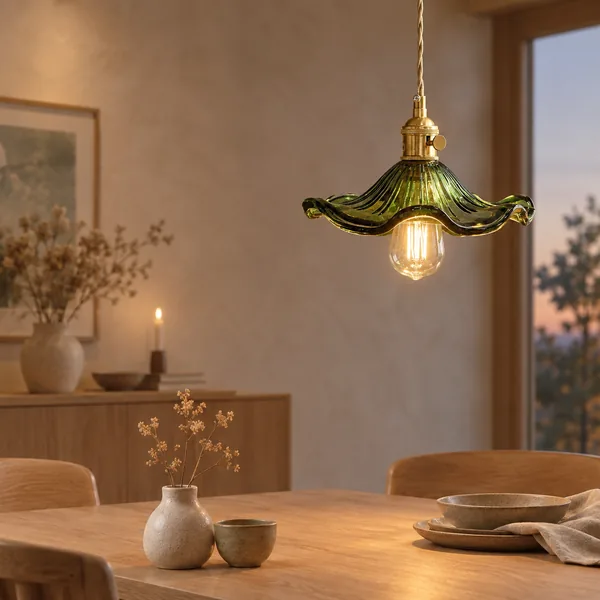
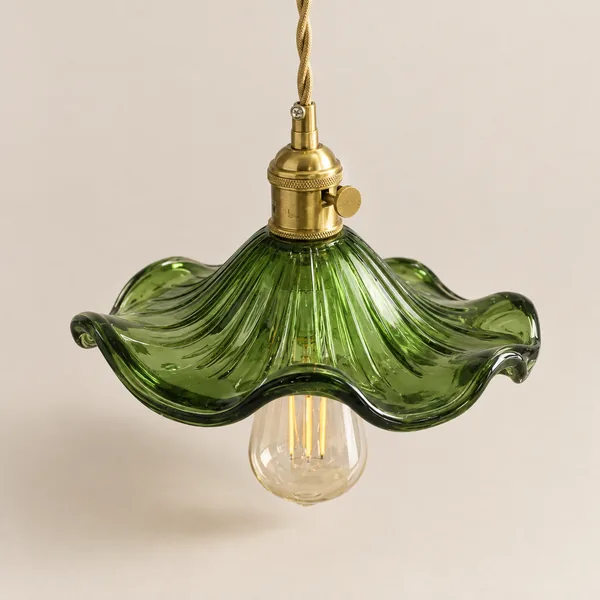 Save $60.00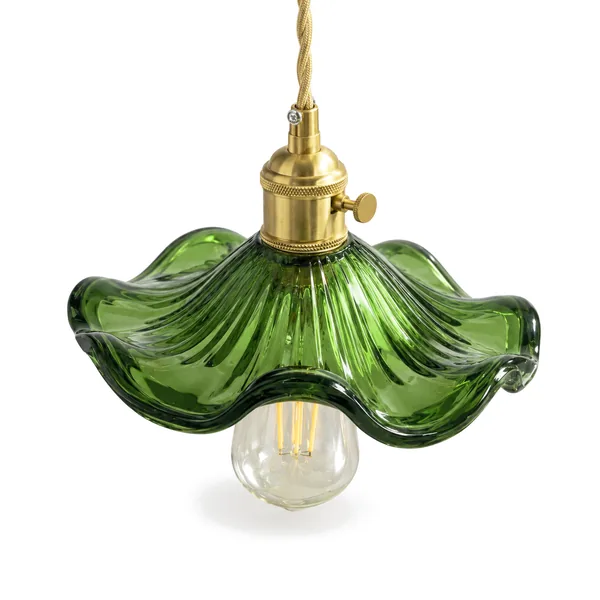
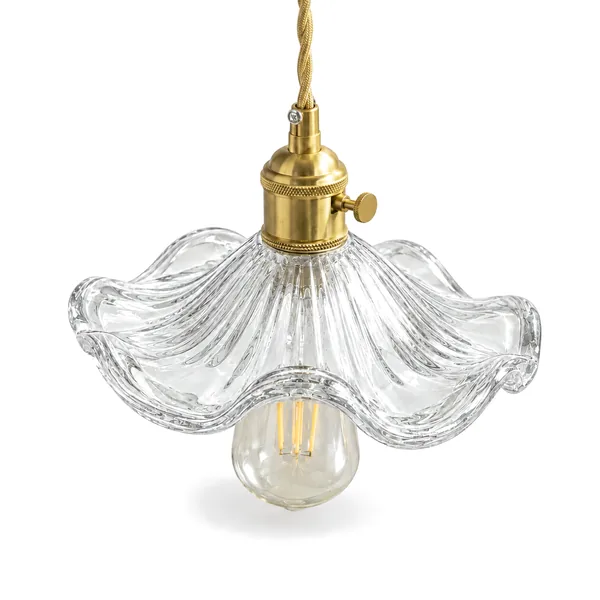
 3 options
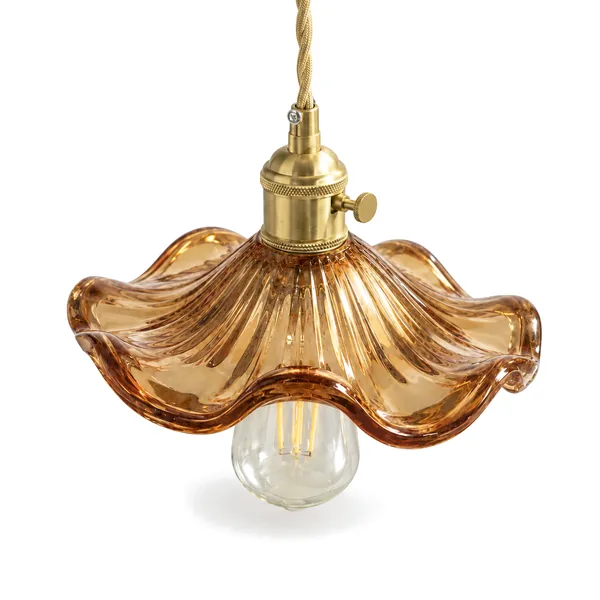
Glora Nordic Glass Pendant Light with Copper
 Save $120.00
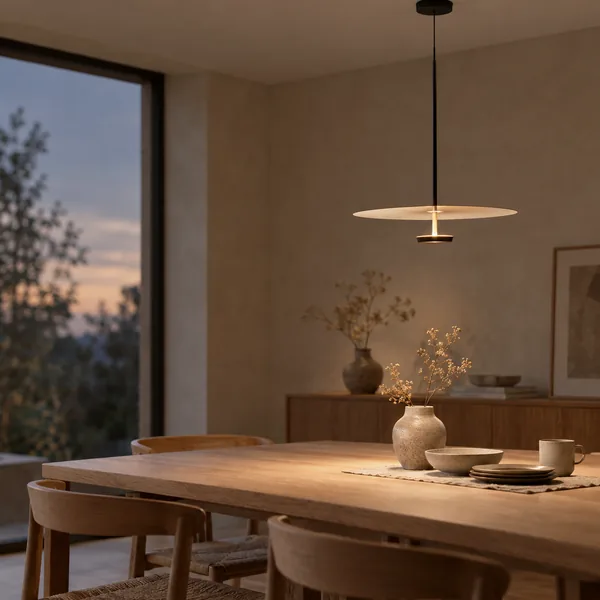
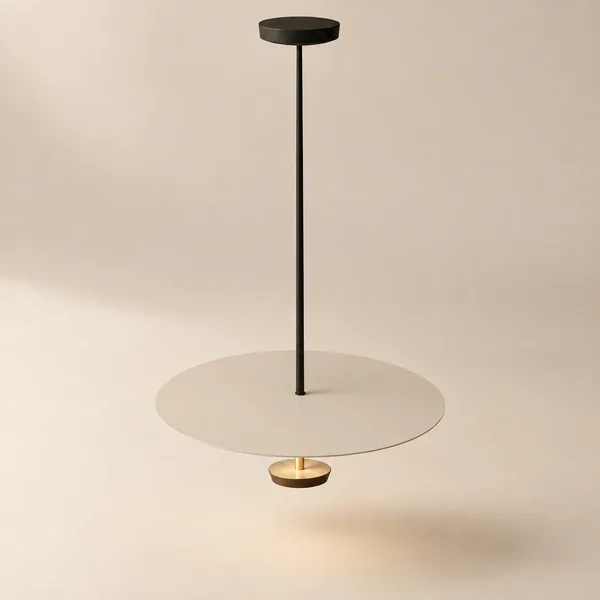
Skiva Nordic Saucer Ceiling Pendant Light LED
Layered Lighting for Scholarly Atmosphere
The most successful bookish home aesthetic spaces understand that lighting creates emotion. Dark academia rejects overhead fluorescent tubes in favor of intimate, layered illumination that flatters both the room and its occupants.
Begin with ambient lighting that washes walls in warmth. Then add task lighting for specific activities—reading, writing, or studying. Finally, incorporate accent lighting to highlight beloved objects: perhaps a first edition collection or an antique globe.
The Gloda Walnut Brass French Style Pendant Light exemplifies this philosophy perfectly. Casting a soft amber warmth over your scholarly space, this French vintage pendant features rich walnut wood and polished brass accents. The combination of materials speaks to dark academia's love of natural elements, while the warm light color temperature creates that coveted golden-hour ambiance regardless of the time of day.
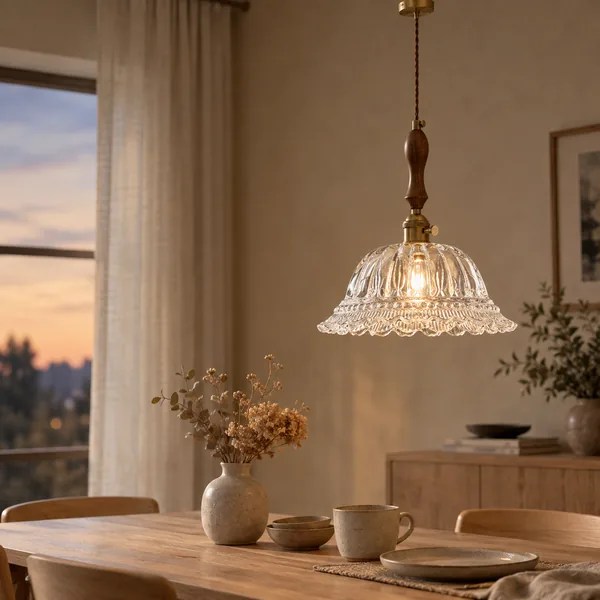 Gloda Walnut Brass French Style Pendant Light$169.00$229.00
When installing pendant lighting in a dark academia space, consider the hanging height carefully. Lower placements create intimacy and pool light exactly where needed, while higher installations provide broader ambient coverage. The Gloda pendant's brass accents will complement other metallic elements in your room, creating visual cohesion.
Essential Furniture & Textures
Beyond lighting, dark academia demands furniture with presence and history. This is not the realm of disposable flat-pack furniture, but rather pieces that grow more beautiful with age and use.
The Statement Reading Chair
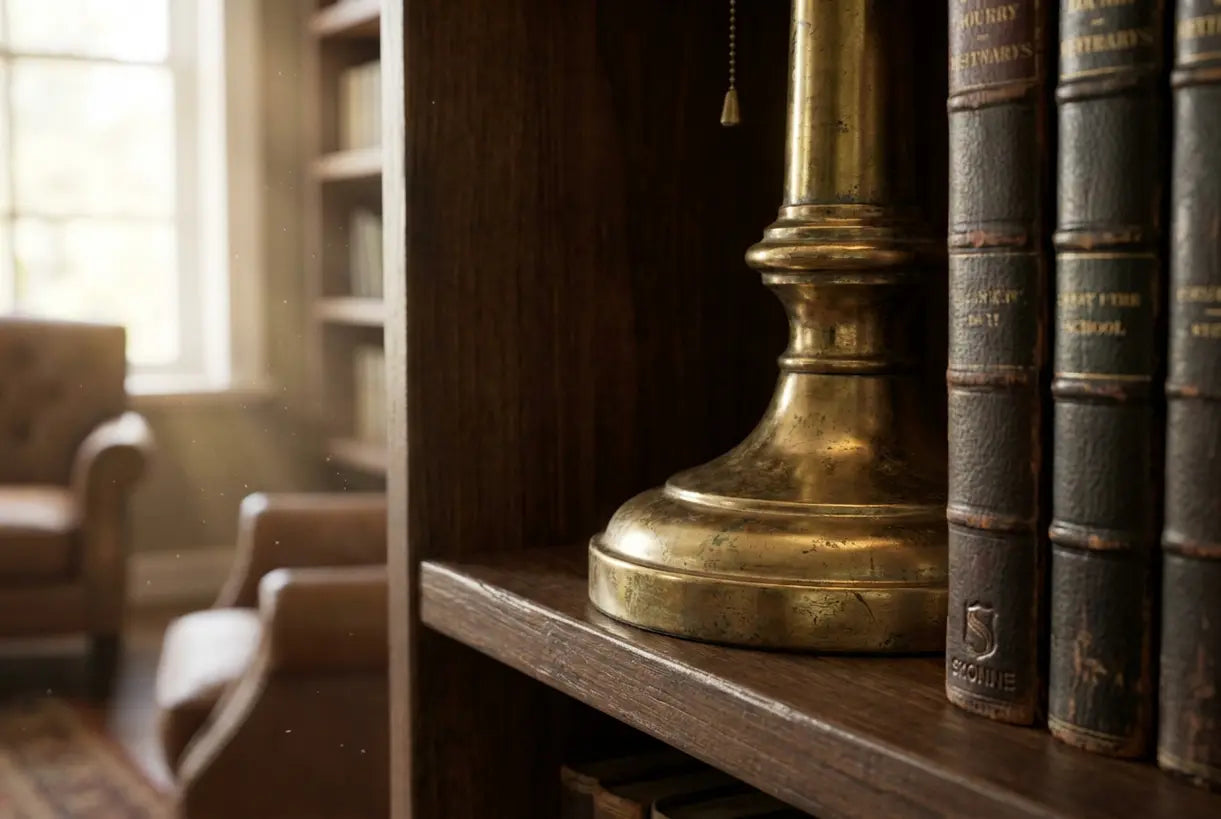
Every scholarly space needs a throne for contemplation. Look for leather wingback chairs, velvet club chairs in deep jewel tones, or button-tufted settees that invite hours of reading. The patina that develops on quality leather over time adds immeasurable character—each crease and mark tells the story of books consumed and ideas pondered.
The Written Word as Decor
In library inspired decor, books transcend their functional purpose to become design objects. Display leather-bound classics, vintage textbooks with marbled endpapers, and poetry collections with gilded edges. Stack them horizontally and vertically. Let them pile on tables and line every available wall. These are not props but invitations to intellectual discovery.
Textural Contrast
The most sophisticated dark academia spaces layer textures to prevent the moody palette from feeling flat. Combine smooth leather with nubby tweed, polished wood with raw stone, and heavy velvet with delicate lace. This tactile variety engages the senses and creates visual depth that keeps the eye moving through the space.
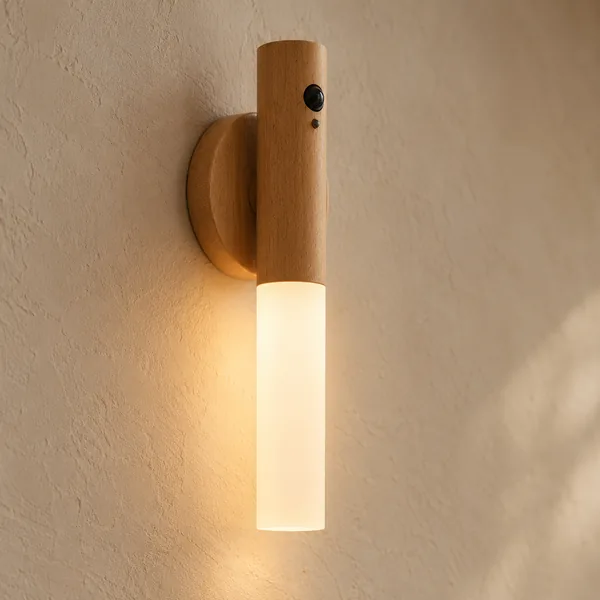
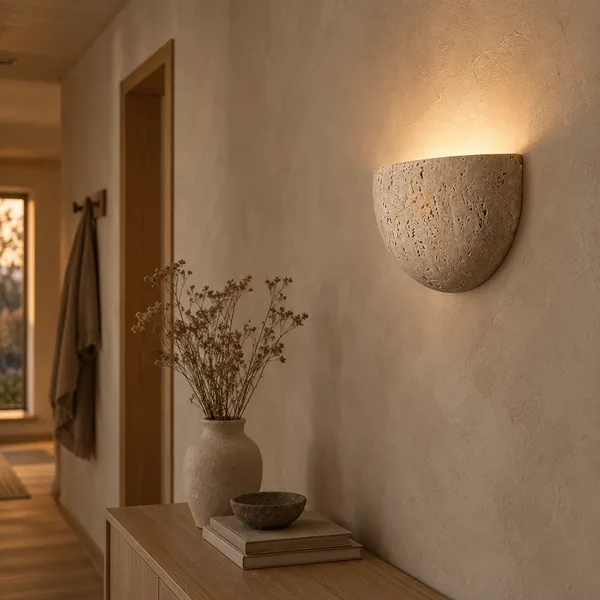
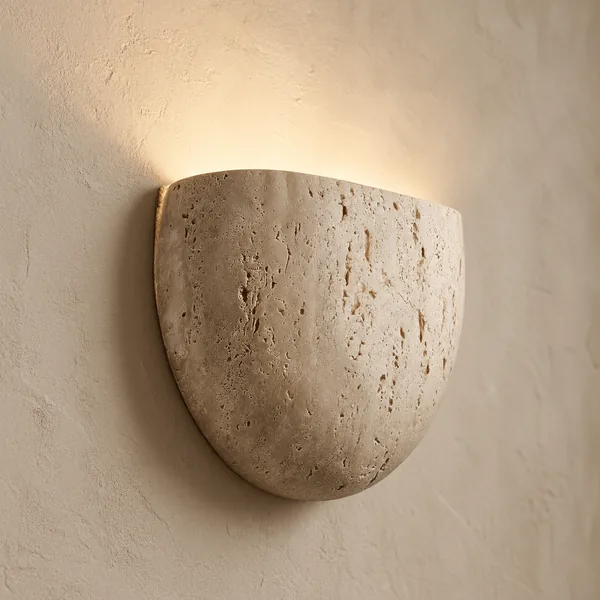
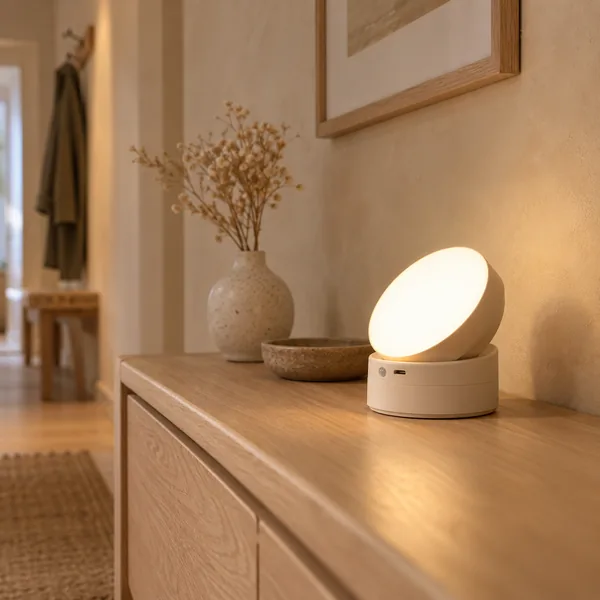
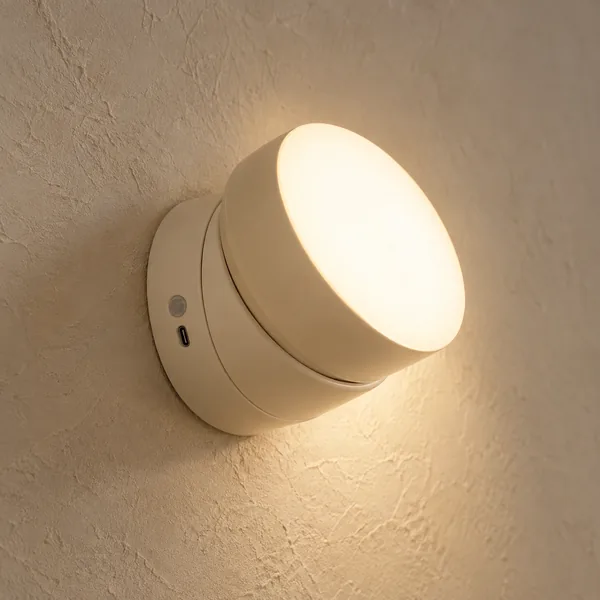
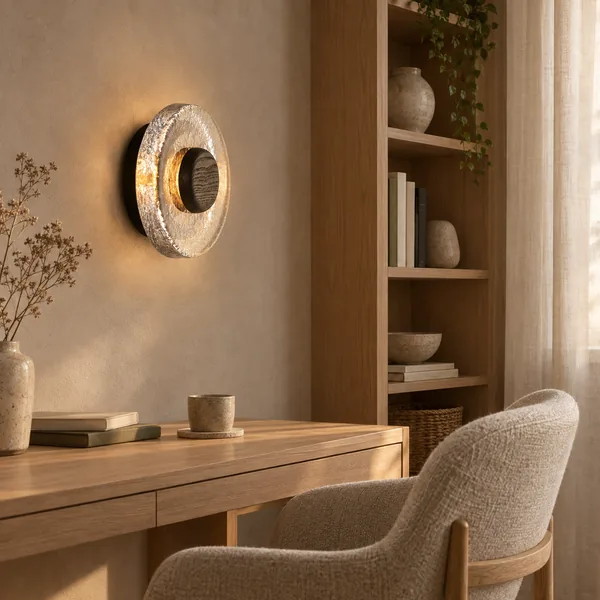
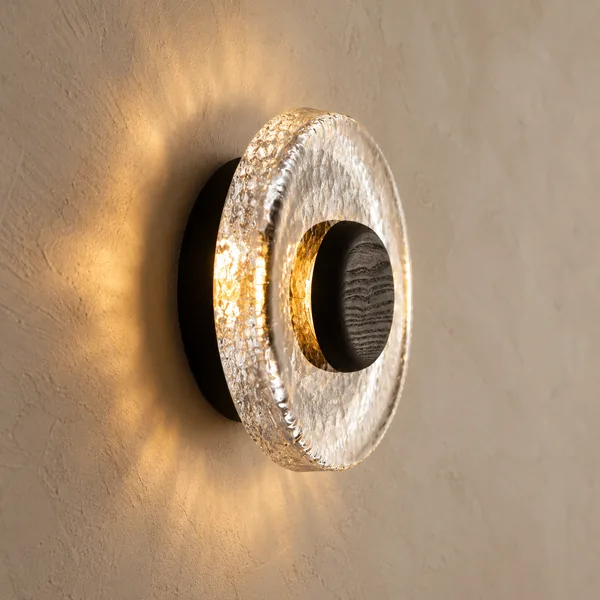
Wall Lights
Shop all Wall Lights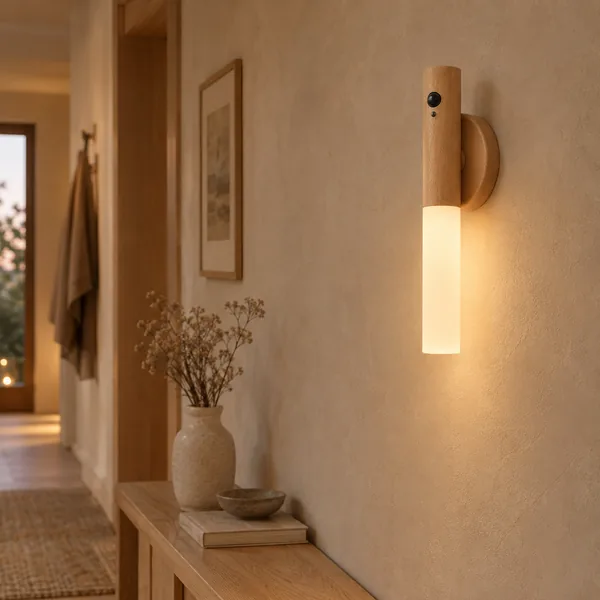
Styling Your Dark Academia Space
Implementation requires balance. The goal is scholarly sanctuary, not theatrical set. Start with one room—typically a study, library, or bedroom—and build your aesthetic deliberately.
Wall Treatments & Architectural Detail
If architecture permits, consider wall treatments that add depth: wainscoting, picture molding, or built-in shelving painted in moody hues. For rentals or simpler spaces, removable wallpaper in damask, toile, or geometric patterns provides similar gravitas without permanence.
Curated Collections
Dark academia celebrates the accumulation of meaningful objects: brass telescopes, ceramic busts, apothecary bottles, vintage clocks, and botanical prints. Display these collections on mantels, in glass-fronted cabinets, or clustered on side tables. The key is curation—each object should feel chosen rather than accumulated randomly.
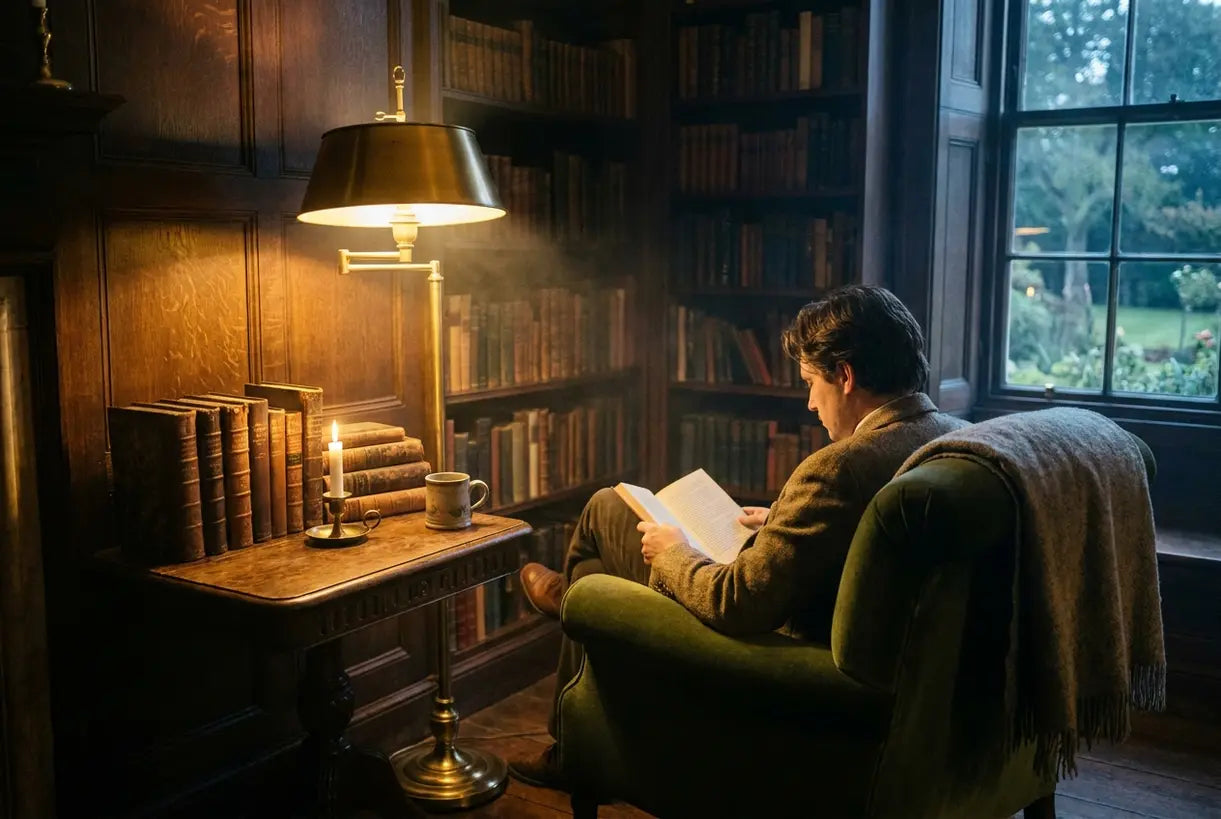
The Kveld Adjustable LED Wall Sconce Mid-Century adds vintage brass charm to reading nooks with its adjustable design available in charcoal or gold finishes. Perfect for focused ambient lighting, this sconce allows you to direct illumination exactly where needed—whether highlighting a favorite passage or providing task lighting for handwritten correspondence.
For grander spaces, the Ravglo Handcrafted Amber Stained Glass Chandelier makes an unforgettable statement. Its hand-cut amber glass panels cast a honeyed radiance worthy of any grand library or moody dining room. This piece transforms ordinary meals into experiences and ordinary evenings into occasions.
Perfect Lighting for Your Scholarly Sanctuary
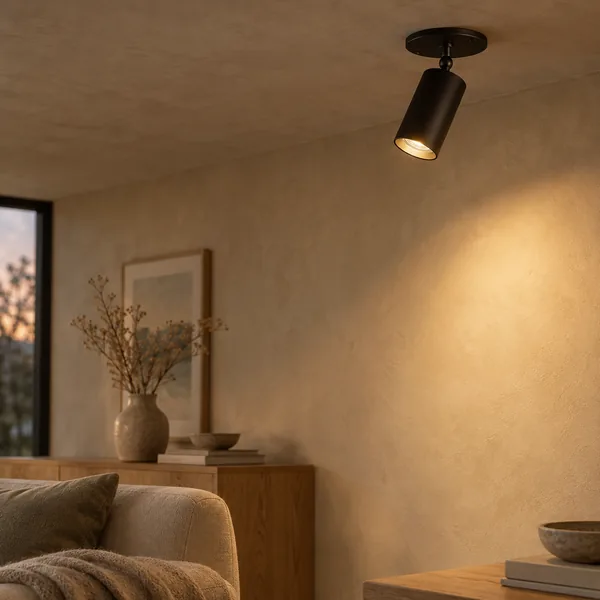 Kveld Adjustable LED Wall Sconce Mid-Century$259.00$399.00
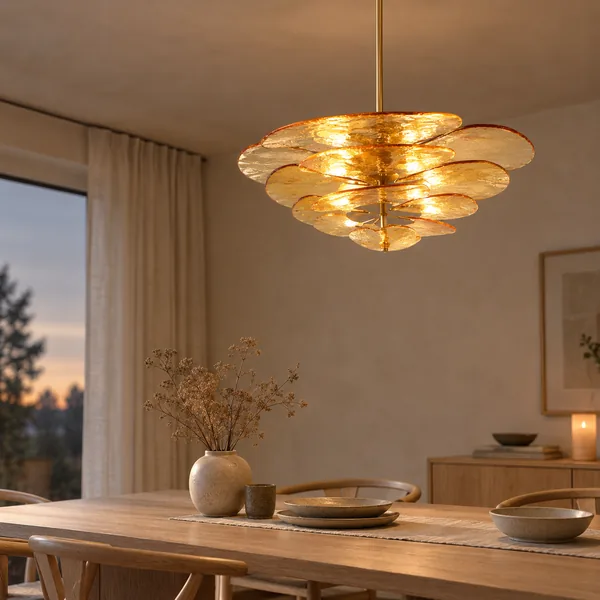 Ravglo Handcrafted Amber Stained Glass Chandelier$899.00$1,389.00
The 3-5-7 Rule in Dark Academia Decorating
The 3-5-7 rule provides a framework for arranging decorative objects without creating visual chaos—particularly important in dark academia spaces where collections can quickly overwhelm. The principle suggests arranging items in odd numbers: 3, 5, or 7 objects grouped together. These asymmetrical arrangements feel more dynamic and natural than even-numbered groupings.
When applying this to gothic academic style spaces, vary the heights and textures within each grouping. Perhaps three brass candlesticks of graduated heights, or five leather-bound books topped with a small ceramic vase. The rule prevents the cluttered look that can plague maximalist aesthetics while still allowing for generous display of beloved objects.
Lighting should also follow compositional principles. When hanging multiple pendants or arranging lamps, think in odd numbers and triangular arrangements. This creates visual hierarchy and guides the eye through the room in pleasing ways.
Conclusion: Creating Your Intellectual Sanctuary
Dark academia interior design offers something increasingly rare in contemporary life: permission to slow down, to surround yourself with beauty that has history, and to create spaces that honor the life of the mind. This aesthetic is not about perfection but about authenticity—the accumulation of objects, books, and experiences that reflect your intellectual journey.
The key to success lies in thoughtful layering: rich colors that cocoon, textures that invite touch, and lighting that transforms ordinary moments into cinematic experiences. Each piece should earn its place through beauty, function, or meaning—preferably all three.
At Skonne, we believe that lighting forms the soul of every room. Our curated collection of Scandinavian-inspired fixtures honors the same principles that guide dark academia design: quality materials that age gracefully, warm light that flatters and comforts, and designs that feel both timeless and distinctly personal. Whether you are drawn to the Gloda Walnut Brass French Style Pendant Light for its vintage charm, the Kveld Adjustable LED Wall Sconce for its reading nook perfection, or the Ravglo Handcrafted Amber Stained Glass Chandelier for its statement-making presence, each piece has been selected to elevate your scholarly sanctuary.
Begin your transformation today. After all, the best ideas deserve a beautiful setting in which to flourish.
Related Article
Postmodern Interior Design: Bold, Playful & Rule-Breaking Style for the Daring DecoratorExplore postmodern interior design - a bold, playful style that breaks rules with vibrant colors, geometric shapes and expressive decor personality.