
Farmhouse Wall Clocks: Charming Designs for Country-Inspired & Rustic-Modern Homes
Summary›
- What Defines a Farmhouse Wall Clock?
- Farmhouse Wall Clock Styles: From Vintage to Modern
- What Size Farmhouse Wall Clock Should I Buy?
- What Materials Are Best for Farmhouse Clocks?
- How Do I Style a Modern Farmhouse Clock?
- Where Not to Put a Wall Clock?
- Are Wall Clocks Still in Style?
- Bringing Farmhouse Character Home
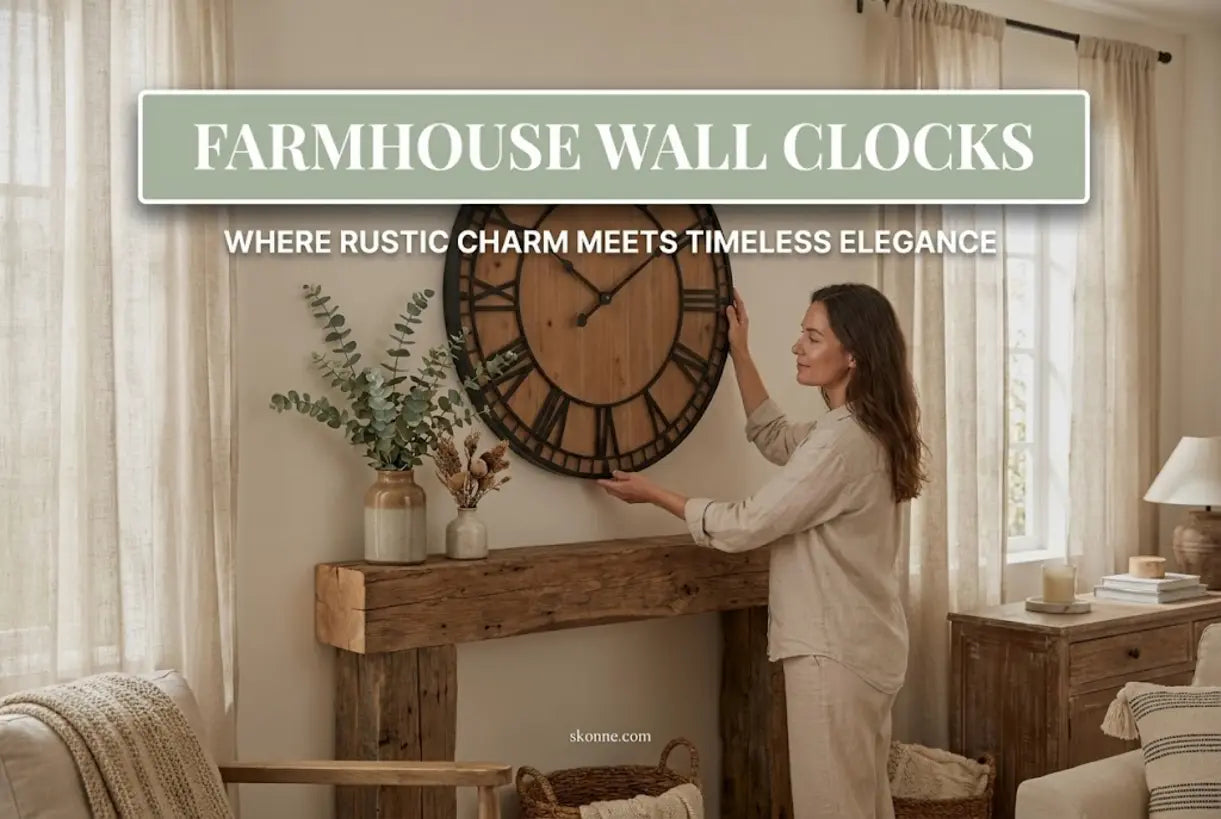
There's something undeniably charming about a farmhouse wall clock adorning a country-inspired home. Perhaps it's the gentle reminder to slow down and savor life's simple moments, or the way weathered wood and vintage details instantly warm a space. At Skonne, we believe that timepieces should do more than tick—they should transform your environment into a sanctuary of comfort and intentional design.
Whether you're drawn to the Joanna Gaines aesthetic of shiplap and distressed finishes, or you prefer a more refined modern farmhouse clock with clean Scandinavian lines, this guide will help you navigate sizing, materials, styling, and placement. By the end, you'll understand exactly how to choose the perfect rustic timepiece that speaks to your personal style.
What Defines a Farmhouse Wall Clock?
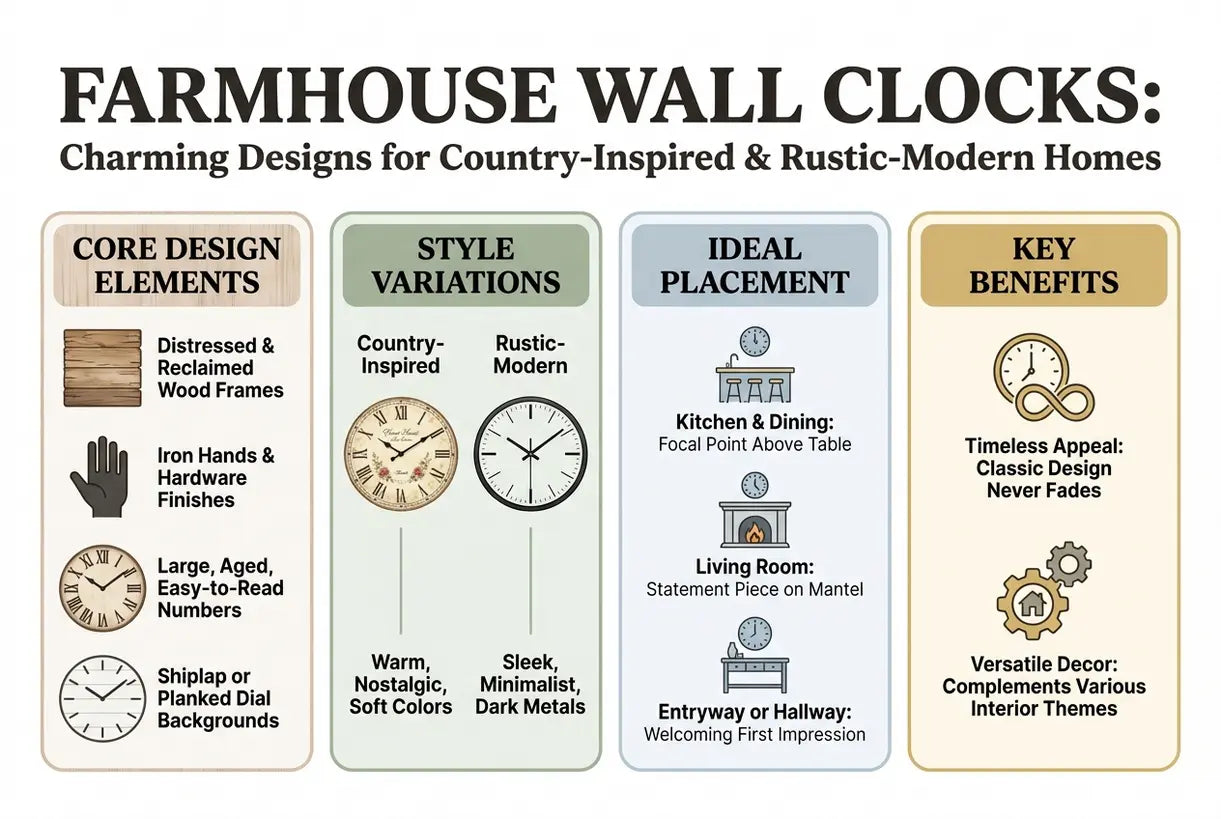
A true farmhouse wall clock embraces imperfection and celebrates natural materials. Unlike sleek, minimalist contemporary designs, farmhouse clocks carry character—nicks in the wood, faded paint, hardware that tells a story. They embody the Scandinavian concept of hygge: creating cozy, contented environments where functionality meets emotional warmth.
The farmhouse aesthetic draws from rural American heritage while incorporating European country influences. Think barn wood reclaimed from century-old structures, Roman numerals that recall antique train station clocks, and oversized faces that command attention without overwhelming a room. These pieces serve as functional art, anchoring living spaces with organic texture and nostalgic appeal.
Farmhouse Wall Clock Styles: From Vintage to Modern
Understanding the spectrum of farmhouse clock styles helps you narrow down the perfect match for your home's personality.
Vintage Farmhouse Wall Clocks
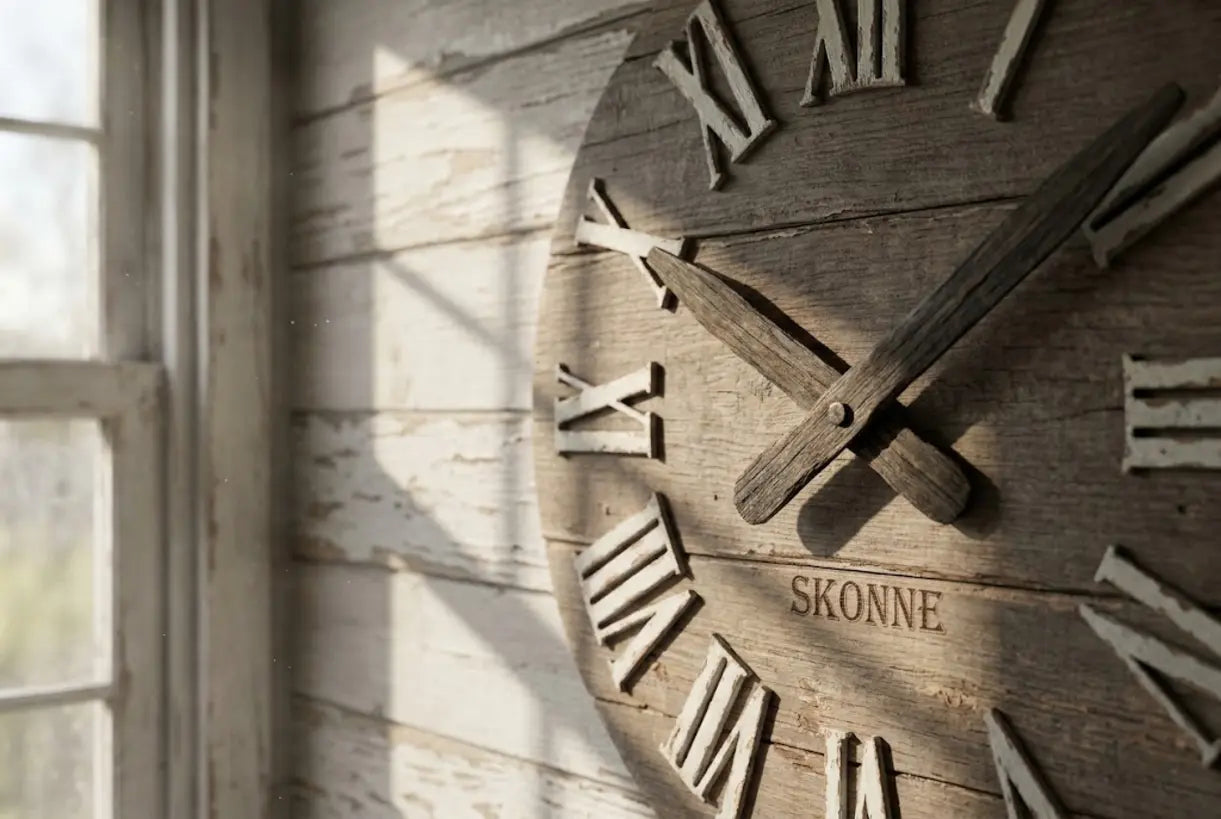
These timepieces channel authentic antique charm with weathered finishes, exposed hardware, and often genuine aged materials. A vintage farmhouse wall clock might feature oxidized metal hands, cream-colored distressed faces, or genuine barn wood frames that have witnessed decades of history. The appeal lies in their unrepeatable patina—no two pieces age identically.
Modern Farmhouse Clocks
The modern farmhouse clock interprets rustic elements through a contemporary lens. These designs often feature cleaner lines, more uniform finishes, and simplified numerals or markings. The color palette tends toward crisp whites, soft grays, and matte blacks rather than the warmer, more varied tones of truly vintage pieces. This style works beautifully in homes that blend farmhouse warmth with Scandinavian minimalism.
The Rustic Middle Ground
Most clock designs fall somewhere between pure vintage and modern interpretations. A rustic clock might combine traditional craftsmanship with updated sizing for today's open floor plans, or merge classic Roman numerals with a streamlined frame. This versatility makes rustic farmhouse clocks the most popular choice for homeowners seeking timeless appeal that transcends specific trend cycles.
What Size Farmhouse Wall Clock Should I Buy?
Selecting the right dimensions is perhaps the most critical decision after choosing your style. An ill-proportioned clock can throw off an entire room's visual balance, while the perfect size creates harmony and draws the eye exactly where intended.
The 30-Inch Sweet Spot
For most living rooms and dining spaces, a 30 inch wall clock hits the ideal balance between presence and proportion. This size makes a statement without demanding complete wall dominance—roughly the visual weight of a medium-sized piece of artwork. In standard 8-9 foot ceiling rooms, a 30-inch clock positioned at eye level creates natural visual flow.
Oversized Statement Pieces
If your home features vaulted ceilings, large open-concept living areas, or expansive two-story walls, consider an oversized farmhouse wall clock. These statement pieces, typically 36 inches or larger, serve as architectural elements that fill vertical space and create dramatic focal points. In great rooms with 12+ foot ceilings, a clock under 30 inches can appear lost and insignificant.
Small Spaces and Gallery Walls
Not every farmhouse clock needs to dominate. Smaller kitchens, reading nooks, and bedroom sitting areas often benefit from modest 18-24 inch clocks that complement rather than compete. These sizes also work beautifully as anchors in gallery wall arrangements, where they provide functional contrast to purely decorative pieces.
Decorative Wall Clocks
Shop all Wall Clocks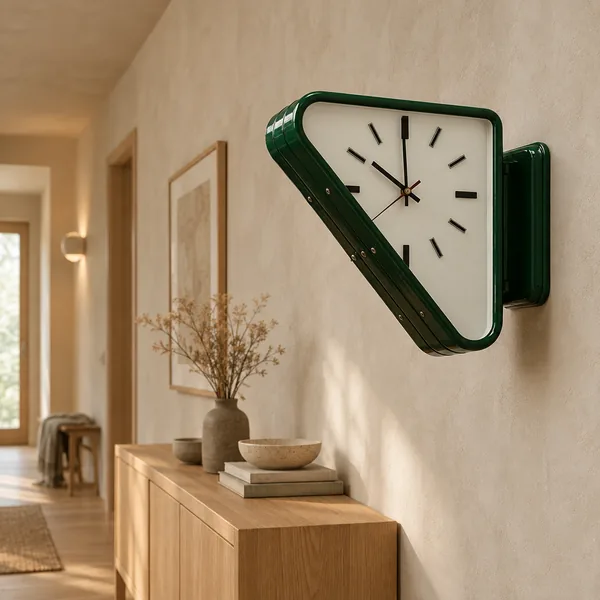
 Save $110.00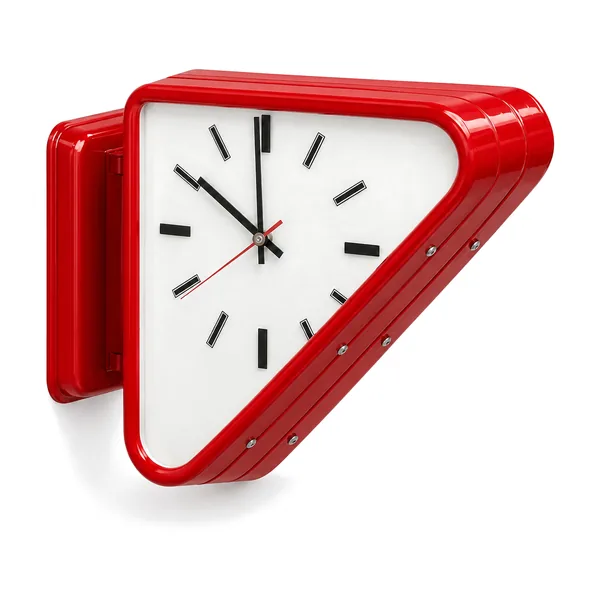
 +15 options
Tvilling Dual-Sided Geometric Metal Wall Clock
 Save $70.00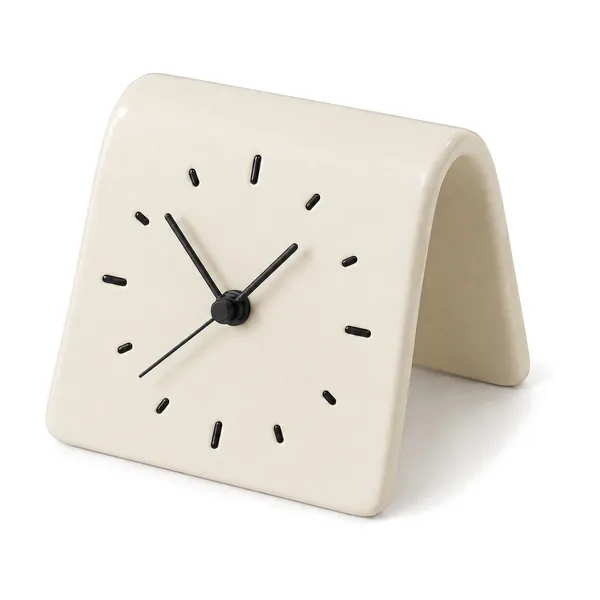
 +37 options
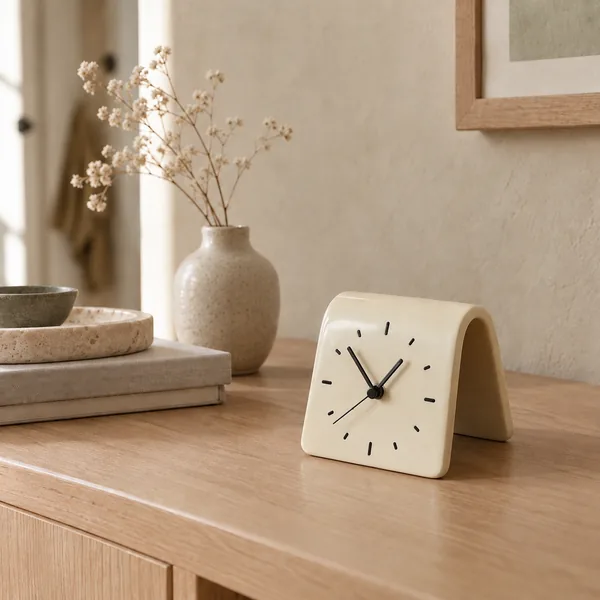
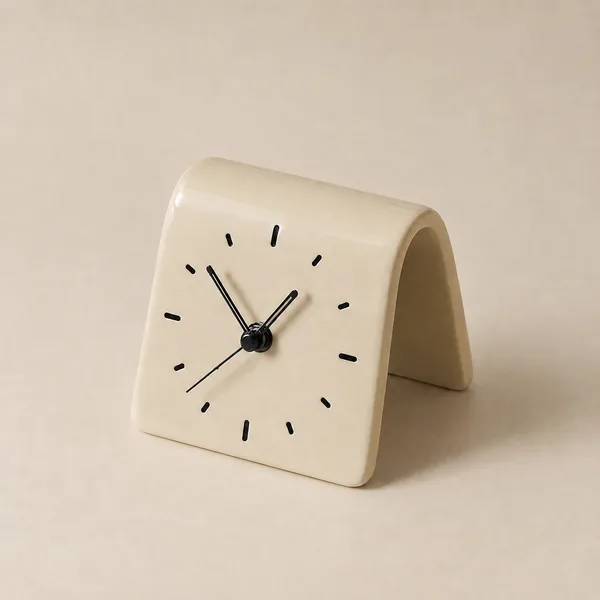
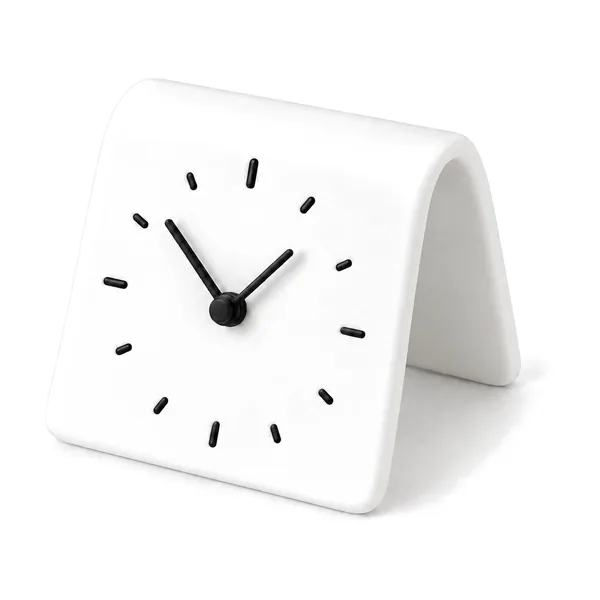
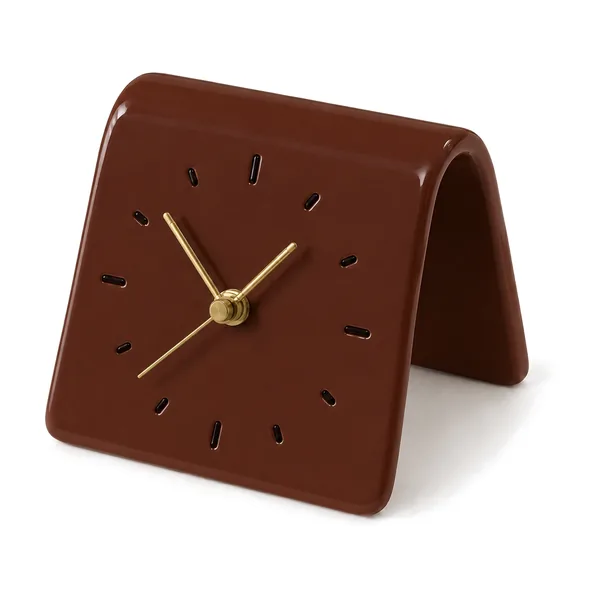
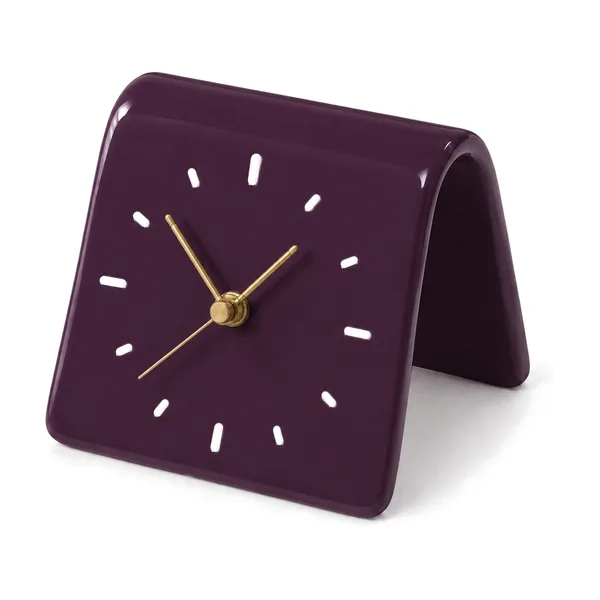
Tilje Silent Ceramic Desk Clock for Modern Homes
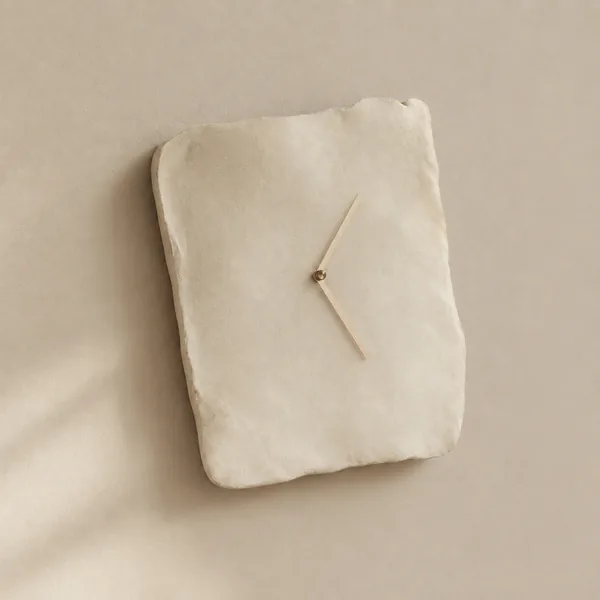
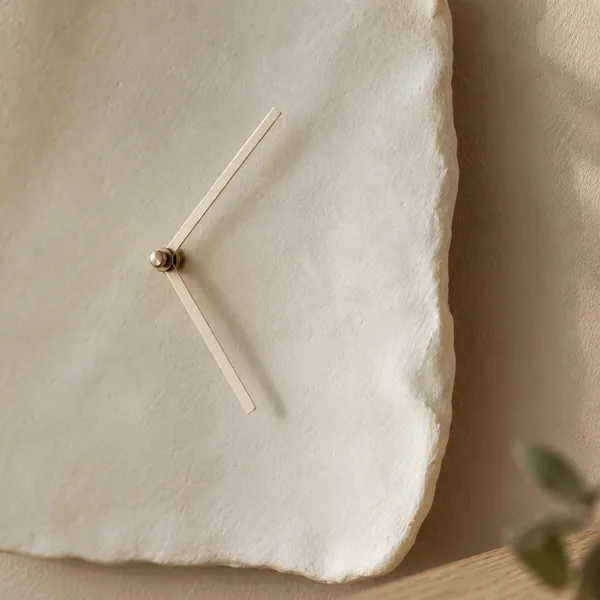 Save $120.00
Stilla Silent Resin Wall Clock Nordic Minimalist
What Materials Are Best for Farmhouse Clocks?
The tactile quality of your clock's materials significantly impacts both aesthetics and longevity. Understanding the characteristics of different materials helps you make an informed investment.
Distressed Wood Clocks
A distressed wood clock represents the quintessential farmhouse choice. Pine, oak, and reclaimed barn wood each offer distinct personalities—pine carries soft, honeyed tones; oak brings pronounced grain and heft; authentic reclaimed lumber carries the patina of age that's impossible to replicate. When selecting wood, consider humidity levels in your space, as solid wood expands and contracts with seasonal changes.
Shiplap and Panel Designs
The shiplap clock emerged as a farmhouse staple through the modern fixer-upper movement. These designs feature the overlapping wooden plank construction associated with coastal and rural American architecture. Beyond pure aesthetics, shiplap construction adds textural depth that catches light beautifully throughout the day, creating subtle shadow play that animates your wall.
Metal and Mixed Media
Iron, galvanized steel, and brass accents bring industrial farmhouse character to timepiece designs. Mixed-material clocks combine wood frames with metal numerals or hands, achieving visual complexity while maintaining the warmth essential to farmhouse style. Brass elements have made a significant comeback in modern farmhouse interpretations, offering sophisticated warmth that complements both traditional and contemporary interiors.
How Do I Style a Modern Farmhouse Clock?
Placement and surrounding context determine whether your clock becomes a stunning focal point or merely wall decoration. Thoughtful styling elevates the ordinary to the extraordinary.
Solo Statement Placement
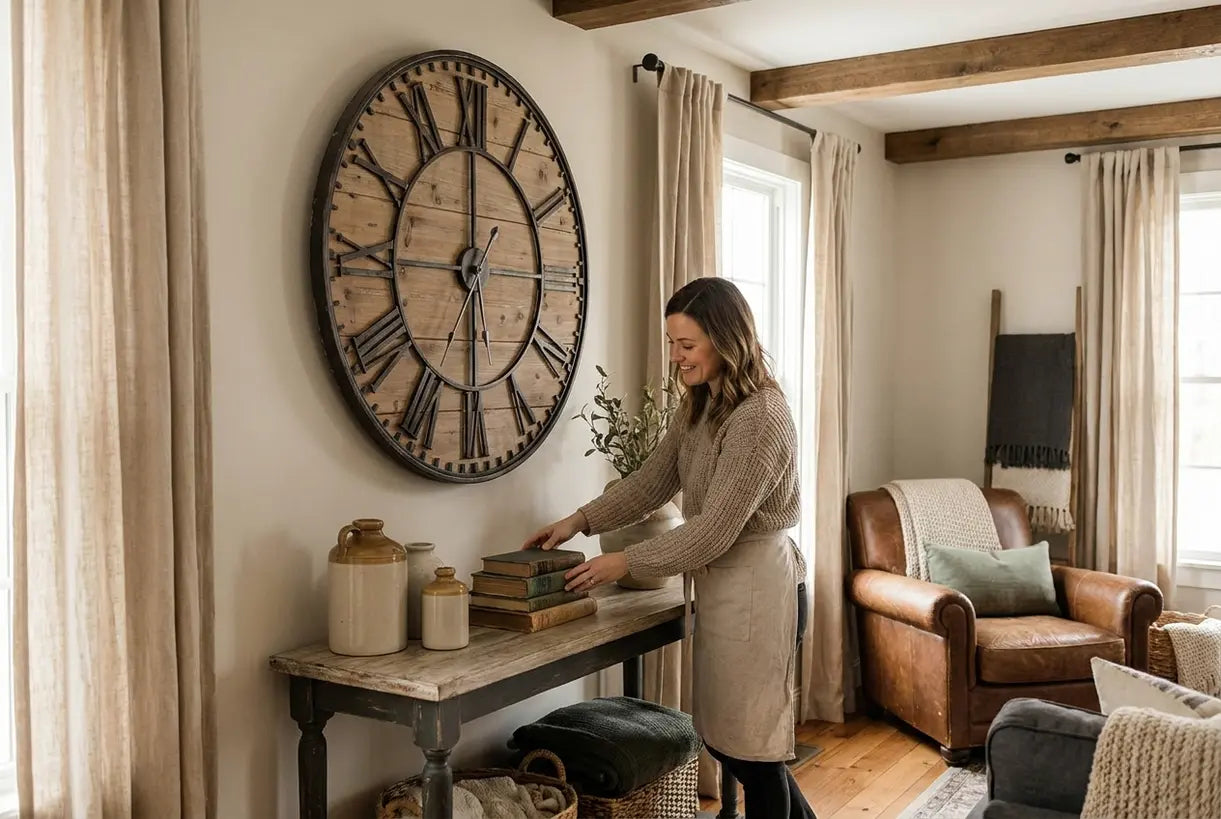
The most impactful approach positions your farmhouse wall clock as the singular hero of a wall. Center it above a mantel, console table, or sofa at eye level—typically 57-60 inches from the floor. Allow generous breathing room on all sides; a good rule of thumb is that your clock should have at least half its diameter in empty wall space surrounding it. This isolation draws attention and emphasizes the clock's sculptural qualities.
Gallery Wall Integration
If you prefer collected, layered aesthetics, integrate your clock into a gallery wall arrangement. Position it slightly off-center to create visual tension, and surround it with complementary pieces: botanical prints, vintage mirrors, woven wall hangings, or black-and-white photography. Maintain a cohesive 2-3 inch spacing between all elements, and consider your clock the anchor that grounds the composition's energy.
Complementary Lighting
Lighting dramatically affects how your clock reads throughout the day. Natural light highlights wood grain and texture, while warm artificial lighting creates evening ambiance that enhances farmhouse coziness. For those looking to explore more options, our Glass Pendant Lights collection offers fixtures that pair beautifully with rustic timepieces, casting illumination that brings out the warmth in distressed wood and aged metal details.
Creating Cohesive Vignettes
Below your wall clock, create intentional surface styling that echoes its character. A weathered console beneath a vintage clock might hold rustic candleholders, stacked books, and a simple ceramic vase. The goal is creating conversation between elements—your clock shouldn't exist in isolation but rather as part of a broader design narrative that flows through your space.
Tilje Silent Ceramic Desk Clock for Modern Homes$89.00$159.00The Tilje Silent Ceramic Desk Clock offers a beautiful bridge between farmhouse warmth and Scandinavian restraint. Its ceramic body in cream and matte brown tones references rustic materials while maintaining a refined, modern silhouette. The silent movement mechanism eliminates distracting ticking—perfect for creating the peaceful, hygge atmosphere farmhouse styling aspires to achieve. Place it on a entryway console, bedside table, or kitchen windowsill where its quiet presence soothes the space.
Where Not to Put a Wall Clock?
Placement mistakes can undermine even the most beautiful farmhouse wall clock. Understanding spatial limitations helps you avoid common errors.
Avoid Direct Sunlight Exposure
Prolonged direct sunlight damages wood finishes, fades clock faces, and can warp mechanisms over time. While natural light enhances your clock's appearance, position it where sunlight creates gentle illumination rather than harsh, constant exposure. East-facing walls often work beautifully, catching morning light without the intensity of afternoon sun.
Steer Clear of High Humidity Areas
Bathrooms and unventilated kitchens present challenges for wood clocks. Moisture penetrates distressed finishes, potentially causing warping, mold growth, or finish degradation. If you desire a clock near cooking or bathing spaces, ensure adequate ventilation and consider sealed, painted finishes rather than raw or oil-finished wood.
Consider Balance and Visual Weight
Avoid placing oversized clocks on walls broken up by multiple doors, windows, or architectural features. The visual fragmentation diminishes impact and can make the clock feel cramped. Similarly, avoid positioning large clocks over furniture that's significantly narrower than the clock itself—the top-heavy appearance creates visual discomfort.
Home Decor
Shop all Home Decor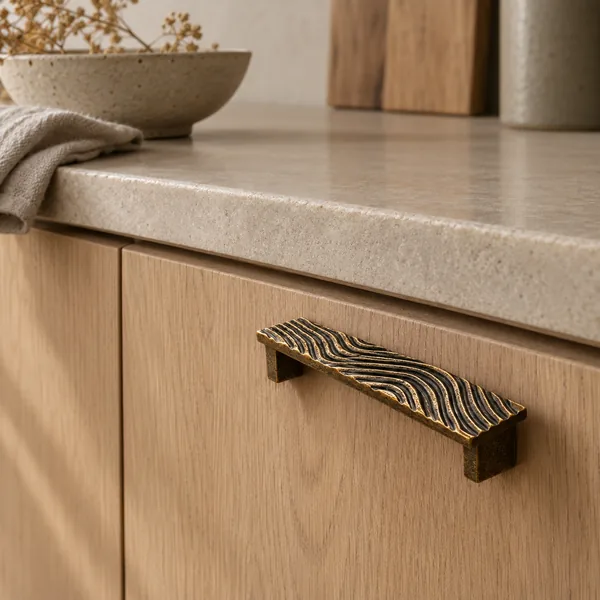
 Save $44.50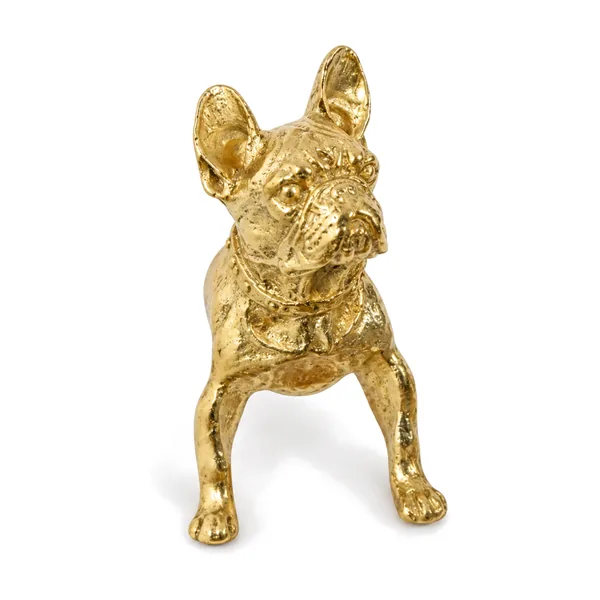
 2 options
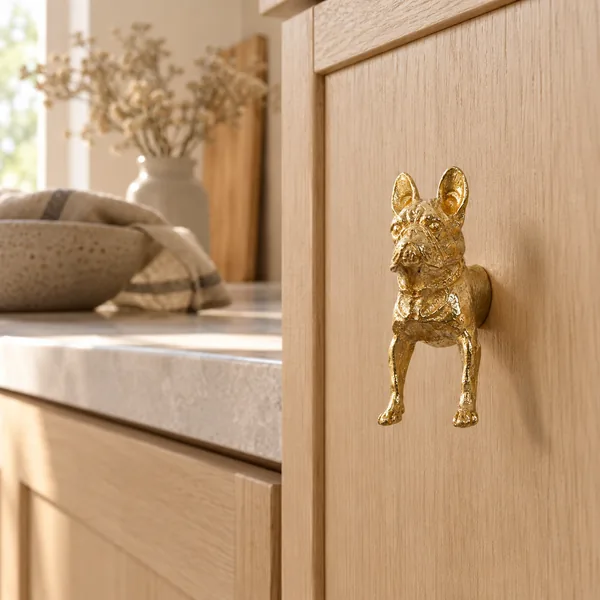
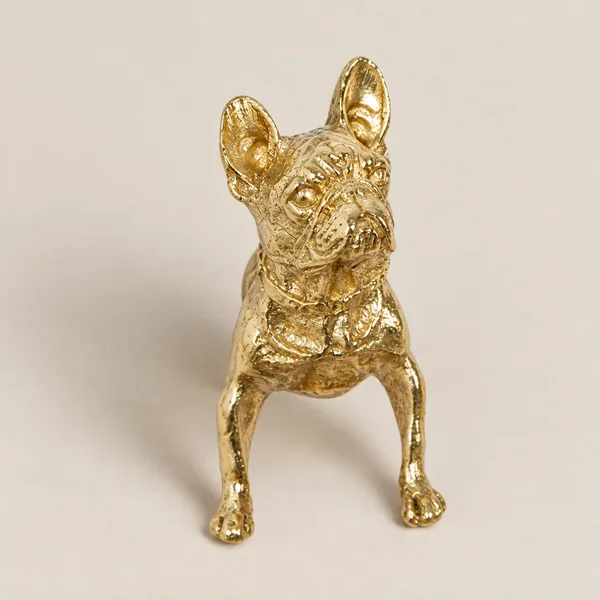
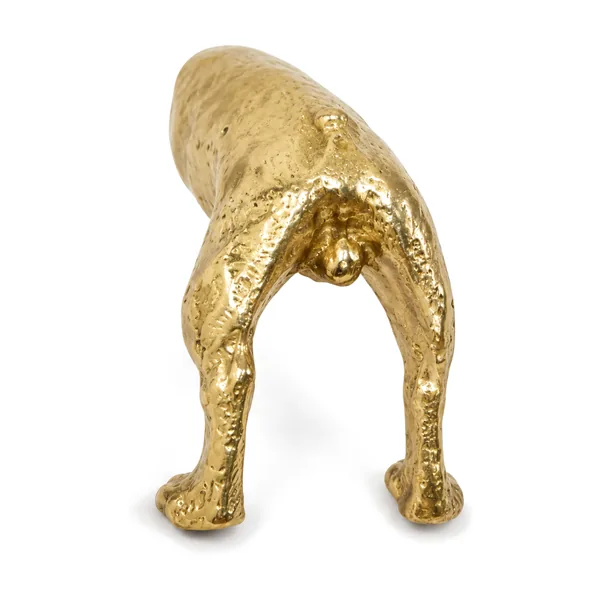
Tassa Polished Brass Dog Cabinet Pull Handle
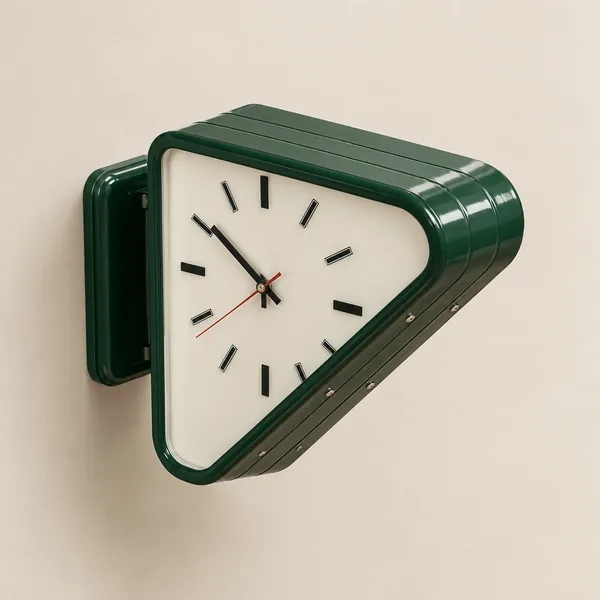
Save $110.00+15 optionsTvilling Dual-Sided Geometric Metal Wall Clock
Are Wall Clocks Still in Style?
Absolutely—and they're experiencing a meaningful renaissance. While smartphones provide time at our fingertips, wall clocks have evolved from pure utility to intentional design statements. The modern homeowner recognizes that a thoughtfully chosen timepiece contributes to a home's soul in ways digital devices cannot replicate.
The farmhouse wall clock specifically endures because it represents values that transcend trends: craftsmanship, authenticity, connection to natural materials, and the celebration of imperfection. In an age of mass production and digital everything, a handcrafted clock on solid wood speaks to our desire for tangible permanence. Investment in quality farmhouse decor isn't following a trend—it's embracing timeless principles of design that have grounded comfortable homes for generations.
Bringing Farmhouse Character Home
A farmhouse wall clock transforms more than your wall—it transforms how you experience time itself. Each glance becomes a moment of aesthetic pleasure, a reminder that your home reflects considered choices and personal values. Whether you gravitate toward the authenticity of vintage pieces, the clean lines of modern farmhouse interpretations, or the substantial presence of oversized designs, the perfect clock awaits.
At Skonne, we curate timepieces and complementary lighting that honor the farmhouse aesthetic while elevating it through Scandinavian design principles. Our collection emphasizes natural materials, thoughtful craftsmanship, and the warm functionality that makes a house feel like home.
Complete Your Farmhouse Sanctuary
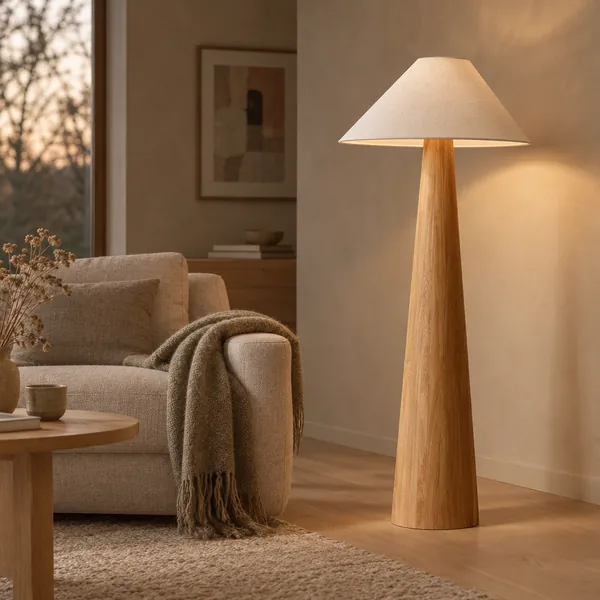 Stille Japanese Wabi-Sabi Solid Wood Floor Lamp$399.00$699.00
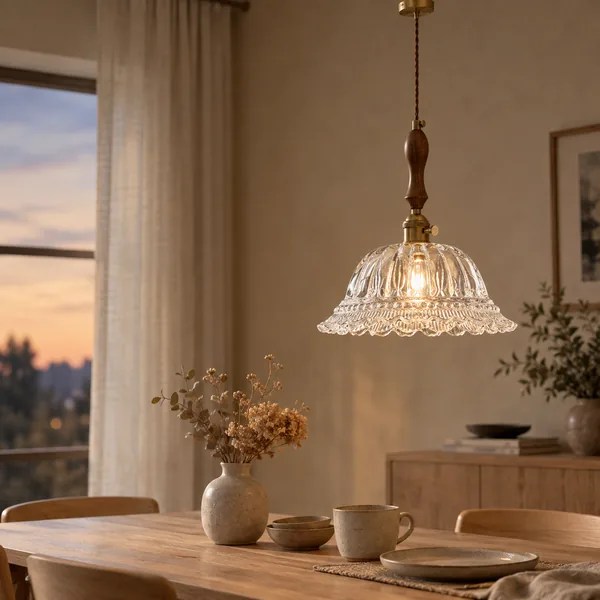 Gloda Walnut Brass French Style Pendant Light$169.00$229.00
The Stille Japanese Wabi-Sabi Solid Wood Floor Lamp brings organic warmth that resonates deeply with farmhouse aesthetics. Its handcrafted wood construction celebrates the beauty of natural imperfection—a core principle shared by both wabi-sabi and farmhouse design philosophies. Position it beside a reading chair beneath your wall clock to create a cozy nook that invites lingering.
Similarly, the Gloda Walnut Brass French Style Pendant Light elevates rustic interiors through refined material combinations. The walnut and brass pairing references vintage farmhouse elegance while casting warm amber light that enhances the rich tones of distressed wood clocks and furniture. Install it above a dining table or kitchen island to create layered lighting that transforms throughout the day.
Ready to find your perfect timepiece? Explore our curated clock collection and discover the farmhouse wall clock that speaks to your vision of home.
Related Article
Wooden Wall Clocks: Warm, Natural Designs for Scandinavian & Organic InteriorsExplore how wooden wall clocks add natural warmth and Scandinavian character to organic interiors with our curated guide to handmade designs.