
Flower & Botanical Pendant Lights: Petal, Lotus & Leaf-Shaped Fixtures for Nature-Inspired Spaces
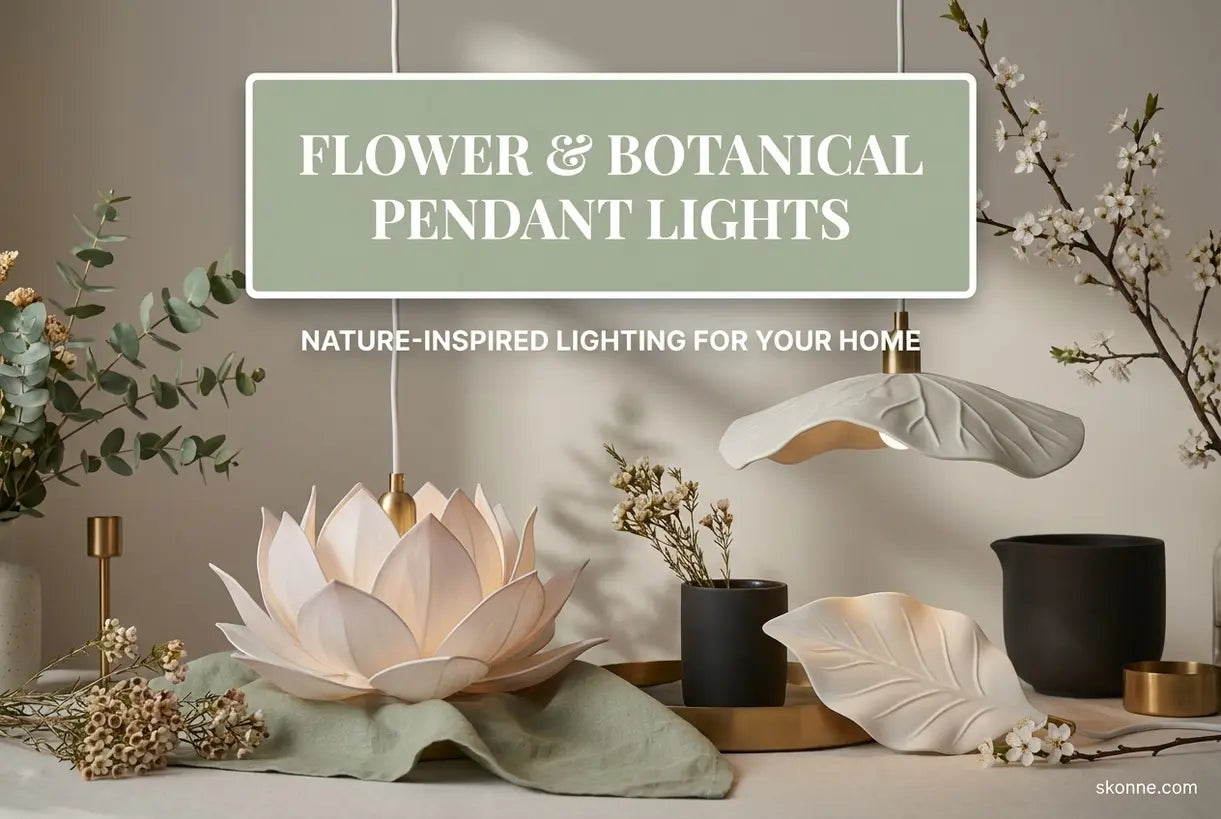
Summary›
There's a quiet magic in the way nature shapes our sense of home. The curve of a petal unfurling, the gentle reach of a leaf toward sunlight, the layered symmetry of a lotus in bloom—these organic forms have inspired artists and makers for centuries. Today, that inspiration takes a beautifully practical form: the flower pendant light.
Botanical pendant lighting brings the outdoors in, transforming ordinary ceilings into sculptural gardens of warm, diffused light. Unlike conventional fixtures with rigid geometric shapes, nature-inspired pendants embrace asymmetry, softness, and movement. They're not merely sources of illumination; they're conversation pieces that anchor a room with organic elegance and Scandinavian hygge sensibility.
Whether you're curating a serene dining retreat, refreshing your kitchen island with something unexpected, or creating a reading nook that feels like a greenhouse sanctuary, the right botanical pendant lighting can be the element that pulls everything together. This guide explores the forms, materials, and styling principles that make flower and leaf-inspired fixtures some of the most compelling choices for contemporary interiors.
What Makes Flower Pendant Lights Special?
A flower pendant light distinguishes itself from standard pendant lighting through its deliberate embrace of organic forms. Where traditional pendants often feature domes, cylinders, or geometric abstractions, botanical fixtures draw directly from the natural world—petals that spiral inward, leaves that curve gracefully, blooms that open toward the room below.
The difference isn't merely aesthetic. These fixtures create a different quality of light. The layered, textured surfaces of petal-shaped shades diffuse illumination more softly than smooth glass or metal, casting gentle shadows and creating ambient glow rather than harsh direct light. This makes them particularly suited to spaces where comfort and atmosphere matter: dining rooms, bedrooms, and living areas where people gather to unwind.
From a design perspective, botanical pendants serve as organic sculpture suspended from above. They soften the hard lines of modern architecture, introducing warmth to minimalist spaces and complementing the natural materials—wood, linen, stone—that define Scandinavian and Japandi interiors. They're equally at home in eclectic bohemian settings or refined contemporary homes seeking a touch of the unexpected.
Popular Botanical Pendant Styles
The world of nature-inspired lighting encompasses several distinct forms, each carrying its own mood and design language. Understanding these variations helps you select the fixture that resonates with your space and sensibility.
Lotus Flower Pendant Light
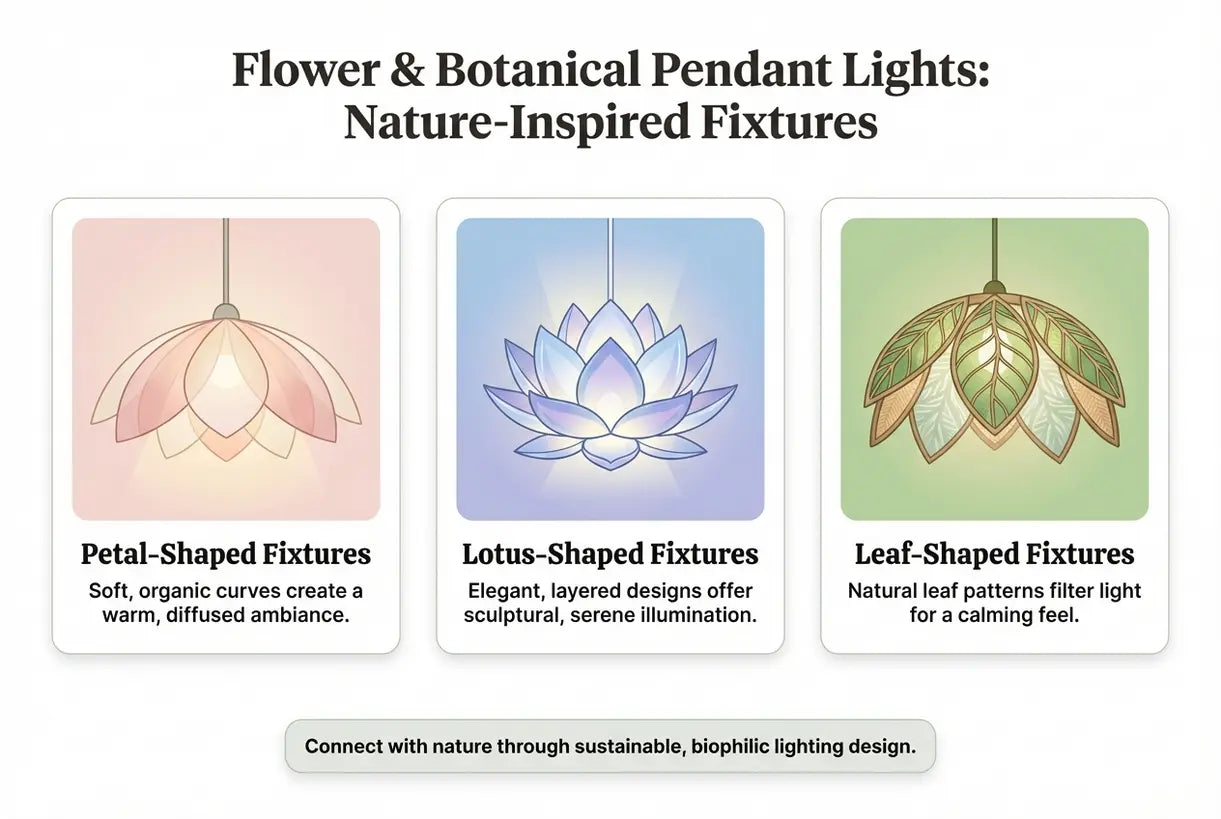
The lotus flower pendant light draws from one of nature's most architecturally perfect forms. These fixtures typically feature multiple layers of petal-like elements that spiral upward and inward, creating a sense of opening and emergence. The silhouette suggests tranquility, meditation, and mindful living—qualities that translate beautifully to dining spaces and bedrooms where calm is paramount.
Lotus designs range from minimalist interpretations with clean, overlapping planes to more elaborate sculptural pieces with dozens of individual elements. The form works particularly well in spaces with natural wood furniture, neutral palettes, and abundant plant life.
Tulip Pendant Light
Tulip pendant light designs capture the elegant, cup-shaped silhouette of the flower before it fully opens. These fixtures tend toward the graceful and feminine, with curved silhouettes that direct light downward while allowing a warm glow to escape from above. They're excellent choices for kitchen islands where task lighting meets aesthetic refinement, or for bedside pendant lighting that feels soft and romantic.
Leaf Pendant Light
For those drawn to more elongated, architectural organic forms, the leaf pendant light offers an appealing alternative to floral shapes. These fixtures often feature single or clustered elements that suggest unfurling foliage, reaching vines, or gently arching fronds. They bring verticality and movement to a space, making them excellent choices for entryways or spaces with higher ceilings.
Leaf designs also tend to skew more contemporary than their lotus counterparts, making them suitable for modern homes that want natural references without rustic associations.
Pendant Lights
Shop all Pendant Lights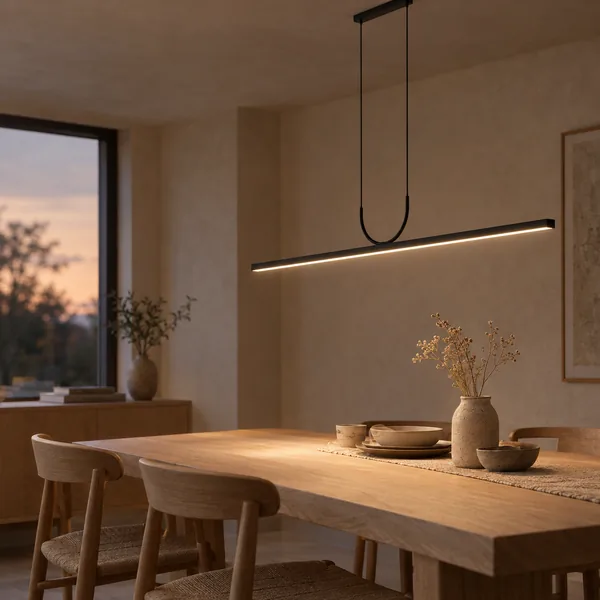
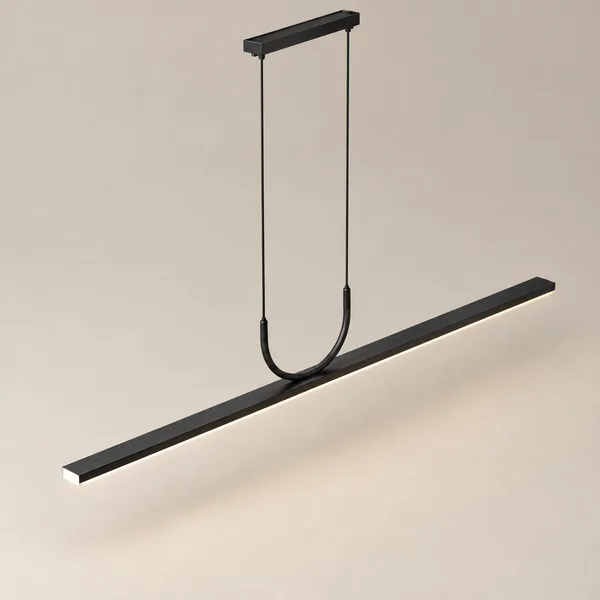 Save $140.00
Linné Minimalist Linear Black LED Pendant Light
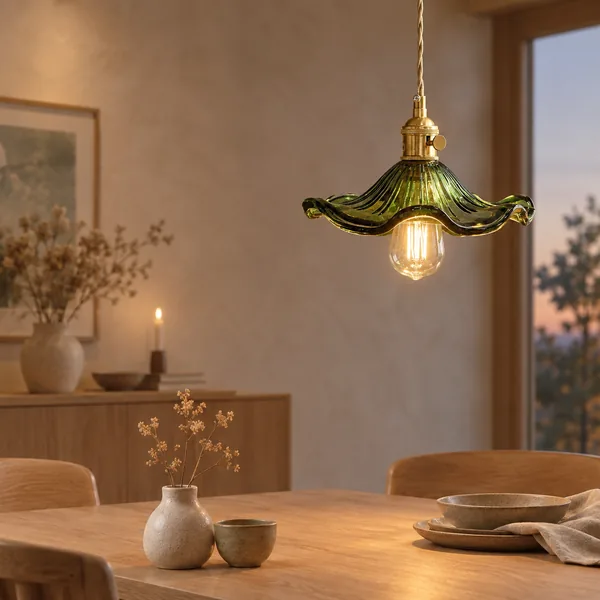
 Save $60.00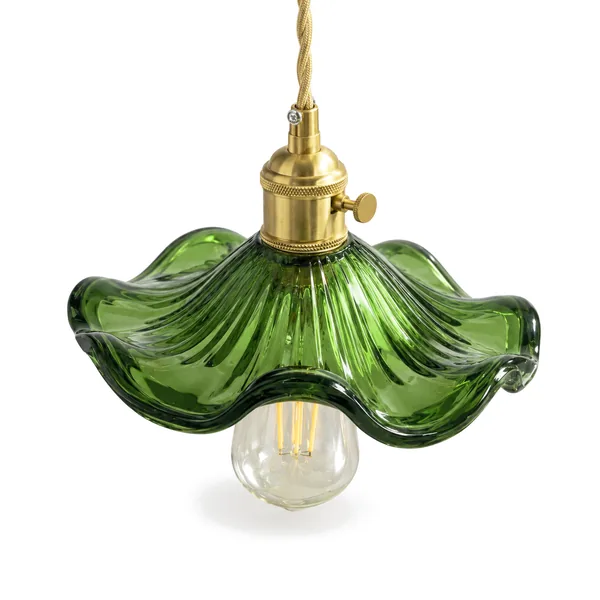
 3 options
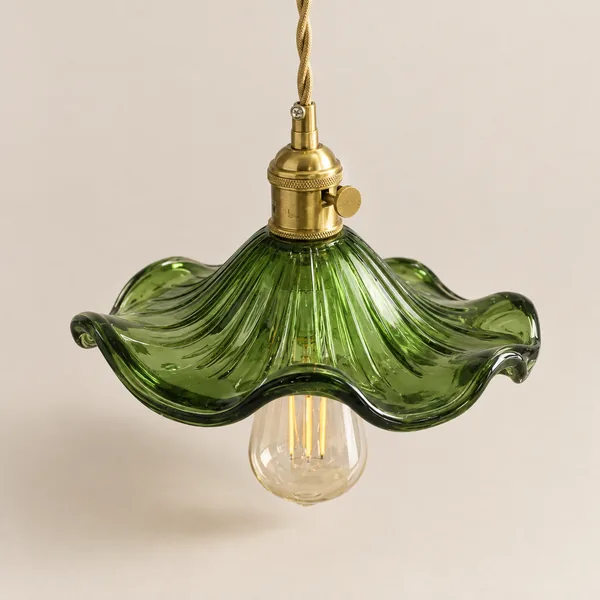
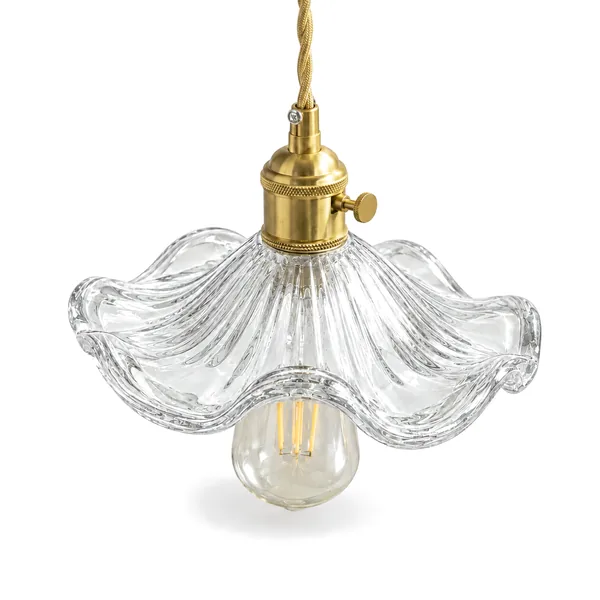
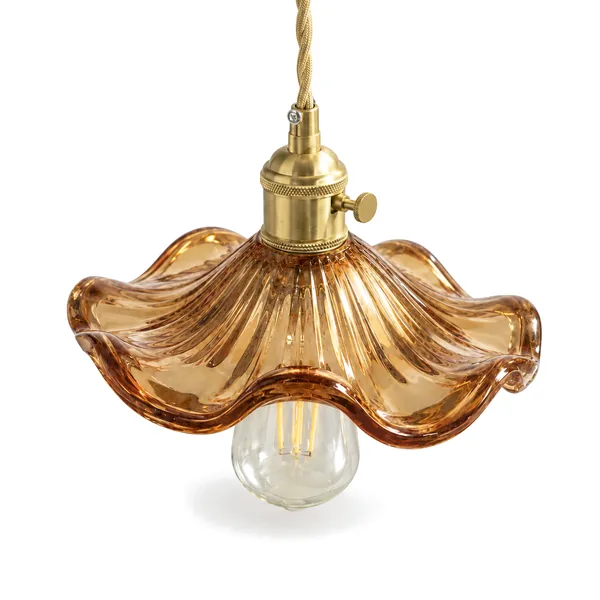
Glora Nordic Glass Pendant Light with Copper
 Save $120.00
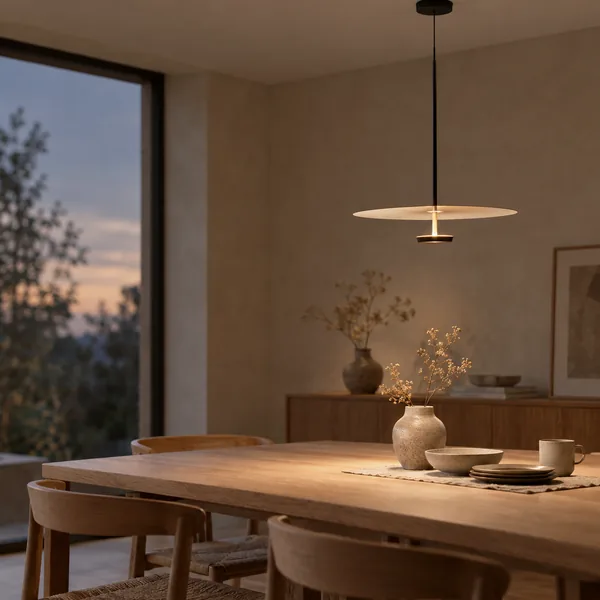
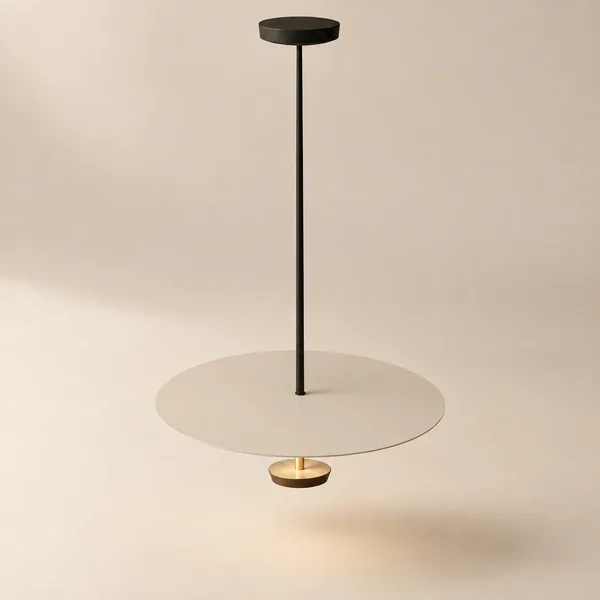
Skiva Nordic Saucer Ceiling Pendant Light LED
Featured: The Lilja Lotus Collection
When Scandinavian craftsmanship meets the meditative beauty of the lotus form, the result is lighting that transcends mere function. The Lilja Minimalist White Lotus LED Pendant Light embodies this philosophy—a sculptural statement piece that brings calm Nordic elegance to any interior.
Crafted from an unexpected combination of cement and metal, the Lilja challenges conventional expectations of botanical lighting. The cement construction gives each petal substantial presence and textural depth, while the white finish maintains the airy, organic quality essential to Scandinavian design. Available in two sizes, it features warm dual LED illumination that casts a gentle glow both upward and downward.
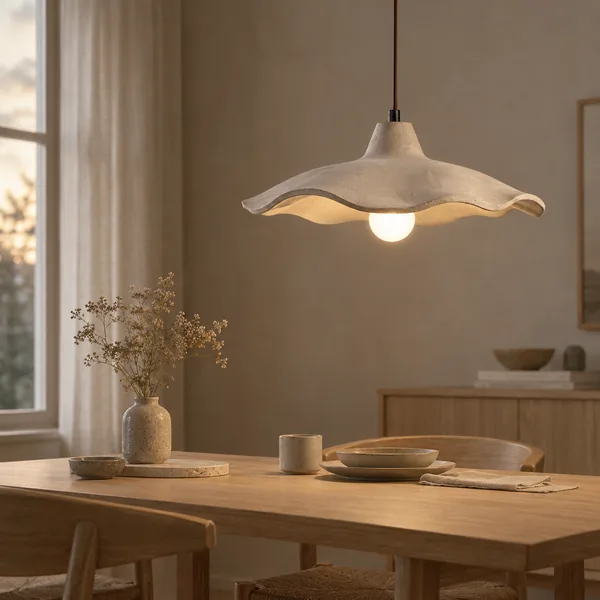 Lilja Minimalist White Lotus LED Pendant Light$269.00$389.00
The Lilja works beautifully as a single statement over a reading nook, or in multiples above a dining table for a unified yet dynamic installation. Its petal-inspired silhouette casts intricate shadow patterns that shift throughout the day, bringing the ever-changing quality of natural light indoors.
Styling Botanical Pendants in Your Home
The versatility of nature-inspired pendant lighting means these fixtures can enhance virtually any room. The key lies in understanding how different botanical forms interact with the activities and atmosphere of each space.
Dining Rooms: Creating Intimate Gathering Spaces
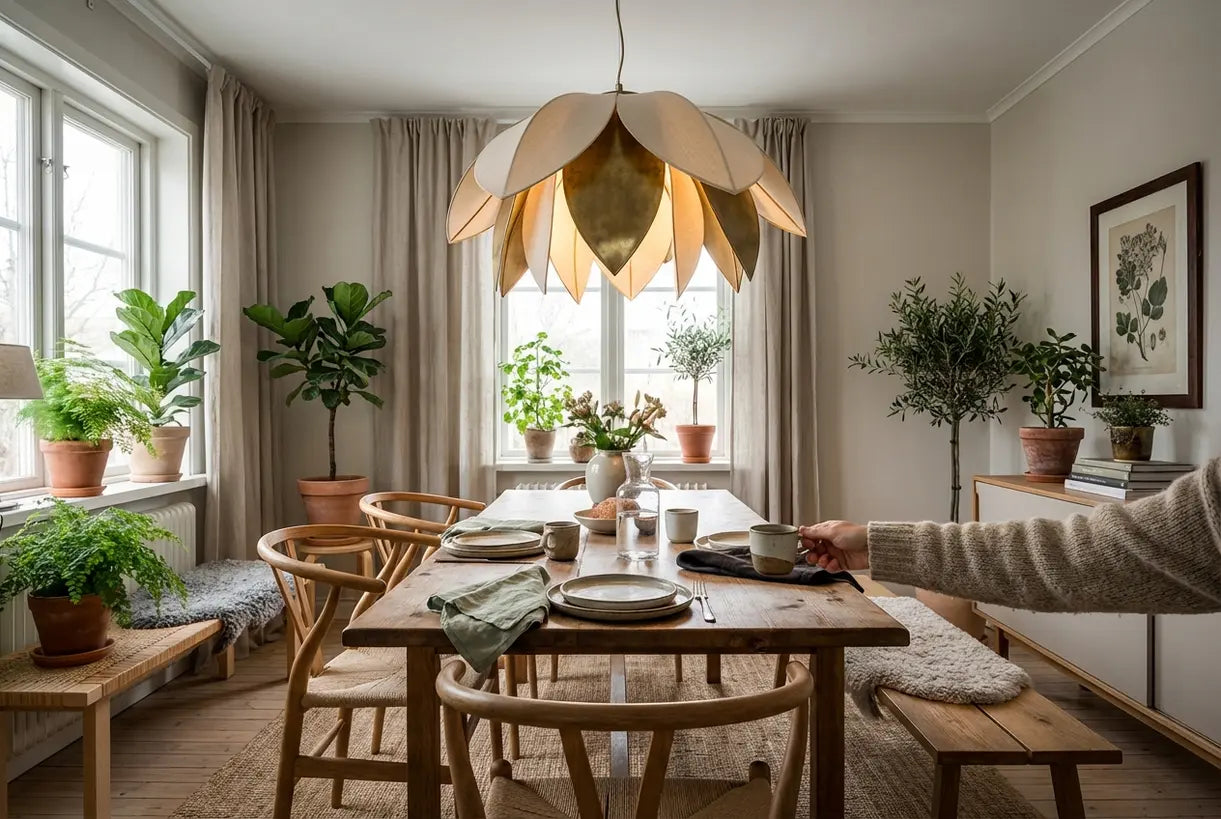
A lotus flower pendant light suspended above a dining table creates an immediate sense of occasion. The layered form suggests abundance and nurturing—qualities that resonate with the communal act of sharing meals. For rectangular tables, consider two or three smaller fixtures arranged in a line; for round tables, a single larger pendant becomes a natural focal point.
The warm, diffused light of botanical fixtures encourages lingering conversation and creates flattering illumination for food and faces alike. Pair with natural wood dining furniture, linen textiles, and plenty of greenery to amplify the organic theme.
Kitchen Islands: Task Lighting with Character
Over a kitchen island, botanical pendants must balance aesthetics with functionality. Fixtures like the tulip pendant light work well here—the downward-directed light provides the task illumination needed for food preparation, while the organic form softens the utilitarian nature of the kitchen space.
Consider mounting botanical pendants slightly higher over kitchen islands than you might in a dining room—typically 30-36 inches above the countertop—to ensure they don't obstruct sightlines while still delivering focused light where it's needed.
Bedrooms: Sanctuary Illumination
In bedrooms, flower pendant lights serve as alternatives to traditional bedside lamps or as ambient ceiling fixtures. Smaller botanical pendants flanking a bed create symmetry and free up nightstand space, while larger pieces centered in the room provide gentle overall illumination that supports relaxation.
The soft shadows and warm glow characteristic of petal-shaped fixtures align perfectly with the bedroom's purpose as a restorative retreat. Choose dimmable options to adjust the atmosphere from morning brightness to evening calm.
Entryways: First Impressions
A leaf pendant light or dramatic lotus fixture in an entryway signals your home's design sensibility immediately upon arrival. These sculptural pieces welcome guests with organic warmth, setting the tone for the curated, nature-connected spaces beyond.
Materials That Matter
The materiality of botanical lighting significantly impacts both its appearance and the quality of light it produces. Understanding these characteristics helps you select fixtures that will perform beautifully in your specific space.
Glass remains the most popular material for nature-inspired pendants, and for good reason. Its translucency captures and diffuses light in ways that feel naturally radiant. For those seeking to explore the range of glass options available, our Glass Pendant Lights collection offers a curated selection of artisan-crafted pieces that demonstrate the material's remarkable versatility.
Cement and ceramic offer unexpected textural depth for botanical forms. These materials absorb light rather than transmit it, creating dramatic shadows and emphasizing the sculptural quality of petal and leaf constructions. The Lilja lotus light exemplifies this approach, using cement to give each petal substantial presence.
Metal provides structural integrity and can be finished in ways that complement various interior styles—from warm brass and copper that enhance organic themes to matte black that creates dramatic contrast against light-colored petals.
Fabric and paper represent more delicate options, offering the softest light diffusion and often the most affordable entry points into botanical lighting. These materials work particularly well in bedrooms and quiet living spaces where gentle illumination takes priority.
The Art of Artisan Craftsmanship
The most compelling botanical lighting often emerges from traditional craft techniques that honor both the natural forms being referenced and the human hands creating them. Two approaches in particular define the highest-quality nature-inspired fixtures.
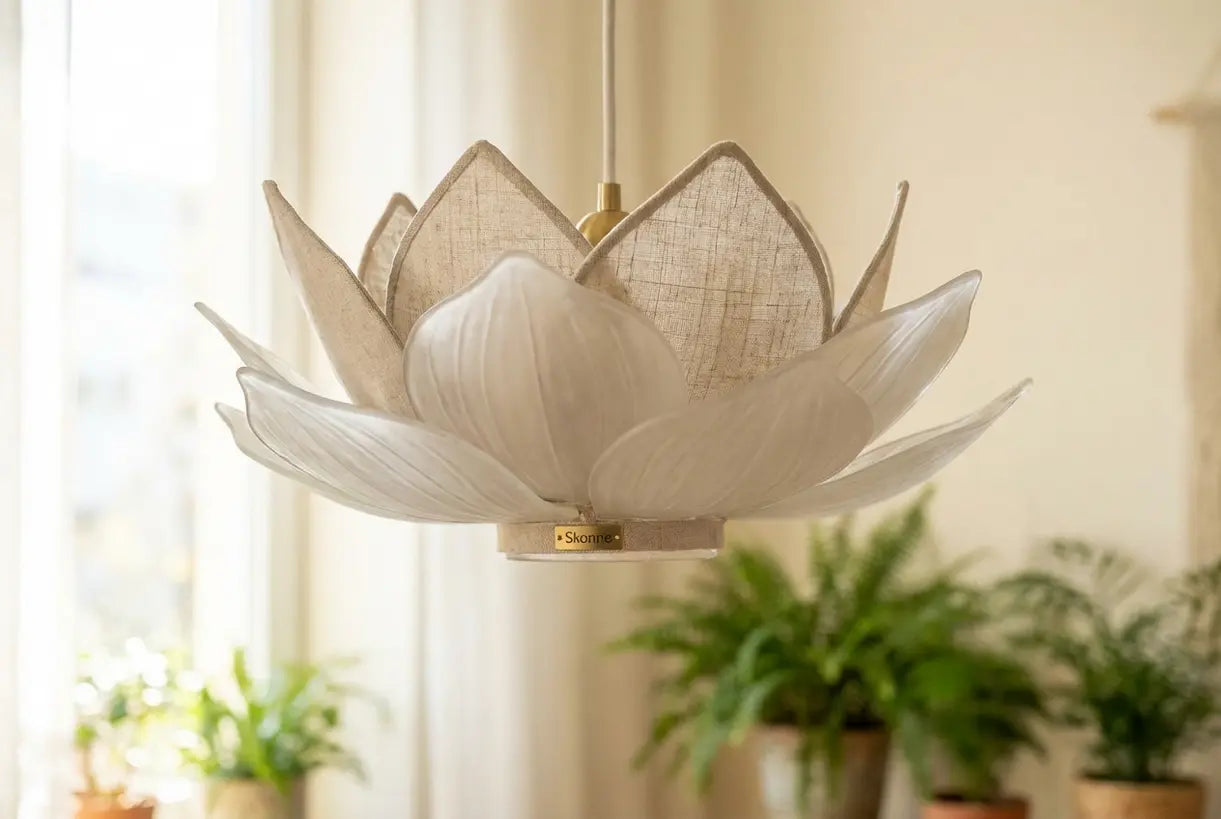
Mouth-Blown Glass: Organic Imperfection
Mouth-blown glass represents the intersection of ancient craft and contemporary design. Unlike machine-made glass with its uniform perfection, hand-blown pieces carry subtle variations—tiny bubbles, slight asymmetries, organic thickness variations—that make each fixture unique.
This technique proves particularly suited to botanical forms, as the flowing, molten glass naturally suggests the soft curves of petals and leaves. The Glora Artisan Mouth-Blown Glass Pendant Light demonstrates this beautifully, with nature-inspired designs including Rosa and Girasole options that capture the luminous quality of flowers in bloom.
Each Glora shade diffuses warm LED light through its artisan-crafted surface, creating an organic, botanical ambiance that machine manufacturing simply cannot replicate. The slight irregularities catch light differently from every angle, ensuring your fixture reveals new nuances over time.
Warm Wood and Brass: Timeless Pairing
For those drawn to botanical lighting with more traditional warmth, the combination of walnut and brass offers enduring appeal. This material palette connects to the natural world through genuine organic elements rather than mere representation.
The Gloda Walnut Brass French Style Pendant Light embodies this approach with pastoral French vintage charm filtered through Nordic craftsmanship sensibility. The warm walnut elements ground the fixture in natural materiality, while the brass accents provide refined detail and the frosted glass diffuser casts an amber glow that complements nature-inspired interiors.
Unlike purely sculptural botanical fixtures, pieces like the Gloda bring actual organic material—the walnut—into your lighting, creating subtle connections to the living world that feel authentic rather than imitative.
Artisan Botanical Lighting
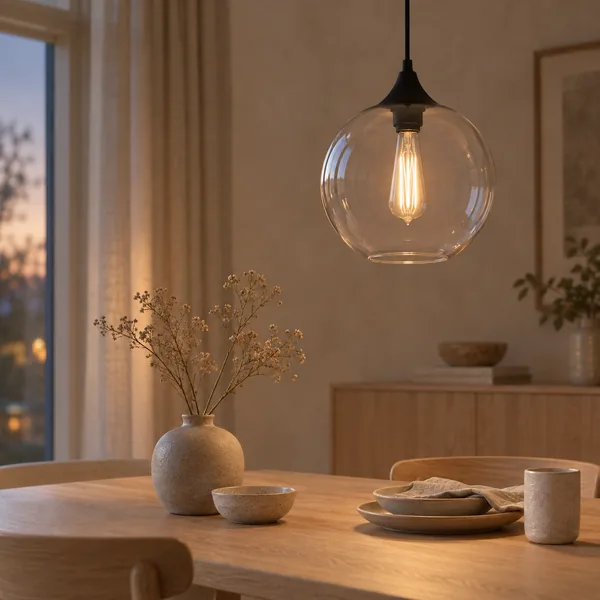 Glora Artisan Mouth-Blown Glass Pendant Light$149.00$219.00
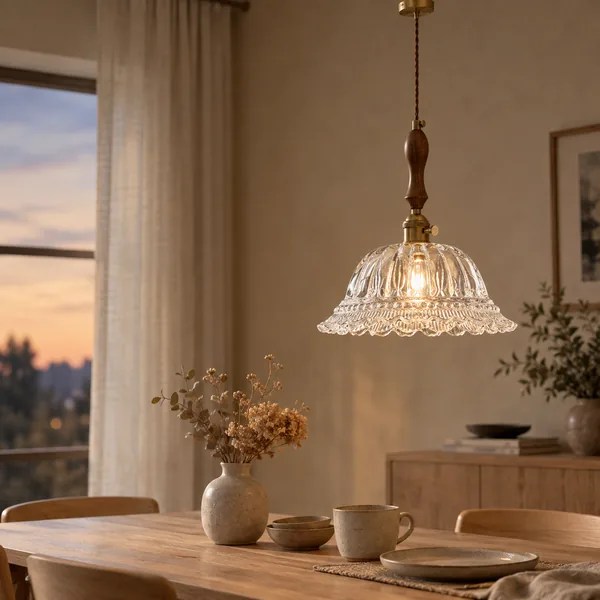 Gloda Walnut Brass French Style Pendant Light$169.00$229.00
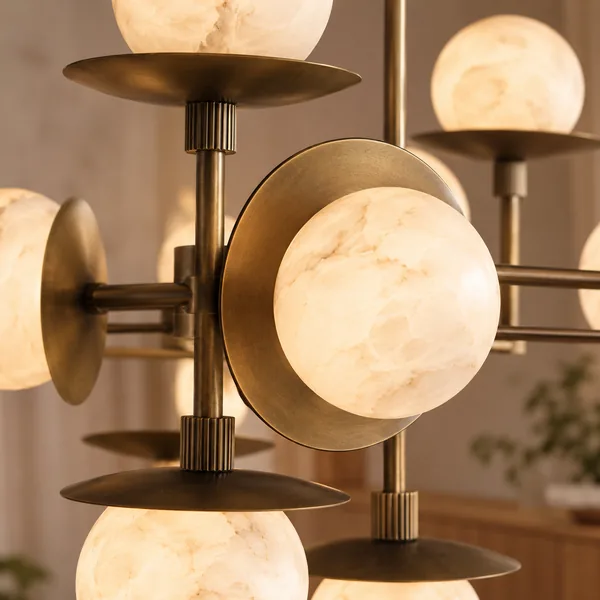
Chandeliers
Shop all Chandeliers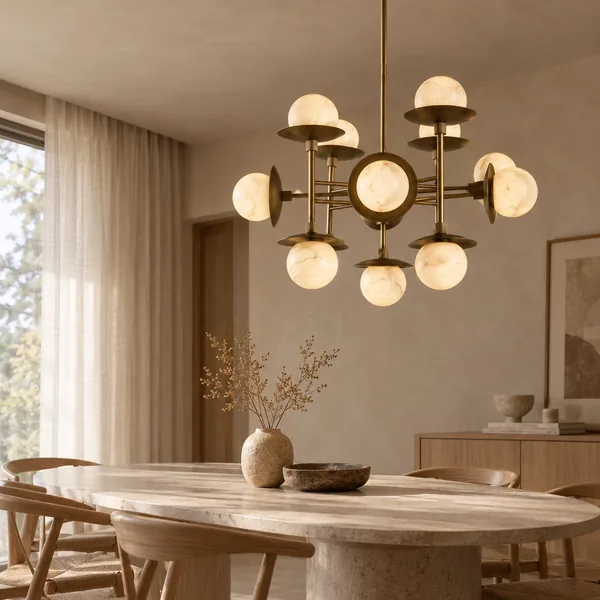
Perfect Placement: Heights and Spacing
Even the most beautiful botanical fixture can disappoint if improperly positioned. Understanding the principles of pendant placement ensures your flower pendant light achieves its full potential.
Above Dining Tables
The standard recommendation for dining table pendants—30 to 36 inches above the table surface—applies to botanical fixtures with one important consideration. Because many flower and lotus pendants are wider than conventional drum or bowl fixtures, you may want to adjust slightly higher (closer to 36 inches) to maintain clear sightlines across the table.
For longer tables, multiple pendants create better light distribution than a single large fixture. Space them evenly along the table length, typically 24-30 inches apart, and ensure each pendant maintains the same height above the surface.
Above Kitchen Islands
Kitchen islands require slightly different thinking. The recommendation of 30 to 36 inches above the countertop still applies, but consider the activities performed at your island. If you use the space primarily for food preparation, err toward 36 inches to prevent the fixtures from interfering with your work. For islands used mainly as casual dining or gathering spaces, 30 inches creates more intimate, connected illumination.
When installing multiple pendants over an island, spacing becomes crucial. Divide the island length by the number of pendants plus one to determine equal spacing from the ends. For example, a 72-inch island with two pendants would place each fixture 24 inches from the ends and 24 inches apart from each other.
Ceiling Height Considerations
Standard 8-foot ceilings accommodate most botanical pendants comfortably. With 9-foot or higher ceilings, you may need to adjust chain or rod lengths to bring the fixture into proper relationship with your furniture. The goal is always to create connection between the light source and the activity below—suspending a fixture too high in a tall room can make it feel disconnected and ineffective.
The Enduring Appeal of Organic Lighting
Botanical pendant lighting continues to resonate because it addresses something deeper than mere illumination. In an increasingly digital, urbanized world, these fixtures reconnect us with the organic forms and natural rhythms that have comforted humans throughout history. A petal shaped light fixture doesn't simply light a room—it introduces the suggestion of growth, renewal, and natural beauty into our daily experience.
Whether you choose the meditative presence of a lotus form, the elegant simplicity of a tulip silhouette, or the architectural grace of leaf-inspired design, organic pendant lighting offers a way to bring the outside world into your most intimate spaces. The best pieces—those crafted with attention to material, proportion, and light quality—become more beautiful with time, developing the patina and character that only well-loved objects acquire.
At Skonne, we believe that lighting should do more than illuminate—it should inspire. Our curated collection of flower and botanical pendants reflects this philosophy, bringing together pieces that honor both the natural world and the human craft of transforming raw materials into objects of enduring beauty. From the sculptural cement petals of the Lilja to the artisan-blown glass of the Glora, each fixture represents an opportunity to bring a piece of nature's poetry into your home.
Explore our complete collection and discover how the right botanical pendant can transform not just your lighting, but your entire sense of space.
Related Article
DIY Pendant Lights: How to Install, Wire & Make Your Own FixtureLearn how to install, wire, and make your own DIY pendant light with our step-by-step guide. Perfect for beginners ready to upgrade their lighting.