
Mechanical Wall Clocks: Wind-Up & Gear-Driven Designs for Timekeeping Enthusiasts

Summary›
- The Enduring Appeal of Gear-Driven Timepieces
- The Tvilling Dual-Sided Geometric Metal Wall Clock: Modern Horology Reimagined
- Brass Gears and Winding Keys: The Soul of Traditional Timekeeping
- Accuracy Considerations and Pendulum Physics
- Integrating Mechanical Clocks into Scandinavian Interiors
- Embracing the Mechanical Wall Clock Tradition
There's something undeniably captivating about the mechanical wall clock. In an age of digital convenience, these handcrafted timepieces represent a slower, more intentional way of living—one where timekeeping becomes an art form rather than a commodity. The rhythmic sweep of a pendulum, the gentle winding of a key, and the intricate dance of interlocking gears create a sensory experience that screens simply cannot replicate.
For homeowners and design enthusiasts seeking to elevate their spaces, mechanical clocks offer more than functionality. They bring warmth, character, and a tangible connection to centuries of horological craftsmanship. Whether you're drawn to vintage brass mechanisms or prefer the clean lines of modern interpretations, finding the right wind-up timepiece can transform an ordinary wall into a focal point of quiet sophistication.
The Enduring Appeal of Gear-Driven Timepieces
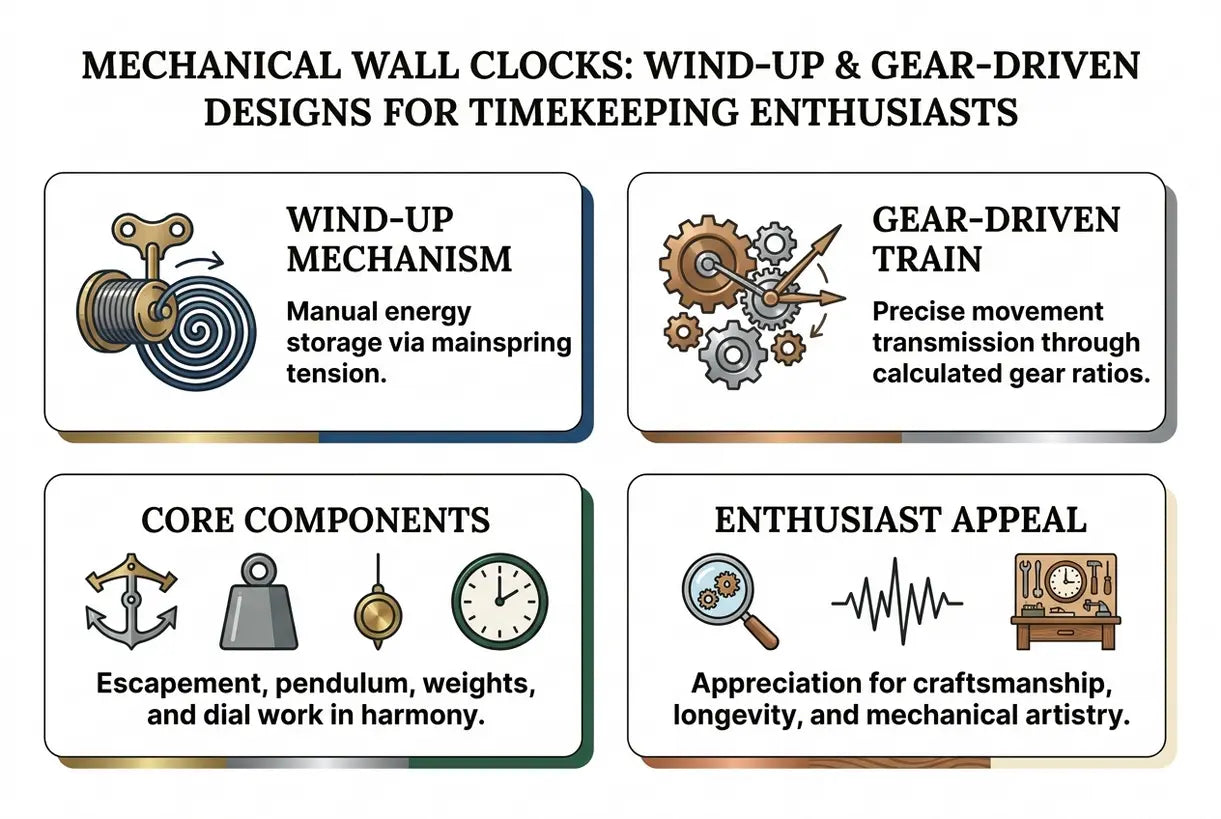
Unlike their battery-powered counterparts, mechanical clocks operate through a fascinating interplay of springs, gears, and escapements. This traditional mechanism stores potential energy in a mainspring, then releases it gradually through a gear train to drive the hands and—when present—the pendulum. The result is a timepiece that feels alive, requiring human interaction through regular winding to continue its steady rhythm.
Modern mechanical wall clocks bridge the gap between heritage craftsmanship and contemporary aesthetics. Today's designs range from exposed skeleton movements that showcase the hypnotic motion of brass gears to minimalist Scandinavian styles that hide complexity behind clean surfaces. This versatility means there's a mechanical timepiece suited for nearly every interior style, from industrial lofts to Nordic-inspired living rooms.
Understanding Wind-Up Clock Mechanics
At the heart of every wind-up clock lies a mainspring—a coiled strip of hardened steel that stores mechanical energy when tension is applied. As the spring unwinds, it transfers energy through a series of gears that reduce the high tension into the slow, measured motion needed to move clock hands precisely. A device called an escapement interrupts this energy flow at regular intervals, creating the familiar ticking sound while ensuring accurate timekeeping intervals.
This mechanical sophistication extends beyond basic timekeeping. Many vintage-inspired and contemporary mechanical clocks incorporate additional complications such as moon phases, chiming sequences, or even calendar functions—all powered solely by spring tension and gravity. For those who appreciate the intersection of engineering and art, these complications transform a simple wall clock into a conversation piece.
Decorative Wall Clocks
Shop all Wall Clocks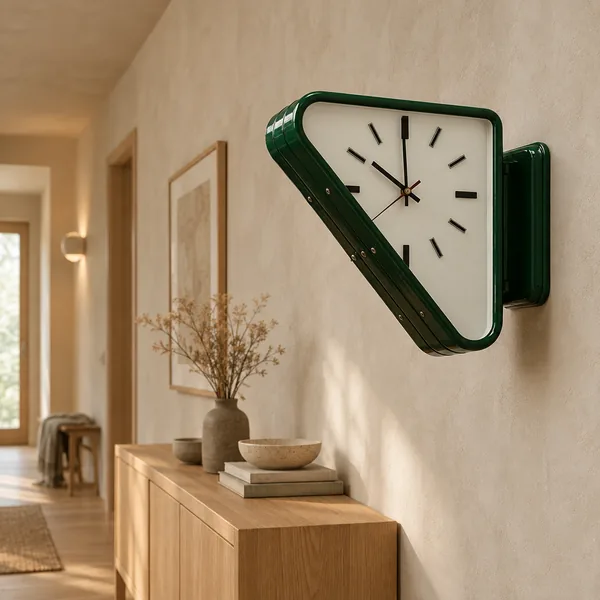
 Save $110.00
 +15 options
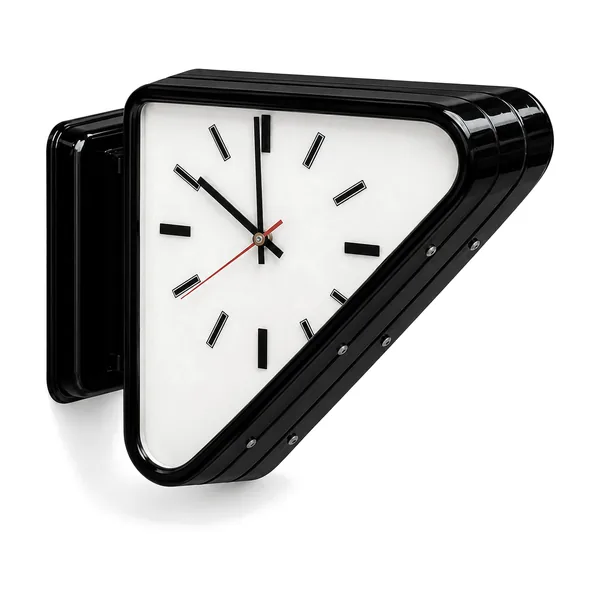
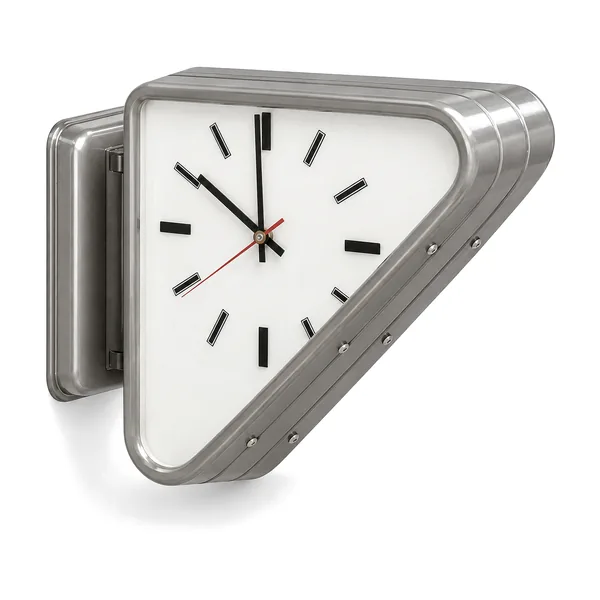
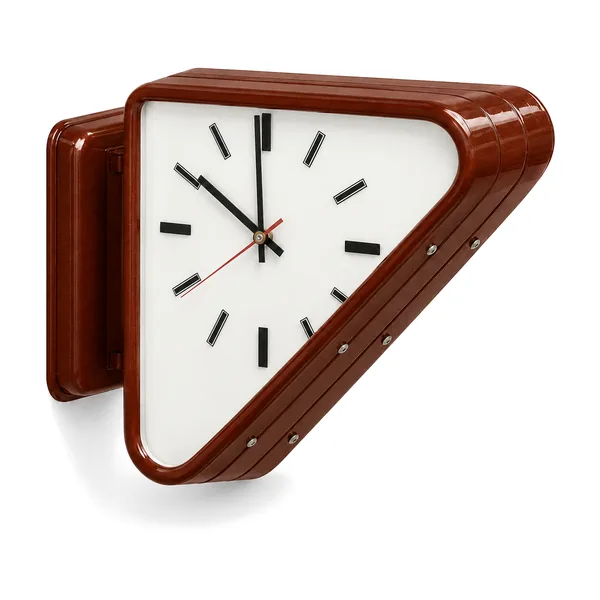
Tvilling Dual-Sided Geometric Metal Wall Clock
 Save $70.00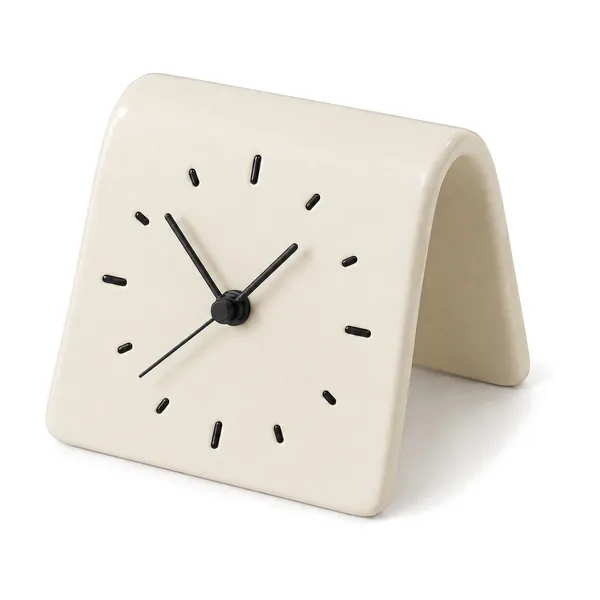
 +37 options
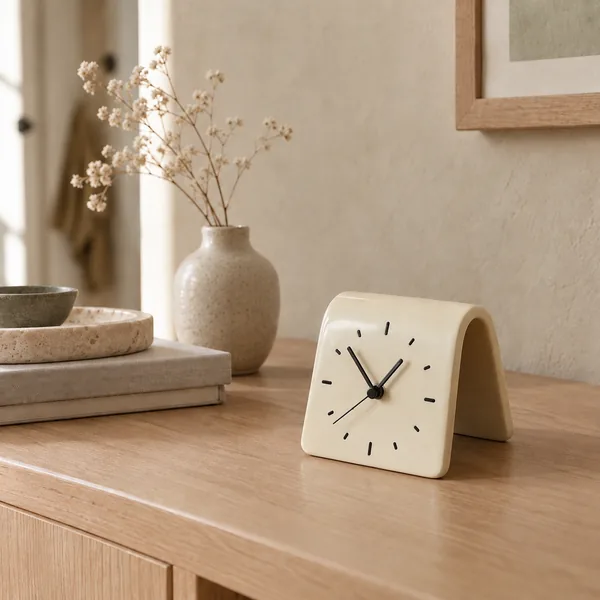
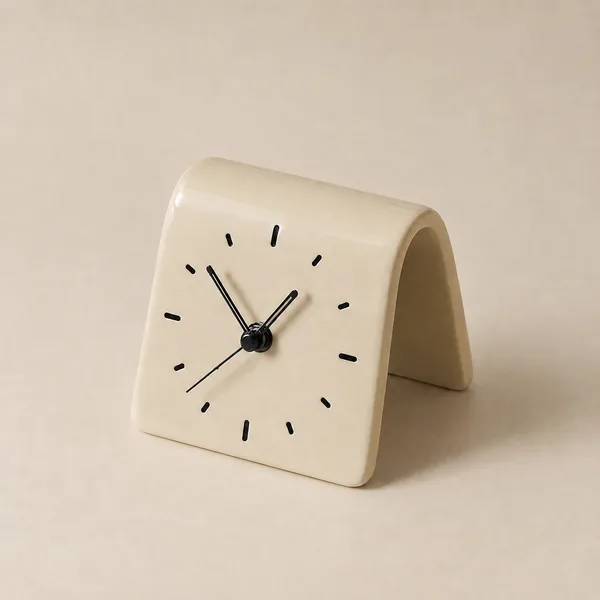
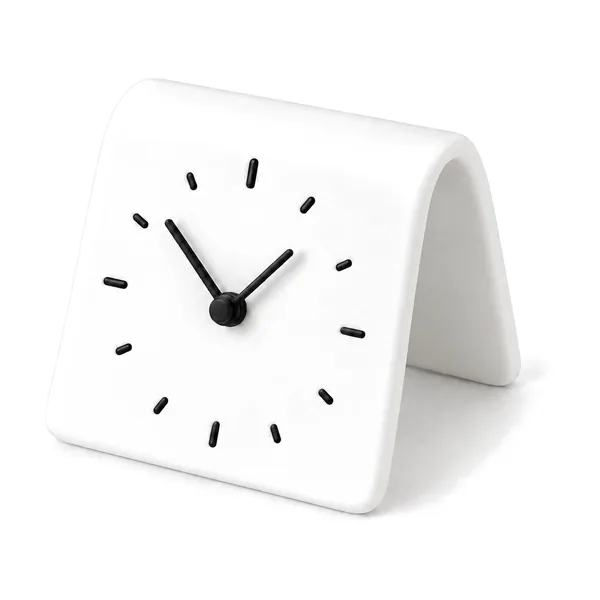
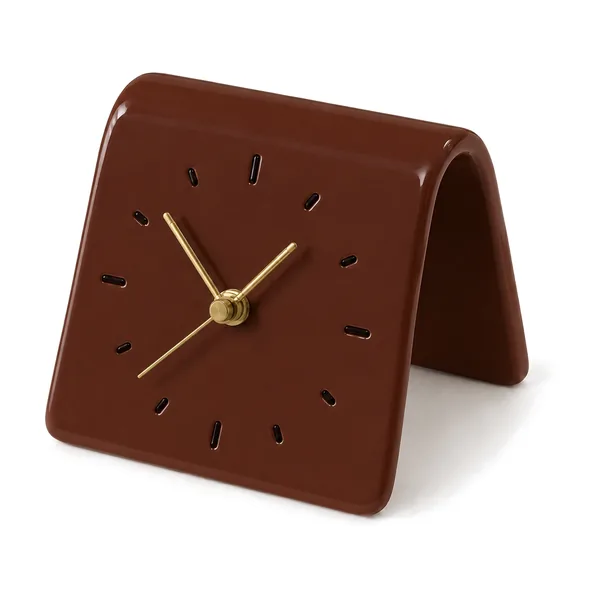
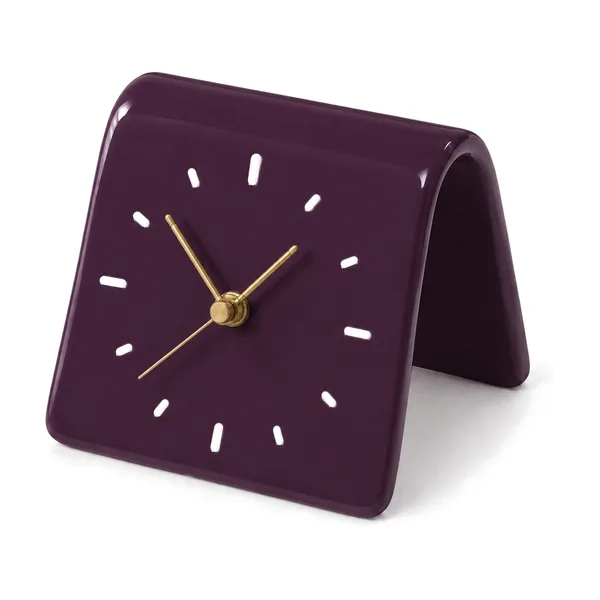
Tilje Silent Ceramic Desk Clock for Modern Homes
 Save $120.00
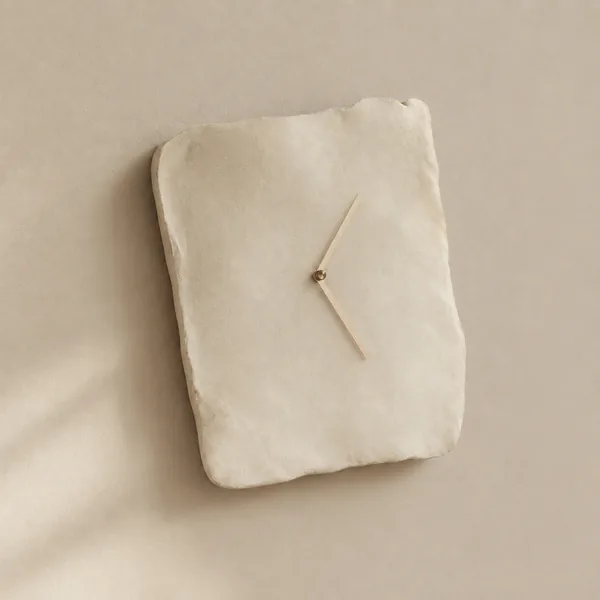
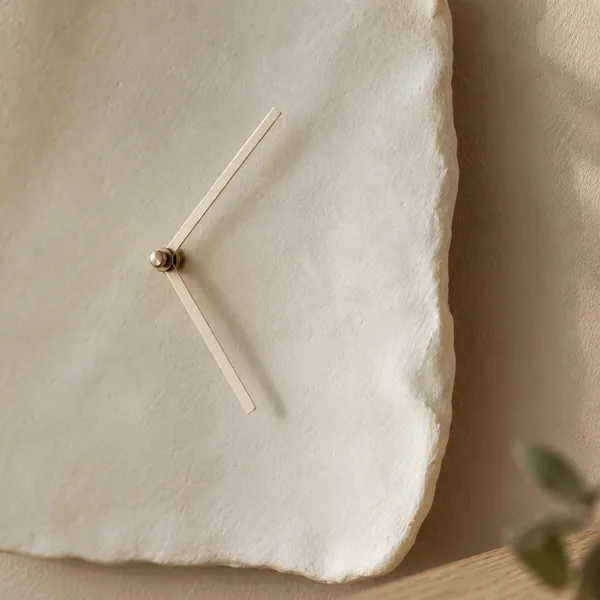
Stilla Silent Resin Wall Clock Nordic Minimalist
The Tvilling Dual-Sided Geometric Metal Wall Clock: Modern Horology Reimagined
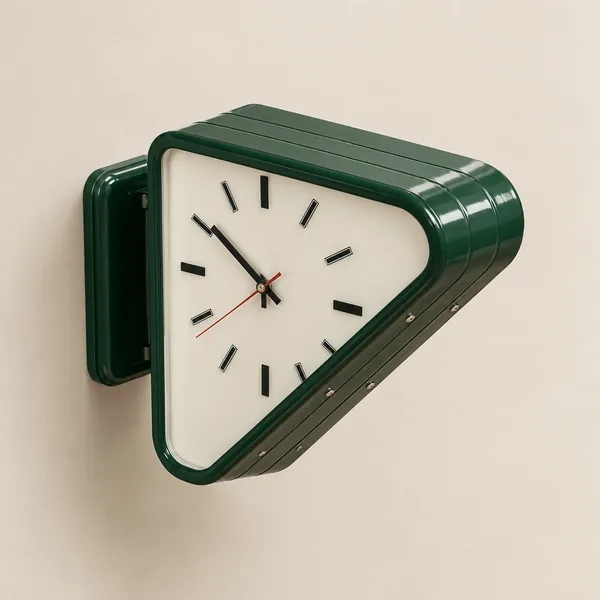
For those seeking a mechanical wall clock that honors traditional craftsmanship while embracing contemporary design, the Tvilling Dual-Sided Geometric Metal Wall Clock offers an exceptional solution. This architectural timepiece features clean geometric lines that pay homage to Nordic design principles while housing whisper-quiet movement technology.
The Tvilling's dual-sided construction makes it particularly versatile for modern open-concept homes, where a clock visible from multiple vantage points becomes both functional and sculptural. Its geometric frame creates dramatic shadow play throughout the day, while the exposed mechanics provide that satisfying glimpse into horological craftsmanship that mechanical enthusiasts cherish. Whether mounted in a hallway, living room, or above a reading nook, this piece demonstrates how the mechanical wall clock can serve as anchor art for Scandinavian interiors.
Tvilling Dual-Sided Geometric Metal Wall Clock$269.00$379.00Brass Gears and Winding Keys: The Soul of Traditional Timekeeping
The visual poetry of a mechanical clock emerges most vividly in its visible mechanics. Polished brass gears mesh with steel pinions, their surfaces catching light as they rotate in precisely calculated ratios. The winding key itself becomes a ritual object—often made of polished brass or chrome, fitting precisely into the clock's arbour to restore tension to the mainspring with each turn.
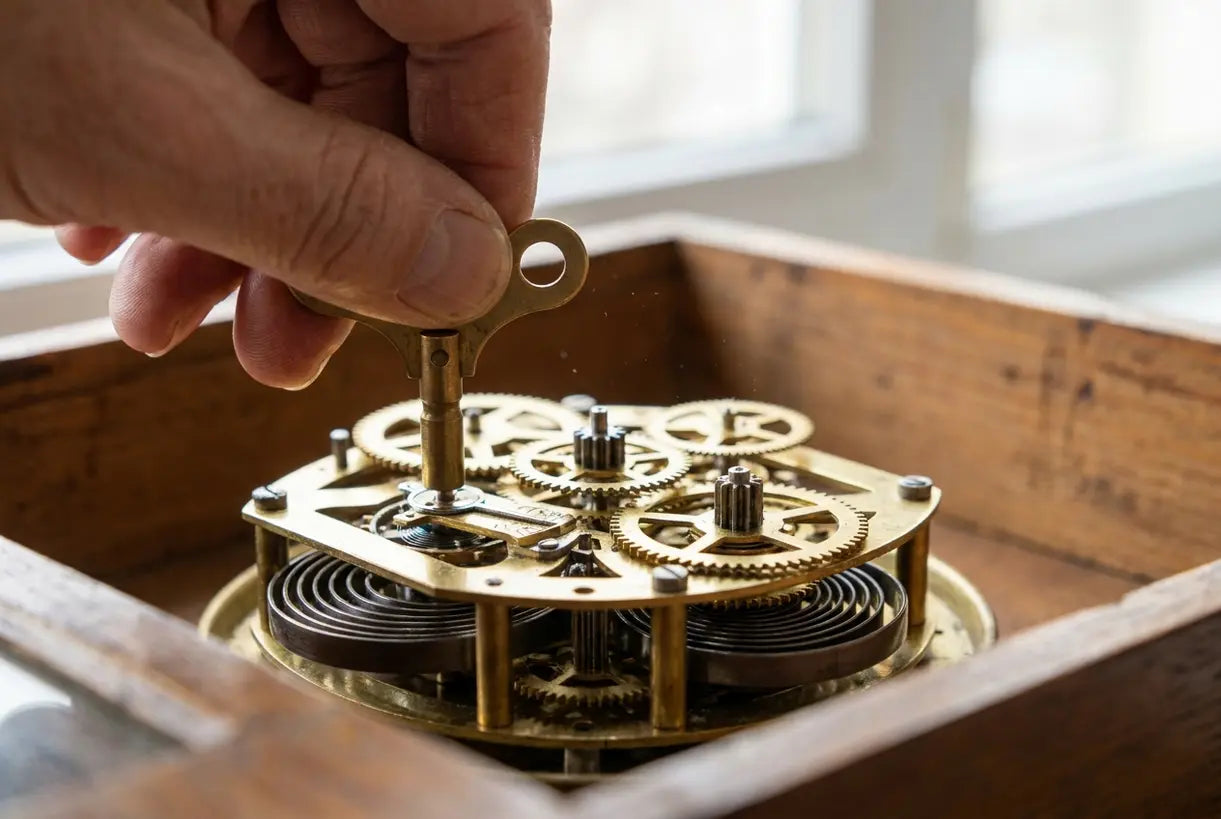
This material choice isn't merely aesthetic. Brass was selected by early clockmakers for its resistance to corrosion and its low friction coefficient when properly lubricated, allowing gears to mesh smoothly for decades or even centuries with proper care. The traditional craft of hand-finishing gear teeth and polishing pivot holes required immense patience and precision—skills that translate even into contemporary movements.
Modern manufacturing maintains these standards while introducing subtle improvements. Synthetic lubricants reduce maintenance intervals, while computer-aided design optimizes gear profiles for smoother operation and improved power efficiency. The result is a mechanical clock that honors tradition while embracing contemporary reliability.
Proper Winding Technique for Optimal Performance
Learning to wind your mechanical clock correctly is essential for both its longevity and accuracy. The video below demonstrates the proper technique for winding a mechanical clock, ensuring you neither over-tension the mainspring nor leave it with insufficient power to maintain consistent timekeeping.
When winding your mechanical wall clock, consistency matters more than timing. Most spring-driven clocks operate optimally when wound at the same time each day, as this establishes a regular rhythm in the mainspring's tension cycle. The gentle resistance you feel as the key turns indicates the spring's increasing tension—stop when you feel firm resistance but never force the mechanism beyond its design limits.
Accuracy Considerations and Pendulum Physics
A common misconception suggests that mechanical clocks cannot match quartz precision. While quartz movements do offer superior short-term accuracy, a well-maintained mechanical clock with a pendulum can achieve remarkable consistency—often gaining or losing only seconds per week when properly regulated.
The pendulum's genius lies in its physics. Galileo's observation that a pendulum's period depends only on its length, not its mass or swing amplitude (within reasonable limits), forms the foundation of accurate mechanical timekeeping. By adjusting the effective length of a pendulum—typically by moving a bob up or down on its rod—clockmakers can fine-tune the rate to achieve impressive accuracy.
Home Decor
Shop all Home Decor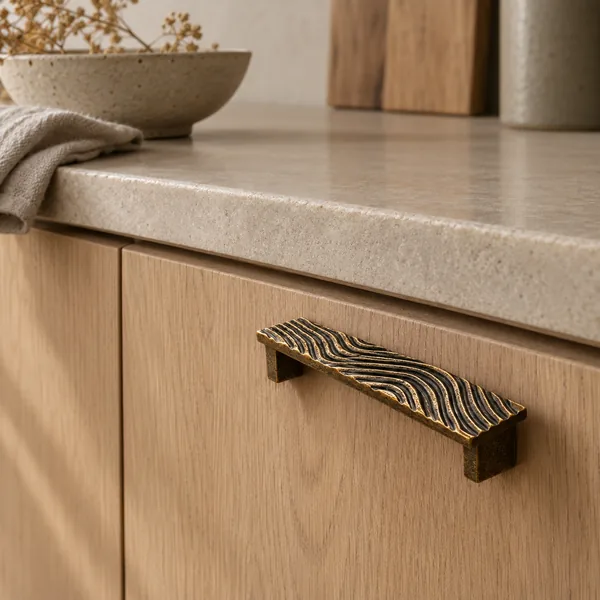
 Save $44.50
 2 options
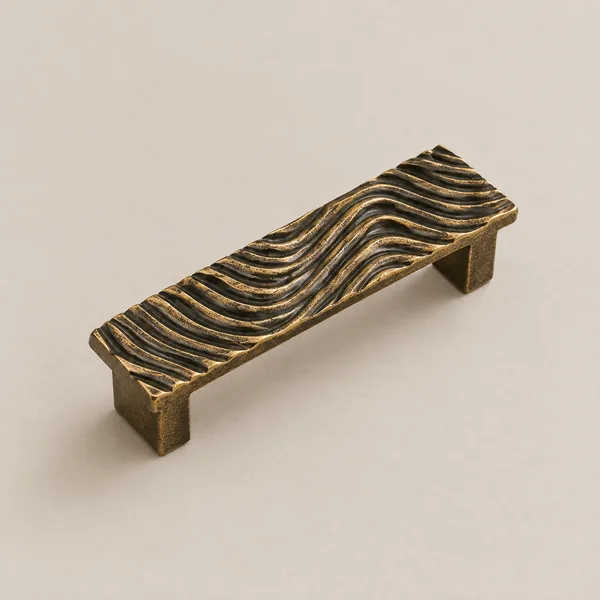
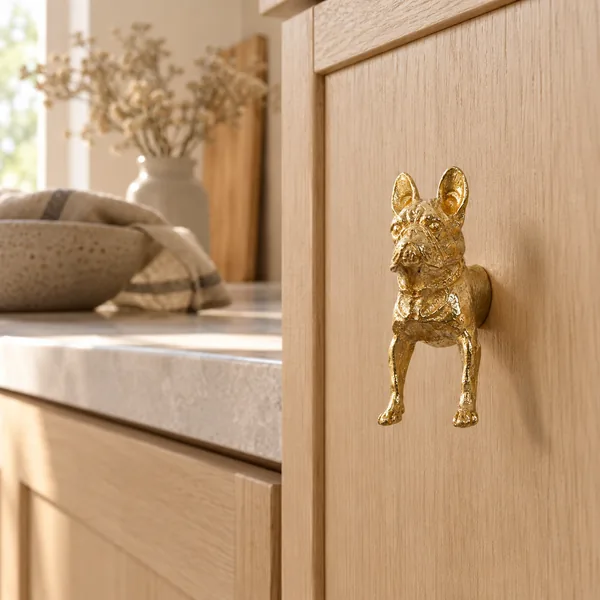
Tassa Polished Brass Dog Cabinet Pull Handle
Save $110.00+15 optionsTvilling Dual-Sided Geometric Metal Wall Clock
Integrating Mechanical Clocks into Scandinavian Interiors
The Scandinavian aesthetic embraces materials and objects that tell a story—and few items accomplish this as elegantly as a thoughtfully chosen mechanical clock. The warmth of brass gears, the honesty of exposed mechanics, and the ritual of winding all align with hygge principles of intentional living and appreciation for the handmade.
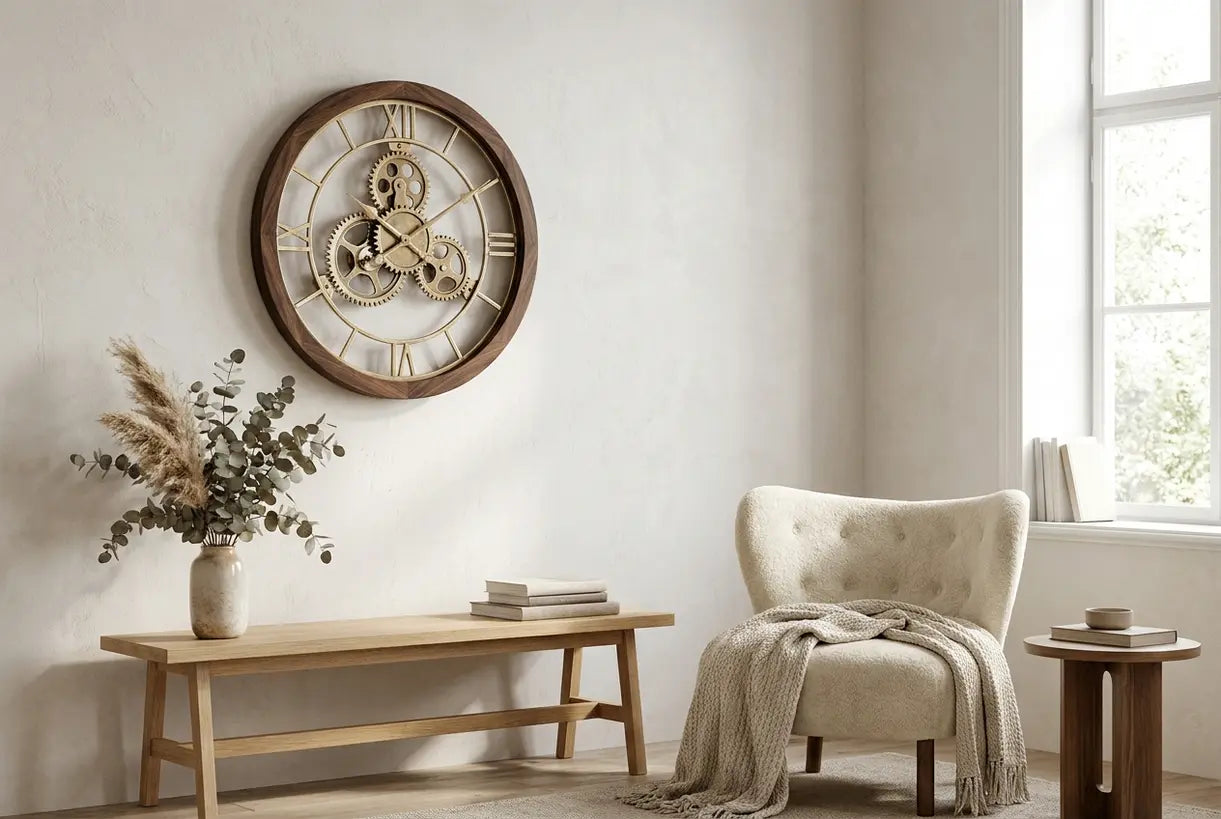
When styling a room around a mechanical wall clock, consider the balance between industrial elements and the organic warmth that defines Nordic design. Pair exposed-gear skeleton clocks with natural materials like wool, ceramic, and untreated wood. The interplay between machined brass precision and the slight irregularities of handcrafted objects creates visual interest without clutter.
The Glødvar Retro Iron Wall Sconce offers the perfect complementary piece for spaces anchored by mechanical timepieces. With its vintage-inspired form and warm ambient lighting, this sconce echoes the industrial elegance of brass clock mechanisms while providing the soft, intimate illumination that makes exposed gears glow with character in evening settings.
Complementary Pieces for Your Clock Collection
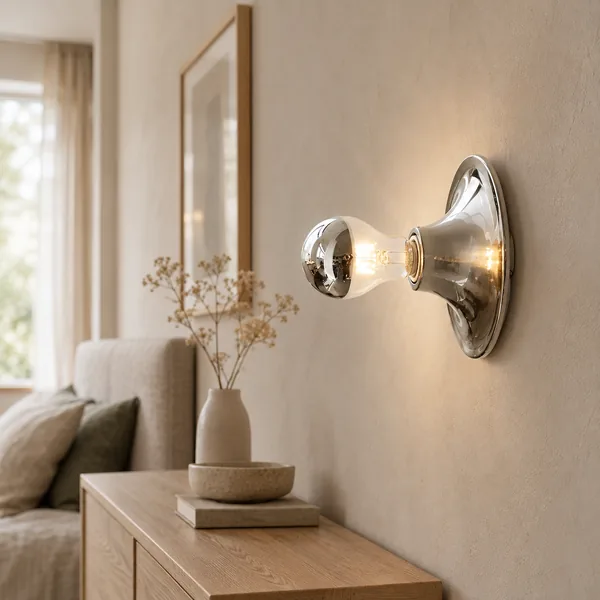 Glødvar Retro Iron Wall Sconce Nordic Design$89.00$129.00
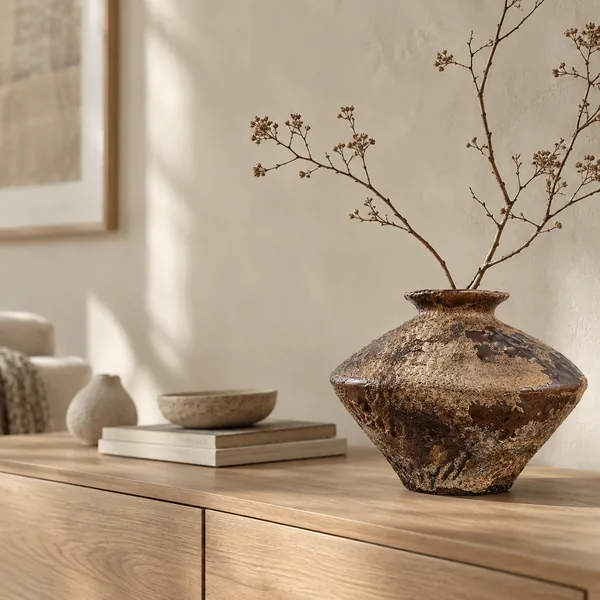 Jorde Handmade Rustic Ceramic Vase Home Decor$129.00$189.00
Creating Cohesive Vignettes with Artisan Objects
The Jorde Handmade Rustic Ceramic Vase demonstrates how artisan-crafted objects can enhance the presence of a mechanical clock. Finished with expressive active glaze that celebrates the unpredictability of the firing process, this vase introduces organic texture that balances the precision engineering of gear-driven timepieces. Displayed beneath or alongside your clock, such handcrafted decor reinforces the appreciation for skilled workmanship that mechanical clocks represent.
For those looking to incorporate additional organic elements into their clock-centered vignettes, our Decorative Vases offer a curated selection of vessels that complement the mechanical aesthetic with various textures and forms.
Placement and Proportion Guidelines
Successful display of mechanical wall clocks requires attention to scale and context. Smaller wind-up clocks work beautifully in intimate spaces—above a bedside table, in a reading corner, or near a writing desk where their quiet ticking provides ambient rhythm without distraction. Larger statement pieces with pendulums need adequate wall height and clearance, often serving as the dominant vertical element in living rooms or formal spaces.
Consider also the acoustics of your space. Mechanical clocks produce a subtle ticking sound that many find soothing but that might prove intrusive in very quiet bedrooms. Pendulum clocks add the gentle rhythmic accent of the swing, creating what interior designers sometimes call "living sound"—audible evidence of the home's vitality.
Embracing the Mechanical Wall Clock Tradition
The journey of selecting and living with a mechanical wall clock connects us to centuries of human ingenuity. These timepieces represent not merely instruments for tracking hours, but objects of contemplation that reward attention with their mechanical beauty and reliable performance. The ritual of winding becomes a daily meditation, a momentary pause that marks time's passage with intention rather than anxiety.
At Skonne, we curate clocks and decor that honor this heritage while embracing contemporary Scandinavian design sensibilities. Whether you're drawn to the dramatic presence of exposed gears or prefer the understated elegance of concealed mechanisms, the right mechanical wall clock becomes both functional timepiece and sculptural statement—an anchor of warmth and intention in your curated home.
Related Article
Flip Clocks: Retro Split-Flap Designs for a Nostalgic Wall FeatureRetro split-flap flip clocks bring nostalgic charm to modern walls. Discover vintage-inspired timepieces that make a bold statement in any room.