
How to Style Pendant Lights in Your Living Room: A Practical Guide
Summary›
- Why Pendant Lights Work Beautifully in Living Rooms
- Getting the Height Right: How High Should Pendant Lights Hang?
- Sizing and Scale: Choosing the Right Pendant Dimensions
- Creating Visual Interest with Multiple Pendants
- Selecting the Perfect Bulbs for Your Living Room Pendants
- Mastering the Art of Layered Lighting
- Conclusion
Transforming your living room into a warm, intentional sanctuary often comes down to one crucial detail: lighting. Whether you're renovating an open-plan loft or refreshing a cozy reading nook, the strategic use of pendant lights for living room spaces can redefine how you experience your home. Unlike harsh overhead fixtures or generic floor lamps, well-chosen living room pendant lighting creates layers of warmth, defines functional zones, and introduces that coveted Scandinavian hygge feeling that makes evenings feel more intimate.
In this practical guide, we'll explore everything from placement rules to bulb selection, showing you exactly how to hang pendant lights for maximum impact. Along the way, you'll discover how Skonne's curated collection of Scandinavian-inspired fixtures can solve your specific lighting challenges while elevating your space with timeless, elevated design.
Why Pendant Lights Work Beautifully in Living Rooms
Are pendant lights good for living rooms? Absolutely—and here's why. Modern living rooms serve multiple functions: they’re entertainment hubs, relaxation zones, and sometimes even home offices. This versatility demands flexible lighting solutions.
Pendant lights excel because they:
- Define zones within open floor plans without blocking sightlines
- Add vertical interest to rooms with high ceilings or empty overhead spaces
- Create focal points that draw the eye toward seating areas or architectural features
- Deliver ambient illumination while maintaining a curated, intentional aesthetic
Unlike chandeliers that dominate a space, pendant lights offer scalable impact. A single statement piece can anchor a reading corner, while multiple fixtures can illuminate lengthysectionals or coffee tables with precision.
Getting the Height Right: How High Should Pendant Lights Hang?
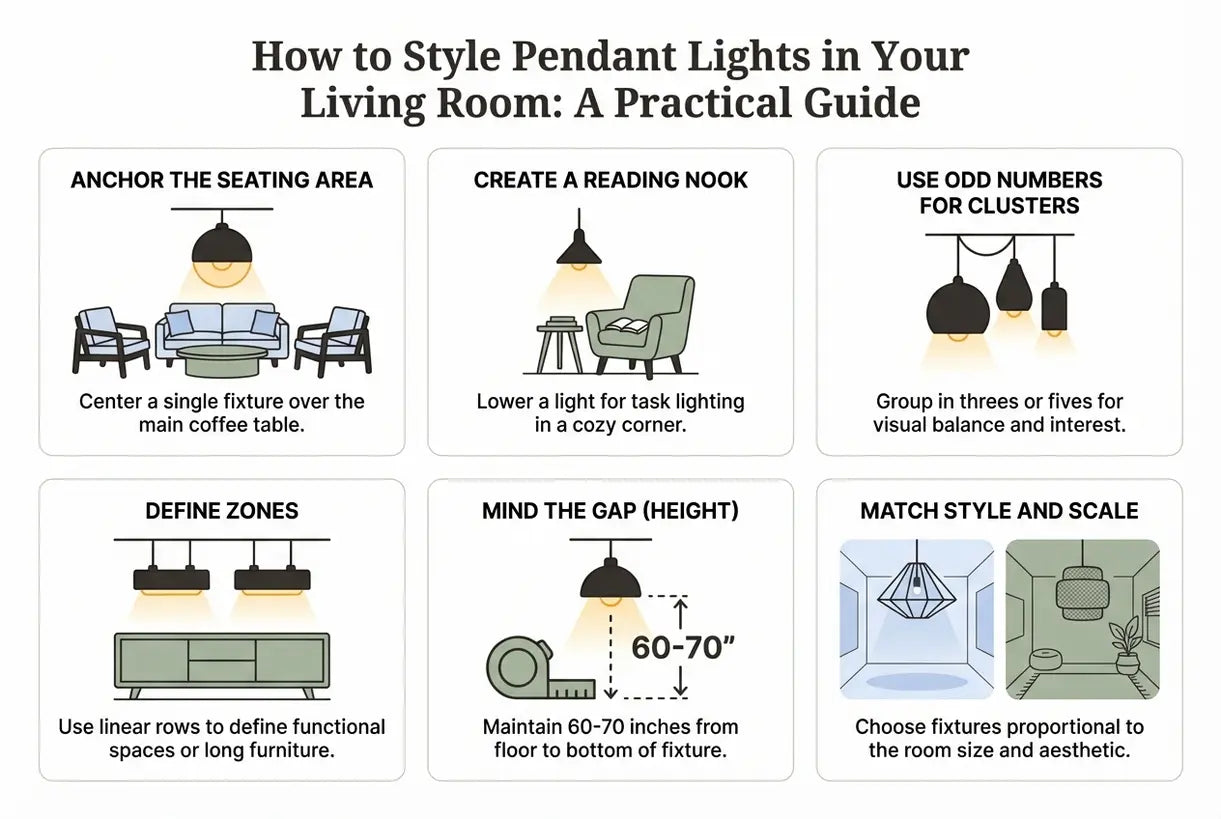
Placement precision makes the difference between a pendant that looks intentional and one that feels awkward. How high should pendant lights hang in a living room? The answer depends on your ceiling height and the fixture's purpose.
For standard 8-9 foot ceilings:
- Minimum clearance: 7 feet from floor to fixture bottom (to prevent head collision)
- Over seating areas: 30-36 inches above the tabletop or cushion surface
- Open walkways: Maintain 7 feet minimum, or higher if you have tall family members
For rooms with soaring ceilings (10+ feet):
- Hang fixtures 12-20 inches below ceiling height to bring light closer to living level
- Consider adjustable cord fixtures that allow seasonal flexibility
Pro Tip: In Scandinavian design, lighting hangs lower than you might expect—creating intimate "pools of light" rather than washing the entire room in uniform brightness.
Sizing and Scale: Choosing the Right Pendant Dimensions
What size pendant light should I use over a seating area? Scale is everything when selecting pendant lights living room fixtures that feel proportional rather than overwhelming.
Follow these guidelines:
- Single statement pendants: Choose a diameter equal to 1/12 to 1/10 of the room's width (in feet, converted to inches)
- Over coffee tables: Select a fixture 1/2 to 2/3 the width of the table
- Reading nooks: Compact pendants (10-14 inches diameter) prevent visual heaviness
For those seeking to explore more options, our Pendant Lights collection offers a curated selection ranging from understated minimalist designs to textured statement pieces that honor Nordic craftsmanship.
Creating Visual Interest with Multiple Pendants
Can I use multiple pendant lights in one living room? Yes, and doing so effectively requires strategic planning. Multiple pendants work beautifully when they follow visual rhythms already present in your space.
Consider these configurations:
- Symmetrical pairs: Flank a fireplace or sofa with matching pendants for formal balance
- Linear arrangements: Three identical fixtures spaced evenly over a long sectional
- Asymmetrical clusters: Grouped at varying heights above coffee tables (ideal for open-plan living)
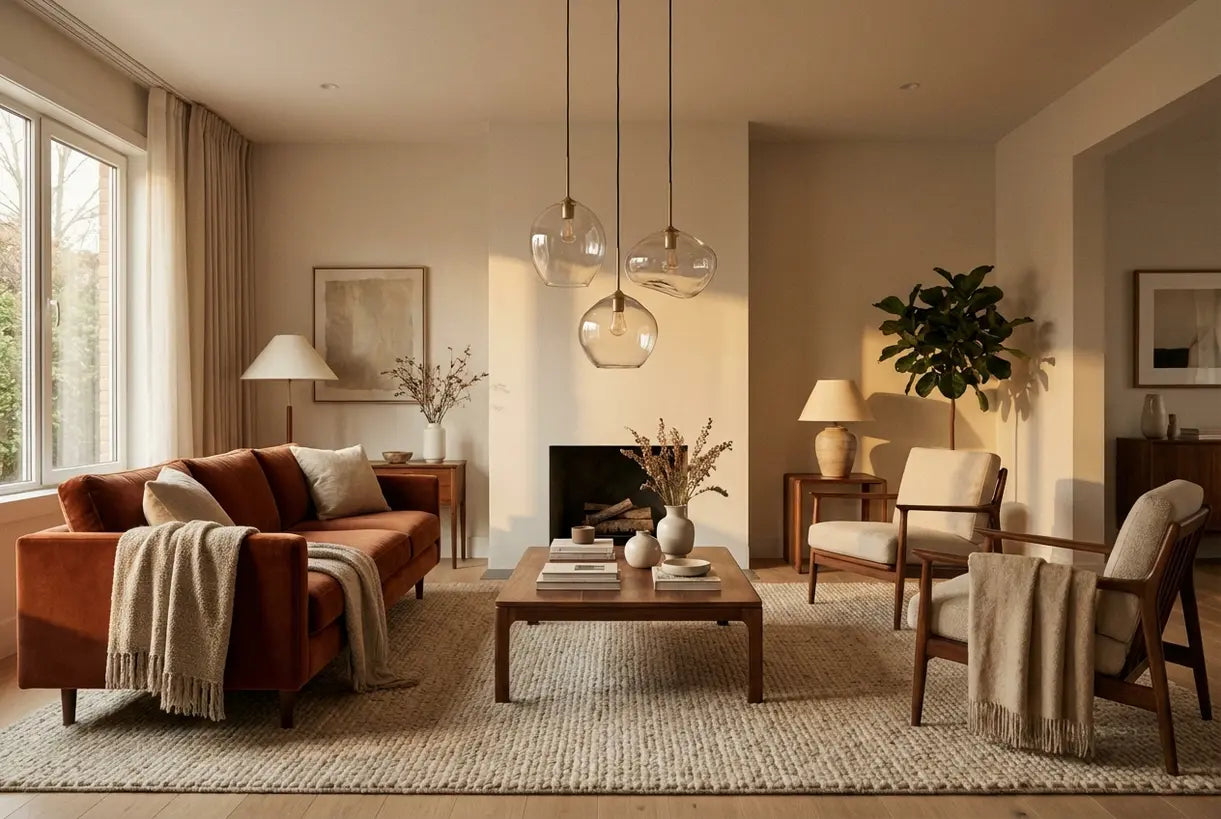
Cluster configurations work particularly well in contemporary Scandinavian interiors where negative space is valued as much as the fixtures themselves.
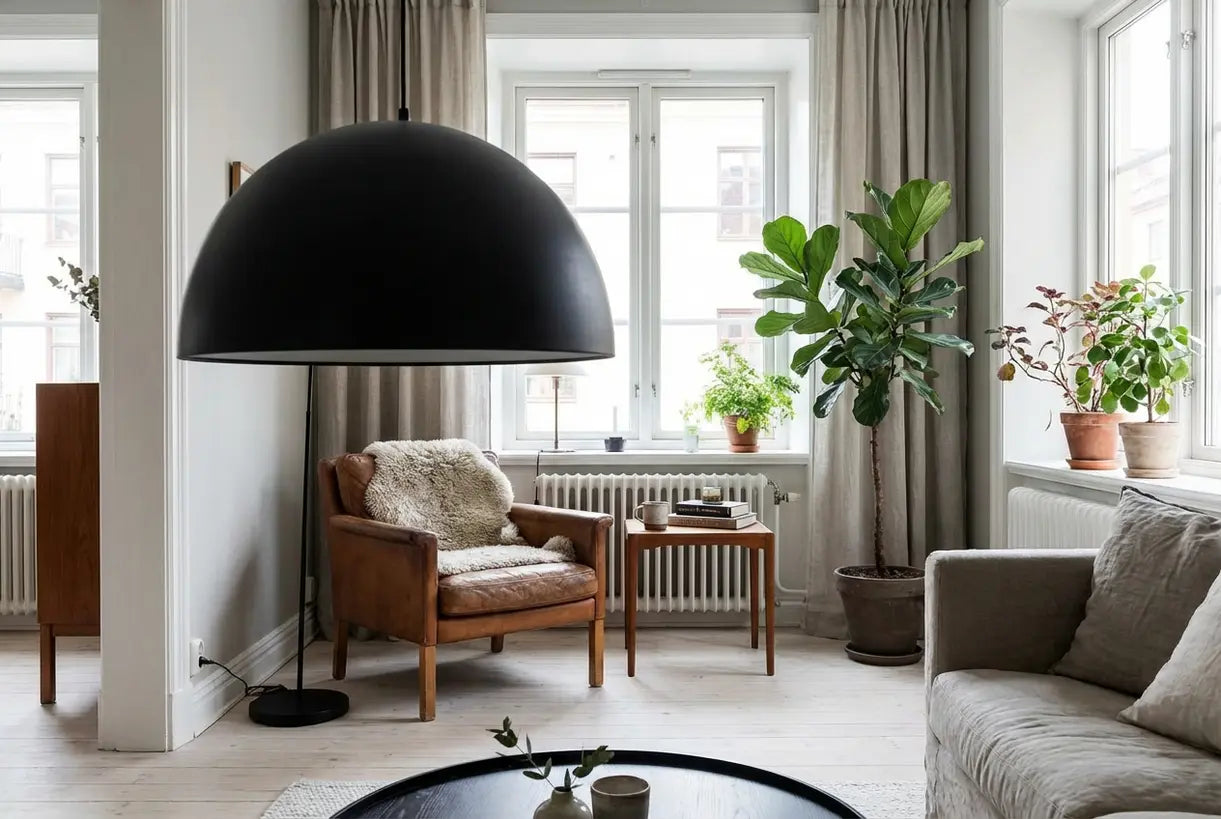
The Aria Matte Black Pendant exemplifies how a single well-chosen fixture can solve the challenge of creating focal points above seating areas. Its sleek dome profile in matte black with warm LED-ready sockets delivers that signature Scandinavian contrast—industrial materials meeting warm illumination.
Selecting the Perfect Bulbs for Your Living Room Pendants
What bulb type is best for pendant lights in living rooms? The right bulb transforms a fixture from functional to phenomenal.
For that authentic Nordic glow:
- Color Temperature: 2700K-3000K (warm white) mimics candlelight and promotes relaxation
- Type: LED filament bulbs combine energy efficiency with vintage aesthetics
- Brightness: 450-800 lumens per fixture for ambient lighting
- Features: Dimmable compatibility allows you to transition from bright afternoon reading to intimate evening entertaining
Mastering the Art of Layered Lighting
How to layer pendant lights with other living room lighting? The secret to professional-quality illumination lies in layering three distinct light types:
- Ambient: Your primary pendant lights provide general illumination
- Task: Directed light for reading, working, or hobbies
- Accent: Wall sconces or picture lights highlighting artwork or textures
Position your pendant lights as the middle layer—warmer than recessed ceiling cans but more ambient than directional task lamps. This approach prevents the sterile "airport lounge" effect while ensuring adequate visibility for daily activities.
Hygge Tip: Combine your pendant lights with candlelight and textured textiles. The interplay of overhead glow and flickering flames creates the ultimate Scandinavian sanctuary atmosphere.
Solutions for Every Living Room Layout
For open-plan living spaces, consider the Lumen Glass Cluster Pendant—three hand-blown glass pendants on an adjustable canopy that creates visual rhythm without cluttering sightlines. If soft, diffused ambient light is your priority, the Nova Adjustable Drum Pendant features textured fabric that transforms harsh bulbs into gentle, candle-like glow perfect for cozy evenings.
Conclusion
Mastering living room pendant lighting requires balancing technical precision with emotional impact. By understanding height requirements, scale relationships, and layering techniques, you create spaces that function beautifully while nurturing the soul.
At Skonne, we believe lighting should feel both intentional and effortless. Our curated collection of pendant lights for living room spaces honors Scandinavian principles—elevated design, warm materials, and that essential hygge quality that makes a house feel like home.
Whether you're drawn to the architectural simplicity of matte black domes or the organic warmth of textured fabric drums, the right pendant light awaits. Start your transformation today and discover how thoughtful illumination can redefine your everyday moments.
Related Article
How to Install a Chandelier: A Step-by-Step Guide for HomeownersDiscover how to install a chandelier safely with our comprehensive DIY guide. Learn mounting, wiring, and safety tips to transform your space.