
Scandinavian Wall Clocks: Nordic-Inspired Designs for Hygge-Filled Interiors
Summary›
- What Makes a Clock Scandinavian Design?
- The Silent Revolution: Non-Ticking Scandinavian Wall Clocks
- Choosing the Right Size Scandinavian Clock
- Styling Your Minimalist Wall Clock
- Materials That Matter: Ceramic, Wood, and Metal
- Investment Pieces vs. Accessible Alternatives
- Conclusion: Time for Intentional Living
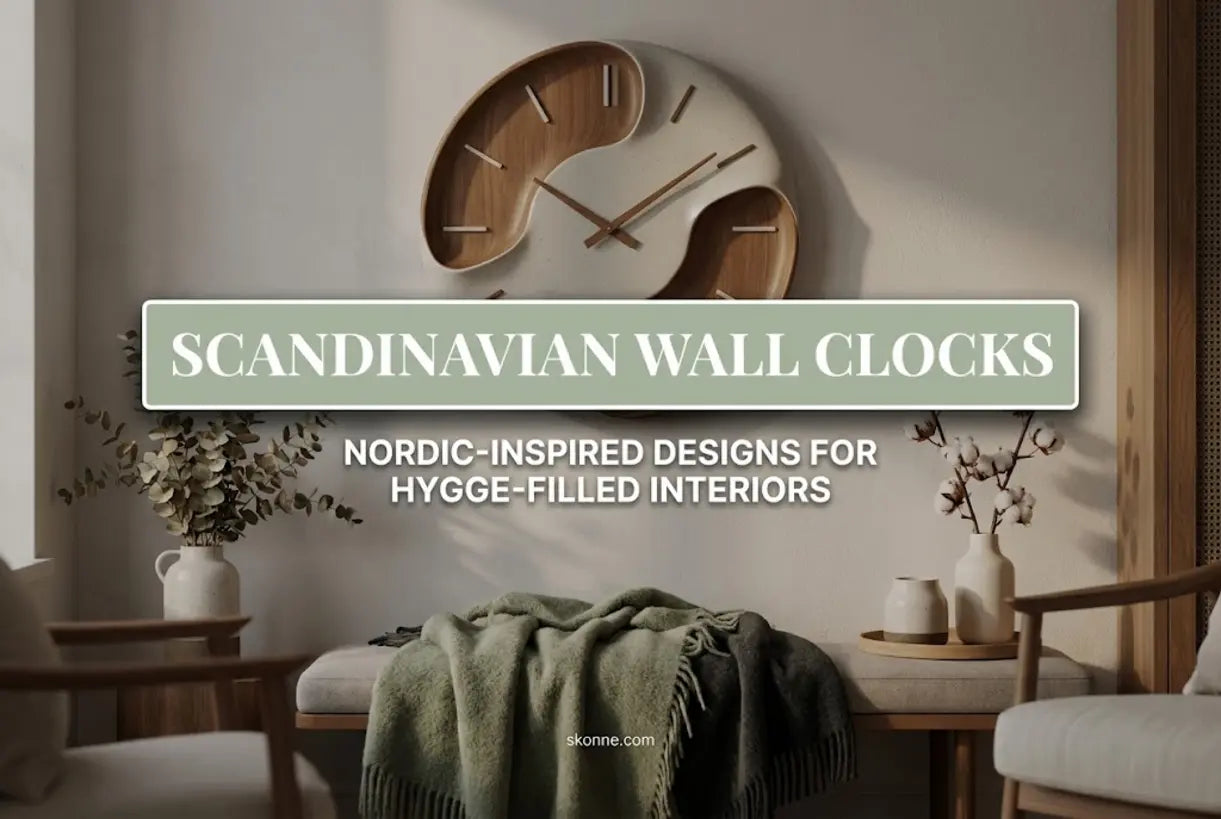
There's a quiet magic to the right timepiece on your wall. Not the kind that demands attention with ornate flourishes, but one that settles into your space like it was always meant to be there. When you're curating a home that breathes calm and intentionality, a scandinavian wall clock becomes more than a functional object—it transforms into a cornerstone of daily life.
Whether you're seeking a nordic wall clock to anchor your living room or a minimalist wall clock for your sanctuary bedroom, the principles remain the same: thoughtful design, natural materials, and an unwavering commitment to quiet functionality. In this guide, we'll explore what defines these timeless timepieces and how to find the perfect scandi wall clock that honors both form and the Danish concept of hygge.
What Makes a Clock Scandinavian Design?
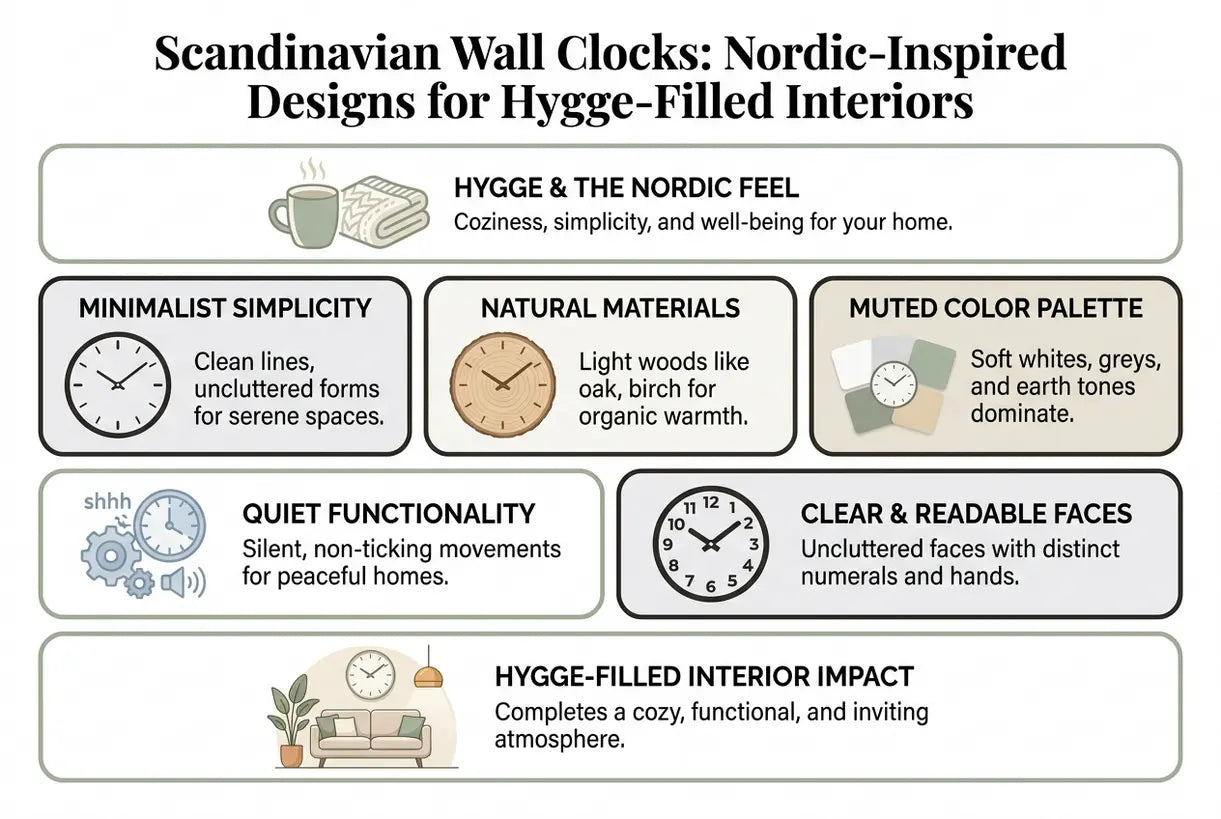
A true scandinavian wall clock embodies several core principles that have defined Nordic aesthetics since the mid-century modern movement. First, there's the rejection of excess. Clean lines, uncluttered faces, and geometric simplicity create visual rest rather than visual noise.
The material palette matters deeply. Natural materials like oak, walnut, ceramic, and matte metals take precedence over plastic or synthetic finishes. This connection to nature isn't decorative—it's philosophical. Scandinavian design draws from the Nordic landscape: soft birch forests, misty coastlines, and the quiet of long winter days.
Color restraint is another hallmark. Expect muted tones: warm creams, soft grays, earthy terracottas, and deep forest greens. These hues work in harmony rather than competition with your existing decor, allowing the clock's form to speak first and its coloration to complement second.
Functionality reigns supreme. A scandinavian wall clock tells time beautifully, but it should also be exceptionally easy to read at a glance. Large numerals or distinctive markers, combined with hands that balance presence with elegance, achieve this without sacrificing aesthetic purity.
Decorative Wall Clocks
Shop all Wall Clocks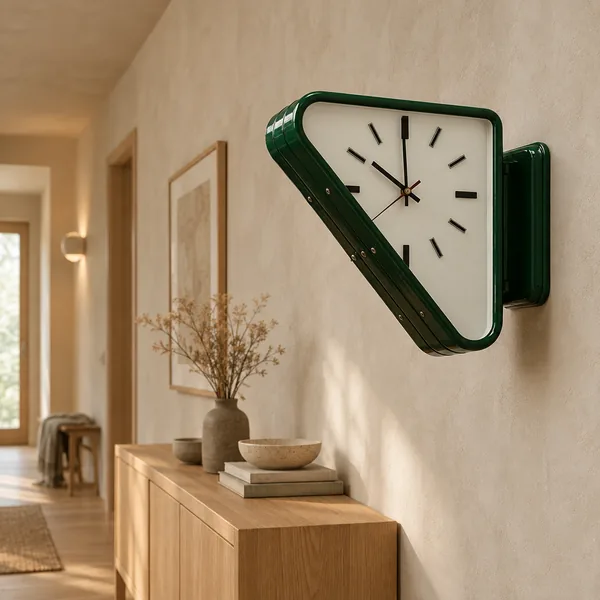
 Save $110.00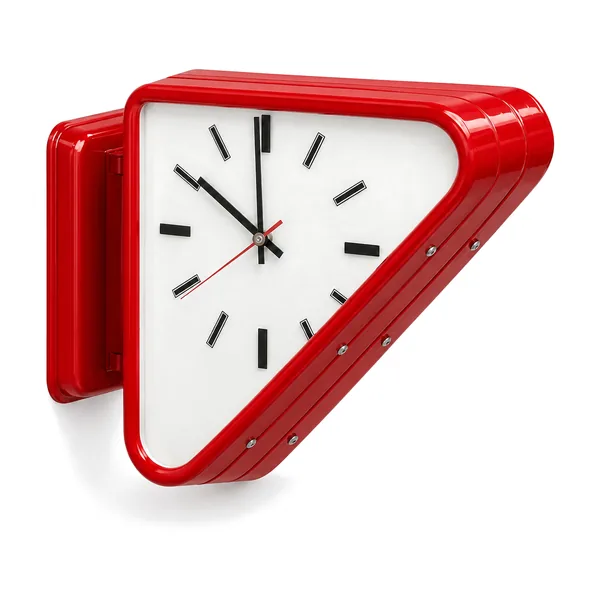
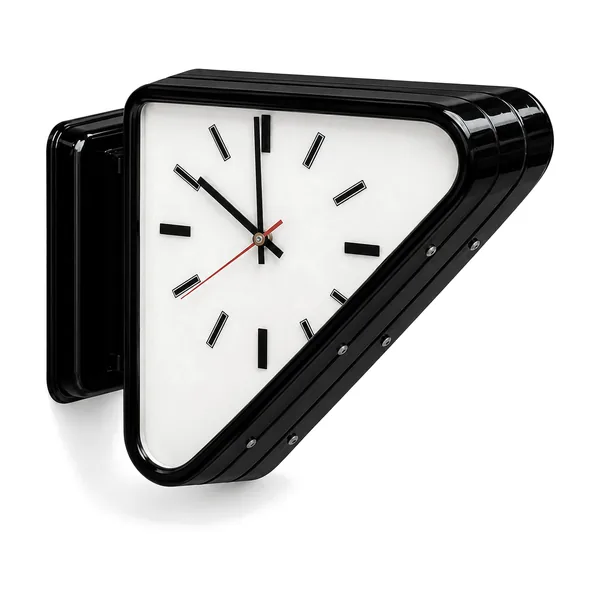
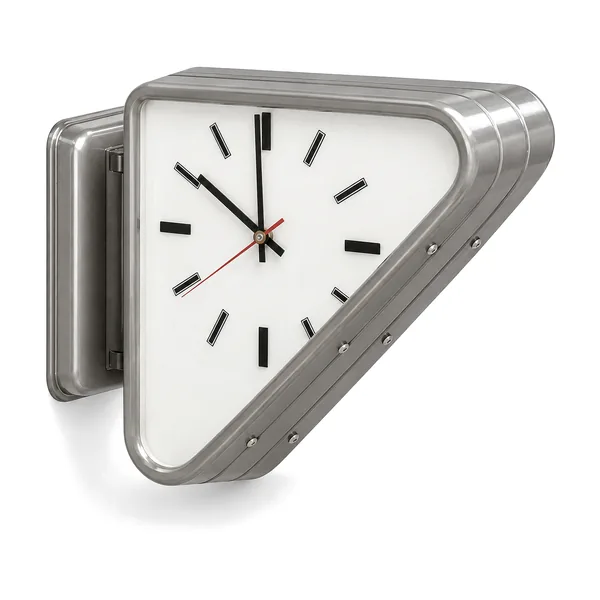
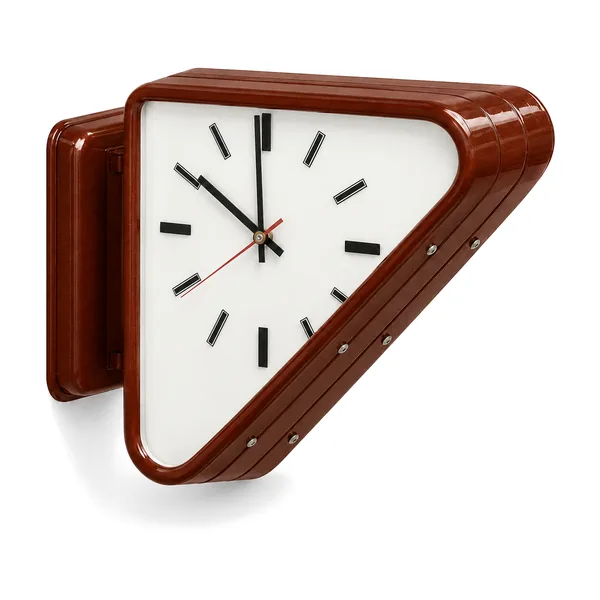 +15 options
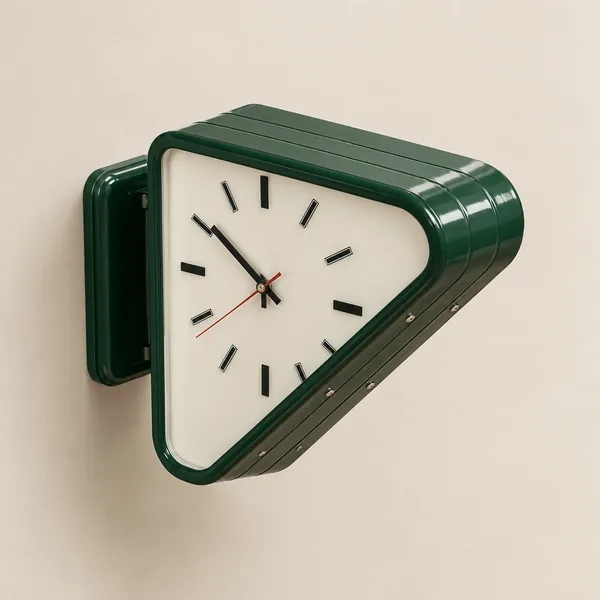
Tvilling Dual-Sided Geometric Metal Wall Clock
 Save $70.00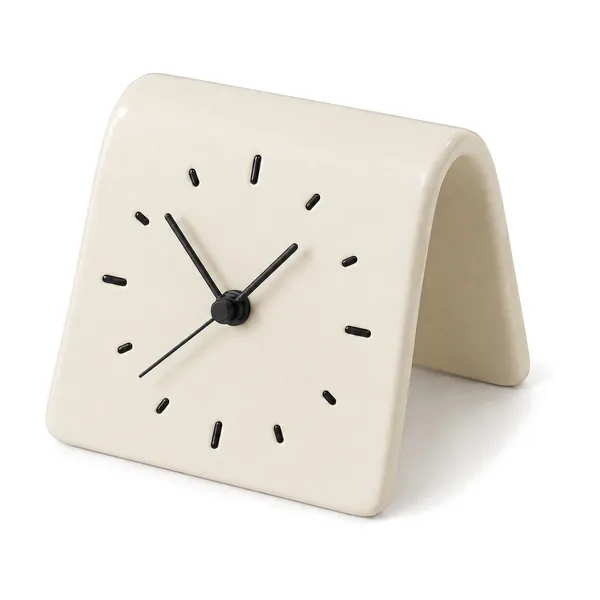
 +37 options
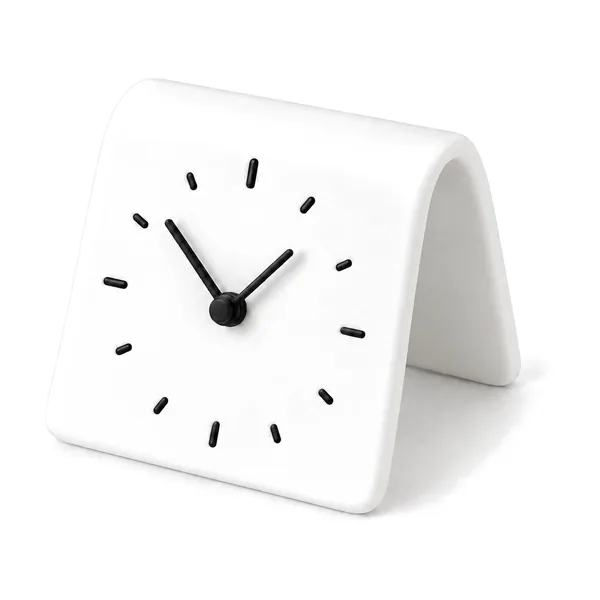
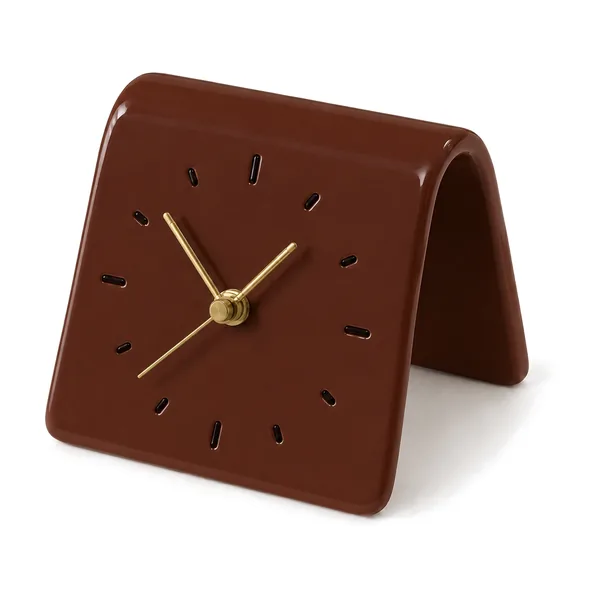
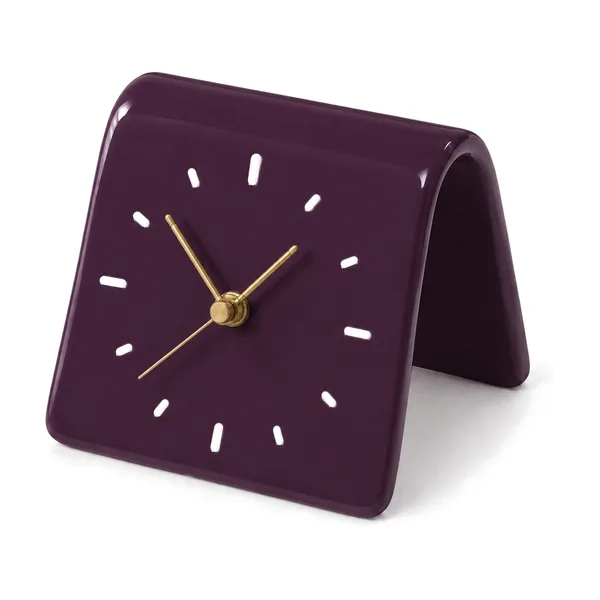
Tilje Silent Ceramic Desk Clock for Modern Homes
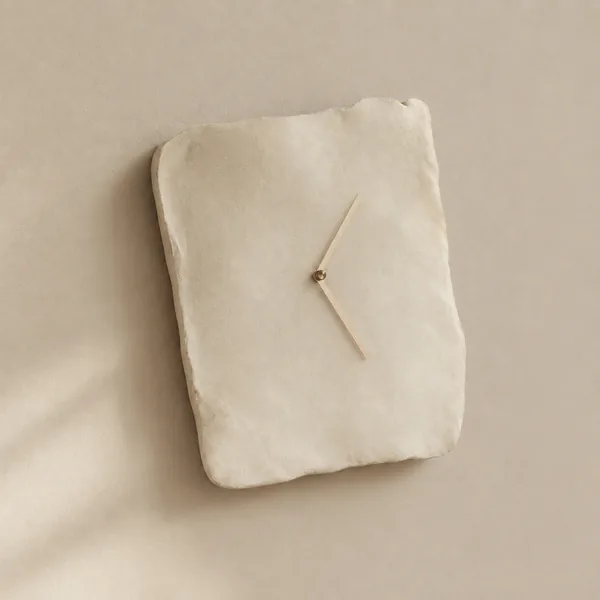
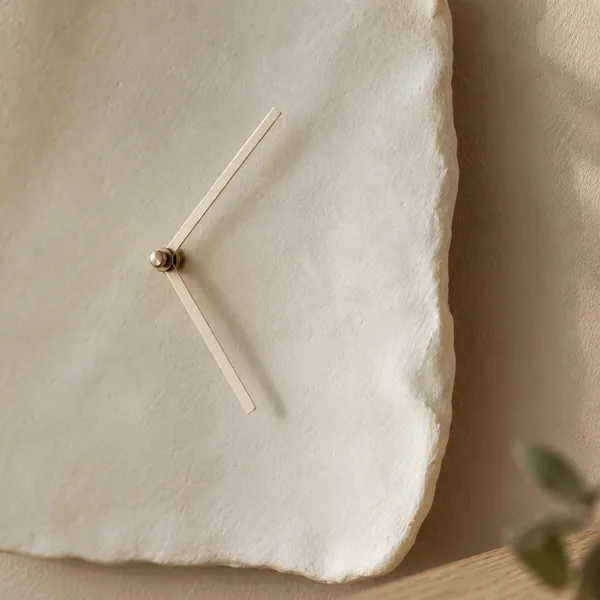 Save $120.00
Stilla Silent Resin Wall Clock Nordic Minimalist
The Silent Revolution: Non-Ticking Scandinavian Wall Clocks
Perhaps nothing defines the scandi wall clock experience quite like silence. The steady, rhythmic ticking of traditional timepieces might seem innocuous, but in a hygge-centered home, auditory peace is paramount. Research from the University of Pennsylvania has shown that repetitive low-level sounds—even those we're not consciously aware of—can raise cortisol levels and disrupt deep sleep cycles.
This is why silent quartz and sweep movements have become standard in quality modern scandinavian clock designs. Rather than the mechanical tick-tock interruption, these timepieces glide through seconds with barely perceptible motion. The result is a wall clock that keeps time while respecting the acoustic calm of your space.
When evaluating a nordic minimalist timepiece, look for specific mentions of "silent movement," "whisper-quiet mechanism," or "sweep seconds." These indicate clockworks designed specifically for noise-sensitive environments: bedrooms, meditation corners, home offices, and libraries.
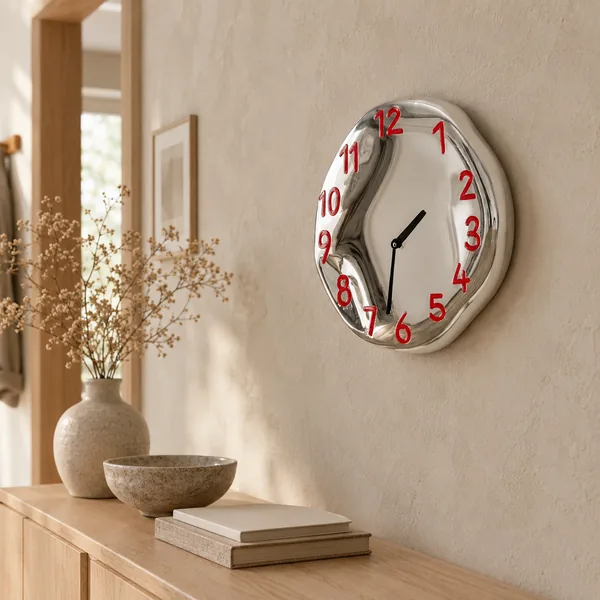 Glansa Chrome Ceramic Wall Clock Silent Quartz$329.00$479.00
The Glansa Chrome Ceramic Wall Clock Silent Quartz exemplifies this philosophy. Its whisper-quiet silent quartz movement eliminates auditory distraction while its handcrafted ceramic construction with chrome electroplated finish adds sculptural presence to any wall. This is how functional art behaves—present, beautiful, yet never intrusive.
Choosing the Right Size Scandinavian Clock
Scale is everything when selecting a scandi design clock for your space. Too small, and it disappears into the wall without making its intended statement. Too large, and it overwhelms the room's carefully balanced composition.
For most residential applications, follow this proportional guide:
- Small spaces (under 150 square feet): 8-12 inches in diameter
- Standard rooms (150-300 square feet): 12-15 inches for subtle presence, 16-20 inches for focal point status
- Open floor plans or large rooms (300+ square feet): 20-24 inches or larger to achieve visual weight
Hang height matters equally. The center of your hygge wall clock should sit at eye level—approximately 57-60 inches from the floor for most adults. Above furniture, maintain at least 6-8 inches of clearance, and in dining rooms, position the bottom edge no lower than 6 inches above seated head height.
Placement Psychology
Where you position your timepiece sends subliminal messages about time itself. A scandinavian clock in the entryway suggests punctuality and intentionality—it greets you as you leave and welcomes you back. In the living room, centered above a console or flanked by art, it serves as temporal anchor. For bedrooms, position away from direct sightlines where the illuminated face might disrupt sleep.
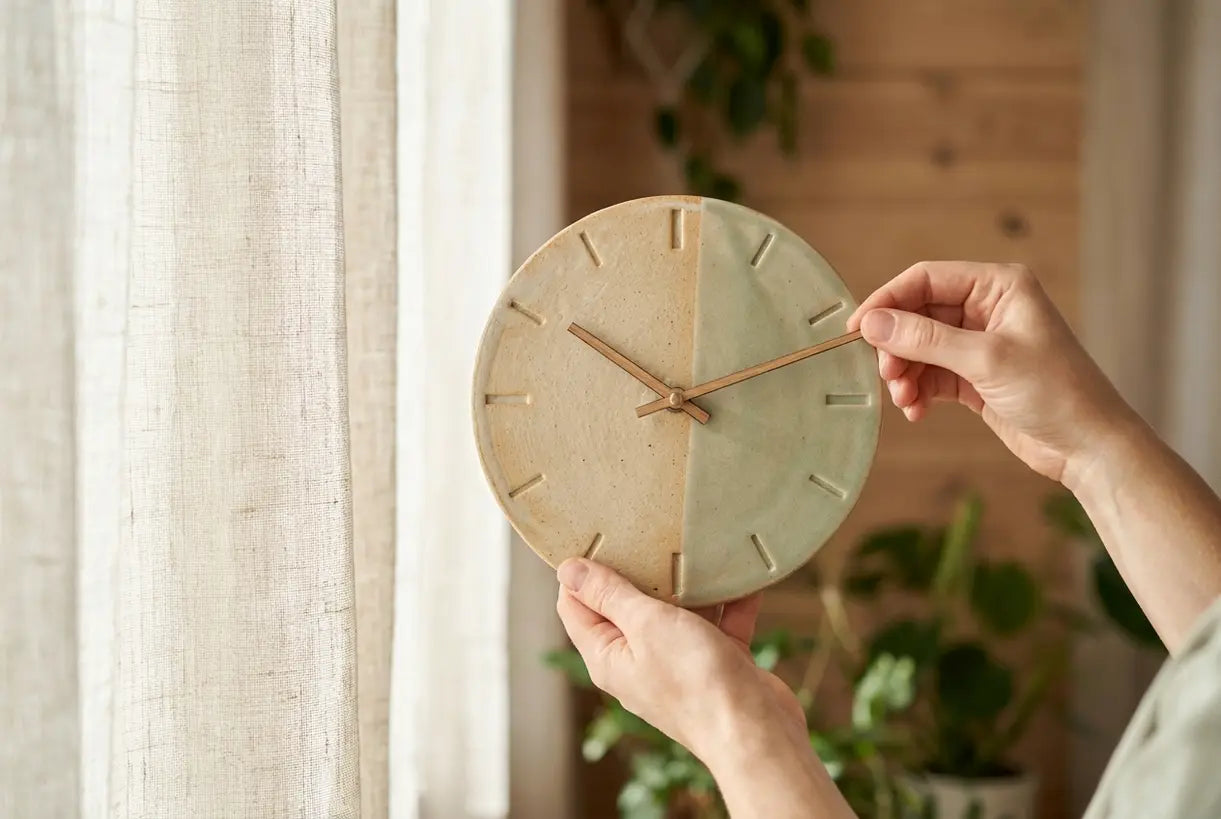
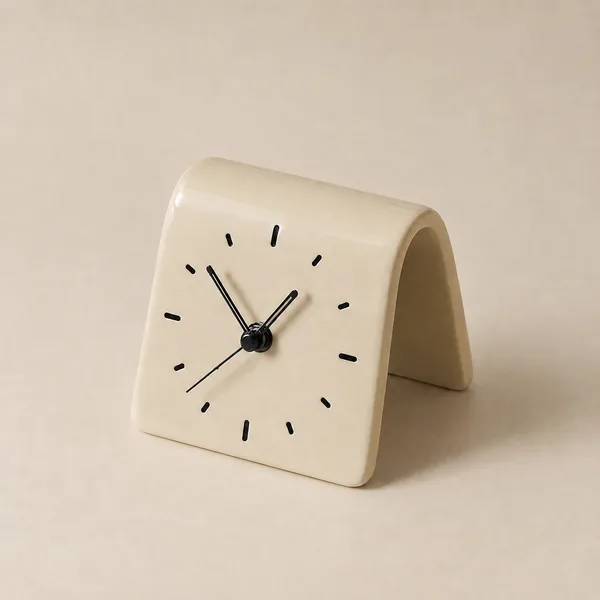
Every detail matters in Nordic design. The close-up reveals how quality craftsmanship distinguishes an ordinary clock from an heirloom piece. Precision ceramic work, balanced hand proportions, and edge finishing that catches light beautifully—these are the details that transform a simple timekeeper into a focal point of daily appreciation.
Styling Your Minimalist Wall Clock
A minimalist wall clock doesn't exist in isolation—it's part of a broader design conversation. The Scandinavian approach treats timepieces as punctuation marks in a sentence composed of furniture, lighting, and textiles. They provide rhythm without shouting.
For those looking to explore more options, our Scandinavian Lighting offers a curated selection that pairs beautifully with these clocks.
Here are tried-and-true styling approaches:
The Solitary Statement
Let your scandinavian home decor speak alone on a blank wall. This works especially well with beautifully crafted pieces featuring interesting materials—a ceramic face, wood grain, or metallic accents. The negative space around the clock becomes part of the design, embodying the Scandinavian philosophy that emptiness is not absence but presence.
The Gallery Wall Moment
Integrate your nordic wall clock into a gallery wall arrangement. Position it off-center among botanical prints, abstract line drawings, and textural fiber art. The clock's circular form provides geometric contrast to rectangular frames while maintaining the overall curated, collected-over-time aesthetic.
The Functional Pairing
Position your clock above or beside practical stations—entryway consoles, home desks, or dining nooks. In these arrangements, consider pairing it with complementary pieces that reinforce the Nordic sensibility.
Complete Your Nordic Sanctuary
Tilje Silent Ceramic Desk Clock for Modern Homes$89.00$159.00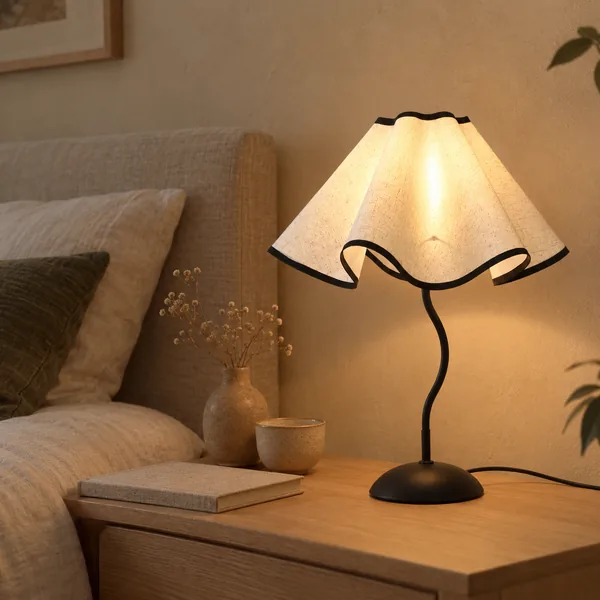 Blomly Petal Table Lamp Handcrafted Nordic LED$89.00$139.00
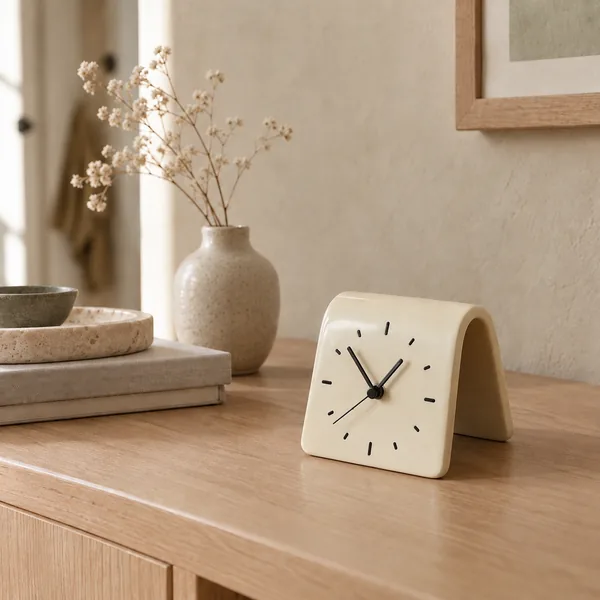
The Tilje Silent Ceramic Desk Clock provides the same Scandinavian principles for tabletop and nightstand applications, with seven curated color options to match your palette perfectly. Pair it with the Blomly Petal Table Lamp for cohesive design language—both pieces celebrate handcrafted Nordic artistry and functional beauty.
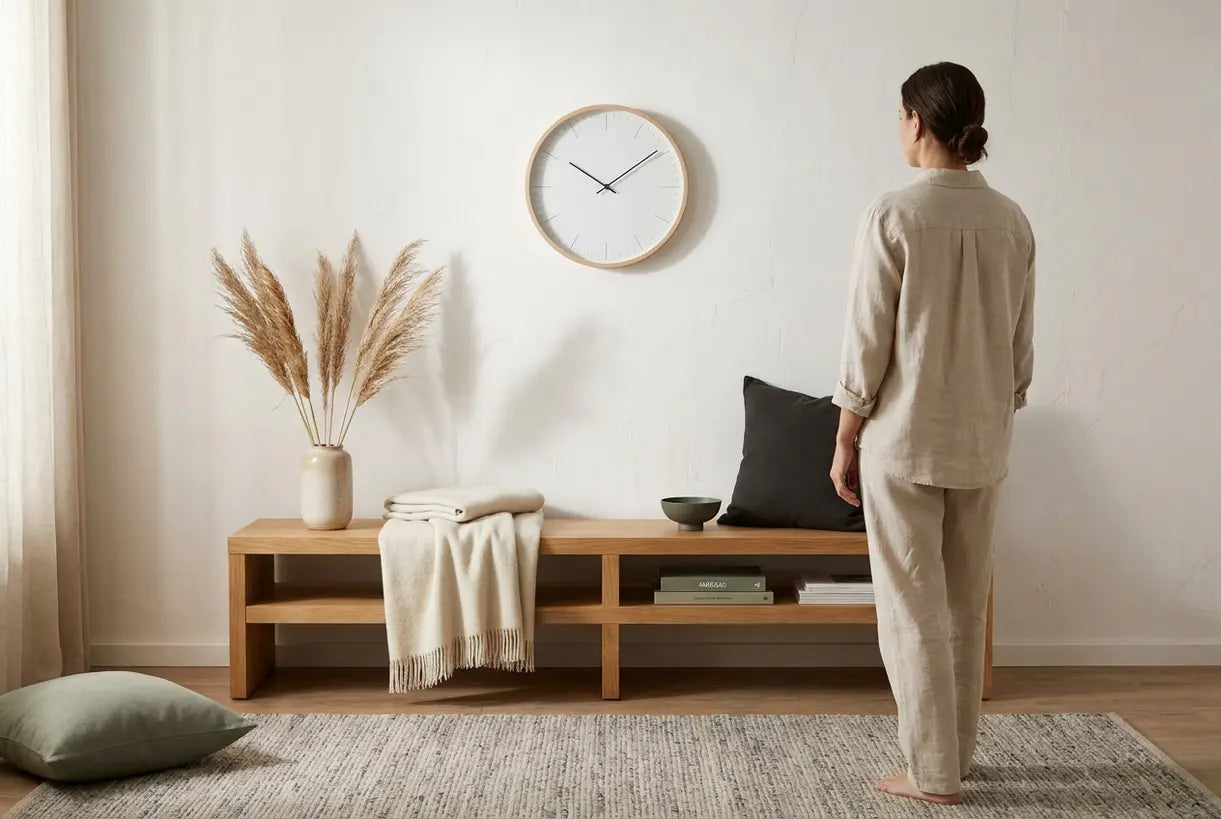
Notice how the timepiece in this scene doesn't compete—it contributes. The warm lighting, natural textures, and restrained palette create a space that invites presence rather than distraction. This is hygge realized: a room that wraps you in intentional calm whenever you enter. Learn more about Scandinavian design principles at the Danish Design Museum.
Materials That Matter: Ceramic, Wood, and Metal
The tactile quality of a scandinavian clock distinguishes it from mass-produced alternatives. Ceramic has emerged as a defining material, offering organic warmth that plastic cannot replicate and visual depth that painted finishes fail to achieve.
Handcrafted ceramic clocks, like the Glansa collection, develop subtle variations that make each piece unique. The glazing process creates surfaces that shift with changing light throughout the day—matte mornings give way to luminous afternoons, ensuring the clock remains visually engaging without becoming distracting.
Wood represents the other pillar of Nordic timepiece design. Lightwoods like birch and pine bring airiness to smaller spaces; deeper walnuts and oaks ground larger rooms with gravitas. Look for sustainable sourcing credentials—the Scandinavian commitment to environmental stewardship reflects in their material choices.
Metal accents appear most successfully in restrained applications: slim frames, minute hands, or subtle mounting hardware. Chrome and brass finishes should feel intentional, not decorative. The best scandinavian home decor uses metal as punctuation, not prose.
Home Decor
Shop all Home Decor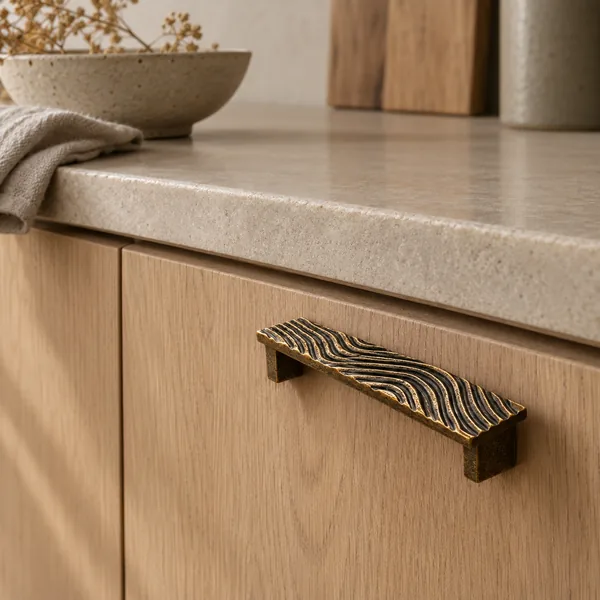
 Save $44.50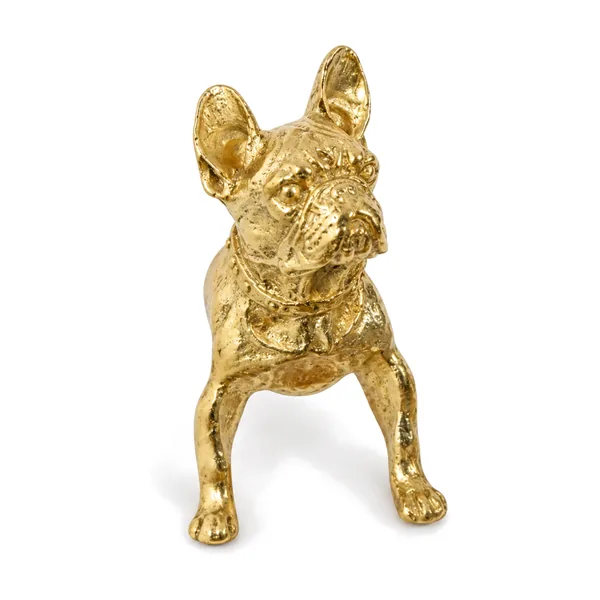
 2 options
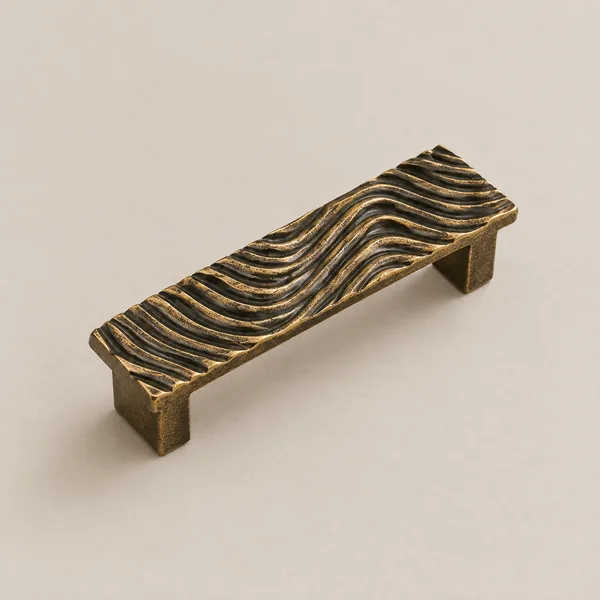
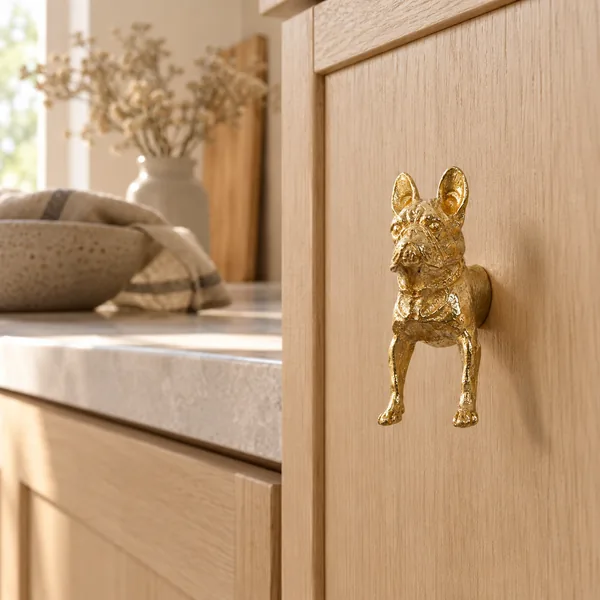
Tassa Polished Brass Dog Cabinet Pull Handle
Save $110.00+15 optionsTvilling Dual-Sided Geometric Metal Wall Clock
Investment Pieces vs. Accessible Alternatives
The market for modern scandinavian clock design spans accessible price points to investment-grade collectibles. Understanding where your needs fall helps navigate options without compromising on core quality markers.
Entry-level pieces ($50-$100) typically offer silent mechanisms and minimalist aesthetics but may rely on composite materials or simpler production methods. These work beautifully for transitional spaces or when testing aesthetic preferences.
Mid-tier options ($100-$300) begin introducing premium materials—ceramic, solid wood, hand-finished metals—with refined manufacturing. This is where you'll find the sweet spot for most homeowners: genuine Nordic design craftsmanship at accessible price points.
Premium and designer pieces ($300-$800+) represent original designs from recognized Scandinavian studios or heritage manufacturers. These become heirloom objects that appreciate over time, often featuring limited production runs and museum-quality materials.
For further reading on Nordic design history and contemporary movements, explore resources at Dezeen, which regularly features emerging Scandinavian designers and trends.
Conclusion: Time for Intentional Living
Choosing a scandinavian wall clock is ultimately about choosing how you want to experience time itself. In a world that often feels accelerated and chaotic, these pieces offer a different relationship with the hours—one marked by presence, intentionality, and quiet beauty.
The perfect nordic minimalist timepiece doesn't just display time; it honors it. It reminds us to slow down, to appreciate the craftsmanship of simple objects, and to create spaces that support wellbeing rather than deplete it.
At Skonne, we've curated a collection of scandi wall clock designs that embody these principles—silent movements, natural materials, and forms that bring calm to your walls. Whether you're beginning your Scandinavian design journey or adding to an established collection, the right timepiece waits to mark your moments with grace.
Explore our full range and discover how a thoughtfully chosen wall clock can transform not just your wall, but your relationship with the time you spend at home.
Related Article
Industrial Wall Clocks: Raw, Factory-Inspired Designs for Loft & Urban InteriorsDiscover raw, factory-inspired industrial wall clocks perfect for loft living. Bold metal designs that transform urban spaces with authentic character.